
Selecting the right climbing chalk format is a crucial decision that directly impacts your grip, climbing performance, and overall comfort on the wall. The ideal format depends on your specific climbing environment, your skin’s natural moisture levels, and the rules of the facility where you train.
To make an immediate decision, you can use this straightforward framework:
- Choose liquid chalk if you prioritize a highly durable, long-lasting base layer of friction, need to cut through heavy hand oils, or climb in indoor commercial gyms with strict dust-reduction policies.
- Choose loose chalk if you require maximum, immediate coverage, need to quickly re-apply chalk with one hand while hanging on long outdoor sport or multi-pitch routes, or simply prefer the traditional tactile feel of a chalk bag.
- Choose chalk balls if you want a balanced, low-mess option for indoor bouldering that minimizes accidental spills and airborne dust while still allowing for straightforward, on-the-go top-ups.
Many experienced climbers do not limit themselves to a single format; instead, they combine them by applying a liquid base before starting a route and topping up with loose chalk or a chalk ball during the climb.
Products mentioned in this guide
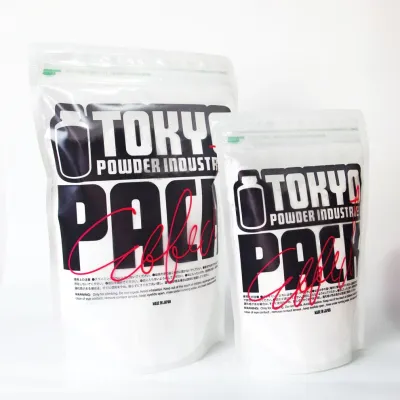
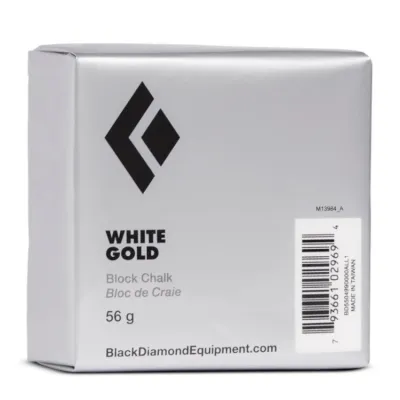
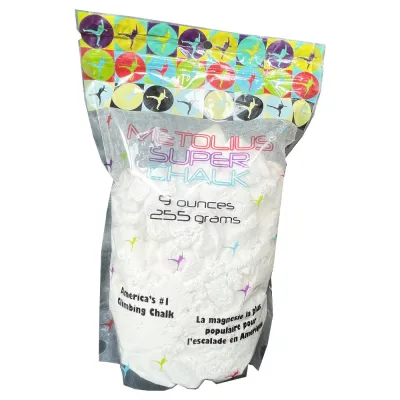
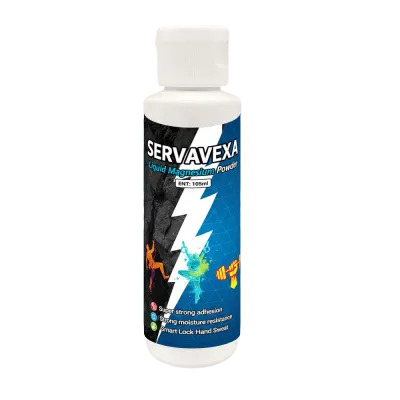
![🇸🇬 [READY STOCK] Chalk Ball 85g 100% Pure Magnesium Carbonate Powder](https://img.lazcdn.com/g/p/795bee487b299fd8f2519655dafefa3e.jpg_400x400q80.jpg_.webp)
Prices are valid at publication and may change. Please refer to the product page for the latest price.
Remember that climbing is an inherently high-risk sport where falls can result in serious injury. No climbing chalk, regardless of its format or grip-enhancing properties, can replace proper safety training, regular gear inspections, and sound personal judgment. Always verify your anchors, tie your knots correctly, perform partner checks, and understand your physical limits before leaving the ground.
How the Three Chalk Formats Work
To understand which format aligns with your climbing style, it is helpful to first look at how each type is physically composed and how it interacts with your skin.
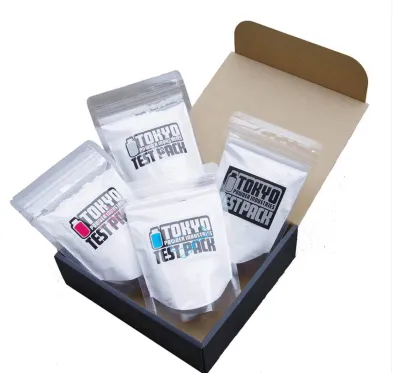
Loose Chalk This is the traditional form of climbing chalk, consisting of pure magnesium carbonate powder in a loose, broken-down state. It works by immediately absorbing moisture and oils from your fingertips upon contact, creating a dry barrier between your skin and the climbing hold. Some manufacturers add secondary drying agents or specialized minerals to loose chalk, but the core mechanism remains the direct physical absorption of sweat.
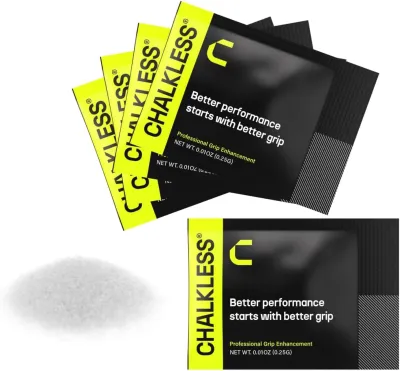
Liquid Chalk This format is a mixture of magnesium carbonate suspended in an alcohol base, typically isopropyl or ethanol, often with a small amount of resin or thickening agent. When you apply a small dollop to your hands and rub them together, the alcohol quickly evaporates into the air. This process leaves behind a highly uniform, ultra-fine layer of dry chalk that adheres tightly to the natural creases of your skin, providing a durable foundation that resists rubbing off.
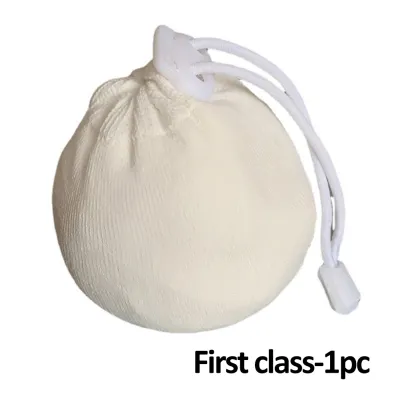
Chalk Balls A chalk ball consists of a porous, stretchy fabric mesh sack that is filled with loose or lightly compressed magnesium carbonate powder. To use it, you squeeze the ball inside your chalk bag, which forces a controlled, metered amount of powder through the mesh fabric onto your fingers. This design ensures you get enough chalk to coat your contact points without releasing excess clouds of dust into the surrounding air.
Key Comparison Dimensions for Climbers
To choose the best option for your climbing style, you must evaluate how these formats perform across several critical dimensions, including grip performance, environmental impact, and daily convenience.

Grip Performance and Moisture Control
The primary function of any climbing chalk is to optimize friction by eliminating moisture, but the three formats manage this task in very different ways.
Loose chalk is highly valued for its immediate, heavy moisture absorption capabilities. When your hands begin to sweat profusely mid-route, dipping into a bag of loose chalk provides an instant, thick coating that completely smothers moisture. However, because loose chalk sits loosely on top of the skin, it is easily rubbed off onto the climbing holds, meaning you must re-apply it frequently during a long or physically demanding climb.
Liquid chalk excels at managing deep-seated skin oils and providing a highly resilient base layer of friction. The alcohol solvent actively strips away surface oils as it evaporates, allowing the magnesium carbonate to bond exceptionally well with the skin. This creates a base layer that can last through an entire bouldering problem or a short sport pitch without needing a top-up. The trade-off is that once this initial layer eventually wears away, you cannot easily re-apply liquid chalk mid-climb, as you need both hands free to rub the liquid in and wait for it to dry.
Chalk balls offer a moderate, highly regulated application that is exceptionally effective for maintaining a consistent level of grip without over-chalking. Over-chalking can actually decrease friction, as excess loose powder can act like tiny ball bearings between your skin and the hold. By dispensing only a thin, even layer of powder when squeezed, a chalk ball helps you maintain optimal friction without the risk of creating a slippery, over-coated surface on your hands.
Ultimately, the performance of each format is highly conditional on your body chemistry and the ambient climbing conditions. If you naturally have very sweaty hands or are climbing in high-humidity environments, a liquid chalk base is often necessary to prevent your sweat from immediately breaking down your chalk layer. Conversely, if you have naturally dry skin, loose chalk or a chalk ball will easily suffice without over-drying your hands to the point of skin cracking.
Mess Factor and Gym Policy Compliance
In modern climbing, where indoor gyms are highly frequented shared spaces, the environmental impact of your chalk choice is a major consideration.
Loose chalk is by far the messiest option available. When you dip your hands into a loose chalk bag or clap your hands to remove excess powder, a significant amount of fine dust becomes airborne. This airborne dust lingers in the indoor air, settles on the holds (making them greasy and slippery for other climbers), and coats the gym floors and mats. Because of these air quality and maintenance challenges, many commercial indoor climbing gyms restrict the use of loose chalk or ban it entirely.
Liquid chalk and chalk balls are designed specifically to mitigate these dust issues. Liquid chalk produces virtually zero airborne dust during application, as the magnesium carbonate is completely contained in a liquid state until it dries directly on your skin. Chalk balls, while still utilizing powder, keep the loose chalk enclosed within a fabric barrier, dramatically reducing the amount of dust that escapes into the air compared to open loose chalk.
Before heading out for a climbing session, it is always a best practice to verify the specific chalk policies of the facility you plan to visit. Some gyms mandate the exclusive use of liquid chalk, while others permit chalk balls but strictly prohibit open loose chalk. Adhering to these rules keeps the air clean for everyone and shows respect for the climbing community.
Application, Convenience, and Portability
The ease of carrying, storing, and applying your chalk can significantly affect your overall climbing experience.
Applying loose chalk is incredibly fast and simple: you simply dip your hands into your chalk bag, coat your fingers, and you are ready to climb. However, carrying loose chalk carries a high risk of accidental spills. A loose chalk bag that is not sealed properly inside a backpack can easily open, coating your climbing shoes, harness, and personal items in a thick layer of white powder.
Liquid chalk requires a bit more preparation, as you must squeeze a small amount onto your palms, rub them together thoroughly, and wait anywhere from 10 to 30 seconds for the alcohol to fully evaporate before you can touch the wall. Despite this minor delay, liquid chalk is incredibly portable and convenient. It is housed in a secure, leak-proof squeeze bottle or tube, making it virtually spill-proof and highly practical to throw into a travel bag or backpack without any worry of a mess.
Chalk balls sit comfortably in the middle of the convenience spectrum. They are kept inside a chalk bag, but because the powder is contained within the mesh, the risk of a catastrophic spill is greatly reduced if the bag is accidentally knocked over. They are easy to pack, highly portable, and provide a clean, self-contained way to transport powder chalk.
Matching Chalk Formats to Climbing Disciplines
To get the most out of your gear, it is highly beneficial to match your choice of chalk to the specific discipline and environment in which you are climbing.
Indoor Bouldering and Gym Climbing
Indoor bouldering and gym climbing sessions are characterized by short, high-intensity bursts of movement on clean, synthetic holds, often in crowded indoor spaces.
For these environments, managing dust and respecting shared spaces is paramount. Liquid chalk is highly recommended as a primary option or as a base layer because it keeps the air clean and prevents the rapid buildup of slippery chalk residue on the gym’s climbing holds. Using liquid chalk also means you do not have to carry a chalk bag around the bouldering mats, reducing the risk of someone stepping on your bag and causing a spill.
If you prefer the tactile sensation of powder chalk while bouldering indoors, a refillable chalk ball housed inside a chalk bucket is an excellent compromise. This setup allows you to quickly dry your hands between attempts while keeping dust to an absolute minimum. Loose chalk is best reserved for home climbing walls or facilities that explicitly allow open powder.
Outdoor Sport Climbing and Multi-Pitch
When you are climbing long, multi-pitch routes or pushing your limits on outdoor sport climbs, the physical demands and logistics of the climb change dramatically.
On long routes, you will inevitably need to re-apply chalk mid-climb while hanging from a rest hold or securing yourself at a belay stance. For these scenarios, loose chalk kept in a waist-mounted chalk bag is the undisputed standard. It allows you to quickly dip one hand into the bag, coat your fingers, and return to climbing without losing your momentum or balance.
To maximize your grip performance on long outdoor pitches, many climbers employ a highly effective layering strategy. Before leaving the ground, apply a thorough layer of liquid chalk to dry out your hands and establish a durable base. Once you are high on the route and the liquid layer begins to wear thin, you can easily top up your grip using the loose chalk in your waist bag. This hybrid approach gives you the best of both worlds: a long-lasting foundation and easy on-the-wall re-application.
Deep-Water Soloing and Humid Conditions
Climbing in humid, tropical environments—such as the warm, damp conditions frequently experienced in Singapore—presents unique challenges for moisture control.
In high ambient humidity, your body naturally sweats more, and the air itself carries a high moisture content. Under these conditions, loose chalk can quickly absorb water from both your skin and the air, turning into a slippery, pasty sludge that actually reduces friction rather than improving it. Liquid chalk is highly advantageous in humid climates because its alcohol base actively dries out the skin’s surface oils and creates a highly resilient, water-resistant barrier that resists breaking down into a paste.
For deep-water soloing (climbing over water without ropes), liquid chalk is also highly beneficial. If you fall into the water, your hands will be completely wet; while no chalk can function on actively wet hands, liquid chalk can be quickly re-applied once you dry your hands with a towel on the exit platform, drying much faster and more uniformly than loose powder. Keep in mind that climbing over water carries significant safety risks; always verify water depth, check for underwater hazards, and ensure you have a safe spotter and exit plan before attempting any deep-water solo.
Cost, Longevity, and Value Considerations
When choosing your climbing chalk format, evaluating the long-term economic value alongside performance is a practical step.
Loose chalk generally offers the lowest upfront cost when purchased in bulk blocks or large bags. However, its long-term value can be compromised by waste. Loose powder is easily spilled, blown away by the wind outdoors, or lost as airborne dust during application, meaning a portion of what you buy is never actually used on your hands.
Liquid chalk carries a higher upfront cost per bottle, but it often proves highly economical over time. Because a single small dollop provides a comprehensive, long-lasting layer that doesn’t spill or blow away, you use significantly less product per session. A single bottle of liquid chalk can often last as long as, or longer than, a larger bag of loose chalk.
Chalk balls represent a highly cost-effective middle ground, especially if you purchase a refillable version. The initial purchase includes the mesh ball, and once it is empty, you can refill it using bulk loose chalk, which is highly economical. This combines the low cost of bulk loose chalk with the waste-reducing benefits of the mesh enclosure. For the best value, check local outdoor retailers in Singapore to compare bulk packaging options and find the format that fits both your climbing budget and your frequency of use.
Frequently Asked Questions (FAQ)
Can I mix liquid chalk and loose chalk?
Yes, combining liquid chalk and loose chalk is a highly popular and effective technique used by many advanced climbers. By applying a layer of liquid chalk to your hands before you start a climb, you create a durable, dry base layer that bonds tightly to your skin and controls deep-seated sweat. Once you are on the wall, you can use loose chalk or a chalk ball from your waist bag to quickly top up your grip on your fingertips as needed. This hybrid method provides the maximum possible friction and longevity for demanding climbs.
Does liquid chalk dry out your skin more than loose chalk?
Yes, liquid chalk generally has a much stronger drying effect on the skin than loose chalk due to its alcohol content. The isopropyl or ethanol alcohol used to suspend the magnesium carbonate acts as a powerful solvent that strips away natural skin oils as it evaporates. While this is highly beneficial for grip during a climb, frequent use can lead to excessively dry, cracked, or peeling skin. To maintain healthy hands, it is highly recommended to wash your hands thoroughly with soap and water immediately after your climbing session to remove all chalk residue, and then apply a climbing-specific salve or heavy moisturizer to restore your skin’s natural moisture barrier.
Community discussion
Share your experience or ask a question. Comments are reviewed before publication.