
Selecting the right fitness equipment for a home gym involves balancing space, cost, and training efficiency. When space is at a premium, a versatile resistance band is often the most practical alternative to bulky dumbbells or cable machines. However, choosing between loop bands and tube bands depends entirely on your primary training goals, your preferred exercise movements, and your physical comfort requirements.
Loop bands, which are continuous flat loops of rubber, latex, or fabric, are highly effective for lower body strengthening, glute activation, mobility work, and physical therapy. Their flat design allows them to wrap securely around your thighs, calves, or ankles without sliding. This makes them ideal for lateral movements and lower body stability exercises.
Tube bands, characterized by their hollow or solid cylindrical rubber design equipped with handles and door anchors, are better suited for upper body hypertrophy and mimicking cable machine exercises. The inclusion of rotating handles provides a familiar, ergonomic grip that closely replicates the feel of gym weights, making them excellent for pushing and pulling movements.
Products mentioned in this guide

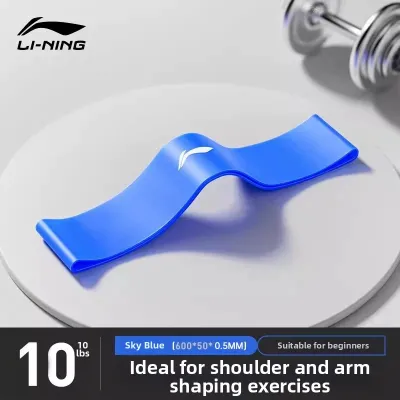
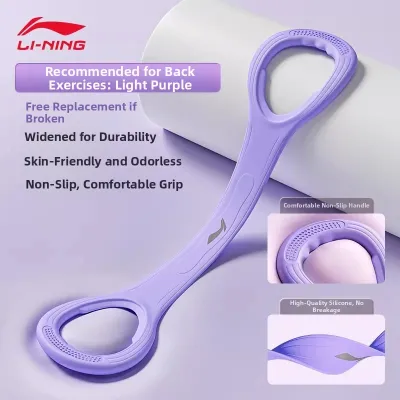
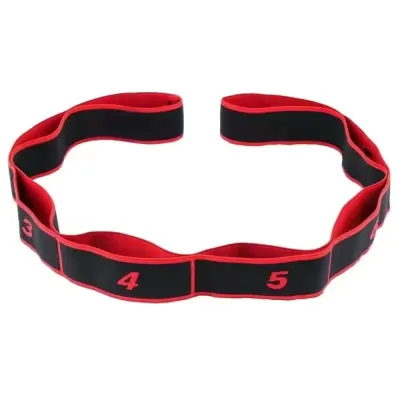
Prices are valid at publication and may change. Please refer to the product page for the latest price.
Understanding the physical and mechanical differences between these two band types will help you select the option that best aligns with your fitness routine and home environment.
Core Design and Functional Differences
To make an informed decision, you must first understand how these two types of bands differ in physical construction and mechanical function. Loop bands are seamless, flat, and continuous loops. They generally come in two variations: short “mini-loops” (typically 10 to 12 inches long) used primarily for hip and glute work, and long “power loops” (typically 41 inches long) used for pull-up assistance, full-body movements, and barbell resistance. Because they lack handles, you can wrap them directly around your limbs, anchors, or gym equipment.
Tube bands are cylindrical rubber tubes with reinforced ends that feature metal D-rings or clips. These clips allow you to attach various accessories, such as foam-grip handles, ankle straps, or door anchors. This modular design makes them highly adaptable, as you can quickly swap attachments or even clip multiple bands onto a single pair of handles to increase the resistance level.
| Feature | Loop Bands | Tube Bands |
|---|---|---|
| Design and Shape | Continuous, flat, seamless rubber or fabric loop | Hollow or solid cylindrical rubber tube with end clips |
| Grip/Handling Method | Direct grip on the band or wrapped around limbs | Detachable foam or plastic handles |
| Typical Accessories | Often none; sometimes door anchors for long loops | Handles, door anchors, ankle straps |
| Primary Resistance Profile | Progressive tension; excels in lateral and linear paths | Progressive tension; excels in rotational and cable paths |
The lack of handles on loop bands is a deliberate design choice that allows the band to lay flat against the skin or clothing. This distributes the pressure across a wider surface area, preventing the band from digging in uncomfortably during lower body movements. Conversely, the handles on tube bands provide a secure, comfortable grip for your hands, which is essential for high-repetition upper body pulling and pushing exercises where holding onto bare rubber would cause friction and discomfort.
When purchasing any band, you must verify the exact resistance levels on the manufacturer’s specification sheet rather than relying on color coding. There is no universal industry standard for resistance band colors; a red band from one brand may offer light resistance, while a red band from another brand could represent heavy tension. Always check the product packaging or online specifications for the exact tension range, which is typically measured in kilograms or pounds at specific elongation percentages.
Matching the Band to Your Workout Routine
Your choice of resistance equipment should directly support the specific exercises and movement patterns in your weekly training program.

Loop Bands for Lower Body and Mobility
Loop bands are highly effective for lower body training because their flat profile keeps them securely in place during dynamic movements. Exercises such as lateral band walks, monster walks, clamshells, and glute bridges require a band that can be placed around the thighs or ankles without rolling up or sliding down. The continuous loop design allows you to step directly into the band, creating immediate lateral tension that forces the gluteus medius and hip abductors to engage throughout the entire range of motion.
Longer loop bands, often referred to as power bands, are also highly effective for compound lower body movements and mobility work. By stepping on one end of a long loop band and wrapping the other end over your neck and shoulders, you can perform resisted good mornings or squats, which place a high demand on the posterior chain. Additionally, these long bands are widely used for assisted pull-ups; choking the band around a pull-up bar and placing your foot or knee in the loop provides a supportive upward force that helps you complete the movement with proper form.
For mobility and physical therapy, loop bands allow for joint distraction techniques that help improve joint capsule mobility. They are also useful for passive stretching, where you can loop the band around the arch of your foot to perform assisted hamstring or calf stretches. The continuous, smooth tension of a flat band provides a predictable level of support, making it a preferred tool for physical therapists and athletes recovering from joint injuries.
Tube Bands for Upper Body and Cable-Style Movements
Tube bands excel at replicating the movement patterns of gym-based cable machines, making them highly effective for upper body hypertrophy and isolation exercises. Exercises like bicep curls, tricep extensions, chest presses, and seated rows require a natural, ergonomic grip that allows your wrists to rotate freely. The rotating foam handles of a tube band set accommodate this natural movement, reducing joint stress on your wrists and elbows during high-repetition sets.
By utilizing a door anchor, you can transform any standard door frame into a multi-functional cable column. Securing the anchor at the top of the door allows you to perform lat pulldowns, tricep pressdowns, and face pulls. Placing the anchor at chest height enables chest flies and standing rows, while securing it at the bottom of the door allows for upward woodchops and bicep curls. This versatility makes tube bands an excellent choice for individuals looking to perform a full-body workout using a single, compact system.
Furthermore, tube bands are highly effective for progressive overload because of their stackable clip system. As your strength increases, you do not need to buy an entirely new set of bands; you can simply clip an additional tube onto your existing handles to increase the resistance. This micro-progression is crucial for continuous muscle growth and strength development in upper body exercises, where small increases in resistance are often required to break through training plateaus.
Comfort, Durability, and Safety Checks
To ensure your home workouts remain safe and effective, you must consider the comfort, durability, and maintenance requirements of your resistance equipment.
One of the primary comfort differences between the two styles involves how the material interacts with your skin. Standard rubber loop bands can sometimes roll up into a tight, thin cord during high-tension leg exercises, which can pinch the skin or pull body hair. If you plan to use loop bands primarily for lower body workouts, fabric-covered loop bands are a highly comfortable alternative. These bands are made from a blend of polyester and latex, which prevents them from rolling or sliding. Tube bands, while highly comfortable for upper body work due to their padded handles, are not designed to be wrapped directly around the thighs or calves and can be awkward to use for lower body movements.
Durability is heavily influenced by environmental factors and how the bands are stored. Most high-quality bands are made from natural latex or synthetic thermoplastic elastomers (TPE). These materials are susceptible to degradation from sweat, body oils, UV light, and extreme temperatures. In tropical climates like Singapore, high humidity and ambient indoor heat can accelerate the dry-rotting process of natural rubber. Sweat contains salts and oils that can break down the chemical structure of latex over time, leading to a loss of elasticity and a brittle texture.
To maximize the lifespan of your bands, perform these routine maintenance steps:
- Clean regularly: After every workout, wipe your bands down with a damp cloth to remove sweat and body oils. Avoid using harsh chemical cleaners, alcohol-based wipes, or dish soaps, as these can dry out the rubber.
- Dry thoroughly: Allow the bands to air dry completely in a shaded, well-ventilated indoor area. Never place them in direct sunlight or near a heat source.
- Store properly: Keep your bands in a cool, dry place away from direct sunlight, such as a dedicated gym bag or drawer. For long-term storage, applying a light dusting of talcum powder or cornstarch to rubber bands can prevent them from sticking together.
Before every workout, you must perform a quick visual and physical safety inspection. Run your fingers along the entire length of the band, stretching it slightly to check for micro-tears, nicks, discoloration, white stress marks, or areas that feel unusually thin or brittle. For tube bands, inspect the connection points where the rubber tube meets the plastic plug and metal clip, as this is the most common point of structural failure. If you detect any sign of structural compromise, immediately stop using the band and discard it. A snapping band can cause severe eye injuries, contusions, or falls, and no amount of wear is safe to ignore. Additionally, never stretch any band beyond its manufacturer-stated maximum elongation limit, which is typically three to four times its resting length.
Final Verdict: How to Choose Your Resistance Band
Selecting the right band for your home gym comes down to analyzing your specific training goals and physical requirements.
Choose Loop Bands if:
- Your primary training focus is lower body strength, glute activation, hip stability, or lateral movement patterns.
- You require a highly portable, lightweight tool for travel, dynamic stretching, or mobility work.
- You want to perform assisted bodyweight exercises, such as pull-ups or dips, where you need a continuous loop to support your body weight.
- You prefer a simple, accessory-free design that can be wrapped directly around limbs or existing gym equipment.
Choose Tube Bands if:
- Your primary goal is upper body muscle building (hypertrophy) and isolation exercises like bicep curls, tricep extensions, and chest presses.
- You want to replicate gym-based cable machine movements at home using a door anchor.
- You prefer the tactile comfort and secure grip of dedicated foam or plastic handles.
- You want a modular system that allows you to easily stack multiple bands to progressively increase resistance.
Neither option may fit if:
- You are looking for maximal, heavy powerlifting resistance. While heavy-duty powerlifting bands exist, achieving maximal strength gains typically requires free weights, barbells, or specialized heavy gym machinery. Resistance bands feature an ascending resistance profile (the tension increases as the band stretches), which does not provide the constant gravitational resistance of free weights.
Verify first if:
- You have a known latex allergy. If so, you must check product labels carefully and choose bands explicitly labeled as latex-free, TPE, or fabric-based.
- You have grip limitations or joint pain in your hands. In these cases, the structured foam handles of tube bands are generally much easier to hold than bare rubber loop bands.
If your budget and home space permit, keeping one set of mini-loop bands for lower body warm-ups and a set of stackable tube bands with a door anchor for upper body training provides the most versatile, space-efficient, and complete home workout setup.
Frequently Asked Questions (FAQ)
Can I combine loop and tube bands in one routine?
Yes, combining both types of bands in a single workout routine is highly effective. You can use mini-loop bands during your warm-up to activate your glutes, hips, and core with lateral walks and clamshells. Once your lower body is primed, you can transition to tube bands secured to a door anchor for your main upper body strength movements, such as standing chest presses, rows, and shoulder presses. This hybrid approach allows you to leverage the mechanical advantages of each band design for a highly effective full-body home workout.
How do I determine the right resistance level?
To choose the right resistance level, you must match the band’s tension to the specific muscle group and exercise you are performing. Smaller muscle groups, such as those involved in shoulder external rotation or bicep curls, require lighter bands to maintain proper form. Larger muscle groups, such as the glutes and quadriceps used in squats and leg presses, require significantly heavier bands. Purchasing a multi-pack that includes light, medium, and heavy options is highly recommended, as it allows you to select the appropriate tension for each movement and apply progressive overload as you grow stronger.
Are fabric loop bands better than rubber for leg workouts?
Fabric loop bands are generally superior to rubber bands for lower body exercises because of their comfort and stability. The blend of polyester and latex creates a wider, thicker band that does not roll up, slide down, or pinch the skin during movements like squats and hip thrusts. However, fabric bands are typically less stretchy and offer a more rigid resistance profile than pure rubber, making them highly specialized for glute and leg work. Rubber loop bands remain the more versatile choice if you also plan to use them for upper body stretching, mobility work, or pull-up assistance.
Community discussion
Share your experience or ask a question. Comments are reviewed before publication.