
Selecting the right gym elastic band for recovery depends on your targeted muscle groups, the specific mobility exercises you perform, and how you prefer to grip or anchor the band. Loop bands feature a continuous, seamless design that excels at lower-body activation and joint stabilization. Tube bands are cylindrical cords equipped with handles or carabiners, making them ideal for upper-body pulling motions and shoulder rehabilitation. Flat therapy bands are long, thin, flat strips without handles, providing highly adjustable, gentle tension for precise joint mobilization and clinical-style stretching. By matching the physical structure of these bands to your active recovery goals, you can safely restore range of motion and support muscle repair.
Understanding the Core Differences in Band Design
To make an informed choice, you must understand the physical construction of each band type. Gym elastic bands are not interchangeable; their shapes dictate how tension is distributed and how your body interacts with the resistance.
Loop bands are continuous, flat, seamless rings that distribute tension uniformly across their entire circumference. This design allows you to wrap them directly around your limbs or ankles without tying knots. They are also highly effective for anchoring to heavy gym equipment, such as power racks, to provide assisted movement.
Products mentioned in this guide
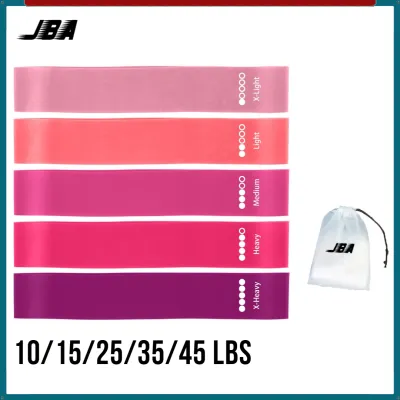
![[RECEIVE IN 3 DAYS] Looped Resistance Exercise Yoga Bands](https://img.lazcdn.com/g/p/478c71011ff76f1dc2636e7c42012a8d.jpg_400x400q80.jpg_.webp)
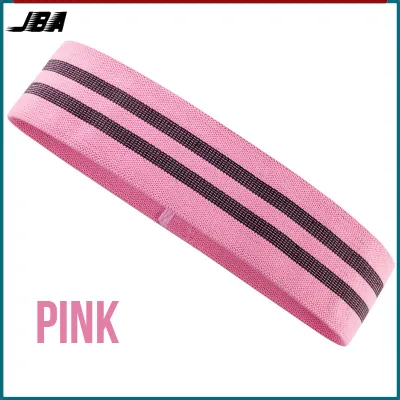
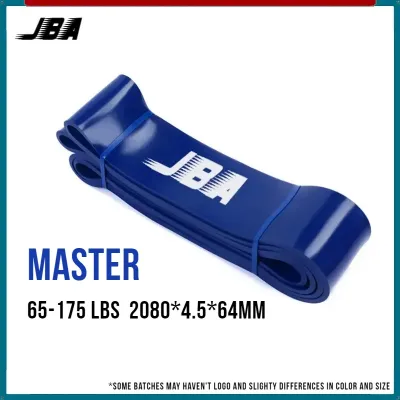
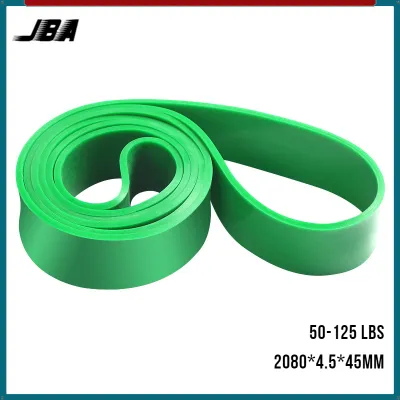
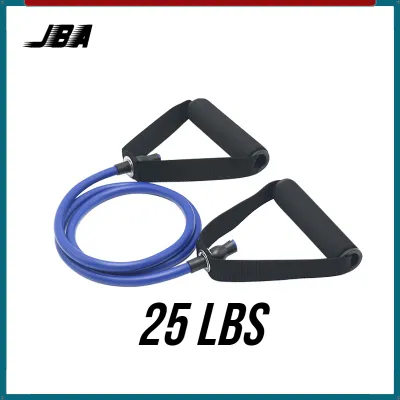
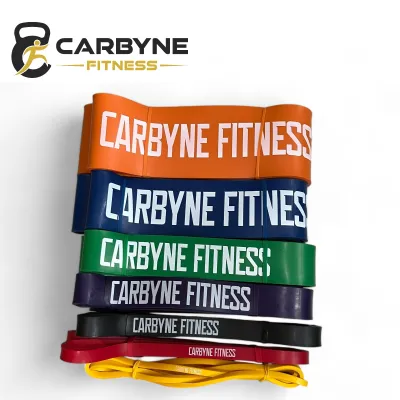
Prices are valid at publication and may change. Please refer to the product page for the latest price.
Tube bands consist of cylindrical, hollow cords made of rubber or latex. They typically feature carabiners at each end, allowing you to clip on foam-padded handles, ankle straps, or door anchors. The cylindrical shape creates a progressive tension profile. Because they rely on handles, tube bands are optimized for traditional pulling and pushing motions.
Flat therapy bands are wide, thin, open-ended strips of elastic material without handles, loops, or clips. You customize the length and tension by wrapping the band around your hands, tying it into a temporary loop, or folding it. This flat, low-profile design distributes pressure evenly over a wide surface area, preventing pinching or rolling.
Matching Band Types to Specific Recovery and Mobility Goals
Your recovery routine should dictate the style of gym elastic band you use. Different muscle groups and joint structures require specific angles of pull and precise tension control to recover safely.

For lower-body activation and hip mobility, loop bands are highly effective. Placing a short loop band above your knees or around your ankles provides continuous lateral resistance during glute bridges, lateral walks, and clamshells. This constant tension forces the hip abductors to fire, stabilizing the pelvis. Additionally, longer loop bands can be anchored to a sturdy post to assist with deep hamstring stretches or hip distraction techniques.
For upper-body isolation and shoulder rehabilitation, tube bands offer excellent ergonomics. The shoulder joint is highly mobile and prone to instability, requiring precise, controlled movements. Tube bands with comfortable handles allow you to perform internal and external rotator cuff rotations, face pulls, and chest expansions with a secure grip. The handles prevent your hands from slipping, which is crucial for maintaining a consistent path of motion.
For precision joint range of motion (ROM) and delicate physical therapy, flat therapy bands are the preferred tool. When recovering from an injury, aggressive resistance can cause muscle guarding. Flat therapy bands allow you to apply exceptionally light, micro-targeted tension. You can wrap the wide band around the arch of your foot for calf stretches, or drape it over your shoulder for gentle downward traction. The lack of handles means you can grip the band at any point, instantly adjusting the working length to match your pain-free range of motion.
Key Selection Criteria for Gym Recovery
When shopping for a gym elastic band specifically for recovery, you should evaluate several practical factors to ensure the tool meets your physical needs.
Resistance level identification is the first step. Unlike strength-training bands, recovery bands should prioritize lighter, highly controllable tension. Be aware that color-coding systems are not standardized across the fitness industry; a red band from one manufacturer might represent light tension, while from another, it could represent heavy resistance. Always check the manufacturer’s specifications for printed weight equivalent metrics, usually measured in kilograms or pounds at specific elongation percentages.
Material composition is another critical consideration, especially for direct skin contact. Natural latex offers excellent elasticity and durability, but it can trigger allergic reactions. If you have a latex allergy, look for synthetic alternatives such as Thermoplastic Elastomer (TPE) or fabric-blend elastic bands. TPE bands are hypoallergenic and odor-free, though they may have a slightly different stretch profile and lower maximum elongation limit than natural latex.
You must also consider the physical dimensions and stretch range of the band. A band that is too short will limit your range of motion and reach its maximum stretch capacity too quickly, increasing the risk of snapping. For general mobility work, look for flat therapy bands that are at least 1.5 meters long, or loop bands with a circumference that matches your body size. Verify the manufacturer’s recommended maximum safe elongation limit, which is typically three to four times the resting length.
Finally, check accessory compatibility to expand your recovery options. If you plan to perform shoulder rehab or chest stretches at home, a secure door anchor is essential. Ensure the tube bands you select have heavy-duty carabiners and reinforced stitching, and verify that any included ankle straps or door attachments are padded to protect both your body and your home environment.
Safety Checks and Maintenance for Elastic Bands
Because gym elastic bands store significant kinetic energy when stretched, proper maintenance and safety checks are vital to prevent sudden failures and snap-back injuries.
Before every recovery session, perform a thorough visual and tactile inspection of your bands. Hold the band up to the light and stretch it slightly to check for micro-tears, small punctures, nicks along the edges, or stress whitening. Run your fingers along the material to feel for dry, brittle patches or sticky residue, which indicate chemical degradation. If you spot any of these warning signs, discard the band immediately.
Environmental factors can rapidly degrade elastic materials. Avoid exposing your bands to direct sunlight, extreme heat, or freezing temperatures, as UV rays and temperature fluctuations break down latex and TPE structures. Never anchor your bands around sharp, abrasive, or rough surfaces, such as threaded barbell sleeves or sharp metal door hinges. If you must anchor to a textured surface, wrap a protective towel or sleeve around the anchor point first.
Proper cleaning protocols will significantly extend the lifespan of your gym elastic bands. After a workout, wipe the bands down with a damp, soft cloth using mild soap and warm water. Avoid harsh chemical cleaners, alcohol-based sanitizers, or abrasive sponges, which strip moisture from the material and cause premature cracking. Allow the bands to air-dry completely in a shaded, well-ventilated area. Once dry, you can apply a light dusting of cornstarch to latex bands to prevent them from sticking together during storage.
Recognize clear stop conditions during your exercises. If a band begins to make a squeaking or cracking sound, or if you notice a sudden drop in resistance, stop the movement immediately. Never stretch a band beyond its specified maximum elongation limit, and never release a stretched band suddenly, as this can cause severe injuries.
How to Build a Condition-Based Recovery Shortlist
To select the ideal gym elastic band for your routine, use this conditional framework based on your current physical condition, recovery goals, and training environment.
Choose loop bands if your primary focus is on lower-body joint stabilization, glute activation, or hip mobility. They are the most efficient tool for wrapping around your legs without slipping, and they easily loop around heavy gym racks for assisted stretching. If you are recovering from a lower-body injury and need to rebuild lateral hip strength, a set of progressive loop bands is highly recommended.
Choose tube bands if you require ergonomic handles for upper-body pulling motions, rotator cuff rehabilitation, or chest mobility. The secure grip provided by foam handles makes it easier to maintain proper form during dynamic movements. This option is ideal if you have limited grip strength or find it uncomfortable to hold raw rubber bands directly.
Choose flat therapy bands if you are in the early stages of clinical rehabilitation, require exceptionally gentle, micro-adjustable tension, or need to distribute pressure evenly over a sensitive joint. These bands are highly portable and allow you to customize your grip and length for delicate, slow-tempo stretching.
Before making your final selection, verify your material sensitivities to rule out latex allergies. Check the manufacturer’s specifications for exact resistance metrics, and ensure your training space has safe, smooth anchor points that match your chosen band style.
Frequently Asked Questions (FAQ)
Can I use the same gym elastic band for both heavy lifting and recovery?
Using the same band for both high-intensity strength training and delicate recovery is generally not recommended. Heavy lifting subjects the elastic material to extreme tension and rapid stretching, which accelerates material fatigue and increases the risk of micro-tears. Furthermore, the high resistance levels required to challenge large muscle groups during lifting are far too intense for safe joint mobilization and rehabilitation. For recovery work, you need lighter, highly controllable tension that allows for a full, unforced range of motion. It is safer and more effective to maintain a dedicated set of lighter, low-tension bands reserved exclusively for mobility and rehabilitation.
How do I accurately measure the resistance of an unmarked flat therapy band?
If your flat therapy band lacks printed resistance markings, you should avoid guessing the tension, as excessive resistance can stall your recovery. To estimate the tension safely, you can perform a basic pull test using a digital luggage scale. Securely anchor one end of the band to a smooth, stable post and attach the other end to the hook of the luggage scale. Slowly pull the scale horizontally until the band reaches a specific, measured elongation—such as double its resting length—and read the weight metric on the display. Always perform this test slowly and within safe limits, wearing protective eyewear, and refer to the manufacturer’s general guidelines for the maximum safe elongation of that specific material type.
Community discussion
Share your experience or ask a question. Comments are reviewed before publication.