
Choosing the right pool float depends entirely on your primary activity—whether you want to lie back and read, actively paddle and play games, share a large platform with family, or enjoy versatile, easy-to-mount recreation. The four main styles—loungers, tubes, rafts, and rings—each offer distinct advantages in stability, maneuverability, and comfort. Selecting the ideal option requires matching your pool’s physical space and your activity level to the float’s design and material specifications.
By matching these designs to your pool’s dimensions and your intended use, you can avoid common frustrations like tipping over, drifting constantly, or dealing with rapid air leaks.
Quick Diagnostic: Which Pool Float Matches Your Main Activity?
To find the right pool float, consider how you plan to spend your time in the water. Different shapes cater to distinct levels of physical activity and social interaction. For instance, a solo lounger will perform poorly in a lively pool game, while a compact ring lacks the support needed for hours of quiet relaxation.
Products mentioned in this guide
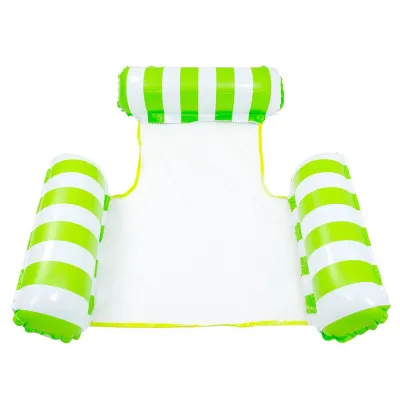
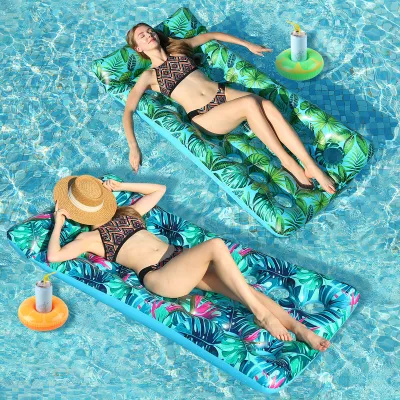
![[SG Stock] WOODLES Giant Float Inflatable Pizza Unicorn Duck Flamingo Rainbow Swan Lounge Hammock Tank Spray Gun Manual Electric Pump Swimming Pool Beach Kids Baby Adult★Local Shipping & Warranty](https://img.lazcdn.com/g/p/ec9d8f95423cbef669f666da32c7aef8.jpg_400x400q80.jpg_.webp)
![[SG Stock] Adult Inflatable Giant Party Float Floatie Swimming Pool Swim Fun](https://img.lazcdn.com/g/p/88b2d5abc4276afcd53c5663d49e1487.jpg_400x400q80.jpg_.webp)
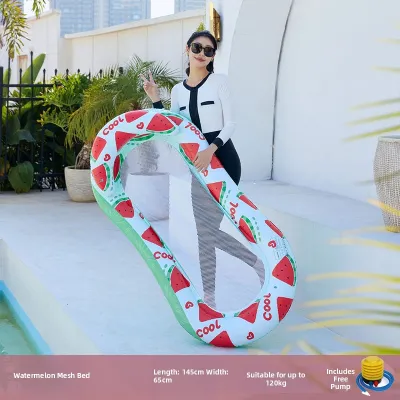
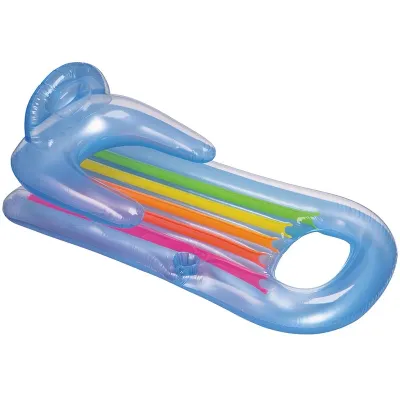
Prices are valid at publication and may change. Please refer to the product page for the latest price.
The following matrix maps common pool scenarios to the most suitable float types, highlighting key decision triggers and space requirements:
| Primary Activity | Recommended Float Type | Key Decision Trigger | Space Requirement | Typical Price Range |
|---|---|---|---|---|
| Solo Relaxation & Sunbathing | Lounger | Built-in headrest, reclined posture, dry experience | High (requires wide turning radius) | S$30 to S$80 |
| Active Games & Socializing | Tube | Open center, grab handles, high mobility | Low to Medium (easy to maneuver) | S$15 to S$40 |
| Shared Lounging & Family Play | Raft | Large flat surface, multi-person capacity | Very High (best for large pools) | S$50 to S$120 |
| Versatile Play & Quick Dips | Ring | Lightweight, easy to slip on/off, compact | Low (fits small plunge pools) | S$5 to S$20 |
While these categories are distinct, some overlapping use cases exist. For example, a heavy-duty tube with a mesh bottom can double as a light lounger for solo relaxation, while a small raft can host a single sunbather if pool space permits. However, choosing a float tailored to your primary activity ensures the best balance of comfort and safety.
Evaluating Your Primary Pool Scenario
Analyzing your specific water activities and physical requirements is the most reliable way to narrow down your choices. Each float style is engineered with specific ergonomics and buoyancy characteristics in mind.

Solo Relaxation and Sunbathing
If your primary goal is to unwind with a book or soak up the sun, a lounger is the most suitable choice. These floats keep your body in a reclined, comfortable position, often keeping you mostly dry and elevated above the water.
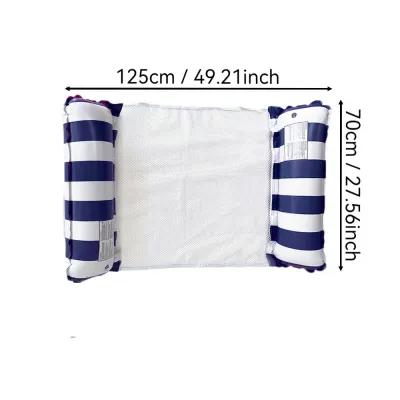
Look for ergonomic features like contoured backrests, integrated headrests, armrests, and built-in cup holders. Some designs incorporate a mesh fabric seat suspended within an inflatable outer ring, allowing a small amount of water to filter through to keep you cool while maintaining body support.
However, loungers trade mobility for stability. Their elongated shapes provide excellent longitudinal stability in calm water, making them highly resistant to tipping. Conversely, their length makes them difficult to steer or paddle by hand, meaning you will likely drift with the wind or pool currents.
Space requirements are also critical. A full-sized lounger can easily dominate a small backyard plunge pool or a crowded condominium swimming pool. Ensure your pool has sufficient clearance to accommodate the float’s length without blocking swim lanes or crowding others.
Active Water Games and Socializing
For active play, pool games, or socializing, tubes and rings offer excellent freedom of movement. These circular designs allow you to sit upright, change directions quickly, and interact easily with others.
Because your legs dangle directly into the water, you can easily paddle, kick, and steer yourself around the pool. This makes them excellent for water volleyball, tag, or navigating around other swimmers in a busy pool.
Active use subjects a float to significant physical stress, including frequent mounting, dismounting, and sudden impacts. To ensure durability, look for models constructed from thick vinyl with reinforced, wide seams.
Design variations affect performance. Tubes with heavy-duty molded handles provide secure grip points during active games. Open-center designs allow you to slip through the middle to cool off quickly, while closed-center or mesh-bottom tubes offer a more secure, chair-like seat for casual drifting.
Shared Lounging and Family Play
When multiple family members or friends want to share the same floating platform, a raft is the most practical option. Rafts provide a large, flat surface area designed to accommodate more than one person simultaneously.
Surface area and weight distribution are critical for multi-person rafts. To prevent the float from tipping or folding when occupants move, look for rafts with multiple independent air chambers. This design ensures that even if one chamber loses pressure, the remaining chambers maintain structural integrity.
Boarding stability is another key factor, especially for children. Large rafts can be challenging to climb onto from deep water. Choosing a model with a low-profile edge, integrated grab ropes, or sturdy boarding handles makes it much easier to mount the float safely without flipping it over.
Before purchasing a large raft, consider storage and transport limitations. Due to their massive surface area, rafts have a large deflated footprint and require a high-volume pump to inflate. Ensure you have adequate storage space and the proper inflation equipment before bringing one home.
Essential Specifications to Verify on the Label
Before purchasing any pool float, verify the physical and safety specifications listed on the packaging or online listing. Relying solely on visual appeal can lead to premature product failure or safety hazards.
- Weight Capacity and Occupant Limits: Always check the manufacturer-stated maximum weight capacity. Exceeding this limit compromises buoyancy, increases the risk of tipping, and places excessive stress on the seams, which can lead to sudden deflation.
- Material Thickness: Look for the material thickness, which is typically measured in gauge or millimeters (mm). For casual pool use, a thickness of 0.20 mm to 0.25 mm is standard. For active play, family use, or environments with rough pool coping, look for heavy-duty vinyl that is 0.30 mm or thicker to resist punctures and abrasions.
- Seam Construction: Inspect the seams of the float. High-quality floats utilize radio-frequency (RF) welding or heat-sealing to fuse the vinyl panels together. These welded seams are significantly stronger and more resistant to splitting under pressure than simple glued seams.
- Valve Types: The type of valve determines how quickly you can inflate and deflate the float, as well as how well it retains air. Standard pinch valves are acceptable for small rings but tedious for large rafts. Look for wide-mouth valves (such as Boston valves) that allow rapid airflow. Additionally, verify if the valve features a built-in safety check mechanism to prevent air from escaping if the outer cap accidentally pops open.
Safe Usage and Storage Conditions
Proper care and safe usage practices are vital to extend the lifespan of your pool float and ensure water safety. Even durable floats can degrade quickly if subjected to improper inflation or harsh environmental conditions.
- Inflation Limits: Avoid the temptation to over-inflate your pool float to make it completely rigid. Air expands when heated by direct sunlight, which can cause the internal pressure to rise rapidly and rupture the seams. Inflate the float until it is firm but still yields slightly when pressed firmly with your hand.
- Supervision and Safety: No pool float is a life-saving device, and they should never be used as a substitute for swimming ability or active supervision. Children must always be supervised by an adult within arm's reach when using any floatation device. For non-swimmers, pool floats should only be used in conjunction with a properly fitted, certified personal flotation device (PFD).
- Rinsing and Drying: Chlorine, salt water, and sunscreen chemicals can degrade vinyl over time, making it brittle and prone to cracking. After every use, rinse the float thoroughly with clean tap water to remove chemical residues. Allow the float to dry completely in a shaded area before folding it; storing a damp float encourages mold and mildew growth, which can permanently damage the material.
- Storage Environment: Store deflated floats in a cool, dry place away from direct sunlight and sharp objects. Avoid storing them in hot outdoor sheds or balconies, as extreme heat can degrade the plasticizers in the vinyl, causing the material to become sticky, brittle, or prone to sticking together.
Frequently Asked Questions (FAQ)
Can I use a standard pool float in the ocean or a lake?
Standard pool floats are designed specifically for calm, controlled water environments and should not be used in open water such as oceans or lakes. Because they are lightweight and have a high profile, pool floats are highly susceptible to wind and water currents, which can quickly sweep a user far from the shore. Furthermore, pool-grade vinyl is not designed to withstand the abrasive sand, sharp rocks, shells, or submerged branches commonly found in natural bodies of water, greatly increasing the risk of a sudden puncture.
How do I know if a pool float is properly inflated without a gauge?
You can easily verify proper inflation using simple visual and tactile checks. A correctly inflated float should hold its intended shape without sagging, deep wrinkling, or folding when you sit or lie on it. When you press your thumb firmly into the main chamber, the material should yield slightly rather than feeling rock-hard or drum-tight. If you notice the seams pulling tight, bulging outward, or showing signs of stress, immediately release a small amount of air to accommodate temperature-induced expansion from the sun.
Community discussion
Share your experience or ask a question. Comments are reviewed before publication.