
Choosing between a manual and an electric football pump depends primarily on how often you play, how many balls you need to inflate at once, and where you plan to use the tool. Manual pumps are highly portable, mechanically reliable, and ideal for occasional players or emergency sideline top-ups. Electric pumps offer rapid, effortless inflation and precise pressure control, making them the preferred choice for coaches, schools, and clubs managing multiple balls. By matching the pump’s mechanical capabilities to your specific playing routine, you can ensure your footballs are always inflated to the correct pressure without unnecessary physical effort or equipment failure.
To help you decide which type fits your routine, consider this quick decision framework:
- Choose a manual pump if: You play occasionally, carry your gear in a compact backpack, need a budget-friendly option, or play on remote pitches where charging ports are unavailable.
- Choose an electric pump if: You manage training sessions for a team, regularly inflate five or more balls at once, require highly consistent pressure readings, or want to save physical energy before a match.
While manual pumps excel in portability and mechanical simplicity, they require physical exertion and time. Electric pumps offer speed and convenience but require regular battery maintenance and are susceptible to electronic wear over time.
Products mentioned in this guide
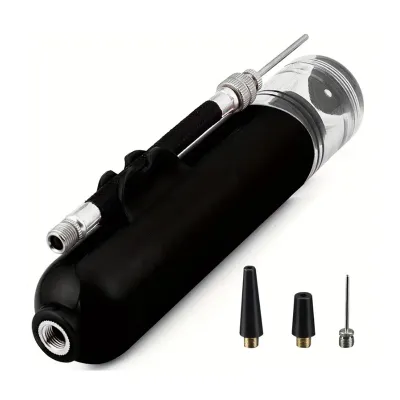
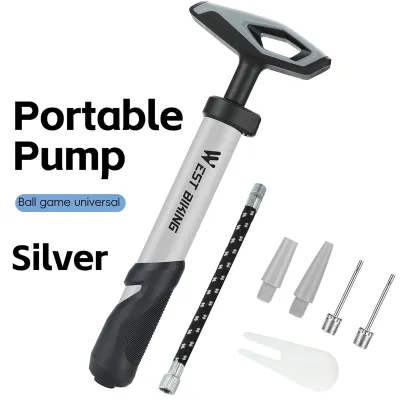
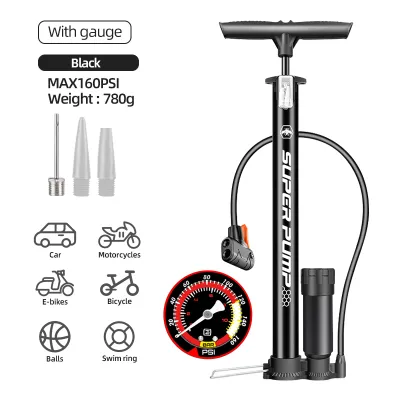
![[LOCAL SELLER] ROCKBROS A320 120PSI Bicycle Air Pump Aluminum Alloy Bike Mini Pump for Balloon Football Basketball Bicycle](https://img.lazcdn.com/g/p/4cdf88dce9570556e1ae5796568391e5.png_400x400q80.png_.webp)
Prices are valid at publication and may change. Please refer to the product page for the latest price.
Evaluating Manual Football Pumps
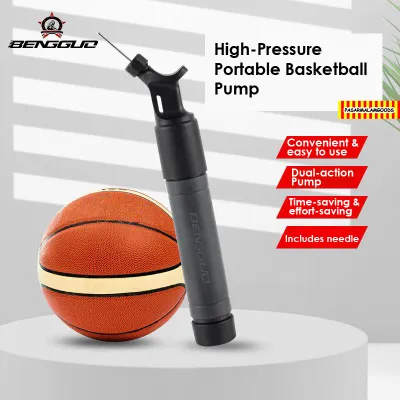
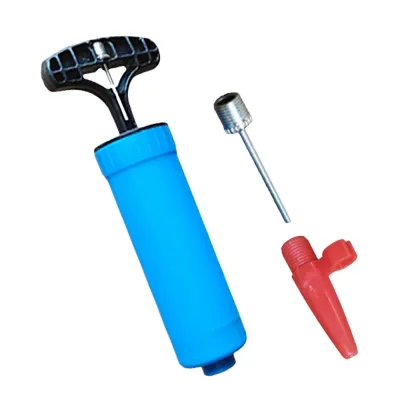
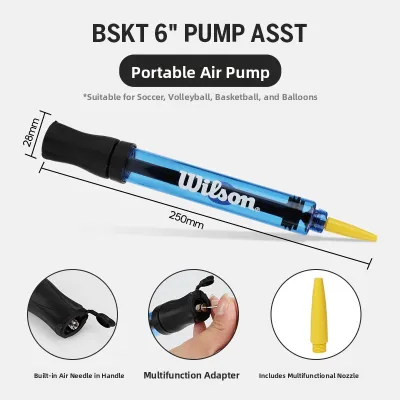
Manual football pumps are the traditional choice for players who value simplicity and reliability. These hand-operated devices are ideal for casual players who only need to top up a single ball before a weekend match. Because they do not rely on batteries or electrical outlets, they can sit in a sports bag for months and still function perfectly the moment they are needed. This makes them excellent for emergency sideline top-ups or for carrying to public pitches where power sources are non-existent.
When evaluating manual pumps, it is important to check the specific mechanical design on the product packaging. Dual-action pumps are generally more efficient than single-action models because they compress and push air into the ball on both the push and pull strokes. This effectively halves the time and effort required to inflate a flat ball. Single-action pumps only deliver air on the downward push, which requires more strokes and can prolong the inflation process.
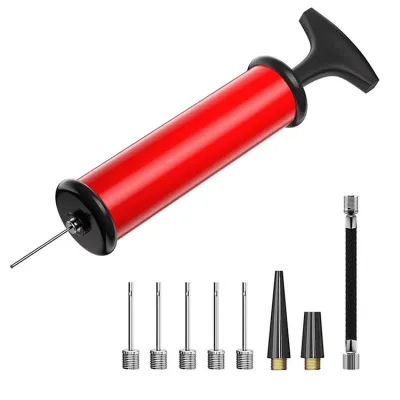
Another critical feature to verify is the hose design. Direct-mount manual pumps, where the inflation needle screws directly into the rigid plastic pump body, require a very steady hand during use. Any sudden movement or awkward angle can easily bend the needle or damage the ball’s valve. Models featuring a flexible extension hose isolate the movement of the pump body from the needle, significantly reducing lateral stress on the valve and extending the lifespan of both the needle and the football.
Pressure gauge integration is also a key consideration for manual pumps. Some models feature an inline dial gauge, while others have no pressure indicator at all. If you choose a manual pump without a gauge, you will need to rely on a separate pressure testing tool to ensure the ball is safe to play. For those who play regularly, investing in a manual pump with a clear, readable inline gauge helps prevent over-inflation and ensures the ball meets standard match play specifications.
Evaluating Electric Football Pumps
Electric football pumps have become increasingly popular among coaches, school sports coordinators, and dedicated players who manage multiple balls. These battery-powered devices eliminate the physical effort of manual pumping, allowing you to inflate a dozen footballs in a fraction of the time. For a coach preparing for a training session on a hot afternoon, saving the physical energy normally spent pumping up a bag of flat balls is a significant practical advantage.

When shopping for an electric pump, the battery specification is one of the most important factors to check. Look for models with clear battery life indicators, such as LED lights or digital screens, so you are never caught with a dead pump at the pitch. Many modern electric pumps utilize lithium-ion batteries, which offer reliable power but require regular charging cycles. It is also useful to check the inflation speed, typically measured in liters of air per minute, to understand how quickly the pump can bring a flat ball to match pressure.
Auto-shutoff functionality is a major benefit of electric pumps. This feature allows you to preset your desired pressure level (measured in PSI or bar). Once the pump detects that the ball has reached this target, it automatically stops inflating. This prevents over-inflation, which can warp the ball’s shape or damage the internal bladder. Additionally, consider the operational noise level of the pump, as some high-powered motors can be quite loud when used in enclosed spaces like changing rooms or home garages.
Reliability and maintenance for electric pumps differ significantly from manual options. Because they contain electronic components and motors, they must be protected from moisture, dust, and extreme heat. In humid climates, storing an electric pump in a damp equipment shed or leaving it in a hot car boot can accelerate battery degradation and damage the internal circuitry. Regular charging, even during the off-season, is necessary to keep the battery healthy and prevent complete discharge.
Comparing Performance and Practicality
To choose the right tool for your gear bag, it helps to compare how manual and electric pumps perform across key practical dimensions. The table below outlines the primary differences in daily operation:
| Feature | Manual Football Pump | Electric Football Pump |
|---|---|---|
| Portability | High; lightweight and fits easily into any boot bag | Moderate; heavier due to battery and motor components |
| Inflation Speed | Slow to moderate; depends entirely on physical effort | Fast; typically inflates a ball in under a minute |
| Power Source | Manual physical effort; no batteries or cables required | Rechargeable lithium-ion battery or plug-in power |
| Pressure Accuracy | Variable; requires manual monitoring or external gauge | High; often features digital sensors and auto-shutoff |
| Maintenance | Minimal; occasional lubrication of the piston seal | Moderate; requires regular battery charging and dry storage |
While electric pumps often feature built-in digital pressure sensors, it is important to verify their accuracy. Over time, digital sensors can drift due to temperature changes, physical drops, or battery depletion. To ensure your footballs are inflated to exact match standards, you can cross-reference the pump’s reading with a standalone digital pressure gauge. Simply plug the standalone gauge into the inflated ball to verify if the pump’s reading matches the actual internal pressure.
Durability and build quality are also essential when comparing these two types. For manual pumps, look for sturdy aluminum alloy barrels rather than thin, brittle plastics that can crack under pressure. For electric pumps, check the quality of the casing and the hose connections. Reinforced rubber hoses with brass thread connectors are far more durable than plastic push-fit connectors, which can wear down and leak air after repeated use.
Matching the Pump to Your Specific Football Gear
Before purchasing any pump, you must ensure it is compatible with the specific types of footballs you play with. Most standard footballs use a classic bladder valve that accepts a standard metal inflation needle. However, specialized balls—such as low-rebound futsal balls, beach soccer balls, or lightweight foam training balls—may have unique valve depths or require specialized plastic adapters. Always check the pump’s nozzle attachment options to ensure it includes the correct needle types for your gear.
Every quality football has its recommended inflation pressure printed directly onto the casing, usually located right next to the valve panel. This pressure is typically expressed in pounds per square inch (PSI) or bar. For example, a standard size 5 match football usually requires a pressure between 8.5 and 15.6 PSI (0.6 to 1.1 bar). Operating outside these recommended limits can severely affect the ball’s flight trajectory, bounce consistency, and overall durability.
To prevent damage to your football, always stop inflating immediately if you notice the panels stretching excessively or if the ball feels rock-hard to the touch. Over-inflation puts immense stress on the synthetic leather panels and the stitched or thermally bonded seams, which can lead to permanent warping or structural failure. Using a pump with a reliable gauge—or checking the pressure frequently with a manual gauge—is the only way to guarantee you stay within safe limits and protect your investment in quality sports gear.
Frequently Asked Questions (FAQ)
Can I use a standard bicycle pump for a football?
Yes, you can use a standard bicycle pump to inflate a football, provided you use a compatible ball needle adapter. Most bicycle pumps are designed for Presta or Schrader valves found on bike tires, so they cannot connect directly to a football valve without this adapter. Additionally, you must exercise caution when using a bicycle pump with a built-in pressure gauge. Bicycle pumps are designed for high-pressure, low-volume inflation (often up to 100 PSI or more), meaning their gauges may not display low pressures like 8 to 12 PSI with high accuracy.
How do I know if my football pump's pressure gauge is accurate?
You can verify the accuracy of your football pump’s gauge by comparing its reading with a dedicated, standalone digital pressure gauge. Insert the standalone gauge into a fully inflated ball and compare the reading to what your pump displayed. If the readings differ significantly, your pump’s gauge may be miscalibrated. You should also inspect the pump’s gauge for physical damage, such as a cracked dial face or a sticking needle, and watch for erratic pressure jumps during the inflation process, which indicate internal wear.
What is the best way to store a football pump to prolong its life?
To prolong the life of a manual pump, keep the inflation needles clean, dry, and free of dirt. Periodically applying a drop of silicone oil or glycerin to the pump’s piston shaft helps maintain a smooth action and keeps the internal rubber seals from drying out. For electric pumps, store them in a cool, dry place away from direct sunlight and high humidity to protect the battery and electronic circuits. Avoid storing electric pumps with a completely flat battery; keeping the charge level around 50% to 70% during long periods of non-use helps maintain overall battery health.
Community discussion
Share your experience or ask a question. Comments are reviewed before publication.