
Selecting the ideal headgear brand for your martial arts training is not a matter of finding a single, universally superior product. Instead, the right choice depends on your specific discipline—whether it is boxing, mixed martial arts (MMA), taekwondo, or karate. Each martial art subjects the head to distinct impact types, from heavy, repetitive blunt-force punches to high-velocity, snapping kicks. Consequently, headgear brands design their products with specialized foam densities, coverage profiles, and fastening systems tailored to these unique demands.
To make an informed decision, you must balance protection, visibility, and compliance with the rules of your sport’s governing body. Wearing the wrong headgear can not only impair your performance and vision but also expose you to avoidable injuries or disqualify you from official competitions. By understanding the design philosophies of leading brands and matching them to your discipline, you can select gear that offers optimal safety and fits seamlessly into your training regimen.
Core Protection and Rule Compliance by Martial Art
Every martial art discipline presents a unique physical environment that dictates how headgear must perform. In boxing, the primary threat comes from repetitive, heavy hand strikes that cause rotational and direct blunt-force trauma. To mitigate this, boxing headgear features thick, multi-layered foam padding concentrated around the forehead, temples, and cheeks. Conversely, taekwondo and karate involve rapid, snapping kicks where the foot or heel strikes at high speed. Headgear for these arts prioritizes lightweight, shock-absorbing materials that allow fast head movement and maximum peripheral vision so you can see kicks coming from extreme angles.
Products mentioned in this guide
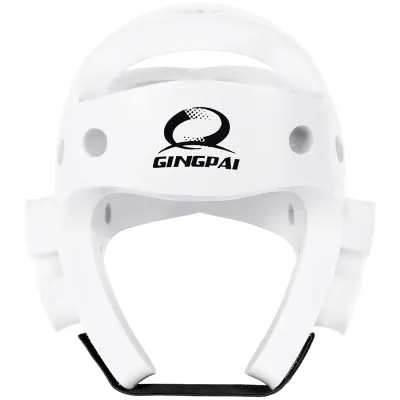
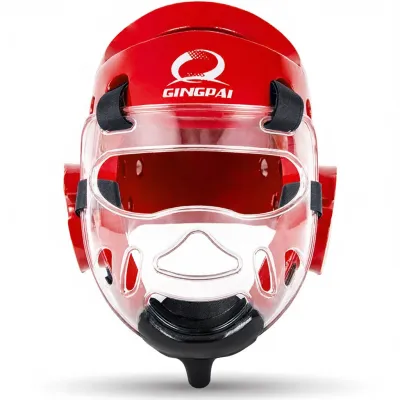
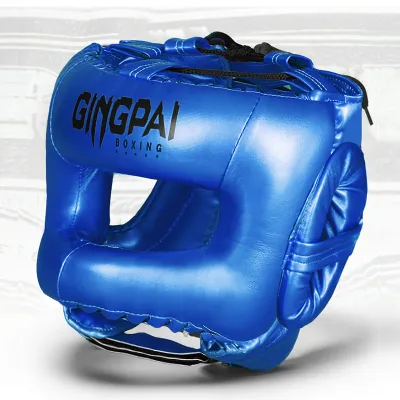
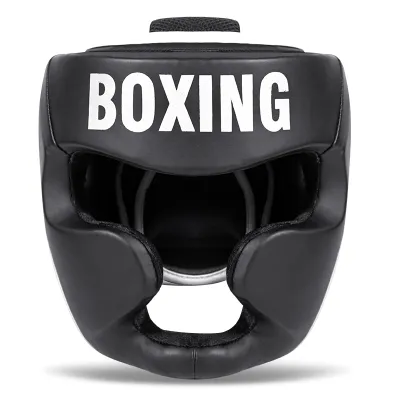
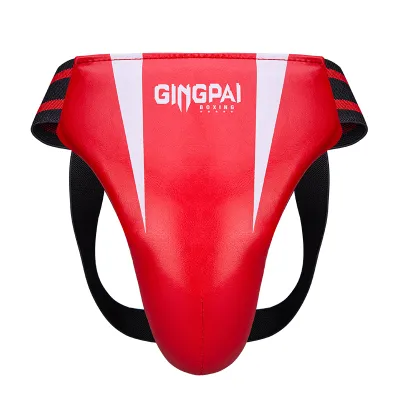
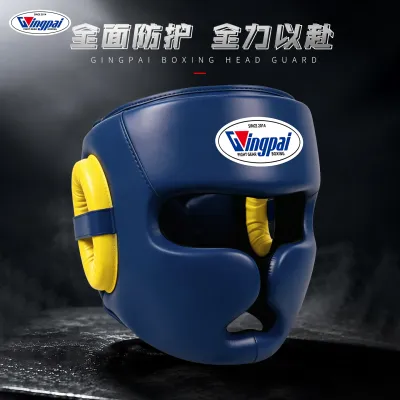
Prices are valid at publication and may change. Please refer to the product page for the latest price.
Before purchasing any protective gear, you must distinguish between training or sparring gear and competition-legal gear. Sparring headgear is designed for daily gym use, prioritizing maximum coverage and durability over strict weight or aesthetic rules. Competition-legal gear, however, must adhere to rigid specifications set by national and international governing bodies. These organizations regulate everything from the materials used to the exact surface area of the padding, ensuring a level playing field and standardized safety levels.
To avoid costly mistakes, always verify the current homologation and approval standards of your specific sport’s federation. For example, if you plan to compete in amateur boxing, your headgear must comply with local or international boxing association rules, which often mandate specific stamps or certifications. Similarly, karate and taekwondo competitors must check for official approval marks from organizations like the World Karate Federation (WKF) or World Taekwondo (WT). Never rely solely on retail product descriptions; always cross-reference the manufacturer’s specifications with the latest official rulebooks of your association.
Continuous Striking and Heavy Contact: Boxing
Boxing requires headgear that can withstand continuous, high-impact punches over multiple rounds. Because the hands are the sole weapons, the head is subjected to direct frontal impacts, hooks from the side, and uppercuts from below. The design of boxing headgear reflects this concentrated striking pattern, focusing heavily on cushioning the face and skull from repeated blunt force.

Full-Face vs. Open-Face Designs
When selecting boxing headgear, the first major decision is choosing between a full-face design and an open-face design. Full-face headgear features prominent cheek protectors and sometimes a padded nose bar or chin guard. This style is designed for hard sparring, offering maximum protection against facial lacerations, broken noses, and direct bruising to the cheekbones. However, this extensive coverage comes at the cost of peripheral vision and ventilation, making it harder to spot incoming low punches or hooks.
Open-face headgear, on the other hand, eliminates the cheek and nose guards, leaving the face exposed while protecting the temples, forehead, and the back of the head. This design is highly favored for technical sparring and bag work because it provides an unobstructed field of vision, allowing you to see punches originating from outside your direct line of sight. It also keeps you cooler during intense sessions, though it leaves your nose, eyes, and mouth vulnerable to direct strikes. Your choice should align with your sparring intensity and how much you value visibility over physical facial protection.
Brand Design Philosophies and Foam Layering
Established boxing brands approach headgear construction with distinct philosophies regarding weight distribution, closure systems, and padding technology. High-end brands often utilize highly engineered, multi-layered foam systems that combine high-density closed-cell foam for shock dispersion with softer open-cell foam for comfort against the skin. This combination ensures that the force of a heavy punch is distributed across a wider surface area, reducing the localized impact on your skull.
Closure mechanisms also vary significantly between brands and models. Lace-up closure systems, typically found on traditional or professional-grade headgear, offer a highly customizable and secure fit that conforms precisely to the shape of your head. However, they require assistance from a coach or training partner to tie securely. Hook-and-loop (Velcro) strap systems are much more convenient, allowing you to put on and adjust the headgear independently, though they may shift slightly more under heavy impact over time. Before purchasing, always check the manufacturer’s official specifications regarding the weight of the headgear and the exact materials used, as these designs evolve.
Mixed Martial Arts (MMA) and Ground Transitions
MMA practitioners face a highly complex sparring environment that combines standing striking with wrestling, clinching, and ground grappling. Consequently, MMA headgear must protect against strikes while remaining functional during close-quarters wrestling and floor transitions.
Minimalist and Grappling-Friendly Profiles
Standard boxing headgear is generally unsuitable for MMA because its bulkiness creates significant hazards during grappling. Thick cheek guards and protruding nose bars can easily snag on an opponent’s limbs or the canvas, increasing the risk of neck strain during transitions. Furthermore, bulky headgear provides convenient leverage points for an opponent to control your head during a clinch or submission attempt, and it can severely obstruct your downward vision, making it difficult to defend against ground-and-pound or submission setups.
To address these challenges, MMA-specific headgear features a highly minimalist, low-profile design. The padding is streamlined to sit close to the skull, reducing the overall outer dimensions of the gear. It typically features open-face designs to maximize visibility and ventilation, coupled with reinforced ear guards that protect against cauliflower ear without adding unnecessary bulk. This low-profile construction ensures you can transition smoothly from striking to grappling without your gear becoming a physical hindrance or a safety liability.
Brand Approaches to MMA Headgear
Brands that specialize in MMA design their headgear to withstand the unique friction and moisture associated with ground fighting. They prioritize secure, multi-point strap systems that prevent the headgear from shifting or twisting when your head is pressed against the canvas or during a scramble. The outer materials are often made of highly durable synthetic leathers or treated natural leathers designed to resist tearing and abrasion from constant contact with wrestling mats.
Additionally, the interior linings of MMA headgear are frequently engineered with moisture-wicking and anti-slip fabrics to ensure the gear remains securely in place even when drenched in sweat. When selecting a brand, look for features like reinforced cross-straps at the back of the head and chin straps that do not restrict breathing or swallowing during choking defense. Always verify with your local gym or coach to ensure the specific model and profile you choose comply with their sparring safety guidelines.
Point-Sparring and Olympic Styles: Taekwondo and Karate
Point-sparring disciplines like Olympic-style Taekwondo and Karate emphasize speed, agility, and precision. Strikes are delivered rapidly, often with spinning kicks that target the head, requiring headgear that supports fast, fluid movement.
Taekwondo and Karate Competition Standards
Headgear designed for Taekwondo (WT) and Karate (WKF) must be exceptionally lightweight to prevent fatigue and allow practitioners to execute and evade high-speed kicks. These designs typically utilize molded, dipped-foam construction or lightweight polymer shells. The foam is dense enough to absorb the shock of a snapping kick but thin enough to keep the overall weight of the headgear to a minimum, ensuring your head movement remains unrestricted.
In these high-velocity disciplines, a secure chin strap and snug ear guards are critical. Because kicks can deliver rapid rotational force, any shifting of the headgear can block your vision entirely or cause the strap to choke your throat. The gear must fit securely around the crown of the head and the temples, with dedicated ear cutouts that protect the ears while allowing you to hear referee commands and coach instructions clearly during a fast-paced bout.
Brand Specializations in Point-Sparring
Brands that cater specifically to point-sparring arts focus heavily on aerodynamic profiles, weight reduction, and official homologation. Many of these brands design headgear with ventilation channels molded directly into the foam to facilitate airflow and keep the competitor cool. The materials used are typically non-absorbent, meaning they do not soak up sweat, keeping the headgear lightweight from the first round to the last.
When shopping for competition-grade point-sparring headgear, it is vital to look for official federation approval stamps. For instance, a World Taekwondo approved headgear will feature the WT logo, indicating it has passed rigorous safety and material tests required for sanctioned tournaments. Before purchasing, physically inspect the product or consult the manufacturer’s official documentation to confirm that the specific model carries a valid, current approval mark for the division in which you plan to compete.
Cross-Discipline Compatibility: Can One Headgear Cover Multiple Arts?
Many martial artists cross-train in multiple disciplines and wonder if they can purchase a single headgear to cover all their sparring needs. While buying one piece of gear is financially appealing, it introduces significant safety and functional compromises that you must carefully evaluate.
Using thick boxing headgear for MMA grappling is highly discouraged because the bulkiness of the cheek guards and padding makes you vulnerable to neck injuries and submission holds. Conversely, using lightweight, dipped-foam Taekwondo or Karate headgear for heavy boxing sparring is dangerous. Point-sparring headgear is designed to absorb occasional, high-velocity kicks in a sport where continuous head strikes are not permitted; it does not possess the multi-layered shock absorption required to protect you from repeated, heavy punches from boxing gloves.
If you are a dedicated competitor in any single discipline, you should invest in discipline-specific gear to ensure maximum safety and compliance with competition rules. However, if you are a casual hobbyist who participates in light, technical cross-training across boxing and MMA, a high-quality, mid-profile, open-face leather headgear may suffice. This style offers a reasonable compromise, providing decent shock absorption for light punches while remaining streamlined enough to allow basic grappling transitions without excessive snagging.
Fitting, Maintenance, and Pre-Session Safety Checks
No matter how high-quality your headgear is, it will not protect you effectively if it does not fit correctly or is poorly maintained. Taking the time to properly fit, clean, and inspect your gear is essential for your safety and the longevity of the product.
To find the correct size, use a flexible measuring tape to measure the circumference of your head approximately one inch above your eyebrows. Compare this measurement to the manufacturer’s specific sizing chart, as sizing can vary significantly between brands. When trying on the headgear, adjust the straps so it sits snug and level on your head. Test the fit by shaking your head side to side and up and down; the gear should not shift or slide over your eyes, nor should it pinch your temples or cause a tension headache.
Proper maintenance is especially critical in high-humidity environments like Singapore, where sweat and moisture can quickly lead to mold, bacterial growth, and material degradation. After every training session, follow these steps to keep your headgear hygienic and functional:
- Wipe Down: Immediately wipe the interior and exterior of the headgear with a damp cloth and a mild, non-abrasive disinfectant or soap solution to remove sweat and oils.
- Air Dry: Hang the headgear in a well-ventilated, shaded indoor area. Never leave it wet inside a closed gym bag, as this promotes rapid bacterial growth and foul odors.
- Avoid Direct Heat: Do not expose the headgear to direct tropical sunlight, hair dryers, or tumble dryers, as extreme heat can crack natural leather, melt synthetic materials, and degrade the protective inner foam.
Regularly inspect your headgear before every sparring session for signs of wear and tear. Over time, the protective foam inside the headgear will compress and lose its ability to absorb impact. Check for soft spots, permanent indentations, cracked outer shells, or frayed straps and closures. If the foam fails to spring back, or if the fastening straps no longer hold securely, the headgear has reached the end of its useful lifespan and must be replaced immediately to prevent injury.
Frequently Asked Questions (FAQ)
Does wearing headgear prevent concussions in sparring?
No, headgear does not prevent concussions. While headgear is highly effective at preventing superficial injuries such as facial cuts, scrapes, bruises, and cauliflower ear, it cannot stop the brain from moving inside the skull when subjected to sudden impact or rotational force. Managing concussion risks relies on controlled sparring intensity, proper defensive technique, adequate recovery time, and knowing when to stop training after a hard blow.
How often should I replace my martial arts headgear?
There is no fixed calendar timeline for replacing headgear, as its lifespan depends on your training frequency, the intensity of the impacts it receives, and how well it is maintained. For an active martial artist training three to four times a week, headgear typically lasts between one and two years. You should inspect your gear regularly and replace it immediately if you notice compressed foam, cracked outer materials, or damaged straps that compromise its fit and protective capabilities.
Community discussion
Share your experience or ask a question. Comments are reviewed before publication.