
Selecting the right knee guard requires matching the physical demands of your sport with the appropriate level of joint stabilization and material design. Because different activities subject the knee to distinct forces—such as sudden lateral pivots in court sports, repetitive linear friction in running, or heavy axial compression in weightlifting—a single style of brace cannot safely or effectively serve every athletic pursuit. Finding the correct fit involves evaluating your personal movement patterns, identifying your required support tier, and verifying the physical specifications of the guard against your training environment.
In tropical climates like Singapore, where high humidity and heat are constant factors during training, material selection is just as critical as structural support. A brace that traps excessive sweat can cause skin chafing and slippage, which discourages consistent use. By understanding how different support levels, structural configurations, and fabric technologies interact with your body, you can make an informed decision that protects your joints without hindering your athletic performance.
Understanding McDavid Support Levels and Brace Structures
To simplify the selection process, sports protection designs are categorized into three distinct support tiers, each engineered for specific levels of joint stress and recovery needs. Level 1 designs focus on primary protection, utilizing mild compression and therapeutic warmth to promote blood circulation and reduce minor muscle fatigue. These are typically lightweight, pull-on elastic or neoprene sleeves that offer maximum flexibility and are ideal for general soreness or minor, non-specific joint discomfort.
Products mentioned in this guide
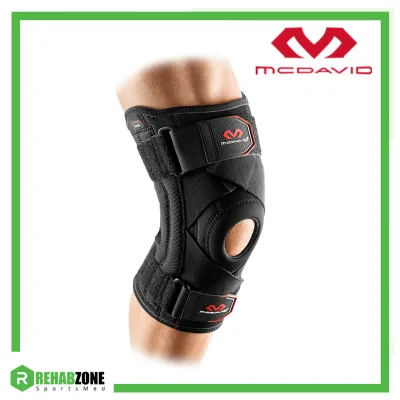
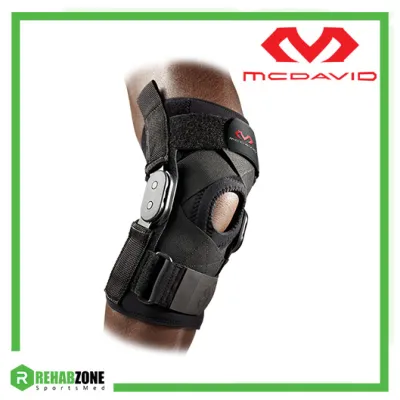
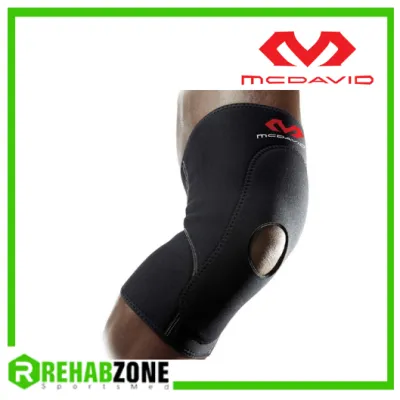
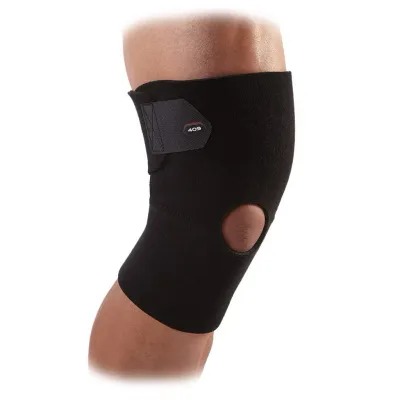
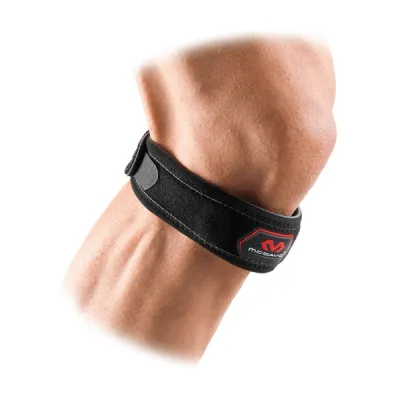
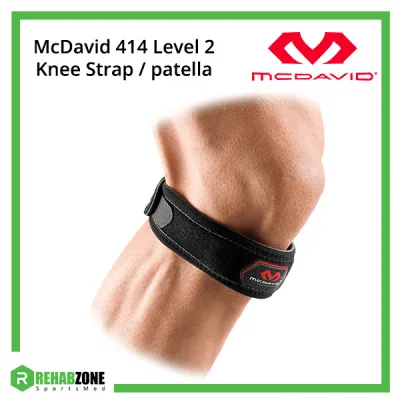
Prices are valid at publication and may change. Please refer to the product page for the latest price.
Level 2 designs provide moderate support, bridging the gap between basic compression and rigid stabilization. These models incorporate structural reinforcements such as flexible steel side stays, adjustable hook-and-loop straps, or targeted gel buttresses around the kneecap. They are engineered to help manage moderate joint instability, minor ligament sprains, or patellar tracking issues by restricting excessive lateral movement while still allowing a functional range of motion.
Level 3 designs deliver maximum stabilization, intended for athletes recovering from significant joint trauma, ligament reconstructions, or severe chronic instability. These braces feature rigid mechanical components, such as dual-action gear hinges, heavy-duty strapping systems, and reinforced open-patella designs. They physically restrict harmful lateral and rotational movements, providing a mechanical boundary that helps protect vulnerable ligaments during high-risk activities.
Beyond these tiers, the physical structure of the guard dictates how it distributes pressure. Continuous sleeves offer uniform compression across the entire joint, while targeted patella straps isolate pressure on the patellar tendon to relieve localized strain. Open-patella designs feature a cutout that reduces direct pressure on the kneecap and helps keep it centered, whereas closed-patella models provide full-coverage compression. Before purchasing, always verify the specific protection claims, sizing guidelines, and any medical device classifications on the product label or manufacturer specifications to ensure the model aligns with your physical needs.
Matching Knee Guards to High-Impact Court Sports
Court sports such as basketball, volleyball, netball, and badminton demand rapid acceleration, abrupt deceleration, explosive vertical jumps, and sudden lateral cutting maneuvers. These dynamic actions subject the knee joint to intense multi-directional forces, placing high stress on the anterior cruciate ligament (ACL) and the patellofemoral joint. Without adequate stabilization, the repetitive shock of landing on hard indoor courts or outdoor concrete surfaces can lead to acute injuries or chronic overuse syndromes.

For these high-impact environments, look for knee guards that prioritize lateral stability and patella tracking. Models featuring integrated flexible side stays help absorb lateral shear forces during quick pivots, reducing the risk of the knee buckling outward or inward. Additionally, a built-in padded patella insert or a circular gel buttress is highly beneficial; it cradles the kneecap, ensuring it glides smoothly along its natural path during deep knee bends and explosive jumps.
The physical demands of court sports also require a secure fit that resists displacement during rapid movements. Look for guards with adjustable, cross-over strapping systems that allow you to customize the tension above and below the joint. When browsing options, verify the product descriptions specifically mention suitability for high-impact, multi-directional activities. A basic compression sleeve may slide down during intense lateral shuffling, whereas a structured wrap with internal anti-slip silicone zones will remain securely in place.
Selecting Guards for Endurance and Linear Sports
Endurance and linear sports, including road running, trail running, and cycling, involve thousands of repetitive, single-plane movements. Unlike court sports, there are few sudden lateral cuts, but the sheer volume of repetitive flexion and extension can lead to friction-based conditions such as iliotibial (IT) band syndrome, patellar tendonitis, or general runner’s knee. In these scenarios, heavy, rigid braces are often counterproductive, as they can restrict your natural stride and add unnecessary weight.
In warm and humid climates, heat dissipation and moisture management are paramount for endurance athletes. A thick, solid neoprene sleeve can quickly trap sweat, leading to skin irritation, heat rashes, and a loss of compression as the material becomes waterlogged. Instead, prioritize knee guards constructed from lightweight, breathable engineered knits or moisture-wicking synthetic fabrics. These materials allow air to circulate freely, keeping the joint cool and dry over long distances.
When choosing between a full compression sleeve and a targeted patella strap, consider the specific source of your discomfort. A lightweight knit compression sleeve provides mild, continuous pressure that enhances proprioception—your body’s awareness of joint positioning—which can improve running form and reduce muscle oscillation. Conversely, a patella strap is a minimalist band worn just below the kneecap that applies direct pressure to the patellar tendon. This targeted pressure helps distribute load away from the tendon insertion point, offering relief from jumper’s knee while leaving the rest of the leg completely unrestricted. Always verify that the chosen guard does not pinch behind the knee during deep flexion, ensuring your natural range of motion remains uncompromised.
Choosing Support for Gym Training and Weightlifting
Gym training, powerlifting, and functional fitness workouts subject the lower body to heavy axial loads during exercises like squats, deadlifts, lunges, and leg presses. Under these heavy loads, the knees require deep compression to promote joint warmth and mechanical feedback. Keeping the joint warm increases the viscosity of the synovial fluid within the joint capsule, which acts as a natural lubricant to facilitate smooth movement under heavy resistance.
It is important to differentiate between general sports compression sleeves and specialized powerlifting wraps. Heavy-duty neoprene sports sleeves (typically 5mm or 7mm in thickness) are designed for continuous wear throughout a workout session. They provide consistent compression, joint warmth, and mild rebound assistance at the bottom of a squat without restricting your ability to perform other movements like lunges or short cardio intervals. Powerlifting wraps, on the other hand, are highly rigid, non-elastic bands designed solely for maximal lifting attempts; they are wrapped extremely tight before a lift and must be removed immediately afterward to restore circulation.
For general gym training, a supportive neoprene or heavy knit sleeve is usually the most practical choice. However, equipment cannot replace proper lifting technique or physical preparation. If you are lifting near your maximum capacity or experiencing persistent joint pain under load, seek professional coaching or physical therapy advice rather than relying on a tight sleeve to mask underlying biomechanical issues. Always check the manufacturer’s specifications to ensure the guard is rated for heavy axial loading and intended for strength training applications.
Evaluating Cross-Sport Compatibility and Verifying Fit
If your weekly routine includes a mix of different activities—such as a weekend basketball game, mid-week runs, and regular gym sessions—you may want a single knee guard that can adapt to multiple scenarios. To achieve this cross-sport versatility, look for adjustable wrap-around designs rather than fixed pull-on sleeves. Wrap-around models allow you to loosen the straps for a comfortable, breathable fit during a long run, and then tighten them to secure the joint before stepping onto the basketball court or under a squat barbell.
Regardless of the model you choose, achieving the correct fit is the single most important factor in ensuring the guard performs as intended. A brace that is too tight can restrict blood flow, cause muscle cramping, and pinch the skin, while a brace that is too loose will slip down constantly and fail to provide any meaningful stabilization. To find your size, stand with your leg slightly bent at approximately a 30-degree angle. Use a flexible tape measure to measure the circumference around the widest part of your knee, directly over the center of the kneecap. Some structured models may also require measurements taken five centimeters above and below the patella; always compare these measurements against the brand’s specific sizing chart for that exact model.
Once your knee guard arrives, perform a series of physical fit checks during a trial wear session at home. First, ensure there is no tingling, numbness, or deep red indentations on your skin, which are clear signs of restricted circulation. Second, perform several bodyweight squats, lunges, and quick lateral steps to verify that the guard does not slip down or bunch up excessively behind the knee. Finally, check that any hook-and-loop straps or rigid hinges do not pinch your skin or rub uncomfortably against your tendons during movement.
Frequently Asked Questions (FAQ)
How should I wash and maintain my McDavid knee guard?
To preserve the elasticity, structural integrity, and hygiene of your knee guard, regular and careful maintenance is essential. Hand-wash the guard in cold or lukewarm water using a mild, pH-neutral liquid detergent. If you prefer to use a washing machine, place the guard inside a mesh laundry bag, select a gentle or delicates cycle, and ensure all hook-and-loop straps are securely fastened to prevent them from snagging the fabric.
Never use bleach, fabric softeners, or harsh chemical stain removers, as these substances chemically degrade the elastic fibers and break down the synthetic compounds in neoprene. After washing, gently squeeze out excess water without wringing or twisting the material. Air-dry the guard flat in a shaded, well-ventilated indoor or outdoor area. Avoid exposing it to direct sunlight, and never use a high-heat clothes dryer or hair dryer, as extreme heat will warp plastic hinges, melt adhesive bonds, and permanently ruin the elasticity of the fabric. Always consult the care label attached to your specific model for precise instructions.
When is it time to replace my knee support brace?
Knee guards are subject to significant mechanical stress and will eventually wear out over time, losing their protective capabilities. Inspect your guard regularly for visible signs of physical degradation, such as stretched-out elastic that no longer snaps back, frayed or non-sticking hook-and-loop fasteners, cracked gel inserts, or loose, noisy, or stiff metal hinges. If you notice that you have to constantly pull the sleeve up or tighten the straps far beyond their original positions to feel any support, the material has likely lost its compressive tension.
Using a compromised or worn-out brace can create a false sense of security while offering little to no actual joint stabilization, increasing your risk of injury during physical activity. If you experience persistent, worsening, or sharp knee pain during or after exercise despite wearing a clean, intact, and properly fitted guard, stop the activity immediately. Do not attempt to self-treat chronic joint issues with a stronger brace; instead, consult a qualified healthcare professional or sports physician for a comprehensive medical evaluation.
Community discussion
Share your experience or ask a question. Comments are reviewed before publication.