
Selecting the right knee support is a critical decision for anyone looking to protect their joints, recover from an injury, or maintain peak athletic performance. McDavid has established a structured three-tier support system designed to help athletes and active individuals identify the exact level of stabilization they require. Choosing the wrong model can either leave your joint vulnerable to injury or unnecessarily restrict your natural range of motion.
To find the ideal model for your needs, you must evaluate your sport’s movement patterns, your personal injury history, and the specific structural features of each guard. This guide breaks down the brand’s classification system, matches each level to specific activities, and outlines the key features to verify before making your purchase.
Decoding the McDavid Support Level System
Understanding the brand’s numerical rating system is the first step in narrowing down your options. McDavid categorizes its supports into three distinct levels, each engineered for specific degrees of joint instability and physical protection.
Products mentioned in this guide
Prices are valid at publication and may change. Please refer to the product page for the latest price.
Level 1: Primary Protection and Compression
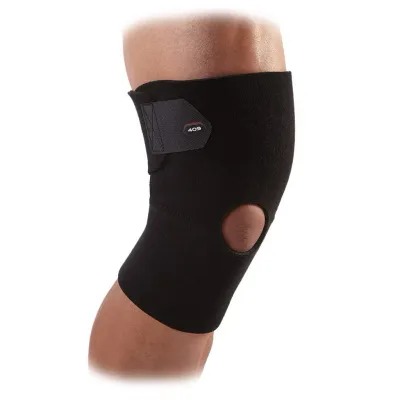
Level 1 supports are designed for minor pain relief, basic compression, and thermal retention. These models typically consist of pull-on sleeves or simple wrap-around designs made from neoprene or engineered elastic knits. They do not feature rigid structural elements like hinges or heavy stays. Instead, they rely on consistent compression to promote blood flow, keep the joint warm, and reduce minor swelling. This level is best suited for managing mild chronic conditions like minor arthritis, general muscle soreness, or early-stage tendonitis.
Level 2: Moderate Support and Joint Alignment
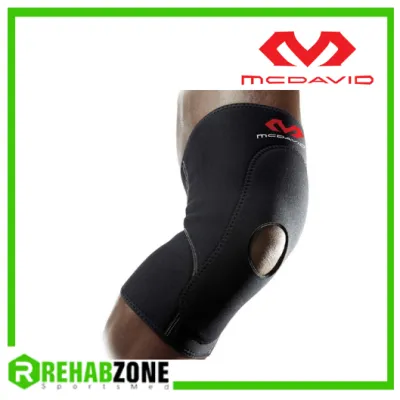
Level 2 models introduce targeted structural reinforcements to address moderate joint instability, patellar tracking issues, and ligament strains. These guards often incorporate flexible steel stays, dual-wrap straps, or specialized gel buttresses around the kneecap. The primary goal of a Level 2 guard is to provide lateral and medial stability while guiding the patella along its proper path during movement. If you are recovering from a mild ligament sprain or experience occasional knee instability during lateral movements, this tier offers a balance of protection and flexibility.
Level 3: Maximum Protection and Mechanical Stability
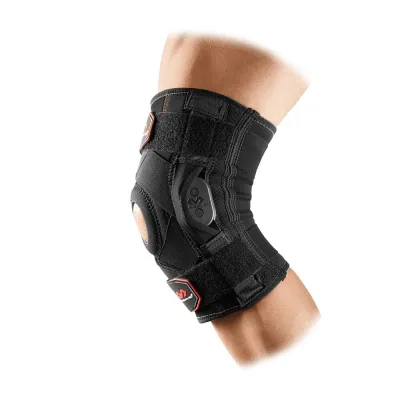
Level 3 represents the highest tier of off-the-shelf support, engineered for severe joint instability, post-surgery rehabilitation, or high-impact joint protection. These braces feature rigid or polycentric hinges that mechanically restrict lateral movement and prevent hyperextension while allowing natural flexion and extension. Level 3 braces are highly structured, utilizing heavy-duty straps and rigid materials to shield the anterior cruciate ligament (ACL), posterior cruciate ligament (PCL), and collateral ligaments from extreme forces. They are designed for individuals returning to sport after major injuries or those engaging in activities with a high risk of joint trauma.
Verifying the Support Level on Product Packaging
When shopping at local sporting goods retailers or browsing online marketplaces, always verify the support level indicated on the product packaging or technical specification sheet. McDavid clearly labels its boxes with a color-coded or numerical indicator representing Level 1, 2, or 3. Do not rely solely on the visual appearance of the guard; check the listed materials and structural components to confirm they match your required level of joint stabilization.
Matching Support Levels to Your Sport and Activity
Different sports place unique biomechanical demands on your knees. Matching the support level to the specific movement patterns of your activity ensures optimal protection without hindering your performance.

Low-Impact and Endurance Sports
Activities like running, cycling, and brisk walking primarily involve linear, repetitive movements with minimal lateral twisting. For these sports, a Level 1 compression sleeve is often the most appropriate choice. The continuous compression helps manage minor joint fatigue and keeps the surrounding muscles warm, which can improve proprioception—your body’s awareness of joint positioning. Heavy, rigid braces are generally counterproductive here, as they add unnecessary weight and can alter your natural running or pedaling gait, potentially leading to secondary overuse injuries.
High-Impact and Pivoting Sports
Sports such as basketball, netball, football, and tennis require rapid acceleration, sudden deceleration, and sharp lateral cuts. These multi-directional movements place immense stress on the lateral ligaments and the patellofemoral joint. A Level 2 knee guard is highly beneficial in these scenarios. The lateral stays help absorb sudden side-to-side forces, while a patellar tracking pad keeps the kneecap centered during deep lunges and jumps. This level of support provides the necessary structural reassurance to handle high-velocity changes of direction without excessively bulky hardware.
Contact Sports and Heavy Weightlifting
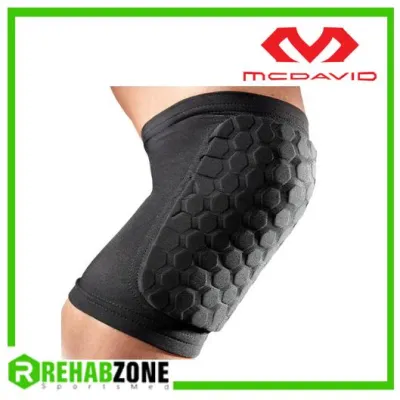
For contact sports like rugby, or high-load activities like powerlifting and heavy squatting, the knee joint is subjected to extreme external forces and axial loads. In these environments, a Level 3 hinged brace or a highly reinforced Level 2 wrap is often utilized. The mechanical hinges in Level 3 braces act as an external skeleton, absorbing direct impacts and preventing the knee from buckling inward or hyperextending under heavy weights. These supports are crucial for athletes who need to protect compromised ligaments during high-risk physical contact.
The Importance of Professional Medical Consultation
While selecting a knee guard based on sport type is a helpful starting point, it should never replace professional medical advice. If you are experiencing chronic pain, severe instability, or are recovering from a recent joint injury, consult a sports physiotherapist or orthopedic specialist before purchasing a Level 3 brace. A professional can diagnose the underlying joint condition and recommend a comprehensive rehabilitation plan, ensuring that the brace is used as a supportive tool rather than a permanent crutch for an unaddressed injury.
Key Features to Compare Within Your Support Level
Once you have determined your required support level, you can compare specific models by evaluating their materials, strap configurations, and structural components.
Material and Breathability
Knee guards are typically constructed from either neoprene or engineered performance knits. Neoprene offers exceptional heat retention, durability, and firm compression, making it highly effective for therapeutic warmth. However, in warm and humid climates, neoprene can trap sweat and cause skin irritation during prolonged use. Engineered knits, on the other hand, are highly breathable, lightweight, and moisture-wicking. They conform closely to the contours of the joint and are ideal for athletes who prioritize temperature regulation and comfort during intense, sweaty workouts.
Strap Configurations
Straps allow you to customize the fit and compression level of your knee guard. Single-strap designs are convenient for quick adjustments, while dual-strap or cross-strap configurations provide highly targeted pressure. For individuals dealing with patellar tendonitis (runner’s knee), guards with an adjustable strap positioned directly below the kneecap can help relieve strain on the tendon. Evaluate how the straps secure to the brace; high-quality hook-and-loop fasteners ensure the guard remains tight and does not loosen during active play.
Hinge Mechanisms
If you require a Level 3 brace, pay close attention to the type of hinge utilized. Rigid, single-axis hinges offer basic lateral protection but can feel restrictive during complex movements. Polycentric hinges feature multiple pivot points that closely mimic the natural, gliding motion of the human knee joint. This allows for a more fluid stride and comfortable flexion while still preventing dangerous lateral shifting or hyperextension. Check if the hinges are removable, as this feature makes cleaning the fabric sleeve significantly easier.
Anti-Slip Designs
A common frustration with knee guards is their tendency to slide down during movement. To prevent this, look for models equipped with internal silicone grip strips or wave patterns along the upper hem. Ergonomic knitting that tapers at the thigh and calf also helps keep the sleeve securely in place. Adjustable top and bottom closures allow you to anchor the guard firmly against your musculature, ensuring consistent protection throughout your entire workout.
How to Measure and Verify the Correct Fit
An improperly fitted knee guard can cause discomfort, restrict circulation, or fail to provide the intended level of joint stabilization. Taking accurate measurements is essential to finding the right size.
Measuring Knee Circumference
To find your correct size, stand with your leg slightly bent at approximately a 30-degree angle. Use a flexible measuring tape to measure around the fullest part of your knee, directly over the center of the kneecap (patella). Some models may also require measurements taken a few centimeters above and below the kneecap to ensure a proper fit along the thigh and calf. Compare your measurements directly to the specific sizing chart provided by the manufacturer for that particular model, as sizing can vary between knit sleeves and rigid hinged braces.
Identifying Signs of a Poor Fit
Once you try on the knee guard, perform a few basic movements like squats and lunges to evaluate the fit. A guard that is too tight will pinch the skin, leave deep red indentations, restrict blood flow, or cause tingling and numbness in your lower leg or foot. Conversely, a guard that is too loose will bunch up behind the knee, slide down during movement, or fail to provide noticeable compression around the joint. The guard should feel snug and supportive, offering firm compression without restricting your breathing or causing localized pain.
Adjusting Straps and Sleeves Safely
When securing a strapped model, tighten the straps incrementally rather than pulling them as tight as possible from the start. Begin with the lower straps to anchor the brace against your calf, then secure the upper straps around your thigh. Ensure that the opening or gel buttress is perfectly centered over your kneecap. Avoid overtightening the straps to the point of nerve impingement or skin chafing; the compression should feel evenly distributed across the entire surface of the support.
When to Stop Use and Seek Advice
If you experience persistent discomfort, skin irritation, numbness, or increased joint pain while wearing the knee guard, stop using it immediately. These symptoms indicate an incorrect fit, an inappropriate support level, or an underlying joint issue that requires professional evaluation. Consult a medical professional or sports physiotherapist to re-evaluate your knee health and ensure you are using the correct supportive equipment.
Frequently Asked Questions (FAQ)
How do I clean and maintain my McDavid knee guard?
To preserve the elasticity, material integrity, and hygiene of your knee guard, hand-wash it in cold water using a mild detergent. Do not machine-wash or tumble-dry the support, as the high heat and mechanical agitation can degrade neoprene, stretch out elastic fibers, and damage hook-and-loop fasteners. If your Level 3 brace has removable metal hinges, always slide them out before washing the fabric sleeve. Allow the guard to air-dry completely in a shaded, well-ventilated area away from direct sunlight.
Can I wear a knee guard all day, or only during sports?
Knee guards are generally designed to be worn during active sports, workouts, or periods of physical exertion. Wearing a highly supportive brace or compression sleeve all day without medical supervision can lead to muscle dependency, where the muscles surrounding the joint weaken because they are relying on the brace for stability. Unless a sports physiotherapist or physician has prescribed a specific all-day wear schedule for post-injury recovery, limit your use of the guard to active training sessions and remove it during periods of rest to maintain natural muscle strength and healthy circulation.
Community discussion
Share your experience or ask a question. Comments are reviewed before publication.