
A Merach vibration plate can be used in a Housing & Development Board (HDB) flat without causing neighbor disputes, but success depends heavily on how you manage structure-borne noise. Because HDB blocks are built with shared concrete slabs, the low-frequency vibrations from fitness equipment can easily travel through floors and walls. Understanding how this sound travels and taking proactive steps to isolate the machine are essential to keeping your workouts neighbor-friendly.
How Vibration Plate Noise Travels in HDB Flats
When evaluating fitness equipment for high-density housing, it is important to understand the two primary types of noise: airborne noise and structure-borne noise. Airborne noise is the sound that travels through the air, such as the hum of the electric motor or the mechanical whirring of the moving platform. In most HDB flats, standard concrete walls and closed doors are relatively effective at blocking moderate airborne sounds, meaning the motor hum itself is rarely the main source of neighbor complaints.
The primary challenge in an HDB setting is structure-borne noise. Vibration plates operate by rapidly moving a platform up and down or side to side, which generates continuous kinetic energy. When the machine sits directly on a hard floor, this energy transfers into the concrete slab. Concrete is an excellent conductor of low-frequency vibrations. These vibrations can travel through the floor, down the structural pillars, and into the ceiling or walls of the flat directly below or adjacent to yours.
Products mentioned in this guide
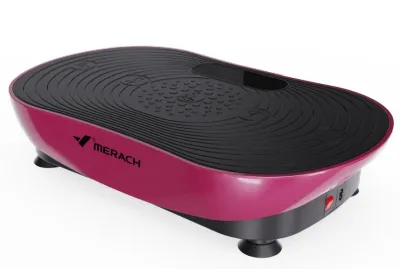
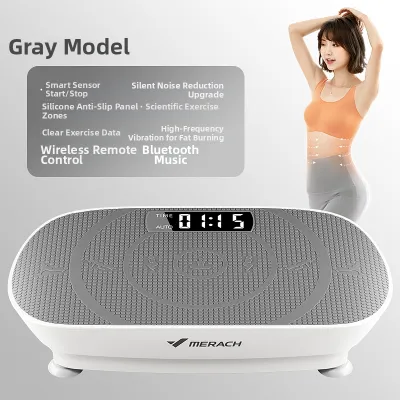
Prices are valid at publication and may change. Please refer to the product page for the latest price.
To your downstairs neighbor, this vibration does not sound like a high-pitched motor hum. Instead, it often manifests as a low, persistent rumbling or droning sound, similar to a heavy appliance running on an uneven spin cycle. Before setting up your equipment, inspect your flat’s flooring. Hollow tiles, older parquet, or laminate flooring without proper underlayment can amplify these vibrations, creating a drum-like resonance chamber that makes the noise significantly louder.
Assessing the Noise Profile of Merach Models
Before purchasing or setting up a Merach vibration plate, you should carefully evaluate its specific mechanical design and rated noise output. Start by checking the official product manual or the physical specification label located on the underside of the machine. Manufacturers typically list the maximum operational noise level in decibels (dB). Keep in mind that these ratings are usually measured in controlled laboratory settings, so real-world noise levels in a furnished room may vary depending on your floor type and room acoustics.

The mechanical movement of the plate also plays a significant role in the type of sound it produces. Vibration plates generally use either an oscillating (pivoting) or a linear (vertical) motion mechanism. Oscillating models mimic a seesaw movement, which often operates at lower frequencies and may produce a deeper, rhythmic thudding. Linear models move straight up and down at higher frequencies, which can result in a faster, more consistent buzzing sound. Understanding these mechanical differences helps you anticipate how the vibration might interact with your home environment.
To get a realistic picture of long-term performance, browse customer feedback on major online marketplaces. Instead of focusing on general star ratings, filter reviews specifically for terms like “noise,” “vibration,” “rattle,” or “neighbor.” Look for verified buyer comments regarding whether the motor begins to strain under heavier loads, if the plastic housing starts to rattle after several months of use, or if the machine remains stable on different floor surfaces over time.
Practical Ways to Reduce Vibration and Noise
If you decide to use a vibration plate in your HDB flat, implementing a few simple noise-mitigation strategies can dramatically reduce the transmission of sound to your neighbors. The most effective step is to decouple the machine from the floor. Place a thick, high-density anti-vibration mat specifically designed for heavy fitness equipment directly under the plate. Standard yoga mats are too soft and compress completely under load, failing to absorb low-frequency energy. Specialized rubber or dense foam mats, however, act as a buffer that absorbs the kinetic energy before it can penetrate the concrete slab.
Timing is another critical factor in maintaining good neighbor relations. HDB estates have designated quiet hours, typically between 10:30 PM and 7:00 AM, during which residents are expected to keep noise to a minimum. To be safe, schedule your vibration plate workouts during the late morning or afternoon when ambient neighborhood noise is higher, which helps mask any residual hum. If possible, have a polite conversation with your immediate neighbors to learn their schedules, ensuring you avoid exercising when they are sleeping or working from home.
Your physical technique during the workout also influences how much noise the machine makes. Standing on the plate with locked knees forces your entire body weight to slam against the platform, increasing mechanical strain and floor impact. Instead, maintain a slight bend in your knees to absorb the movement naturally. Wearing supportive, rubber-soled athletic shoes can also help dampen the impact, while starting your sessions at a lower intensity setting allows you to monitor how the machine behaves before ramping up to higher speeds.
When to Stop and Adjust Your Setup
Even with a high-quality setup, you must remain observant of how your equipment behaves during operation. Physical warning signs that your vibration plate is transferring too much energy include visible rattling of nearby floor items, vibrating furniture, or a buzzing sensation in adjacent walls. If you notice loose items on a nearby shelf shaking while the machine is running, it is a clear indication that the vibration is traveling through the structure and needs immediate dampening.
If a neighbor or building management contacts you regarding noise, respond constructively and respectfully. Offer to adjust your workout times, add extra layers of dampening material, or move the machine to a different room that does not share a direct wall with their living space. Taking proactive, cooperative steps prevents minor noise issues from escalating into formal disputes.
Finally, pay close attention to the sounds coming directly from the machine itself. If the vibration plate suddenly begins to emit loud grinding, squeaking, or clicking noises, stop using it immediately. These sounds often point to internal mechanical wear, loose bolts, or motor misalignment. Continuing to run a malfunctioning machine not only risks permanent damage to the equipment but also significantly increases the noise level. In such cases, disconnect the power and consult the manufacturer’s customer service or a qualified technician for repair options.
Frequently Asked Questions (FAQ)
Can I use a vibration plate late at night in an HDB flat?
Using a vibration plate late at night in an HDB flat is highly discouraged. During quiet hours, ambient neighborhood noise drops significantly, making low-frequency vibrations and motor hums much more noticeable to your neighbors. To maintain a peaceful living environment and avoid complaints, restrict your workouts to daytime or early evening hours when normal household activities are already taking place.
Do oscillating Merach plates make less noise than linear ones?
Oscillating models and linear models produce different acoustic profiles due to their distinct mechanical movements, but one is not universally quieter than the other. Oscillating plates tend to have a lower-frequency, rocking motion that may feel less buzzy but can still cause structural thudding if not properly padded. You should always verify the specific decibel ratings and mechanism details in the product manual of your chosen model rather than assuming a specific vibration type is inherently silent.
Community discussion
Share your experience or ask a question. Comments are reviewed before publication.