
To make a mini walking pad work in a typical Singapore HDB flat, you must balance the machine’s physical footprint with your available floor space, storage clearance, and safety zones. A successful setup requires measuring not just where the machine sits when active, but also the height of your under-bed or under-sofa storage gaps, the width of your doorways, and the distance to the nearest power outlet. By verifying these dimensions before purchasing, you can enjoy the convenience of home cardio without permanently sacrificing your valuable living space.
While a compact walking pad offers an excellent way to stay active indoors, it is not a one-size-fits-all solution. Different models cater to different stride lengths, storage preferences, and room layouts. Understanding how to evaluate these specifications against your specific home environment is the key to choosing a unit that remains a useful fitness tool rather than a bulky storage obstacle.
Measuring Your HDB Space Before Buying
Before browsing online marketplaces, you must accurately assess the physical layout of the room where you plan to use and store the equipment. Start by measuring the floor area of your intended active zone. This is the space where the walking pad will sit while in use. Ensure this area is completely flat, level, and free of loose rugs or toys that could interfere with the machine’s stability.
Products mentioned in this guide
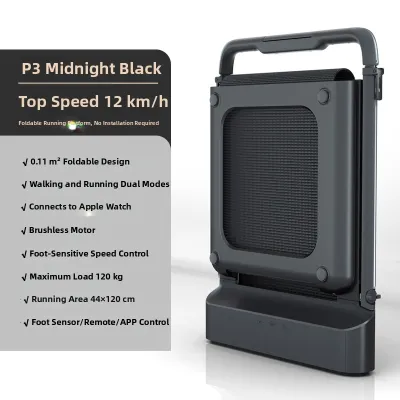
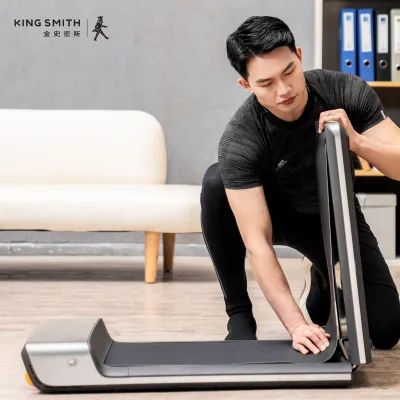
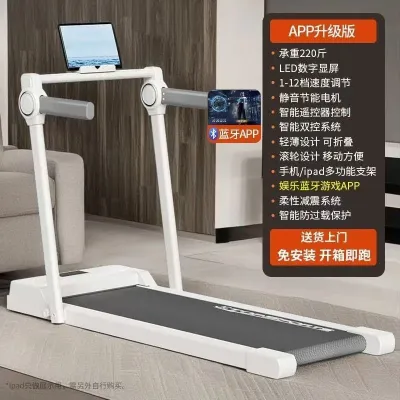
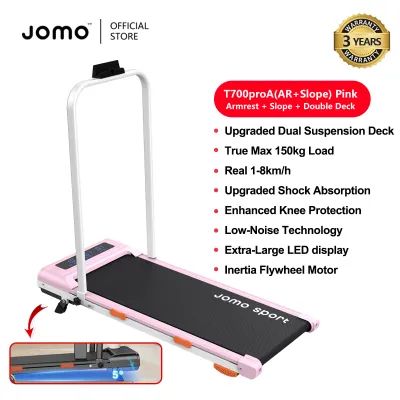
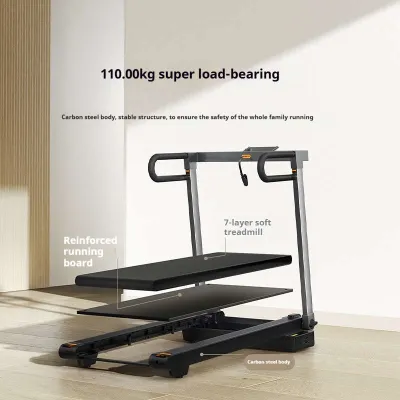
Prices are valid at publication and may change. Please refer to the product page for the latest price.
Next, map out the transit path from your storage spot to the active zone. If you plan to store the walking pad in a bedroom wardrobe and roll it out to the living room daily, you must measure the clearance of your door frames. Standard HDB bedroom doors typically offer sufficient clearance, but older flats or customized renovated frames can sometimes be narrower than expected. Ensure the folded or boxed width of the unit can pass through these openings without scraping your walls or doors.
Power outlet proximity is another critical factor that is easily overlooked. Walking pads require a direct connection to a wall socket to operate safely and efficiently. Running long extension cords across high-traffic walkways creates a severe tripping hazard and can cause power fluctuations. Identify a dedicated wall outlet near your active zone, and check the manufacturer’s specifications for the included power cord length to ensure it reaches comfortably.
Finally, do not forget to measure your lift lobby and front door entryways. If you live in an older estate where lift access is restricted to certain floors, or if your front gate has a unique configuration, verify that the delivery box can safely enter your home. Knowing these entry dimensions beforehand prevents delivery day complications and ensures a smooth setup process.
Key Dimensions and Clearance Requirements
When evaluating a walking pad mini, you must distinguish between its stored dimensions and its active running footprint. A machine that looks incredibly compact when folded upright can still require a significant amount of floor space when fully extended. Always check the unfolded length and width specifications to visualize how much of your room will be occupied during your workout.

Safety clearances are paramount when operating any motorized fitness equipment. You must plan for adequate buffer zones around the walking pad to prevent injuries in case of a slip or loss of balance. Ideally, you should maintain a clear space of at least 0.5 meters on both sides of the machine and at least 1 to 1.5 meters behind the rear roller. In tight HDB bedrooms, this means keeping the rear of the belt away from sharp furniture corners, glass sliding doors, or study desks.
Your physical height and natural walking stride also dictate the minimum belt dimensions you require. A belt that is too short or too narrow can restrict your movement and increase the risk of stepping off the side rails. Taller users with longer strides should verify that the running deck length accommodates their natural step without forcing them too close to the front motor cover or the rear edge.
To find your ideal belt size, measure your comfortable walking stride length and add a buffer of at least 10 to 15 centimeters. Standard mini walking pads often feature belt widths ranging from 40 to 45 centimeters, which is generally suitable for moderate walking speeds. If you plan to use the machine for brisk walking or light jogging, a slightly wider belt provides a safer margin of error for lateral foot movement.
Folding Mechanisms and Under-Furniture Storage
Selecting the right folding mechanism depends heavily on your daily physical capacity and the specific furniture layouts in your HDB flat. The most common designs include 180-degree double-fold models, flat-slide non-folding frames, and upright standing units. Each mechanism offers distinct advantages and trade-offs regarding storage convenience and structural feel.
Double-fold models fold completely in half, significantly reducing their length footprint. This makes them ideal for storing inside shallow wardrobes or tight corners. However, because the running deck folds, these units feature a hinge in the middle of the belt. You should verify that the hinge mechanism feels stable and seamless underfoot, as some users may be sensitive to the slight seam line during operation.
Flat-slide models do not fold in half but maintain a very thin, low-profile frame. These are designed to slide directly under low-clearance furniture like sofas and bed frames. Before choosing this style, use a precise measuring tape to check the exact height gap under your furniture. Many modern HDB bed frames have a clearance of less than 12 centimeters, which may not accommodate the thicker motor housing section of the walking pad, even if the running deck itself is ultra-thin.
Upright standing models are designed to store vertically against a wall or behind a door. This is an excellent space-saving option if you lack under-furniture clearance. If you choose an upright model, ensure your walls are sturdy enough to support the unit if it rests against them, and verify if the machine includes a safety lock or strap to prevent it from tipping over, especially if you have young children or pets at home.
Regardless of the storage style, pay close attention to the total weight of the unit and the quality of its transport wheels. A mini walking pad can still weigh between 20 and 30 kilograms. Moving this weight daily can cause physical strain if the machine lacks smooth, multi-directional wheels. Look for models with durable, non-marking wheels at the front of the frame, allowing you to lift one end and roll the unit easily like a wheelbarrow.
Common Space-Matching Mistakes to Avoid
One of the most frequent mistakes is relying solely on marketing terms like “mini,” “compact,” or “ultra-thin” without verifying the actual millimeter measurements. Standardized sizing does not exist in the fitness equipment industry, and a model labeled as “mini” by one manufacturer might still be too large for a compact HDB study room. Always rely on the exact physical specifications provided in the product manual.
Another critical oversight is ignoring noise and vibration transmission. HDB flats share concrete floor slabs, which can easily conduct the low-frequency vibrations of your footsteps to the unit below. Even at slow walking speeds, the repetitive impact can cause disturbance to your downstairs neighbors. To maintain good community relations, always plan to place a high-density rubber equipment mat under your walking pad to absorb impact and dampen sound.
Finally, avoid purchasing heavy, non-folding cardio equipment under the assumption that you will simply leave it out permanently. In a multi-purpose HDB living room or study, a permanently deployed walking pad quickly becomes a physical obstacle that disrupts the flow of the room. Opting for a lightweight, easily storable model ensures that your home remains a comfortable, flexible living space when you are not exercising.
Frequently Asked Questions (FAQ)
Can I use a mini walking pad on typical HDB vinyl or laminate flooring?
Yes, you can use a mini walking pad on vinyl or laminate flooring, but you must take precautions to protect the surface. These flooring materials can be susceptible to pressure marks, scratches, and heat buildup from the machine’s motor. Always check the manufacturer’s guidelines for base materials, and place a high-density, non-slip equipment mat under the unit to distribute weight, prevent sliding, and protect your floor from scuffs and sweat.
Do I need to assemble a folding walking pad every time I use it?
No, most mini walking pads do not require complex assembly for daily use. Flat-slide models are designed to be pulled out from under storage and plugged directly into the wall. Models with foldable handrails typically use quick-release levers that allow you to raise and lock the rail in seconds. Always refer to the product manual to understand the specific folding steps and ensure the routine fits your physical comfort level.
Community discussion
Share your experience or ask a question. Comments are reviewed before publication.