
Selecting a high-quality basketball requires evaluating where and how often you play. In Singapore, where playing conditions range from humid, outdoor neighborhood concrete courts to polished indoor ActiveSG sports hall floors, finding the right basketball molten model requires matching the cover material to your specific playing environment. Molten offers a diverse lineup categorized by cover materials, including vulcanized rubber, synthetic composite leather, and premium genuine leather.
To make an informed decision, you can rely on a straightforward, condition-based framework:
- Choose rubber or entry-level composite models if you primarily play on abrasive outdoor surfaces like concrete or asphalt. These materials are engineered to resist rapid wear, manage dust accumulation, and withstand high-friction play without peeling or losing their grip.
- Choose premium composite or genuine leather models if you play competitive indoor games on hardwood or synthetic indoor courts. These materials offer superior tackiness, advanced moisture-wicking capabilities, and a consistent bounce, allowing for precise ball control and shooting alignment.
- Verify first if you play on mixed indoor/outdoor surfaces, require a ball with zero break-in period, or participate in leagues that mandate official FIBA-approved specifications.
The optimal basketball for your game is not determined solely by the price tag. A premium genuine leather ball will quickly deteriorate and lose its playability if used outdoors, while an entry-level rubber ball will lack the refined grip and moisture management required for high-stakes indoor tournaments. Match the ball to your court surface first, and your playing intensity second.
Products mentioned in this guide
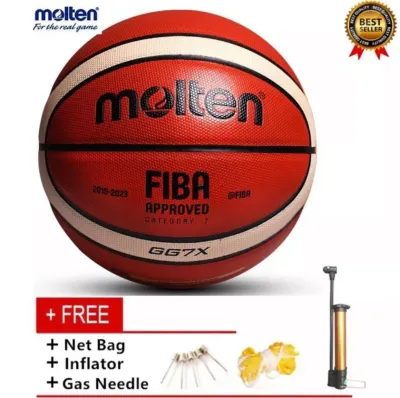
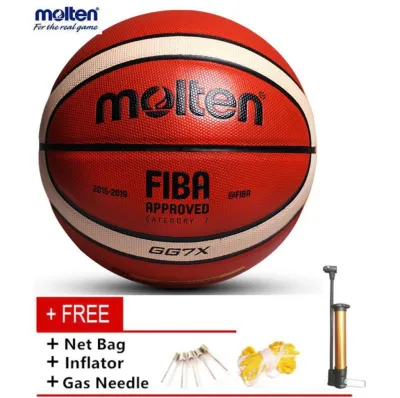
![[Local Seller] Molten GG7X Official Size 7 Basketball | Professional Game Ball | Non-Slip PU Leather | Indoor & Outdoor Play | Free Shipping SG](https://img.lazcdn.com/g/p/71e0bfb9e8ba68adf04a2e274ec9c971.jpg_400x400q80.jpg_.webp)
![[SG] MOLTEN Basketball FIBA GG7X Size 7 Indoor Outdoor Basketball Court Training Ball](https://img.lazcdn.com/g/ff/kf/S1979cbee9f35428e923e683dbbde933bA.jpg_400x400q80.jpg_.webp)
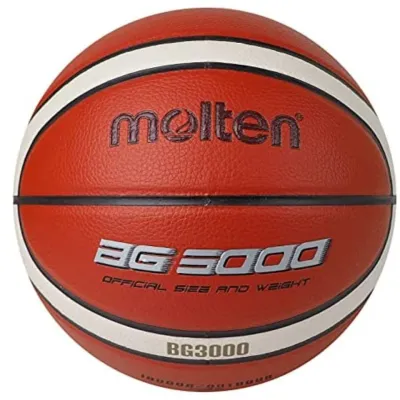
![[Local Seller] Molten number7 indoor outdoor games kid free gift professional FIBA basketball 7号魔腾篮球](https://img.lazcdn.com/g/p/124ed82375567fd1a04666114f86b70e.jpg_400x400q80.jpg_.webp)
Prices are valid at publication and may change. Please refer to the product page for the latest price.
Core Comparison Dimensions: Material, Court Type, and Grip of a Basketball Molten
The fundamental trade-off in basketball construction lies between durability and tactile grip. High-grip materials like genuine leather are soft and porous, which allows them to absorb moisture and conform to the hand, but makes them highly vulnerable to abrasive surfaces. Conversely, highly durable materials like vulcanized rubber are non-porous and rigid, resisting concrete wear but offering less cushion and sweat absorption. Understanding these material properties helps you select a ball that balances longevity with on-court performance.
Rubber Cover Balls
Rubber cover basketballs are engineered for maximum durability and weather resistance. They utilize a vulcanized rubber skin that can withstand the scraping and scuffing typical of outdoor concrete and asphalt courts. These balls feature deeply molded pebble patterns and wide channel grips designed to help players maintain control even when the court is dusty or slightly damp.
While rubber balls are highly resilient, they offer a much firmer feel and a higher, more elastic rebound velocity compared to leather options. Because rubber is non-porous, it does not absorb moisture; sweat or rain will pool on the surface, though it can be wiped clean instantly. This makes rubber models the standard choice for casual, recreational outdoor play where durability is the absolute priority.
Composite Leather Balls
Composite leather basketballs represent a balance between premium indoor feel and outdoor resilience. These balls are constructed using a synthetic polyurethane (PU) or microfibre layer laminated over a rubber or nylon-wound carcass. This design mimics the soft, cushioned touch of genuine leather while providing a synthetic backing that resists tearing and moisture damage.
Depending on the manufacturer’s grade, composite balls are classified for either indoor-only use or dual indoor/outdoor play. Premium composite models feature advanced moisture-absorbing covers that draw sweat away from the surface, making them ideal for competitive indoor league play. Mid-tier and entry-level composites are often formulated with tougher resins, allowing them to handle the occasional outdoor session without immediate cover degradation.
Genuine Leather Balls
Genuine leather basketballs are the gold standard for professional and high-level competitive indoor play. Made from top-grain natural leather, these balls offer an unmatched, high-tack grip that actually improves as the ball absorbs small amounts of moisture from players’ hands during a game. The natural fibers provide a soft, cushioned feel that allows for precise fingertip control during shooting and dribbling.
However, genuine leather requires a dedicated break-in period; out of the box, a new leather ball feels stiff, pale, and relatively slippery. It must be played with on clean indoor courts for several weeks to develop its characteristic dark patina and optimal grip. Genuine leather is strictly for indoor use; exposing it to concrete, dirt, or outdoor moisture will permanently ruin the cover material and void any manufacturer warranties.
Casual Play: Choosing Durable Molten Balls for Outdoor Courts
Outdoor courts in tropical climates present unique challenges for basketball players. High humidity, intense sun exposure, and abrasive concrete or asphalt surfaces accelerate the degradation of any basketball cover. Furthermore, fine dust particles settle on outdoor courts and coat the ball, creating a slippery barrier between your hands and the cover, which severely compromises grip and ball control.

When choosing a Molten ball for casual outdoor sessions, look for models explicitly designated as “Outdoor” or “Indoor/Outdoor” by the manufacturer. These models, such as the Molten BG2000 (rubber) or the BG3800 (indoor/outdoor composite), utilize specialized rubber compounds or reinforced synthetic composite covers. These materials are formulated to resist tearing and peeling when scraped against concrete or metal chain nets.
Outdoor play demands deep pebble patterns and wide, recessed channels. Molten’s signature 12-panel Giugiaro design features additional seams that provide extra edges for your fingers to grip, which is particularly beneficial when the ball is covered in outdoor dust. Deep channels help channel away light moisture and debris, maintaining a reliable release point during shots.
Maintaining an outdoor ball is crucial for preserving its grip over time. Because outdoor surfaces are dusty, the tiny spaces between the pebbles quickly fill with dirt, neutralizing the ball’s texture. Clean your outdoor ball regularly by wiping it down with a damp cloth and mild soapy water, then drying it thoroughly in a shaded, well-ventilated area. Avoid direct sunlight during drying, as extreme heat can degrade the adhesives holding the cover panels to the carcass.
Competitive Games: Selecting High-Performance Molten Balls for Indoors
High-intensity competitive play on indoor hardwood or synthetic courts demands absolute consistency from the basketball. Players require a ball that delivers a predictable bounce, reliable spin visibility, and exceptional grip even when hands are slick with sweat. In these environments, minor variations in ball roundness or surface tackiness can directly impact shooting accuracy and ball security.
Competitive indoor games are the primary domain of premium composite leather and genuine leather. Models like the Molten BG5000 (genuine leather) and the BG4500 (premium composite) feature advanced microfibre backings and cushioned carcasses. These layers compress slightly under finger pressure, providing a deep, secure grip that gives players maximum tactile feedback during high-speed dribbling and passing.
For league play, verifying official certification is essential. Look for the “FIBA Approved” logo printed directly on the ball’s cover. This mark indicates that the ball has undergone rigorous testing for weight, sphericity, bounce height, and durability under compression, ensuring it meets international competition standards. Most structured leagues in Singapore require FIBA-approved match balls for official play.
Sweat management is another critical factor in indoor sports halls. Premium Molten indoor models incorporate dual-layer moisture-absorbing covers. Instead of letting sweat pool on the surface, the microfibre material disperses and absorbs moisture, maintaining a dry, high-tack feel throughout the game. This prevents the ball from becoming dangerously slippery during fast-paced transitions and intense defensive pressure.
Pre-Purchase Checklist: Verifying Specs, Sizes, and Authenticity
Before purchasing your basketball, go through a systematic checklist to ensure the model matches your physical requirements, league rules, and quality standards.
Size Verification
Select the correct size based on league rules and player demographics:
- Size 7: Standard size for men's competitive play (ages 15 and up), with a circumference of 75 to 78 cm and a weight of 567 to 650 grams.
- Size 6: Standard size for women's competitive play (ages 12 and up) and youth boys (ages 12 to 14), with a circumference of 72 to 74 cm and a weight of 510 to 567 grams.
- Size 5: Standard size for junior play (ages 9 to 11), with a circumference of 69 to 71 cm and a weight of 470 to 500 grams.
Authenticity Checks
Due to the popularity of Molten basketballs, counterfeit products are common on online marketplaces. To verify authenticity, inspect the inflation valve; genuine Molten valves are neatly recessed and flush with the cover. Examine the seam alignment—the 12-panel Giugiaro design features highly precise, uniform seams with no visible glue residue or uneven panel edges. Official branding, patent numbers, and the specific model code (e.g., BG5000, BG4500) should be crisp, clear, and free of spelling errors.
Label Reading
Always check the manufacturer’s printed specifications on the ball or packaging. Look for the recommended inflation pressure, typically indicated as 0.5 to 0.6 bar (7.25 to 8.7 psi). Over-inflating a basketball can stretch the bladder, distort its shape, and void the warranty, while under-inflating leads to a dead bounce.
Stop Condition
If you encounter a basketball that lacks clear material specifications, has misaligned seams, shows exposed glue, or lacks official branding, stop the purchase immediately. Consult an authorized retailer to ensure you are buying a genuine product that meets safety and performance standards.
Frequently Asked Questions (FAQ)
How do I break in a new Molten leather basketball?
Genuine leather basketballs require a break-in period to reach their optimal grip level. The best way to break in a new leather ball is through natural use: dribble, pass, and play with it regularly on clean indoor courts. The natural oils from your hands will gradually soften the leather and enhance its tackiness. Avoid using artificial leather conditioners, oils, or chemical treatments, as these can alter the ball’s weight, damage the internal carcass adhesives, and void the manufacturer’s warranty.
Can I use an indoor Molten basketball on outdoor concrete courts?
No, you should never use an indoor-only Molten basketball on outdoor concrete or asphalt courts. Indoor balls made of premium composite or genuine leather have soft, delicate covers designed specifically for smooth hardwood. Abrasive outdoor surfaces will rapidly wear down these materials, scraping away the outer grip layer and exposing the underlying carcass. This damage is irreversible and will permanently ruin the ball’s grip, feel, and structural integrity within just a few outdoor sessions.
Community discussion
Share your experience or ask a question. Comments are reviewed before publication.