
Choosing the correct glove weight in Muay Thai is essential for protecting your hands, keeping your training partners safe, and optimizing your skill development. Your ideal glove weight depends primarily on two factors: your body weight and the specific training activity you are performing. As a general rule, most practitioners use lighter gloves (10 oz to 12 oz) for pad work and heavy bags, and transition to heavier gloves (14 oz to 16 oz) for live sparring.
Selecting the wrong weight can lead to chronic wrist injuries, premature shoulder fatigue, or being restricted from partner drills at your gym. In Singapore’s hot and humid climate, where sweat can compromise your grip and hand wrap stability, making an informed gear choice is vital for long-term safety. Before hitting the mats, understanding how glove weight translates to physical protection will help you train sustainably.
What Does Glove Weight (oz) Actually Mean in Muay Thai?
The abbreviation “oz” stands for ounces, which measures the physical weight of the glove rather than its external size or internal hand compartment. While a 16 oz glove is physically bulkier than an 8 oz glove due to the sheer volume of foam inside, the internal hand pocket is often quite similar. Manufacturers add layers of protective foam to reach the target weight, meaning a higher ounce rating directly translates to more shock absorption.
Products mentioned in this guide
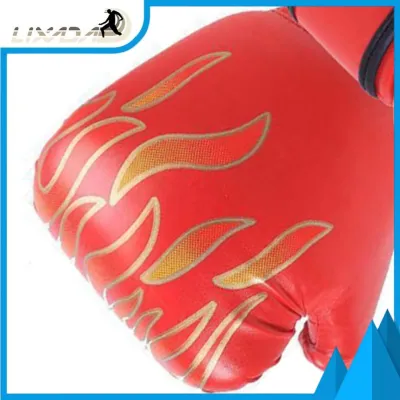
Prices are valid at publication and may change. Please refer to the product page for the latest price.
This weight specification creates a fundamental trade-off between speed and protection:
- Heavier Gloves (14 oz – 16 oz): These provide a thick barrier of defense, absorbing high-velocity impacts to shield your knuckles and your training partner. However, the extra mass increases shoulder fatigue and slows down your hand speed, which can compromise your striking form during long sessions.
- Lighter Gloves (8 oz – 12 oz): These offer minimal resistance, allowing you to strike quickly and receive immediate tactile feedback upon impact. The trade-off is a significantly higher risk of hand strain and minimal protection for anyone on the receiving end of your punches.
Recommended Glove Weights for Specific Training Activities
Different training modalities place unique physical demands on your body and your gear. Using a single pair of gloves for every aspect of Muay Thai is rarely practical and can compromise safety.

Bag Work and Pad Work
For striking heavy bags and Thai pads, gloves weighing 10 oz or 12 oz are the industry standards. If you are a heavier individual weighing over 80 kilograms, you should scale up to 14 oz to ensure your knuckles do not bottom out against dense leather pads.
This lighter weight range is ideal because it allows you to focus on proper technique, alignment, and speed without fighting the inertia of a heavy glove. It provides clear physical feedback, helping you feel whether your punches are landing on the correct knuckles. When shopping, look for gloves with dense, multi-layered foam padding. This specific construction is designed to withstand repeated, high-velocity impacts against hard surfaces without collapsing, preserving your joints over months of training.
Sparring
When transitioning to live partner sparring, safety becomes the absolute priority. For this activity, 14 oz to 16 oz gloves are non-negotiable. Reputable combat sports gyms enforce strict minimum weight rules—typically 16 oz for anyone over 65 kilograms—to prevent unnecessary concussions, facial cuts, and hand injuries.
Sparring gloves are engineered differently than bag gloves. They utilize a softer, more pillowy formulation of foam designed to disperse impact across a wider surface area rather than absorbing it stiffly. This protects your partner’s face and ribs while shielding your own hands during blocks. Never attempt to spar in light bag gloves; doing so is highly dangerous and violates standard gym safety protocols.
Clinch Drills and Technical Work
The clinch is a defining element of Muay Thai, requiring you to grapple, control your opponent’s neck, catch kicks, and sweep from close range. While technical drills are often performed in 12 oz or 14 oz gloves, the physical structure of the glove is far more critical than the weight rating itself.
To clinch effectively, you need a glove that permits hand mobility. Bulky, rigid gloves lock your fingers into a tight fist, making it nearly impossible to hook your hands behind an opponent’s head or secure a firm grip. For dedicated clinch sessions, look for gloves with flexible wrist cuffs and open-palm designs that allow your hand to open fully. If your gloves are too stiff, you will struggle to execute proper technique, which can lead to wrist strain as you try to force your hands into position.
How Body Weight and Experience Level Influence Your Choice
While activity-based guidelines provide a solid foundation, your physical profile and experience level must guide your final decision. A lightweight practitioner and a heavyweight fighter require completely different levels of padding to achieve the same standard of safety.
As a general framework, practitioners weighing under 60 kilograms can safely spar in 14 oz gloves, while those between 60 and 80 kilograms should opt for 16 oz. Anyone exceeding 80 kilograms should strictly use 16 oz or even specialized 18 oz gloves for sparring. This scaling is necessary because heavier individuals generate significantly more kinetic energy; lighter foam layers will compress completely under their weight, rendering the padding useless.
Your experience level also plays a major role in glove selection:
- Beginners: If you are new to the sport, starting with a slightly heavier glove (such as 14 oz for general training) is highly beneficial. It builds essential shoulder conditioning and muscular endurance early on. More importantly, beginners often lack refined punching mechanics, and the extra padding helps protect fragile hand bones from misaligned strikes.
- Advanced Fighters: Experienced practitioners often maintain a diverse gear rotation. They may use ultra-light 8 oz or 10 oz gloves for high-speed shadowboxing and precise pad work, but they strictly transition back to heavy 16 oz gloves the moment partner contact is involved.
Always remember that these are general benchmarks. If you have previous hand injuries or lower bone density, prioritize extra protection by choosing a heavier glove.
Muay Thai Gloves vs. Standard Boxing Gloves: Why Design Matters
It is a common mistake to assume that any boxing glove will suffice for Muay Thai as long as the weight in ounces matches. However, traditional Western boxing gloves and authentic Muay Thai gloves are built for entirely different rulesets and movement patterns.
Western boxing gloves are optimized exclusively for punching. They feature a rigid, highly supportive wrist cuff designed to lock the wrist in place, and a pre-curved thumb that forces the hand into a tight, permanent fist. The padding is concentrated heavily over the front knuckles to maximize punch protection.
In contrast, Muay Thai gloves are designed for a multi-dimensional sport involving kicks, elbows, knees, and grappling:
- Flexible Cuffs: The wrist cuff is shorter and more flexible, allowing the wrist to bend during clinch work and when catching kicks.
- Open Palm Design: The glove profile is flatter, allowing the hand to open up to grab opponents or parry strikes.
- Side Padding: Extra padding is distributed along the outer edge of the hand and wrist to shield against incoming head kicks and elbow strikes.
To ensure you can execute all aspects of the sport safely and correctly, seek out models explicitly designated for Muay Thai rather than standard boxing variations.
Pre-Purchase Fit and Safety Checklist
Before purchasing your gloves, run through this practical checklist to ensure they meet safety standards and fit your hands perfectly.
- Test with Hand Wraps: Never try on gloves with bare hands. Hand wraps are essential for wrist stability and knuckle protection, and they add substantial volume to your hand. Ensure the glove fits snugly but comfortably over wrapped hands without cutting off circulation.
- Evaluate the Closure System: Velcro (hook-and-loop) closures are highly practical for daily training, allowing you to put on and remove your gloves independently. Lace-up gloves offer superior wrist support but require a trainer or partner to tie them, making them less practical for solo bag work.
- Verify Finger Alignment: Slide your hand fully into the glove. Your fingers should align naturally with the internal grip bar. There should be no empty space at the fingertips, and your thumb should feel secure and protected from awkward angles that could cause joint jams on impact.
- Check the Padding Condition: If you are using older gloves, press down on the knuckle area. If you can feel your knuckles easily through the foam, or if the padding feels lumpy and cracked, the glove has reached the end of its lifespan and must be replaced to prevent injury.
Frequently Asked Questions (FAQ)
Can I use one pair of 14 oz gloves for all Muay Thai training?
While a 14 oz glove is often considered a middle-ground compromise, using a single pair for all training is not recommended. If you use the same gloves for heavy bag work and sparring, the dense impact of the bag will quickly compact and degrade the foam. When you then use those same degraded gloves to spar, you risk injuring your partner. For optimal safety and gear longevity, it is best to own a lighter pair for pads and a dedicated, softer pair for sparring.
Do heavier gloves make you punch harder?
No, heavier gloves do not increase your striking power. According to basic physics, kinetic energy is a product of mass and velocity. While a heavier glove adds mass, it also increases wind resistance and muscle fatigue, which slows down your hand acceleration. Ultimately, this results in a similar or lower impact force. Heavier gloves are used to build muscular endurance in the shoulders and to protect your hands, not to increase knockout power.
Community discussion
Share your experience or ask a question. Comments are reviewed before publication.