
Selecting the correct Muay Thai glove weight is one of the most critical decisions you will make for your training. The weight of a glove, measured in ounces (oz), directly impacts your hand safety, the safety of your sparring partners, and the development of your striking technique. Using the wrong weight can lead to chronic wrist pain, hand injuries, or being barred from sparring sessions at your local gym.
While many beginners assume that glove weight corresponds to hand size, it actually refers to the weight of the protective padding built into the glove. Matching this padding to your specific training activity—whether you are hitting heavy bags, catching kicks in clinical drills, or engaging in live sparring—is essential for longevity in the sport.
Quick Reference: Muay Thai Glove Weights by Training Scenario
To help you make an immediate decision, the table below outlines the standard glove weight recommendations based on your primary training activity. These ranges serve as a baseline for most adult practitioners.
Products mentioned in this guide
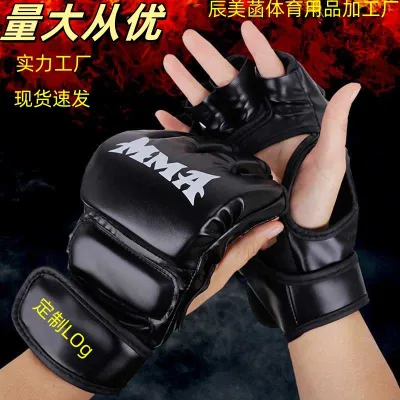
Prices are valid at publication and may change. Please refer to the product page for the latest price.
| Training Scenario | Recommended Glove Weight (oz) | Primary Purpose |
|---|---|---|
| Shadow Boxing & Technique | 10 oz – 12 oz | Maximizes hand speed, builds shoulder endurance, and allows precise form checks. |
| Heavy Bag & Pad Work | 12 oz – 14 oz | Balances dense knuckle protection with realistic impact feedback. |
| Sparring | 16 oz | Prioritizes partner safety and shock dispersion; mandatory in most gyms. |
It is important to understand that “oz” represents the physical weight of the internal foam padding, not the size of the hand compartment. A 16oz glove contains significantly more shock-absorbing material than a 10oz glove, making it bulkier and heavier to lift.
While these standard ranges apply to the majority of practitioners, your individual body weight and physical stature will dictate where you fall within these brackets. Heavyweight strikers naturally generate more force and require thicker padding, whereas lighter individuals may need smaller glove profiles to maintain proper alignment.
Heavy Bag and Pad Work: Balancing Knuckle Protection and Tactile Feedback
Training on heavy bags and Thai pads involves repetitive, high-impact collisions. To safeguard the delicate bones in your hands over hundreds of weekly strikes, a glove weight between 12oz and 16oz is the industry standard for impact-based drills.

These gloves are engineered with dense, compact padding designed to withstand repeated compression. When you strike an unyielding heavy bag or a stiff pair of leather Thai pads, this dense foam layer prevents your knuckles from bottoming out, which is the primary cause of bruised hand bones and joint inflammation.
Choosing the correct weight within this range requires balancing protection against tactile feedback. An 18oz glove offers maximum protection but can feel like a pillow, masking poor punching angles and reducing your ability to feel how your knuckles align with the target. Conversely, using a light 10oz glove on a heavy bag increases the risk of impact injuries because the thin padding cannot fully absorb the force of your strikes.
Wrist support is another critical factor during bag and pad work. Because stationary targets do not yield easily, any deviation in your wrist alignment can result in a painful sprain. Look for gloves with wide, rigid hook-and-loop straps or traditional lace-ups that lock your wrist in place and prevent lateral bending upon impact.
Sparring: Prioritizing Partner Safety and Shock Dispersion
Sparring is a collaborative learning tool, not a fight. Because your goal is to practice timing and strategy without injuring your teammates, a 16oz glove is the universal standard required by reputable Muay Thai gyms worldwide.
The key difference between sparring gloves and bag gloves lies in the composition of the padding. Sparring gloves utilize softer, more pillowy layers of foam that are designed to disperse shock across a wider surface area. This construction minimizes the concussive force transmitted to your partner’s head and reduces the likelihood of cuts, bruises, and orbital injuries.
Using lighter gloves, such as 12oz or 14oz, for sparring is widely considered unsafe and disrespectful in the martial arts community. Lighter padding does not compress sufficiently to protect your partner from high-velocity impacts. If you are a larger practitioner weighing over 80kg, your coach may even require you to wear 18oz gloves to compensate for your natural power.
Always consult your head coach before purchasing gloves specifically for sparring. Gyms often enforce strict safety boundaries regarding mandatory equipment, and attempting to spar with inadequate glove weights will result in you being turned away from the mat for safety reasons.
Shadow Boxing and Technique: Building Speed and Shoulder Endurance
Non-impact training, such as shadow boxing, mirror work, and light reflex bag drills, focuses entirely on form, speed, and cardiovascular conditioning. For these activities, lighter gloves ranging from 10oz to 12oz are highly recommended.
Lighter gloves allow you to focus on the fine details of your technique, such as hand rotation, hip engagement, and keeping your guard tight to your face. Because you are not fighting the weight of heavy padding, you can maintain a high hand speed and practice rapid combinations without your shoulders fatiguing prematurely.
Using heavy sparring gloves for extended shadow boxing sessions can negatively alter your natural punching mechanics. The excess weight can pull your hands downward at the end of a punch, leading to elbow hyperextension and unnecessary strain on your rotator cuffs. Training with lighter gloves ensures you build functional shoulder endurance while keeping your movements sharp and precise.
Cross-Scenario Compatibility: Can You Use One Pair for Everything?
For beginners or budget-conscious practitioners, purchasing multiple pairs of specialized gloves may not be immediately practical. If you need a single, versatile pair of gloves to cover all aspects of your training, a 14oz or 16oz glove is the standard compromise.
A 16oz glove is the safest all-rounder because it allows you to participate in sparring sessions while still providing excellent protection on the heavy bag. However, using a single pair of 16oz gloves comes with distinct trade-offs. They will feel heavy and cumbersome during fast pad work, and the dense foam will wear down faster if you use them daily on rough heavy bags, eventually making them too hard to safely use for sparring.
If you choose to start with one pair, monitor the condition of the padding regularly. Press your thumb into the knuckle area; if you can easily feel the shape of your knuckles through the foam, the padding has degraded. Once you transition to regular sparring sessions, it is highly recommended to invest in a dedicated second pair. Keeping one pristine 16oz pair reserved exclusively for sparring and a separate 12oz pair for bag work ensures maximum safety and longevity for your gear.
In tropical environments like Singapore, high humidity can prevent wet gloves from drying quickly between sessions. Owning two pairs of gloves allows you to rotate them, giving each pair adequate time to air out completely. This practice prevents the growth of odor-causing bacteria and extends the lifespan of the leather.
Scaling Glove Weight to Your Body Mass and Striking Power
Because a fixed glove weight does not suit every body type, you must scale your choice based on your body mass and physical power. A lightweight practitioner generates far less kinetic energy than a heavyweight, meaning they do not require the same volume of padding.
The framework below outlines how to scale your glove selection based on your body weight:
- Under 55 kg: Use 10 oz to 12 oz gloves for bag and pad work, and 14 oz gloves for sparring.
- 55 kg to 75 kg: Use 12 oz to 14 oz gloves for bag and pad work, and 16 oz gloves for sparring.
- 75 kg to 90 kg: Use 14 oz to 16 oz gloves for bag and pad work, and 16 oz to 18 oz gloves for sparring.
- Over 90 kg: Use 16 oz gloves for bag and pad work, and 18 oz gloves for sparring.
In addition to body weight, consider your hand size and the internal compartment of the glove. Different brands construct their gloves with varying internal volumes. For example, some brands feature a compact, snug hand compartment ideal for smaller hands, while others offer a spacious fit that accommodates larger hands and thick hand wraps.
Always refer to the manufacturer’s specific sizing chart before making a purchase. When trying on new gloves, do so with your hand wraps on to ensure the wrist closure fastens securely and there is no painful pressure on your fingertips or knuckles.
Frequently Asked Questions (FAQ)
Do Muay Thai gloves fit and function differently than Western boxing gloves?
Yes, Muay Thai gloves feature distinct structural differences tailored to the demands of kickboxing. They are designed with a flatter, more open palm profile, a flexible thumb, and a less pronounced grip bar. This flexibility allows you to open your hand to clinch with opponents, catch incoming kicks, and execute sweeps. Western boxing gloves, by contrast, are engineered to lock your hand into a rigid, closed fist optimized solely for punching.
Should I use hand wraps with every glove weight?
Yes, hand wraps are mandatory for all impact-based training, regardless of whether you are wearing 10oz or 18oz gloves. While glove padding is designed to absorb external shock, hand wraps compress and stabilize the 27 small bones in your hand and wrist. This compression prevents the bones from shifting upon impact and keeps your wrist aligned. Never hit a heavy bag or spar without wrapping your hands first, as glove padding alone cannot prevent structural wrist injuries.
Community discussion
Share your experience or ask a question. Comments are reviewed before publication.