
Finding a reliable soccer ball pump that also services your household’s bicycles and leisure inflatables is the key to maximizing utility from a single purchase. While a simple needle and syringe-style pump can inflate a football, it fails completely when faced with a flat bicycle tire or a large swimming pool float. A truly effective multi-purpose air pump must balance high-pressure capability with low-pressure precision, ensuring you can transition seamlessly from preparing for a weekend match to inflating gear for a family outing. By understanding the mechanical differences and compatibility requirements of various pump types, you can select a single tool that meets all your inflation needs safely and efficiently.
Why Versatility Matters for a Soccer Ball Pump and Sports Gear
Active households and multi-sport athletes often face the frustration of managing a cluttered array of single-purpose inflation tools. Owning a dedicated pump for every piece of equipment is not only expensive but also highly impractical, particularly in space-conscious urban homes such as HDB flats or condominiums in Singapore. A unified inflation solution streamlines your gear storage, ensuring that whether you are heading to the pitch, the cycling path, or the beach, you only need one dependable tool to keep your equipment ready for action.
Using the wrong inflation tool carries distinct risks that can compromise your sports gear. For instance, attempting to inflate a delicate soccer ball with a high-pressure floor pump designed for road bikes can easily lead to over-inflation, which stretches the outer casing and can even rupture the internal bladder. Conversely, trying to fill a high-volume beach inflatable or a pool float with a small, low-volume hand pump is physically exhausting and can cause the pump’s internal seals to overheat and fail prematurely. A versatile pump resolves these issues by delivering the correct volume of air while allowing you to monitor pressure levels safely.
Products mentioned in this guide
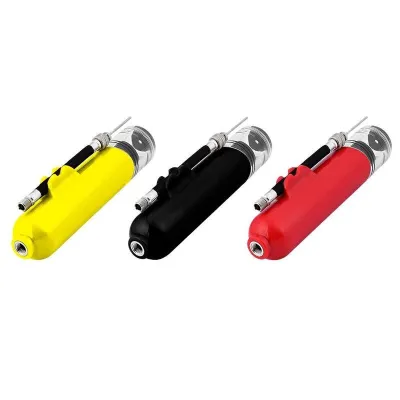
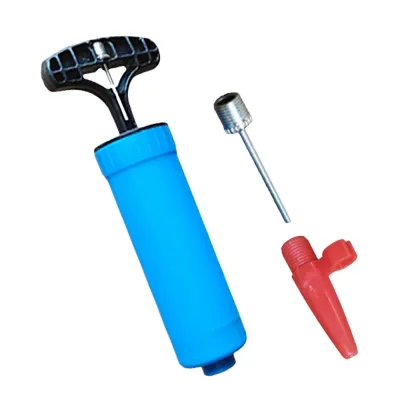
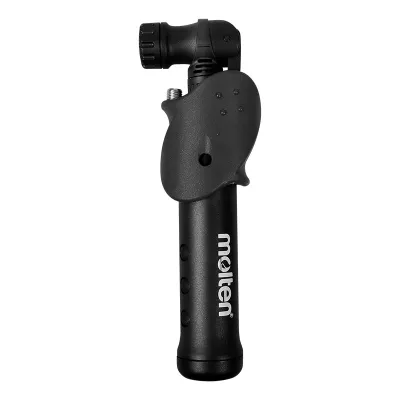
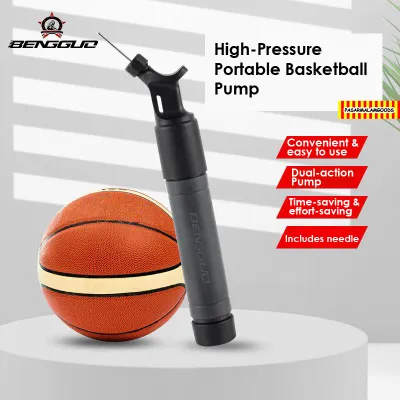
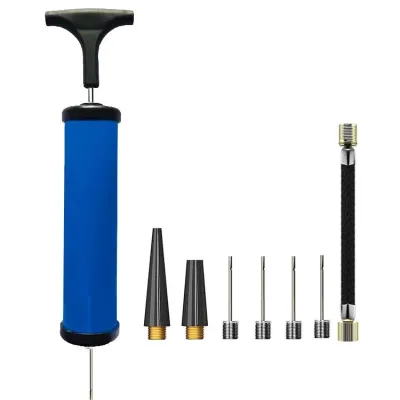
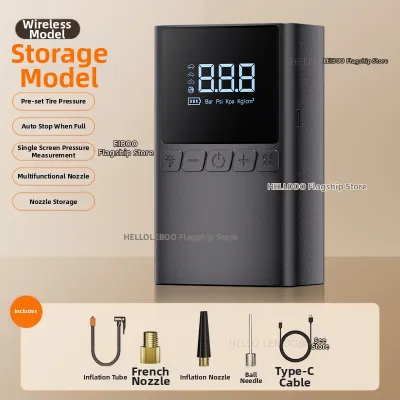
![[SG Stock] Air Pump Car Inflator Compressor Portable Ball Bike Bicycle Rechargeable Basketball Soccer Volleyball Tyre Wheel Tire 12V LED Fast Auto Shut-off Emergency](https://img.lazcdn.com/g/p/cc7d92c566c3860fbbfa1d535cc6f3bb.jpg_400x400q80.jpg_.webp)
Prices are valid at publication and may change. Please refer to the product page for the latest price.
Essential Features of a Reliable Multi-Purpose Soccer Ball Pump
To ensure your pump can handle various sports items, valve adaptability is the first feature to evaluate. Most bicycles use either Presta (slender, high-pressure) or Schrader (wider, automotive-style) valves, whereas sports balls require a specialized metal inflation needle. A high-quality multi-purpose pump should feature a twin-head or smart-head design that securely clamps onto both Presta and Schrader valves without needing separate adapters, alongside a dedicated storage compartment for ball needles and plastic nozzle adapters.

Pressure gauge accuracy is equally critical, especially when dealing with low-pressure items like soccer balls, which typically require between 8 and 12 PSI. A gauge with a clear, easy-to-read display allows you to monitor the inflation process in real-time, preventing the structural damage associated with over-pressurization. For multi-purpose use, look for a gauge that features a dual scale showing both PSI and Bar, with clear increments at the lower end of the spectrum so you can make precise adjustments for sports balls.
The mechanism of the pump—specifically whether it is single-action or dual-action—directly impacts its efficiency. Single-action pumps only deliver air on the downward stroke, which is sufficient for high-pressure bicycle tires but slow for larger items. Dual-action pumps, on the other hand, compress and deliver air on both the push and pull strokes, effectively doubling the inflation speed. This makes dual-action hand pumps exceptionally efficient for inflating sports balls and medium-sized recreational gear quickly on the sidelines.
Finally, robust build quality ensures the pump survives frequent use and transport. Look for floor pumps with wide, stable steel or heavy-duty composite baseplates that keep the unit steady on uneven surfaces like grass or gravel. The hose should be constructed from reinforced, braided rubber to withstand high pressures and resist kinking, while the valve chuck should feature a secure thumb-lock lever to prevent air leakage during operation.
Types of Multi-Purpose Pumps and Their Best Use Cases
Manual Floor Pumps with Gauges
Manual floor pumps, often referred to as track pumps, are the gold standard for home workshops, garages, and pre-match preparations. They feature a large air chamber that delivers a high volume of air per stroke, allowing you to inflate bicycle tires and sports balls with minimal physical effort. Their integrated, eye-level pressure gauges offer excellent readability, making it simple to hit precise target pressures. However, their bulky frame and long hoses make them highly impractical for carrying to the local field or packing into a compact sports bag for sideline use.
Portable Dual-Action Hand Pumps
For athletes who need a compact, on-the-go solution, portable dual-action hand pumps are the ideal choice. These lightweight tools fit easily into a backpack or can be mounted directly to a bicycle frame, making them perfect for emergency sideline top-ups or trailside repairs. Because they pump air on both the push and pull strokes, they inflate sports balls rapidly with minimal wasted motion. The main trade-off is that reaching high pressures (such as those required for road bike tires) with a compact hand pump requires significant manual effort and time compared to a full-sized floor pump.
Rechargeable Electric Inflators
Rechargeable electric inflators represent the modern, effortless approach to sports gear maintenance. Powered by internal lithium-ion batteries, these compact devices allow you to pre-set your desired pressure, connect the nozzle, and let the motor do the work, automatically shutting off once the target PSI is reached. This hands-free operation is incredibly convenient for inflating multiple soccer balls before a training session or filling up large pool floats for a weekend at Sentosa. However, users must manage battery levels to avoid being stranded with a dead unit, tolerate the moderate motor noise, and regularly verify the digital gauge’s calibration to ensure it remains accurate.
Matching Pump Specifications to Your Sports Equipment
Before connecting your pump, it is vital to understand the specific pressure requirements of your gear. Soccer balls almost always have their recommended inflation range (typically 8.7 to 11.6 PSI, or 0.6 to 0.8 Bar) printed directly onto the outer casing near the valve panel. Bicycle tires feature their recommended pressure ranges embossed on the sidewall, which can vary wildly from 30 PSI for mountain bikes to over 100 PSI for road bikes. Recreational water gear and pool floats generally operate on very low pressures (often under 2 PSI) but require a massive volume of air.
Mismatching your equipment and your pump can lead to poor performance or irreversible damage. If you attempt to use a high-pressure, low-volume pump designed for shock absorbers or narrow road tires on a large inflatable kayak or pool float, the process will take an incredibly long time, and the continuous resistance can burn out the pump’s internal seals. Conversely, using a high-volume, low-pressure pump on a bicycle tire is physically impossible, as the pump’s piston cannot generate enough force to overcome the tire’s internal air resistance.
Ergonomics and physical setup also play a role in successful inflation. Ensure the pump hose is long enough to reach the valve comfortably without bending the valve stem or forcing you to hold the soccer ball in an awkward position. A stable base footprint on a floor pump allows you to plant both feet firmly, utilizing your body weight rather than just your arm strength to compress the air, which reduces physical strain during high-pressure inflation tasks.
Safe Inflation Practices and Equipment Care
Maintaining your inflation equipment is just as important as choosing the right model. To prevent damaging your sports balls, always moisten the metal inflation needle with water or a drop of silicone-based lubricant before inserting it into the valve. Inserting a dry, dirty, or rusty needle can easily tear the delicate rubber valve core or push it entirely inside the ball’s bladder, causing a permanent and unrepairable air leak.
Storage conditions drastically affect the lifespan of your pump’s components. In humid climates like Singapore, storing your pump on an open balcony or in a damp outdoor storage box can lead to rapid degradation of the rubber hoses, rust on internal steel springs, and condensation inside the pressure gauge. To prevent these issues, store your pump in a cool, dry, and shaded indoor cupboard, and periodically check the hose for fine cracks or dry rot.
Always establish clear stopping conditions during any inflation task. If you hear a persistent hissing sound around the valve connection, notice that the soccer ball’s panels are bulging unevenly, or see the pump’s pressure gauge fluctuating wildly, stop pumping immediately. These symptoms indicate a compromised valve, a ruptured internal bladder, or a faulty gauge. Always refer to the manufacturer’s care instructions for both the pump and the specific sports equipment before attempting to resolve any inflation issues.
Frequently Asked Questions (FAQ)
Can I use a standard bike tire pump for a soccer ball?
Yes, you can use a standard bicycle tire pump to inflate a soccer ball, provided you attach a compatible metal inflation needle. Most bicycle pumps feature a universal chuck that fits Schrader or Presta valves, which can easily secure a standard threaded needle adapter. However, because bicycle pumps are designed to deliver high pressures, you must pump slowly and monitor the gauge carefully to avoid over-inflating and damaging the soccer ball’s internal bladder.
How do I check if my soccer ball is properly inflated without a gauge?
While using a calibrated pressure gauge is the only way to guarantee exact pressure, you can perform a quick field test if a gauge is unavailable. Hold the soccer ball at shoulder height (approximately 1.5 meters) and drop it onto a flat concrete surface; a correctly inflated ball should bounce back up to roughly chest height (around 1 to 1.2 meters). Additionally, you can press both thumbs firmly into the center of the ball; there should be a slight, firm give of about 2 to 3 millimeters rather than feeling completely rock-hard or excessively soft.
Do portable electric air pumps work well for sports balls?
Portable electric air pumps work exceptionally well for sports balls, offering rapid inflation and precise pressure control. To use them safely, you must select an electric pump that features a digital pressure sensor and an automatic shut-off function. Because these pumps inflate quickly, a manual electric pump without an auto-stop feature can easily over-inflate and burst a soccer ball’s bladder in a matter of seconds if left unattended. Always pre-set the target PSI on the device before initiating the inflation cycle.
Community discussion
Share your experience or ask a question. Comments are reviewed before publication.