
When evaluating how the Oasis flask compares to other sports water bottles in insulation performance, the answer does not lie in brand prestige alone. Instead, temperature retention is determined by physical specifications: vacuum layer integrity, lid design, material thickness, and the specific environment of your workout. Whether you are cycling under the intense tropical sun of Singapore or training in an air-conditioned gym, understanding these technical elements allows you to look past marketing claims and choose a bottle that keeps your drinks at the desired temperature throughout your entire routine.
Understanding Insulation Technology in Sports Bottles
To evaluate any sports bottle, including the Oasis flask, you must first understand the physics of thermal retention. Most premium sports bottles utilize double-wall vacuum insulation. This structure consists of an inner and outer stainless steel vessel welded together, with the air evacuated from the space between them. Because a vacuum contains no air molecules, it virtually eliminates heat transfer by conduction and convection. The only remaining pathway for heat to enter or escape is radiation, which manufacturers often minimize by coating the inner wall with reflective materials.
However, the vacuum layer is only as effective as the bottle’s weakest thermal link: the lid. Lids are typically made of plastic and silicone, which do not insulate as effectively as a double-walled steel vacuum. Every opening, straw mechanism, or flip-top hinge acts as a thermal bridge, allowing heat to bypass the vacuum insulation. A wide-mouth bottle with a simple, thick screw cap will naturally retain temperature longer than a bottle with a complex straw lid, as the straw lid introduces more air gaps and thinner materials where heat exchange can occur.
Products mentioned in this guide
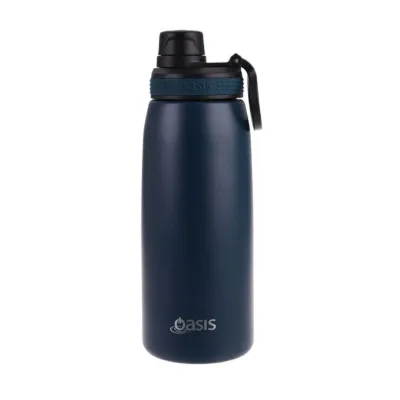
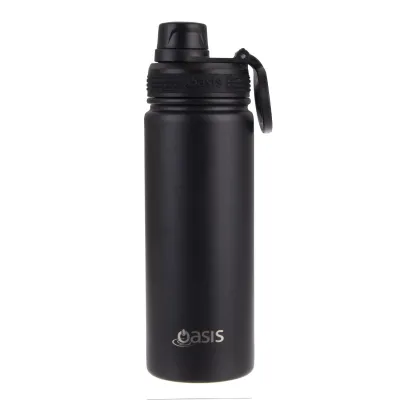
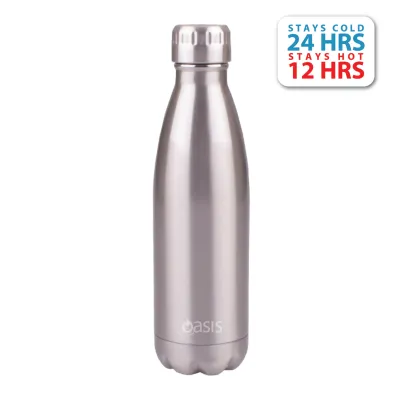
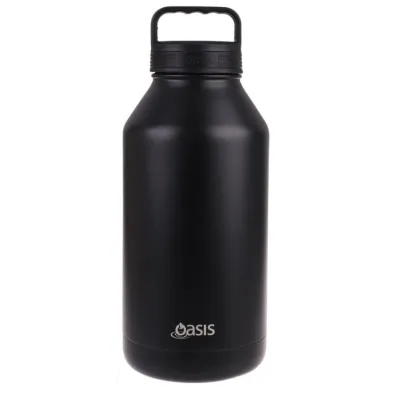
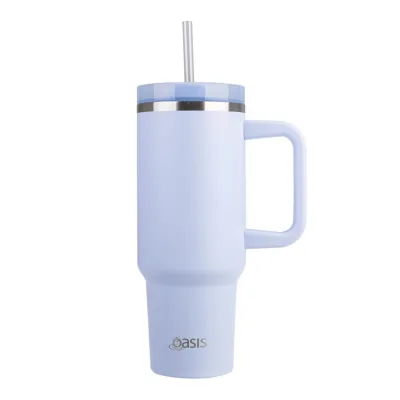
Prices are valid at publication and may change. Please refer to the product page for the latest price.
Additionally, the exterior construction plays a secondary role in thermal regulation and durability. High-grade 18/8 food-grade stainless steel is the industry standard for sports bottles, offering excellent resistance to dents and corrosion from sweat. Many brands apply a powder-coated exterior finish. While powder coating is primarily designed to improve grip during high-intensity workouts, it also provides a minor barrier against external ambient heat and prevents the bottle from feeling uncomfortably hot or cold to the touch.
Key Specifications to Check on the Oasis Flask
When analyzing an Oasis flask, you should start by locating the manufacturer’s official performance ratings, usually printed on the packaging or the product’s specification sheet. These ratings typically state a specific number of hours for cold retention and hot retention. It is crucial to recognize that these figures are established under controlled laboratory conditions—usually starting with solid ice or boiling water in a stable room-temperature environment without the lid being opened.

The capacity of the Oasis flask you select also directly influences its thermal performance. A larger volume of liquid possesses greater thermal mass, meaning a 1.2-litre bottle will naturally maintain its temperature longer than a 500-millilitre bottle of the exact same design, provided both are filled to capacity. Conversely, a larger bottle has a wider mouth and more surface area, which can accelerate temperature loss if the bottle is only half-full. You must balance your hydration volume requirements against the physical weight you are willing to carry during your workouts.
Finally, examine the lid configuration of the specific Oasis model you are considering. Oasis flasks are often compatible with various lid styles, including standard screw caps, straw lids, and sports caps. If your primary goal is maximum cold retention during long outdoor runs, a solid, insulated screw cap is technically superior. If quick, one-handed hydration is necessary during a fast-paced spin class, a straw lid is more convenient, though you should expect a slight trade-off in absolute insulation hours due to the non-insulated straw pathway.
Comparing Oasis Flask with Other Popular Sports Bottles
To determine how the Oasis flask stacks up against competing sports bottles on the market, you must compare them across several practical dimensions. Weight is a critical factor for active users; a bottle with thicker steel walls may offer slightly better insulation but will feel significantly heavier in your backpack or bottle cage. You must also evaluate the spout design and leak-proof mechanisms, ensuring that the bottle can withstand being tossed into a gym bag without spilling water over your gear.
Your choice should also align with your specific workout scenarios. For high-sweat cardio sessions in humid conditions, such as outdoor running or outdoor boot camps, you need a bottle that keeps water cold while offering a high-flow spout for rapid drinking. For long-distance hiking or cycling, where you might be away from a clean water source for hours, maximum insulation capacity and a secure, dust-proof lid are paramount. For standard indoor gym sessions, a moderate-capacity bottle that fits standard treadmill cup holders and features an easy-grip exterior is often the most practical choice.
To help you compare the Oasis flask with other options you find at local retailers or online marketplaces, use the following verification template to record and analyze key specifications:
| Comparison Dimension | Oasis Flask Specification | Competitor A Specification | Competitor B Specification |
|---|---|---|---|
| Stated Cold Retention | Check label (e.g., hours) | Check label (e.g., hours) | Check label (e.g., hours) |
| Stated Hot Retention | Check label (e.g., hours) | Check label (e.g., hours) | Check label (e.g., hours) |
| Base Material & Grade | Verify steel grade (e.g., 18/8) | Verify steel grade | Verify steel grade |
| Lid Type & Seal | e.g., Straw, Screw, Flip | e.g., Straw, Screw, Flip | e.g., Straw, Screw, Flip |
| Empty Weight (g) | Measure or check specs | Measure or check specs | Measure or check specs |
| Cup Holder Compatible | Yes / No (Check diameter) | Yes / No (Check diameter) | Yes / No (Check diameter) |
| Estimated Price Range | e.g., S$30 – S$50 | e.g., S$35 – S$60 | e.g., S$25 – S$45 |
How to Test and Verify Insulation Claims at Home
Once you have purchased an Oasis flask or a competing sports bottle, you do not have to rely solely on manufacturer claims. You can perform simple, safe, and reversible tests at home to verify the actual insulation performance under your local environmental conditions.
The ice melt test is an excellent way to evaluate cold retention. Fill your bottle to the brim with standard ice cubes, secure the lid tightly, and leave it in a room with a stable temperature (such as an air-conditioned room set to 24°C). Check the bottle periodically without opening it too frequently, as opening the lid introduces warm air. Note how many hours it takes for the ice to melt completely into water. A high-performing vacuum insulated bottle should keep ice solid for a significant portion of the day.
For a more precise measurement, conduct a water temperature test using a standard food-safe digital thermometer. Fill the bottle with ice-cold water, measure and record the initial temperature, and seal the lid. Measure the temperature again at regular intervals, such as after four, eight, and twelve hours. This test allows you to plot a realistic temperature curve, showing you exactly how much heat your bottle gains over the course of a typical workout day.
Finally, perform an exterior condensation check, which is the easiest way to detect a faulty vacuum seal. Fill the bottle with ice water and let it sit for ten to fifteen minutes. Feel the exterior surface of the stainless steel. The outside of the bottle should remain dry and close to room temperature. If you notice “sweating” or condensation forming on the outer steel wall, or if the exterior feels cold to the touch, it indicates that the vacuum seal has failed or was compromised during manufacturing, allowing heat to transfer freely.
Making the Final Decision for Your Workout Needs
Selecting between the Oasis flask and other sports bottles ultimately comes down to matching verified specifications with your personal athletic habits. The Oasis flask is an excellent choice when its physical dimensions, lid options, and verified insulation performance align with your daily hydration volume. If you find that the Oasis model offers the specific lid style you prefer—such as a well-sealed straw lid that does not leak during transport—and fits comfortably in your bicycle cage or gym bag, it represents a highly functional option for daily use.
On the other hand, you might opt for a competitor if your workout demands highly specialized features. For instance, ultra-lightweight backpackers might prioritize a bottle made with thinner, lighter steel walls, even if it means sacrificing a few hours of cold retention. Similarly, competitive cyclists might require a specialized squeeze bottle design that cannot be achieved with rigid stainless steel. Always identify your non-negotiable requirements—whether that is weight, drinking flow rate, or cup-holder compatibility—before making your purchase.
Before finalizing your decision, always verify the retailer’s return and warranty policies. Since vacuum insulation failures can occasionally occur due to shipping impacts or manufacturing defects, buying from a reputable seller who offers a straightforward exchange policy ensures you can test your bottle at home risk-free. If your home tests reveal condensation or poor temperature retention, you can easily exchange the unit for one that performs to its technical specifications.
Frequently Asked Questions (FAQ)
Does the color of the water bottle affect its insulation performance?
In direct sunlight, the exterior color of your water bottle can have a minor theoretical impact on heat absorption. Darker colors, such as matte black or deep navy, absorb more radiant heat from the sun than lighter colors or bare stainless steel. However, because the double-wall vacuum layer is highly efficient at blocking heat conduction, this external temperature difference rarely affects the liquid inside to a noticeable degree. The vacuum layer remains the dominant factor in temperature retention, meaning you can generally choose whichever color matches your personal style without worrying about performance loss.
Can I put boiling water directly into a sports water bottle?
While high-quality stainless steel sports bottles can withstand boiling water, you must exercise caution before pouring hot liquids into them. Always check the manufacturer’s instructions, as many sports bottles—especially those equipped with plastic straw lids or bite valves—are not rated for hot liquids. Extreme heat can degrade silicone gaskets, warp plastic components, and cause pressure to build up inside the bottle. This pressure can lead to hot liquid spraying out when you open the lid, presenting a serious steam burn hazard. If you intend to carry hot drinks, use a dedicated travel mug with a pressure-release lid.
Why does my insulated bottle stop keeping drinks cold over time?
If your insulated bottle suddenly loses its ability to keep drinks cold, the most common cause is a compromised vacuum seal. This failure usually happens when the bottle is dropped or suffers a hard impact, creating microscopic fractures in the steel welds that allow air to re-enter the vacuum chamber. Once air fills this space, the bottle behaves like a single-walled container, transferring heat rapidly. Since a broken vacuum seal cannot be repaired at home, you will need to replace the bottle or contact the manufacturer to see if the damage is covered under their product warranty.
Community discussion
Share your experience or ask a question. Comments are reviewed before publication.