
Selecting the right recovery tool depends entirely on the nature of your muscle tightness, your physical mobility, and your recovery goals. If you are dealing with deep, localized knots in hard-to-reach areas like the arches of your feet or deep within your glutes, a dense massage ball like an Oball offers the targeted precision needed to release these trigger points. For those seeking to address broad muscle groups, improve overall flexibility, or perform full-body mobility routines after a long run, a classic foam roller remains the standard choice. Meanwhile, if you prefer a passive, high-intensity recovery method that delivers rapid deep-tissue stimulation without requiring you to support your own body weight on the floor, a percussive massage gun is the most suitable option.
Quick Answer: Matching the Tool to Your Tension Type
To optimize your recovery routine, match the tool directly to the specific type of muscle tension you are experiencing:
- Oball / Massage Ball: Best for pinpoint trigger points, deep localized knots, and small stabilizer muscles (such as the arches of the feet, glutes, and shoulder blades).
- Foam Roller: Best for broad muscle groups (like the quadriceps, hamstrings, and calves), general warm-ups, and full-body mobility work.
- Massage Gun: Best for passive, deep-tissue relief, rapid muscle stimulation, and quick pre-workout activation without physical exertion.
How Each Tool Targets Muscle Tension
To make an informed choice, it is essential to understand how these tools interact with your musculoskeletal system. Each device employs a distinct mechanical action to stimulate blood flow, alleviate tension, and promote tissue relaxation.
Products mentioned in this guide
![[Pre Order] Medicine Ball / Exercise Ball / Fitness Ball](https://img.lazcdn.com/g/p/a25473cc5f8d7083a155a58bbeceae0e.jpg_400x400q80.jpg_.webp)
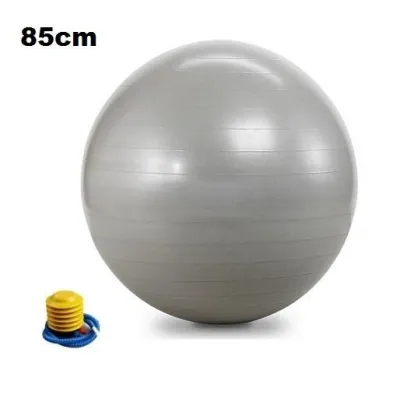
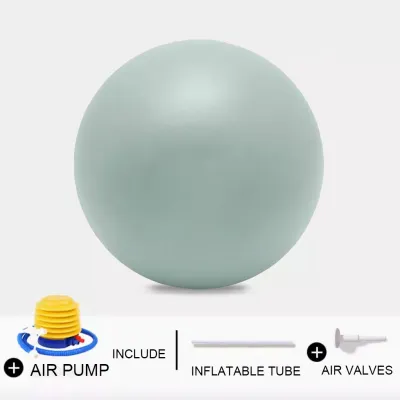
Prices are valid at publication and may change. Please refer to the product page for the latest price.

The Oball, or targeted massage ball, relies on concentrated, static compression. By placing the ball under a specific muscle group and using your body weight or wall pressure, you isolate tiny, hyper-irritable spots within the muscle tissue, often referred to as trigger points. This focused pressure temporarily restricts blood flow; upon release, a fresh surge of oxygenated blood circulates through the tissue, helping to restore elasticity to small stabilizer muscles that larger tools cannot reach.
In contrast, a foam roller utilizes broad, rolling compression. As you sweep your body weight across the cylindrical surface, the roller applies pressure over a wide surface area, targeting entire muscle bellies such as the quadriceps, hamstrings, and calves. This action helps to address general fascial tightness, smoothing out the connective tissue that surrounds your muscles. It is an active process that encourages overall circulation, making it highly effective for general stiffness and post-workout cool-downs.
A massage gun operates on the principle of percussive therapy, delivering rapid, repetitive pulses deep into the muscle fibers. Instead of relying on static pressure or slow rolling, the motorized head of the gun coaxes the nervous system into relaxation by overriding pain signals with high-frequency vibration. This rapid mechanical pulsing increases local blood flow and temperature, offering deep-tissue stimulation with minimal physical effort, which is particularly beneficial for waking up cold muscles before training.
Comparing Precision, Coverage Area, and Effort
When deciding between these tools, you must weigh the trade-offs between precision, coverage area, and the physical effort required during use. Each tool demands a different level of physical engagement and spatial awareness.
Precision vs. Surface Area The primary differentiator between these devices is the surface area they cover. An Oball has a very small contact patch, making it exceptionally precise. This allows you to pin down deep knots in the piriformis, the subscapularis under the shoulder blade, or the plantar fascia on the sole of the foot. A foam roller, with its long cylindrical shape, sacrifices this pinpoint precision in favor of rapid, broad coverage. Rolling out both quadriceps or the entire upper back takes only a few minutes, whereas attempting to cover the same surface area with a small ball would be tedious. A massage gun sits in the middle; while its attachments allow for moderate precision, it cannot match the deep, passive structural leverage of a small, hard ball placed directly under a heavy muscle group.
Active vs. Passive Recovery The physical demand of the recovery session itself is another critical factor. Using a foam roller is an active, physical process. You must support your body weight using your core, shoulders, and arms as you glide back and forth across the floor. For individuals who are already fatigued from an intense workout, or those with limited upper body strength, this can feel more like an extension of the workout than a recovery session. An Oball also requires some active positioning, especially when pinning it against a wall or balancing on the floor. A massage gun, however, offers almost entirely passive recovery. You can sit comfortably on a sofa or chair and guide the device over your target muscles with one hand, requiring virtually no core stability or physical exertion.
Learning Curve and Technique Each tool requires a specific technique to ensure safety and effectiveness. Foam rolling has a moderate learning curve; users must learn how to modulate their body weight to control the pressure and avoid rolling directly over bony prominences. The Oball requires a high degree of body awareness, as positioning a small ball under the glutes or shoulder blades requires subtle adjustments to find the exact spot without causing joint strain. Massage guns are relatively intuitive to hold, but they require careful speed and pressure management. Pressing a percussive tool too hard against a tight muscle can trigger a protective contraction rather than relaxation, and accidental contact with bone can be painful.
Evaluating Budget, Portability, and Upkeep
Beyond physical performance, practical lifestyle factors such as your budget, available space, and maintenance habits will heavily influence which tool fits seamlessly into your daily routine.
Cost Tiers and Value Drivers The financial investment required for these tools varies significantly. A simple, non-electronic tool like an Oball or a standard high-density foam roller is highly accessible, typically costing anywhere from S$15 to S$50. The price of a foam roller generally scales with material density and surface texturing. Massage guns represent a much higher financial tier, with prices starting around S$50 for basic, compact models and climbing well over S$300 for professional-grade devices. The cost of a massage gun is driven by motor torque, battery longevity, noise-dampening technology, and the variety of interchangeable attachment heads included in the kit.
Portability and Storage For active individuals in Singapore, portability is a major consideration. If you frequently commute to a local gym, run along East Coast Park, or travel for races, carrying a full-sized foam roller can be highly inconvenient due to its bulk. While travel-sized rollers exist, they still occupy substantial space in a backpack. An Oball is the ultimate portable option; it is small enough to slip into any gym bag, work tote, or carry-on luggage, allowing you to roll out your feet or back at your office desk. A massage gun offers moderate portability; while compact “mini” models are highly packable, standard units require a dedicated carrying case to protect the battery, motor, and various attachment heads from damage during transit.
Upkeep and Durability Maintenance requirements differ based on the materials and complexity of each tool. In Singapore’s warm, humid climate, sweat buildup on recovery equipment can quickly lead to hygiene issues. Solid foam rollers and rubberized Oballs are incredibly durable and easy to maintain; they can be wiped down with a damp cloth and mild soap after every session without risk of damage. Massage guns require more careful upkeep. Because they contain electronic components and lithium-ion batteries, they cannot be submerged in water. The handle and plastic attachments must be wiped down carefully, and the battery must be charged periodically to maintain its lifespan. Over time, the moving parts of a massage gun may wear down, whereas a high-quality solid foam roller or dense rubber ball can last for years.
Final Decision Framework for Your Recovery Routine
To help you decide which tool to integrate into your fitness regimen, consider the following scenarios and matching recommendations.
Choose an Oball if:
- Your primary complaints are localized, deep knots in the glutes, shoulders, or feet.
- You have a limited budget and want a simple, indestructible tool that requires zero maintenance.
- You require maximum portability for travel, office use, or commuting.
Choose a Foam Roller if:
- Your fitness routine involves large-scale lower body workouts, such as running or cycling, and you need to sweep broad muscle groups like the IT band, quads, and calves.
- You enjoy active stretching, mobility work, and using your own body weight to control pressure levels.
- You have dedicated storage space at home for a larger recovery accessory.
Choose a Massage Gun if:
- You prefer a highly convenient, passive recovery method that you can use while relaxing.
- You want a tool that is excellent for quick, pre-workout muscle activation.
- You find floor-based rolling too physically demanding due to joint discomfort or limited core strength.
The Hybrid Approach: Many athletes find that combining these tools yields excellent results. You might use a foam roller for a broad, full-body sweep to warm up your tissues, and then follow up with an Oball to target specific, stubborn knots that the roller passed over.
Safety Checks and When to Stop
While self-myofascial release is generally safe, improper use of these tools can lead to tissue damage, bruising, or nerve irritation. Adhering to basic safety boundaries is essential for protecting your body.
Anatomical Areas to Avoid Regardless of the tool you choose, never apply direct pressure to bones, joints, or major nerve pathways. Avoid rolling or pulsing directly over the spine, the lower back (where there is no rib cage to protect internal organs), the front of the neck, the groin, or the armpits. These areas contain delicate blood vessels and nerves that can easily be compressed or damaged. Keep the application focused strictly on fleshy muscle bellies.
Immediate Warning Signs Self-massage should feel like a deep, dull ache that gradually releases. If you experience sharp, stabbing pain, numbness, tingling, or a “pins and needles” sensation, stop immediately. These are clear indicators of nerve compression or acute tissue strain. Additionally, if you notice excessive bruising or skin irritation, reduce the frequency and intensity of your sessions.
When to Seek Professional Help These recovery tools are designed to alleviate minor muscle tension and delayed onset muscle soreness (DOMS). They are not a cure for acute injuries. If you are dealing with persistent pain that does not improve after several days, swelling, joint instability, or a suspected muscle tear, do not attempt to self-treat. Consult a qualified physiotherapist or medical professional to receive an accurate diagnosis and a tailored rehabilitation plan.
Frequently Asked Questions (FAQ)
Can I use a massage gun and a foam roller on the same day?
Yes, you can safely combine both tools in a single recovery session, provided you monitor your tissue tolerance. A highly effective sequence is to start with the foam roller to perform broad, sweeping strokes across your major muscle groups. This initial step helps to increase overall circulation and prepare the fascia. Afterward, you can use the massage gun to target specific, stubborn areas of tension that require deeper, localized stimulation. Be careful not to overwork any single area; if your muscles begin to feel tender, bruised, or overly sensitive, reduce the intensity or stop the session to allow your tissues to recover.
How long should I spend on a single muscle group?
For general recovery, spend approximately 30 to 60 seconds on each muscle group. When using a foam roller, keep the movement slow and continuous, gliding at a rate of about one inch per second. If you are using an Oball for static trigger point release, place the ball under the knot and hold steady pressure for 20 to 30 seconds while taking deep, slow breaths to encourage the muscle to relax. Avoid spending more than two minutes on any single spot with a massage gun or ball, as prolonged compression or high-frequency percussion can irritate the skin, bruise the underlying tissue, and trigger a protective inflammatory response.
Are these tools safe to use if I have a previous muscle injury?
If you have an acute muscle injury, such as a recent strain, tear, or severe sprain, you should avoid using these recovery tools directly on the affected area. Applying intense compression or percussive force to healing fibers can disrupt the recovery process, worsen inflammation, and potentially cause further structural damage. These tools are best reserved for healthy, intact muscle tissue experiencing normal post-workout soreness. If you are recovering from a past injury and want to reintroduce self-myofascial release, always consult your physiotherapist or healthcare provider first to ensure your tissues have healed sufficiently to tolerate the pressure.
Community discussion
Share your experience or ask a question. Comments are reviewed before publication.