
Quick Answer: Which Barbell Fits Your Home Gym?
Choosing between an Olympic and a standard barbell is a foundational decision for your home gym. The right choice depends on your long-term fitness goals, your available floor space, and your budget.
An Olympic barbell is the ideal choice if you plan to perform heavy compound lifts, require compatibility with standard commercial gym equipment, and want a setup that supports long-term strength progression. These bars are built to handle substantial weight and offer standard dimensions that fit most power racks.
A standard barbell is better suited if you focus on light resistance training, have strict space limitations, or are working with a tight initial budget. They are lighter, shorter, and easier to store in compact living areas.
Products mentioned in this guide
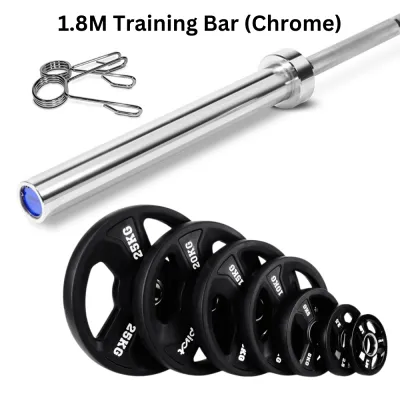
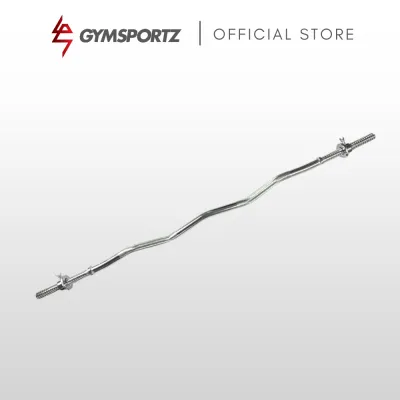
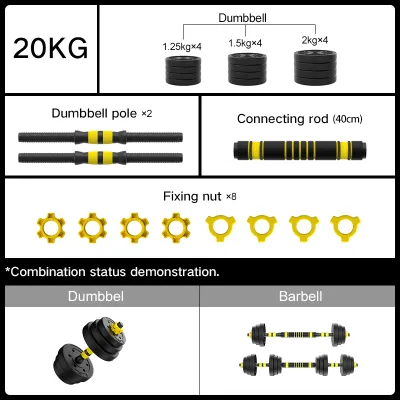
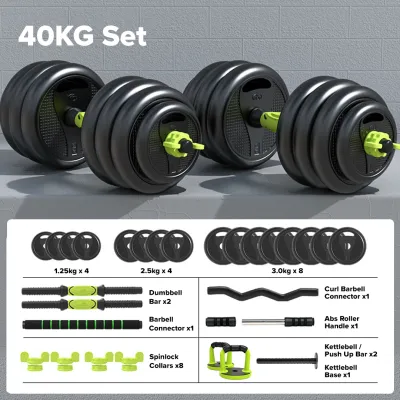
Prices are valid at publication and may change. Please refer to the product page for the latest price.
Before making a purchase, you must verify if your existing weight plates, power racks, or benches are compatible with the sleeve diameter and overall bar length. Mixing incompatible equipment can lead to safety hazards or unusable gear.
Core Differences: Dimensions, Sleeves, and Weight Capacity
To make an informed decision, you must understand the physical and structural distinctions between these two barbell categories. These differences affect everything from your grip comfort to the types of weight plates you can buy.

Sleeve Diameter and Plate Compatibility
The most critical difference lies in the sleeves, which are the outer ends of the bar where you load weight plates. Olympic barbells feature sleeves with a 2-inch (approximately 50mm) diameter. These sleeves are designed to rotate independently of the shaft, using internal bushings or bearings. Standard barbells have fixed, non-rotating sleeves with a 1-inch (approximately 25mm) diameter. Because of this difference, Olympic plates will slide off a standard bar without adapters, and standard plates simply will not fit onto an Olympic bar.
Shaft Diameter and Grip Thickness
The shaft is the middle portion of the bar that you grip. Olympic bars typically have a shaft diameter ranging from 28mm to 32mm, which is standardized to optimize grip security for heavy lifting. Standard bars often feature thinner shafts, sometimes down to 25mm. While a thinner shaft can be easier to grip for individuals with smaller hands, it may feel less stable under heavier loads. You should check the manufacturer’s specifications for the exact millimeter measurements before buying.
Overall Bar Weight and Length
Olympic barbells are standardized in weight and length. A standard men’s Olympic bar weighs 20kg and measures 2.2 meters (about 7.2 feet) in length, while a women’s version weighs 15kg and measures 2.01 meters. Standard barbells are highly variable; they typically weigh between 5kg and 10kg and range from 1.5 to 1.8 meters in length. This makes standard bars significantly lighter and easier to handle when setting up or packing away your gear.
Weight Capacity Limits
Weight capacity is a vital safety specification. Olympic bars are engineered with high-tensile steel to support heavy loads, often rated by manufacturers to hold hundreds of kilograms. Standard bars are constructed from lighter materials and have much lower weight limits. You must rely strictly on the manufacturer’s product labels and ratings rather than assuming a bar’s strength based on its appearance. Overloading any bar beyond its rated capacity can cause sudden structural failure.
Matching the Barbell to Your Training Goals
Your barbell choice should directly support the specific exercises you perform and your long-term athletic progression. Choosing a bar that matches your training style ensures both safety and optimal performance.
Heavy Compound Lifts and Powerlifting
If your training program centers on squats, deadlifts, bench presses, or Olympic weightlifting movements like cleans and snatches, an Olympic barbell is highly recommended. The rotating sleeves on an Olympic bar allow the weight plates to spin freely as you lift. This rotation minimizes the rotational inertia of the plates, preventing the bar from twisting in your hands and reducing strain on your wrists and elbows. Additionally, you should evaluate the knurling—the crosshatched pattern etched into the shaft—to ensure it provides sufficient grip without being overly abrasive for your skill level.
General Fitness and Light Resistance Training
For workouts focused on general fitness, body toning, high-repetition endurance sets, or targeted accessory movements like bicep curls and tricep extensions, a standard barbell is highly functional. The lighter starting weight of a standard bar is excellent for beginners learning proper form. It allows you to focus on movement mechanics without the physical strain of lifting a 20kg bar before adding plates.
Future-Proofing Your Home Gym
Consider your fitness trajectory over the next few years. While a standard barbell may meet your needs today, you may quickly outgrow its weight capacity as your strength increases. Upgrading from a standard to an Olympic system later requires purchasing not only a new bar but also an entirely new set of 2-inch weight plates. Investing in an Olympic barbell early can save you money in the long run by avoiding duplicate purchases.
Space, Compatibility, and Budget Constraints
Setting up a home gym requires balancing equipment specifications with the practical realities of your living space and budget. This is especially true in compact residential layouts, such as HDB flats or apartments in Singapore.
Rack and Bench Compatibility
Before buying, you must measure your existing power rack or bench press station. Most commercial-grade racks are designed for the wider collar-to-collar distance of a 2.2-meter Olympic barbell. A shorter standard barbell may not be wide enough to rest securely on the J-cups of a standard rack. Attempting to use a bar that is too short for your rack can result in the bar falling during re-racking, posing a severe safety risk.
Weight Plate Availability and Costs
The local market offers different options for both barbell types. Olympic plates are highly common and come in various styles, including cast iron, rubber-coated, and solid rubber bumper plates. Bumper plates are essential if you plan to drop the bar during deadlifts or Olympic lifts, as they protect your flooring. Standard plates are often cheaper and more compact, but they are rarely available in rubber-coated bumper styles, meaning they can be noisier and harsher on home floors.
Storage and Environmental Considerations
A 2.2-meter barbell requires a significant amount of clear space to use safely. You must ensure you have enough room not just for the bar itself, but also for sliding plates onto the sleeves on either side. In Singapore’s humid climate, equipment stored in non-air-conditioned spaces like balconies or utility rooms is prone to rust. When choosing a bar, check the shaft finish—such as chrome, zinc, or cerakote—as these coatings offer varying levels of corrosion resistance. Standard bars are often simpler to store vertically in a closet due to their shorter length.
Step-by-Step Buying Checklist
Use this step-by-step checklist to verify all compatibility and safety factors before purchasing your barbell from a local sports store or online marketplace:
- Measure your workout area: Ensure you have at least 2.5 meters of horizontal clearance to safely load and unload plates on an Olympic bar, or verify that a shorter standard bar fits your designated space.
- Check your rack dimensions: Measure the distance between the outer edges of your power rack's uprights and compare it to the shaft length (the distance between the sleeves) of the barbell.
- Verify plate compatibility: Double-check the hole diameter of your existing weight plates. Ensure you buy a 2-inch bar for 2-inch plates, or a 1-inch bar for 1-inch plates.
- Review manufacturer specifications: Confirm the maximum weight capacity, shaft diameter, and sleeve rotation mechanism (bushings or bearings) on the product label.
- Assess the shaft finish: Choose a rust-resistant coating like zinc or cerakote if you live in a humid environment or store your equipment in a non-climate-controlled room.
- Calculate the total cost of ownership: Sum the cost of the barbell, a compatible set of weight plates, and secure collars to ensure the entire package fits your budget.
Frequently Asked Questions (FAQ)
Can I use standard plates on an Olympic barbell?
No, you cannot use standard weight plates directly on an Olympic barbell. Standard plates have a 1-inch (25mm) center hole, which is too small to fit over the larger 2-inch (50mm) sleeves of an Olympic bar. While you can find adapter sleeves to convert a 1-inch standard bar to accept 2-inch Olympic plates, there is no safe way to enlarge the hole of a standard plate to fit an Olympic bar. Always use weight plates that match the exact sleeve diameter of your barbell to ensure a secure fit.
Are standard barbells safe for heavy lifting?
Standard barbells are safe only when used within the strict weight limits specified by the manufacturer. Because they are typically made from thinner, lower-tensile steel, they are prone to bending or structural failure under heavy loads. You must check the product label for the maximum weight capacity before loading the bar. If you observe any permanent bending, warping, or cracking along the shaft or sleeves, stop using the barbell immediately and upgrade to an Olympic barbell designed for higher weight capacities.
Community discussion
Share your experience or ask a question. Comments are reviewed before publication.