
Choosing the right barbell set is the foundation of any successful home gym setup. The decision primarily comes down to selecting between an Olympic barbell set and a standard barbell set. While both options allow you to perform fundamental strength movements, they differ significantly in construction, weight capacity, plate compatibility, and long-term durability. Making the wrong choice can lead to compatibility issues with other gym gear, safety hazards under heavy loads, or unnecessary expenses when you outgrow your equipment.
Quick Answer: Which Barbell Set Should You Choose?
The fundamental physical difference between these two categories lies in the sleeve diameter—the ends of the bar where you slide the weight plates. Olympic barbells feature 2-inch (approximately 50mm) sleeves, whereas standard barbells feature 1-inch (approximately 25mm) sleeves. This structural variance dictates which weight plates will fit your bar and determines the overall weight capacity of your lifting setup.
An Olympic barbell set is a highly suitable choice for serious lifters, those focusing on heavy compound movements like squats, deadlifts, and bench presses, and anyone planning for long-term strength progression. These sets offer enhanced durability, standardized dimensions, and the ability to handle heavy loads safely.
Products mentioned in this guide
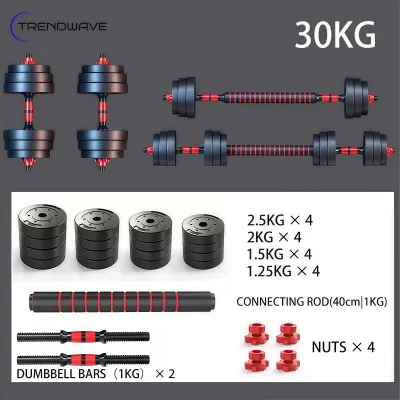
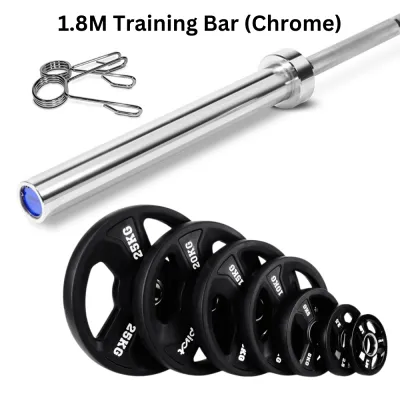
![[INSTOCK] PVC Barbell 50/60/70/80/90/100KG Gym Set / Black Barbell / Home Gym Barbell [+FREE GIFTS!]](https://img.lazcdn.com/g/p/4904c22b1969c8b50600aec35ffe092c.png_400x400q80.png_.webp)
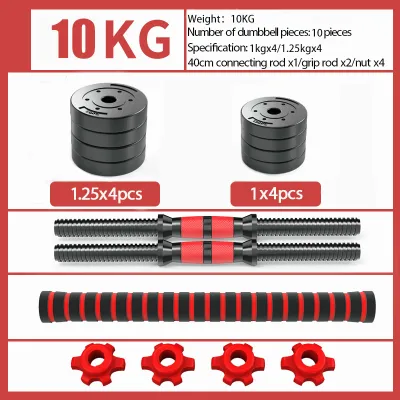
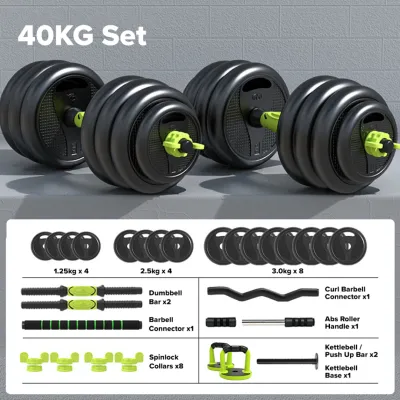
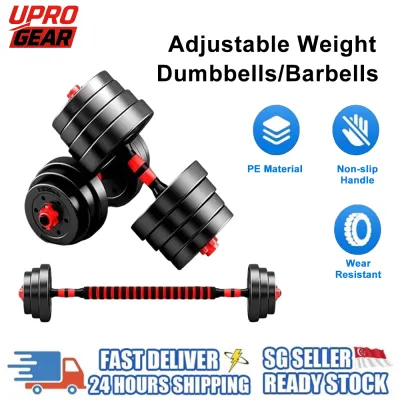
![[BULKY] Dumbbell Set Adjustable Exercise Weight Plates Dumbbell Barbell Convertible Gym Set](https://img.lazcdn.com/g/p/084fbf90618f02a1a89eb8fb30f8a31e.jpg_400x400q80.jpg_.webp)
![[BULKY] Dumbbell Set Adjustable Exercise Weight Plates Dumbbells Barbell Convertible Gym Set](https://img.lazcdn.com/g/p/6f7685dbd91ddf9aedf45f14d9b7cdb8.jpg_400x400q80.jpg_.webp)
Prices are valid at publication and may change. Please refer to the product page for the latest price.
Conversely, a standard barbell set is best suited for beginners, individuals focusing on light-to-moderate general fitness, those working with tight budgets, or lifters with highly restricted workout spaces. If your training consists primarily of high-rep endurance routines, rehabilitation exercises, or basic bicep curls and overhead presses, a standard set provides a cost-effective entry point.
Core Differences: Olympic vs Standard Barbell Specs
Understanding the technical specifications of each barbell type is essential before making an investment. The most obvious distinction is the sleeve diameter. Olympic bars require plates with a 2-inch center hole, while standard bars require plates with a 1-inch center hole. Because of this, weight plates are not directly interchangeable between the two systems, meaning your choice of bar locks you into a specific ecosystem of weight plates.

Barbell weight and length also differ significantly. A typical male Olympic barbell weighs 20kg and measures 2.2 meters in length, though lighter female and youth variations exist. Standard barbells are generally much lighter, often weighing between 5kg and 10kg, and are typically shorter, ranging from 1.5 to 1.8 meters. This makes standard bars easier to handle for beginners but limits the physical space available on the sleeves for loading multiple plates.
Weight capacity limits and structural durability represent another critical divide. Olympic bars are engineered with high-tensile steel designed to withstand substantial bending forces and return to their original straight shape. Standard bars are typically made from basic steel alloys with lower weight thresholds. While some high-end Olympic bars can safely support several hundred kilograms, standard bars often have maximum capacities capped at 100kg to 150kg. You must always verify these exact thresholds on the manufacturer’s product labels before purchasing.
Performance features further set Olympic bars apart. They typically include knurling patterns designed to enhance grip security without tearing your hands, engineered bar whip (the ability of the bar to flex and store elastic energy during heavy lifts), and rotating sleeves. These sleeves utilize bushings or bearings to allow the weight plates to spin freely. This rotation is crucial because it reduces the rotational torque transmitted to your wrists and elbows during dynamic movements. Standard barbells rarely feature rotating sleeves, meaning the entire bar and weight plate assembly rotates as one unit, which can increase joint strain during exercises like cleans or bicep curls.
Matching the Barbell Set to Your Training Goals
To select the right barbell set, you must honestly assess your current fitness level and project your strength progression over the next one to two years. If you are new to lifting, a standard set might seem appealing due to its lower entry barrier. However, if you plan to train consistently, you may find yourself outgrowing the weight limits of a standard bar surprisingly quickly, especially on lower-body compound movements like the deadlift or squat.
Heavy compound lifts require the structural integrity and stability that only an Olympic setup can reliably provide. The wider grip area, standardized knurling, and rotating sleeves of an Olympic bar ensure that your body mechanics remain aligned under heavy loads. Attempting to perform heavy squats or deadlifts on a standard bar can lead to excessive bar bending, which destabilizes your balance and increases the risk of injury.
Standard sets find their utility in specific training scenarios. If your goals revolve around general body toning, physical therapy, high-rep muscular endurance, or aerobic barbell classes, the lighter starting weight of a standard bar is highly advantageous. It allows you to perform high-volume movements without premature joint fatigue. Additionally, standard sets are excellent for youth lifters or older adults who require a lighter, more manageable starting point.
Regardless of which path you choose, safety must remain your primary focus. Equipment cannot replace proper training, form, and personal judgment. Before loading any weight onto your bar, instruct yourself to verify the manufacturer’s stated maximum load capacity. Never assume a bar can handle your lifting goals simply because it looks sturdy. Regularly inspect your barbell for any signs of structural fatigue, such as permanent bending or loose sleeve components, and stop using the equipment immediately if any defects are observed.
Space, Budget, and Home Gym Compatibility
Setting up a home gym in Singapore requires careful consideration of physical space, financial investment, and residential constraints. Before ordering any equipment, measure your available floor space, ceiling height, and doorway widths. A standard 2.2-meter Olympic bar requires a lifting area of at least 3 meters in width to allow for safe plate loading and unloading without striking walls or furniture. If you are setting up your gym in a compact HDB spare room or a tight balcony space, a shorter standard barbell (typically 1.5 to 1.8 meters) may be the only practical option that fits your layout.
Upfront costs and long-term value also play a major role in your decision. Standard barbell sets are significantly cheaper upfront, making them highly attractive for budget-conscious fitness enthusiasts. However, Olympic equipment offers much better long-term value. Olympic plates and bars are highly standardized, meaning they retain their resale value exceptionally well on local secondhand marketplaces. Furthermore, choosing an Olympic bar opens up a vast ecosystem of compatible accessories, such as specialized power racks, safety spotter arms, and specialty bars.
Compatibility with existing gym gear is another critical checkpoint. If you already own a power rack, weight bench, or plate storage tree, you must verify the dimensions before buying a new barbell set. Most heavy-duty power racks are designed specifically for the wider shaft of a 2.2-meter Olympic bar; a shorter standard bar may not be wide enough to rest securely on the rack’s J-cups. Similarly, ensure that your plate storage pegs match your plate hole sizes. Standard 1-inch pegs will not hold Olympic plates securely without sliding, and 2-inch Olympic pegs cannot accommodate standard 1-inch plates at all.
Finally, consider floor impact and noise, which are critical factors when training in high-rise residential buildings. Dropping weights safely requires proper flooring, such as high-density rubber mats, and compatible bumper plates. Bumper plates, which are made of dense rubber designed to absorb impact, are almost exclusively manufactured for Olympic-diameter sleeves. Standard plates are typically made of cast iron or vinyl-filled concrete, which cannot be dropped without risking severe damage to your floor tiles and creating disruptive noise for your neighbors. If you plan to perform lifts where dropping the bar is common, an Olympic set paired with thick rubber flooring is essential.
Final Decision Framework: Choose Your Barbell Set
To finalize your purchase decision, evaluate your training environment and goals against these clear, condition-based rules.
Choose an Olympic barbell set if:
- Your training focus is on heavy compound lifts, powerlifting, Olympic weightlifting, or functional fitness.
- You plan to consistently increase your strength and require a bar that can safely support loads exceeding 100kg.
- You want to build a highly compatible home gym utilizing standard power racks, cages, and high-density rubber bumper plates.
- You view your gym equipment as a long-term investment with high durability and strong resale value.
Choose a standard barbell set if:
- Your workouts consist of light strength training, high-rep endurance routines, or rehabilitation exercises.
- You are working with a strict budget and want to minimize your initial financial outlay.
- Your workout space is highly restricted, making a full-sized 2.2-meter barbell impractical to use or store.
- You already own standard-compatible benches, racks, or weight plates and do not wish to replace your entire setup.
Verify first if:
- Your existing power rack or weight bench width is compatible with the shaft length of the barbell you intend to buy.
- Your home's flooring can support the localized impact of dropped weights, especially if you reside in a multi-story building.
- The manufacturer's specification sheet explicitly lists the maximum weight capacity, sleeve rotation mechanism, and warranty terms for the exact model you are considering.
Always read product labels and specification sheets carefully before checkout to ensure the equipment meets your safety and performance requirements.
Frequently Asked Questions (FAQ)
Can I use standard plates on an Olympic barbell?
No, you cannot directly use standard plates on an Olympic barbell. Standard plates feature a 1-inch (25mm) center hole, which is physically too small to slide onto the 2-inch (50mm) sleeves of an Olympic bar. While adapter sleeves exist to convert 1-inch standard bars to accept 2-inch Olympic plates, there is no safe way to stretch a 1-inch plate hole to fit a 2-inch bar. Attempting to modify plates manually compromises their structural integrity and safety. Always ensure your plates and barbell sleeves share the same diameter specification.
Is a standard barbell set safe for heavy deadlifts?
Generally, standard barbell sets are not recommended for heavy deadlifts. A heavy deadlift relative to a standard bar is typically anything approaching or exceeding 100kg, which is near the maximum structural limit of many standard bars. Before attempting any heavy pulls, you must check the manufacturer’s stated maximum load capacity. If a standard bar is subjected to excessive weight, it may suffer permanent deformation, visible bending, or sleeve failure. If you observe any visible bending or excessive sleeve play during your lifts, stop using the equipment immediately and upgrade to an Olympic setup designed for heavy loads.
Community discussion
Share your experience or ask a question. Comments are reviewed before publication.