
The Short Answer: Which Grip Should You Choose?
Choosing the right badminton racket grip depends entirely on the current condition of your racket handle and your specific comfort needs. You should buy an overgrip if your racket’s base grip is still clean, cushioned, and structurally sound, but you need to restore surface tackiness, increase sweat absorption, or make a very minor adjustment to the handle thickness. Conversely, you must buy a replacement grip if your original factory grip is peeling, crumbling, emitting an odor, or has compressed to the point of feeling rock-hard against the wooden handle.
For the majority of regular players, the optimal configuration is a hybrid setup: maintain a high-quality replacement grip as a permanent, cushioned base layer, and wrap a thin, easily replaceable overgrip on top. This combination provides the necessary shock absorption to protect your joints while allowing you to maintain a fresh, hygienic, and high-traction surface for a fraction of the cost of replacing the entire grip system. Understanding how these two layers interact is the key to preventing hand fatigue and maintaining precise control over your racket face during fast-paced rallies.
Overgrip vs Replacement Grip: Core Differences
To make an informed decision, you must first understand the structural and functional differences between these two types of grips. They are engineered with different materials, thicknesses, and adhesive properties, meaning they cannot be used interchangeably without affecting your racket’s performance.
Products mentioned in this guide
![Towel Grip - High Quality [🇸🇬 SG Local Seller]](https://img.lazcdn.com/g/p/8299f3c91021dfebe87e58b9a283e6c1.jpg_400x400q80.jpg_.webp)
![[SG Ready Stock] Yonex Premium Badminton Pickleball Tennis Racket Grip Tape sweat & shock absorption grip wrap anti-slip Sports](https://img.lazcdn.com/g/p/adf16b151b395cfca056e21fcdb0af0e.png_400x400q80.png_.webp)
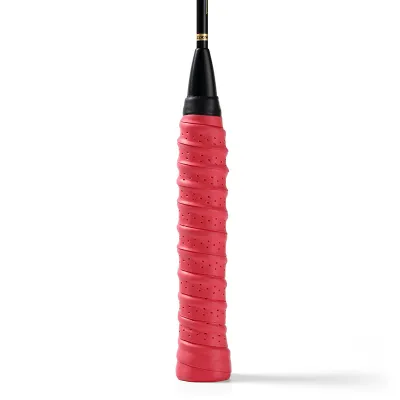
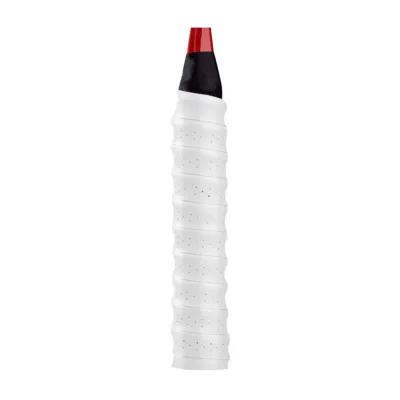
Prices are valid at publication and may change. Please refer to the product page for the latest price.

Defining the Replacement Grip
A replacement grip is the thick, cushioned layer that comes pre-installed on a new badminton racket from the manufacturer. It is designed to be applied directly to the bare wooden handle. To ensure a permanent, slip-free bond, a replacement grip features a full-length adhesive backing that secures the material firmly to the wood. These grips are typically made of thick polyurethane (PU) foam, often integrated with an ethylene-vinyl acetate (EVA) cushion strip running down the center of the underside. This thick construction serves as the primary shock absorber for the racket, dampening the vibrations generated when the shuttlecock impacts the string bed.
Defining the Overgrip
An overgrip is a much thinner, lightweight strip of polyurethane or cotton that is designed to be wrapped on top of an existing base layer. Unlike replacement grips, overgrips do not have a full-length adhesive backing; instead, they feature only a small sticky tab at one end to anchor the wrap to the butt cap of the racket. The rest of the grip is held in place purely by the tension applied during wrapping and is secured at the top of the handle with a strip of flexible finishing tape. Overgrips are engineered to be highly disposable, prioritizing immediate surface feel, moisture management, and quick replacement over long-term structural durability.
Comparison of Grip Types
| Feature | Replacement Grip | Overgrip |
|---|---|---|
| Primary Function | Provides foundational cushioning, shock absorption, and defines base handle size | Delivers surface texture, moisture absorption, and protects the underlying grip |
| Adhesive Backing | Full-length adhesive strip for permanent, slip-free bonding to the wooden handle | Minimal (only a small starting adhesive tab); relies on wrapping tension |
| Thickness Range | Typically 1.5 mm to 2.2 mm | Typically 0.4 mm to 0.7 mm |
| Replacement Frequency | Every 3 to 12 months (depending on play frequency and sweat exposure) | Every 2 to 6 playing sessions (or when tackiness/absorbency degrades) |
| Application Layer | Applied directly to the bare wooden handle of the racket | Applied over an existing replacement grip or cushion wrap layer |
The Bare Wood Misconception
A common mistake among beginner players is applying an overgrip directly to the bare wooden handle of a racket. Because overgrips are incredibly thin (often under 0.6 mm), wrapping them directly onto the wood offers virtually zero shock absorption. This lack of cushioning transmits the raw impact of every smash directly into your fingers, wrist, and elbow, significantly increasing the risk of repetitive strain injuries such as tennis elbow (lateral epicondylitis). Furthermore, because overgrips lack a full adhesive backing, wrapping them on bare wood leads to constant slipping and bunching during high-speed swings, which compromises your shot accuracy and can cause friction blisters on your palm.
When to Buy and Use an Overgrip
Overgrips are the most versatile and frequently purchased accessories in a badminton player’s gear bag. Understanding when to deploy an overgrip can dramatically improve your comfort, shot consistency, and overall maintenance budget.
Sweat and Humidity Management
In hot and highly humid environments, such as Singapore’s tropical climate, indoor sports halls can quickly become sweatboxes. When playing under these conditions, sweat inevitably runs down your arm and onto your hands, making a secure hold on the racket difficult to maintain. Overgrips are your primary defense against a slippery racket.
Depending on how heavily your hands sweat, you must choose between two primary styles of overgrips:
- Tacky Overgrips: These grips feature a smooth, glossy polyurethane surface that offers a sticky, high-traction feel. They are ideal for players with dry to moderately sweaty hands who require maximum grip security to prevent the racket from twisting during off-center hits.
- Dry or Absorbent Overgrips: Often featuring a matte, textured, or perforated surface, these grips are designed to draw moisture away from the skin. For extreme sweaters, cotton towel overgrips are also an option. These materials act like a sponge, ensuring that your hands remain dry and slip-free even during intense, multi-hour playing sessions.
Fine-Tuning Handle Thickness
Badminton rackets are sold in standard handle sizes, commonly denoted as G5 (standard in most Asian markets) or G4 (slightly larger). However, these factory dimensions may not perfectly match your hand anatomy. If your racket handle feels slightly too small, you can use one or two layers of overgrip to customize the thickness.
Sizing up your grip correctly prevents hand cramping by allowing your fingers to wrap naturally around the handle without over-clenching. It also provides better leverage for power shots, as a slightly larger grip surface area allows for a more efficient transfer of force from your forearm and wrist during a smash.
Protecting the Base Grip
Replacing a factory base grip is a time-consuming process that requires scraping off old adhesive and carefully wrapping a thick, stiff material around the wooden handle. Overgrips act as a protective shield, absorbing the friction, dirt, and acidic sweat that would otherwise degrade the expensive replacement grip underneath. By swapping out a cheap overgrip regularly, you can keep your original base grip in pristine condition for a year or more, saving you both time and money.
Hygiene and Cost-Efficiency
Over time, any grip material will accumulate dead skin cells, dirt, oils, and bacteria from your hands. Because overgrips are inexpensive and sold in multi-packs, they offer a highly cost-effective way to maintain hygiene. Regularly replacing your overgrip ensures that your racket always feels fresh and smells clean, preventing the buildup of bacteria that can thrive in damp sports bags.
When to Buy and Install a Replacement Grip
While overgrips are excellent for quick adjustments, they cannot fix a structurally compromised foundation. There are specific scenarios where you must strip the handle down to the bare wood and install a completely new replacement grip.
Severe Wear and Tear
Over months of play, the constant pressure from your fingers compresses the polyurethane foam of your base grip. Eventually, this foam loses its elasticity and rebound memory, leaving the grip feeling flat, hard, and uneven. If you notice that your base grip is visibly worn, peeling away from the wood, or crumbling into small black particles, it has reached the end of its lifespan. Adding an overgrip on top of a degraded base will not restore the lost cushioning; you must replace the base grip entirely to restore the racket’s original shock-absorbing properties.
Odor and Mold Prevention
Because replacement grips are thick and porous, they can absorb a significant amount of moisture over time. In humid climates, a sweat-soaked base grip that is left to dry slowly inside a dark, sealed racket bag becomes a breeding ground for mold, mildew, and bacteria. If your racket handle has developed a persistent, musty odor that does not go away after changing the overgrip, the contamination has penetrated the base layer. In this scenario, you must immediately remove the old replacement grip, sanitize the wooden handle, and install a fresh replacement grip to protect both your health and the integrity of the racket wood.
Adjusting Base Weight and Feel
Advanced players often want to feel the octagonal bevels of the wooden handle as clearly as possible. These bevels serve as tactile guides, allowing you to instantly index your racket face and switch between forehand and backhand grips without looking. If your current base grip is too thick or rounded, stripping it off and applying a thinner replacement grip—or using a specialized cushion wrap underlayer beneath an overgrip—allows you to customize the handle profile to your exact preferences. Additionally, altering the weight of the grip material can slightly adjust the overall weight of the racket handle, helping you fine-tune the frame’s balance.
Restoring Racket Balance
A degraded, sweat-logged base grip can actually alter the intended balance point of your racket. As the grip absorbs moisture and salt deposits from your sweat, it gains weight, shifting the balance point toward the handle and making a head-heavy power racket feel more head-light. Replacing a compromised base grip with a fresh, dry replacement grip restores the manufacturer’s baseline specifications, ensuring that the racket swings and performs exactly as it was designed to.
How to Decide: A Step-by-Step Racket Check
If you are still unsure whether to buy an overgrip or a replacement grip, follow this diagnostic checklist to evaluate your racket’s current condition and make a confident decision.
Step 1: Inspect the Current Surface
Examine the outer surface of your racket handle under bright light. If the grip material is simply dirty, discolored, or smooth to the touch, but the overall shape of the handle is still uniform and intact, you only need to buy an overgrip to restore the surface traction. However, if you see the underlying wood peeking through, or if the grip is physically tearing, peeling, or shedding debris, you must purchase a replacement grip.
Step 2: Check the Cushioning
Hold your racket and squeeze the handle firmly with your thumb and fingers. Pay close attention to how much “give” or compression you feel. If the handle feels completely hard, rigid, and unforgiving, the foam in your base grip has collapsed. To protect your wrist and elbow from heavy impact vibrations, you should strip the handle and install a new replacement grip.
Step 3: Evaluate the Thickness
Hold the racket in your standard playing grip and observe the gap between your fingertips and the palm of your hand.
- If your fingertips are digging deeply into your palm, the handle is too thin, which can cause hand fatigue. You should buy an overgrip to build up the thickness.
- If you cannot wrap your fingers comfortably around the handle, or if the octagonal bevels feel completely rounded out, the grip is too bulky. You should remove all existing layers, clean the handle, and install a thin, precisely wrapped replacement grip.
Step 4: Consider Playstyle and Environment
Assess your playing frequency and environment. If you play multiple times a week in a warm, humid indoor court, your grip will degrade rapidly. In this situation, the most practical approach is to buy a bulk pack of overgrips for frequent, low-cost swaps, alongside one or two high-quality replacement grips to keep on hand for your semi-annual racket maintenance.
Actionable Safety and Maintenance Rule
Never wrap a new overgrip over a rotting, moldy, or crumbling base grip. Doing so traps moisture against the wooden handle, which can cause the wood to rot, soften, or eventually snap at the cone during a high-impact smash. Always consult the manufacturer’s care instructions when removing factory grips, and ensure the wooden handle is completely dry and clean before applying a new replacement grip.
Frequently Asked Questions (FAQ)
Can I use an overgrip directly on the bare wooden handle?
No, you should not use an overgrip directly on the bare wooden handle. Because overgrips are exceptionally thin, they do not provide the necessary shock absorption to protect your hand and arm from the vibrations of high-impact shots. Additionally, overgrips lack a full-length adhesive backing, meaning they will quickly slip, slide, and bunch up during play. Wrapping an overgrip directly on wood also allows sweat to seep directly into the handle, which can rot and weaken the wood over time.
How often should I change my badminton racket grip?
There is no rigid timeline, but you should change your grip based on wear and playing frequency. For regular players (2 to 3 times a week), an overgrip should be replaced every 2 to 4 weeks, or as soon as it loses its tackiness, starts slipping, or develops a noticeable odor. A replacement grip lasts much longer and typically needs to be changed every 3 to 6 months, or sooner if you feel the cushioning has collapsed and the handle feels hard.
Does a thicker grip affect my racket's balance and swing weight?
Yes, grip thickness and weight directly impact racket physics. Adding multiple overgrips or using a heavy replacement grip adds weight to the handle end of the racket. This shifts the balance point toward the handle, making the racket feel more head-light, which increases maneuverability and defense speed but reduces smash power. Furthermore, an overly thick grip rounds out the handle’s octagonal bevels, reducing your finger sensitivity and making precise shot control more difficult.
Community discussion
Share your experience or ask a question. Comments are reviewed before publication.