
The insulation performance of the Owala 32oz sports water bottle compared to other market alternatives is not a matter of a single, undisputed winner. Instead, thermal efficiency is a variable outcome determined by structural engineering, lid design, and how you use the bottle in your daily routine. To find the bottle that keeps your drinks cold longest during intense workouts, you must look closely at verifiable manufacturer specifications, materials, and the physical laws of heat transfer. This guide establishes a clear framework to help you evaluate the Owala 32oz against its competitors, ensuring you choose a hydration companion tailored to your specific environment and activity levels.
Understanding Insulation Specs for the Owala 32oz
To evaluate the Owala 32oz, start by examining the manufacturer’s official documentation, packaging, or product labels. Manufacturers of vacuum-insulated bottles typically print a rated number of hours for cold and hot retention. For sports bottles of this class, cold retention ratings often span from 12 to 24 hours, but these figures are established under controlled laboratory conditions. You should verify these claims on the official product packaging or the manufacturer’s website before purchasing, keeping in mind that real-world performance will vary based on external factors.
The core of any high-performing sports bottle’s insulation is its physical construction. The Owala 32oz utilizes double-wall vacuum insulation. This design features two layers of stainless steel—typically food-grade 18/8 stainless steel—separated by a vacuum gap. Because a vacuum contains no air molecules, it prevents heat transfer via conduction and convection. When verifying specifications, confirm that the bottle is made from high-quality, rust-resistant stainless steel, which maintains structural integrity and prevents the vacuum seal from failing over time.
Products mentioned in this guide
![SG[100% Authentic] Owala FreeSip Insulated Stainless Steel Water Bottle with Straw Sports 24Oz/32Oz With Locking](https://img.lazcdn.com/g/p/c6013834ebc4a4c26a3d7433cb8fb80e.png_400x400q80.png_.webp)
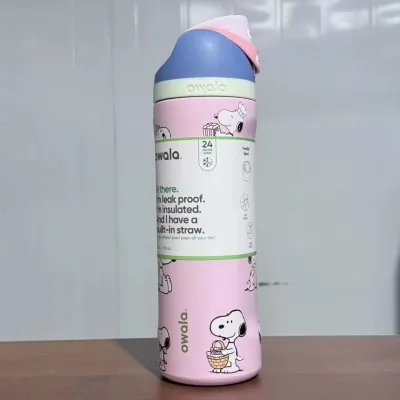
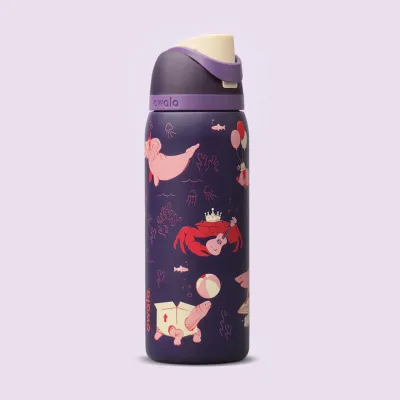
![SG🔥 [100% Authentic] Owala FreeSip Stainless-Steel Insulated Water Bottle Locking Push-Button Lid Owala Water Bottle](https://img.lazcdn.com/g/p/bca6b863022fad51b11522056333afd7.jpg_400x400q80.jpg_.webp)
Prices are valid at publication and may change. Please refer to the product page for the latest price.
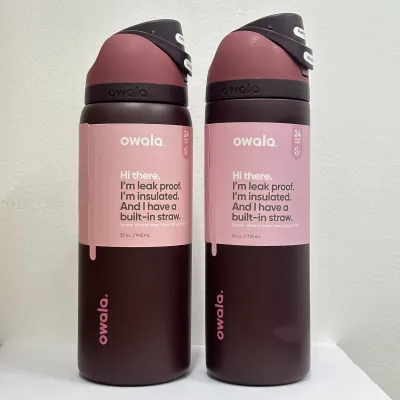
While the stainless steel body prevents heat from entering through the sides, the lid is often the primary point of thermal loss. The Owala 32oz features a unique lid mechanism that combines a built-in straw with a wide-mouth spout, secured by a push-button cap. This multi-functional lid design affects the thermal seal differently than a traditional, solid screw-on cap. A lid with integrated straws, gaskets, and hinges has more potential pathways for minor heat exchange compared to a solid, heavily insulated screw cap. When comparing bottles, inspect the thickness of the lid plastic and the quality of the silicone gaskets, as these components are critical for maintaining an airtight, thermally efficient seal.
Key Dimensions for Comparing Sports Bottle Insulation
When comparing the Owala 32oz to other vacuum-insulated sports bottles on the market, you should focus on three primary design dimensions: lid configuration, wall construction, and exterior finish. Each of these elements plays a distinct role in how long your beverage remains at your desired temperature during a workout.

First, analyze the lid and opening design. Wide-mouth bottles make it easy to insert large ice cubes, which directly contributes to longer-lasting cold temperatures. However, a wider opening also allows more warm air to enter every time you open the bottle to drink. Conversely, narrow-mouth bottles limit heat exchange during use but can be difficult to fill with ice. Straw-integrated lids, like the one on the Owala 32oz, allow you to sip without tilting the bottle or fully exposing the interior liquid to the ambient air. This design minimizes the volume of warm air introduced during hydration breaks, helping to preserve the internal temperature over long training sessions.
Second, evaluate the wall thickness and vacuum layer quality. While most premium sports bottles feature double-wall construction, some heavy-duty models utilize triple-wall insulation or copper-plated inner layers. Copper plating on the exterior of the inner wall reflects thermal radiation, further reducing heat transfer. When reviewing product descriptions on online marketplaces or brand websites, check if the alternative bottles you are considering feature these advanced thermal barriers, as they can provide a marginal advantage in extreme heat.
Third, consider the exterior finish of the bottle. A high-quality powder coating does more than just provide a secure, non-slip grip when your hands are sweaty during a workout; it also adds a protective layer that shields the stainless steel from minor dents. Dents in a metal water bottle can compromise the vacuum seal, causing the insulation to fail entirely. Additionally, look for sweat-proof designs. A properly insulated bottle should not develop external condensation, ensuring your gym bag and hands remain dry.
Real-World Workout Conditions That Affect Cold Retention
Laboratory tests provide a baseline, but real-world workout environments introduce variables that significantly alter insulation performance. If you are exercising outdoors in a tropical, high-humidity climate like Singapore’s, your water bottle will face much harsher conditions than it would in an air-conditioned indoor gym. Direct sunlight exposure on the metal body of the bottle accelerates heat absorption, forcing the insulation system to work much harder to maintain cold temperatures.
Your drinking habits also play a major role in thermal retention. Every time you open your bottle or sip through the straw, you introduce ambient air into the container. If you open a wide-mouth bottle frequently during a long run or cycling session, the cold air inside escapes, and warm air takes its place, rapidly melting any ice. Using a straw lid can mitigate this effect, but frequent sipping still draws warm air into the chamber to replace the displaced liquid.
Finally, the initial state of your beverage is the most critical factor you can control. The ratio of ice to liquid and the starting temperature of the water dictate how long the contents will stay cold. Filling a bottle with lukewarm tap water and a few ice cubes will result in rapid ice melt as the water absorbs the cold. For optimal performance, fill your bottle with pre-chilled water and maximize the volume of ice. This establishes a low baseline temperature, allowing the vacuum insulation to preserve the cold for the entirety of your workout.
How to Choose the Right Insulated Bottle for Your Routine
Selecting between the Owala 32oz and alternative sports bottles requires a realistic assessment of your daily routine, workout environment, and personal preferences. There is no single bottle that excels in every scenario, so your choice should be guided by which features align best with your physical activities.
The Owala 32oz is highly suitable if you prioritize convenience, rapid hydration, and one-handed operation. Its unique lid design allows you to choose between sipping through the built-in straw or swigging from the wide spout, all accessible with the push of a button. This makes it an excellent choice for activities where you need to keep one hand free or maintain focus, such as driving, walking on a treadmill, or performing structured gym workouts. If your exercise sessions are of moderate duration—typically one to three hours—the insulation provided by the Owala 32oz will easily keep your water cold, provided you start with pre-chilled liquid and ice.
On the other hand, you should consider alternative wide-mouth or traditional screw-cap bottles if your absolute priority is maximum ice retention over extended periods, or if you frequently exercise in extreme outdoor heat. Traditional screw-cap bottles with thick, insulated lids often provide a more robust thermal barrier because they lack the complex hinges, buttons, and straw pathways that can allow minor heat transfer. These bottles are also easier to clean thoroughly and can accommodate extra-large ice blocks that melt much slower than standard ice cubes.
When comparing premium sports bottles in the S$40 to S$70 range, consider whether the unique lid features justify the investment over a simpler, more traditional design. Before making your final decision, verify the physical dimensions and weight of a full 32oz bottle. A 32oz bottle holds approximately 0.95 liters of water. When fully filled with liquid and ice, the total weight can exceed 1.3 kilograms. Ensure that this weight and the bottle’s diameter are compatible with your carrying method, whether that is a backpack side pocket, a bicycle bottle cage, or a car cup holder. If the bottle is too bulky or heavy for your sport, a smaller size may be more practical, regardless of its insulation capabilities.
Frequently Asked Questions (FAQ)
Is the Owala 32oz dishwasher safe?
To preserve the integrity of your bottle’s insulation and exterior finish, always check the specific care instructions printed on the base of the bottle or detailed in the official user manual. While some components, such as the plastic lid and internal straw, are often labeled as dishwasher safe on the top rack, the stainless steel body requires careful consideration. Exposing the vacuum-insulated flask to the high heat and harsh detergents of a dishwasher cycle can degrade the exterior powder coating and, over time, compromise the vacuum seal itself. To ensure your bottle continues to keep drinks cold, hand washing the painted stainless steel body with warm, soapy water is highly recommended.
Does the Owala 32oz sweat when filled with ice water?
A high-quality sports bottle should not experience external condensation, commonly known as sweating, under normal operating conditions. The double-wall vacuum insulation of the Owala 32oz is designed to prevent heat transfer, meaning the cold temperature of the inner liquid does not reach the outer stainless steel wall. If you notice sweat forming on the metal body of your bottle, it is a strong indicator that the vacuum seal has been compromised, possibly due to a drop or exposure to extreme heat. However, minor condensation may occasionally form around the plastic lid or collar during intense workouts in highly humid environments, such as outdoor training in Singapore, as these plastic components do not feature the same vacuum insulation as the stainless steel body.
Community discussion
Share your experience or ask a question. Comments are reviewed before publication.