
Quick Answer: Pea vs Pealess Whistle Decision Guide
When preparing for a match, selecting the right referee whistle (sometimes searched online as a sports ‘whisle’) is one of the most critical gear decisions you will make. For modern football officiating, pealess whistles are generally the superior choice. Their design ensures absolute reliability in wet conditions, provides exceptional sound projection to cut through crowd noise, and requires minimal breath effort to produce a commanding tone. Traditional pea whistles remain a niche option, primarily valued by those who prefer a classic acoustic trill or operate exclusively in dry, controlled environments.
To determine which mechanism suits your officiating needs, consider the following decision framework:
- Choose a pealess whistle if: You frequently officiate in rainy or highly humid conditions (such as Singapore's tropical climate), require maximum volume with minimal physical exertion, and want a completely jam-proof design that has no moving parts to fail.
- Choose a pea whistle if: You coach at a recreational or school level, prefer the traditional vibrating sound profile, and primarily operate in dry, indoor, or highly controlled environments.
- Verify first if: Your local refereeing association, school league, or tournament governing body mandates a specific acoustic profile, brand approval, or decibel limit for match officials.
Understanding the Mechanisms: How the Sound is Made
The fundamental difference between these two whistle types lies in how they manipulate moving air to generate sound waves. This mechanical divergence dictates how each whistle performs under pressure, in adverse weather, and over long matches.
Products mentioned in this guide
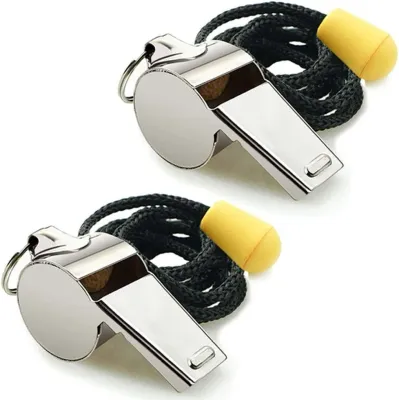
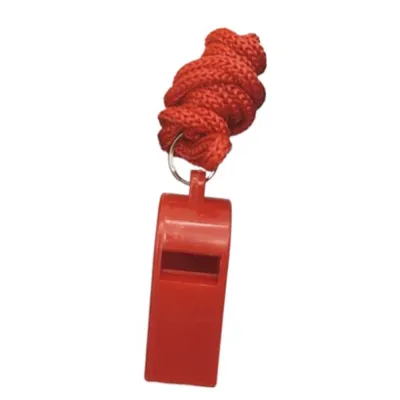
Prices are valid at publication and may change. Please refer to the product page for the latest price.

The Pea Whistle Mechanism
A traditional pea whistle features a small, loose ball (the ‘pea’) inside its main acoustic chamber. Historically made of natural cork, modern peas are typically crafted from synthetic plastics or dense wood. When you blow air into the mouthpiece, it enters the chamber and creates a swirling vortex. This air movement forces the pea to spin rapidly inside the chamber, repeatedly blocking and clearing the whistle’s exit hole (the window). This rapid interruption of the airflow creates a frequency modulation, resulting in the classic, vibratory ‘trill’ sound associated with traditional sports officiating.
The Pealess Whistle Mechanism
A pealess whistle operates without any moving parts. Instead, it relies on advanced fluid dynamics and acoustic resonance. The interior of a pealess whistle features precisely engineered split air channels and tuned harmonic chambers. When air is blown into the mouthpiece, the internal geometry splits the air stream into separate paths, forcing the air to collide with itself at high speeds. This collision creates a high-frequency, pure acoustic tone. Because there are no physical components moving inside, the sound is generated purely through air pressure and chamber resonance.
Why the Physics Matter on the Pitch
This mechanical distinction directly impacts real-world performance. Because a pea whistle requires a physical object to move freely to create its sound, any obstruction—such as moisture, dirt, or physical wear—can stop the pea from spinning, rendering the whistle silent. A pealess whistle, lacking any internal components, cannot jam. This fundamental difference affects everything from weather resistance to the amount of lung capacity required to blow a decisive whistle blast.
Core Performance Differences on the Football Pitch
To choose the right equipment, you must understand how these mechanical differences translate to the pitch. Football matches present demanding acoustic, physical, and environmental challenges that test the limits of your gear.
Loudness and Sound Projection
Cutting through the noise of shouting players, cheering spectators, and ambient environmental sounds is a whistle’s primary job. Pealess whistles are specifically engineered to project sound outward and upward. They typically emit a high-frequency, piercing tone that travels exceptionally well over long distances. This high-pitched frequency cuts through low-frequency background noise, such as crowd chants or traffic, making the whistle sound much louder and more immediate to players on the far side of the field.
Pea whistles, by contrast, produce a broader, lower-frequency sound. While this acoustic profile is warm and highly recognizable, low-frequency sound waves do not cut through ambient noise as effectively. In large, open stadiums or crowded park complexes with multiple adjacent games, the sound of a pea whistle can easily become muffled or lost in the surrounding noise.
When shopping, always check the manufacturer’s specifications for exact decibel (dB) ratings and frequency ranges. Do not assume every pealess model is automatically louder than every pea model; acoustic output varies significantly based on chamber size, materials, and design. However, for sheer projection and the ability to command attention in noisy environments, the pealess design holds a clear acoustic advantage.
Weather Reliability: Wet and Humid Conditions
For referees operating in tropical regions like Singapore, weather reliability is a non-negotiable requirement. Local football pitches, from school fields to community stadiums, are frequently subjected to sudden tropical downpours, intense humidity, and heavy condensation. These environmental factors expose the primary vulnerability of the pea whistle.
When rain, sweat, or saliva enters a pea whistle, a liquid meniscus forms inside the chamber. This moisture causes the lightweight pea to stick to the inner chamber walls. Once the pea is stuck, it can no longer spin or disrupt the airflow. If you attempt to blow the whistle while the pea is stuck, it will produce only a hollow, airy hiss instead of a sharp blast. This failure can lead to missed calls, player confusion, and a loss of control on the pitch.
Pealess whistles are virtually immune to these moisture-related failures. Because there are no moving parts inside, water cannot jam the mechanism. If water or saliva accumulates inside a pealess whistle, blowing forcefully naturally clears the open chambers, ejecting the liquid and instantly restoring the whistle’s full acoustic resonance. For referees who must officiate in unpredictable weather, the pealess design represents a critical safety and reliability upgrade.
Breath Control and Referee Fatigue
Officiating a 90-minute football match is a physically demanding task. Referees must maintain high-intensity running to stay close to the play, often covering up to 10 to 12 kilometers per match. In hot, humid conditions, physical fatigue accumulates rapidly, directly impacting lung capacity and breath control.
Pea whistles require a relatively high level of air pressure (backpressure) to break the inertia of the internal pea and get it spinning. If you are physically exhausted near the end of a match, producing the rapid, forceful breath required to activate a pea whistle can be difficult. A weak blow can result in a trembling, quiet sound that fails to stop play effectively.
Pealess whistles are engineered to convert air pressure into sound waves with high efficiency. The optimized internal channels require very little initial breath pressure to resonate. This allows you to produce a sharp, high-decibel blast with minimal lung effort. For a fatigued referee in the final minutes of a match, this efficiency preserves physical stamina, reduces jaw and lip fatigue, and ensures that every signal remains consistent, clear, and authoritative.
Acoustic Profile: The Classic Trill vs. Piercing Tone
The sound of a whistle carries psychological weight on the football pitch. Players, coaches, and spectators react instinctively to the tone and assertiveness of a referee’s signal.
The pea whistle produces a fluctuating, warbling trill. This sound is deeply rooted in the history of the sport, evoking memories of grassroots football, school physical education, and classic matches. The trill allows for a degree of acoustic expression; by varying your breath pressure, you can alter the speed of the trill to convey different levels of urgency. However, because the sound wave fluctuates, it lacks the immediate, shocking impact of a single, pure tone.
Pealess whistles deliver a sharp, piercing, and unwavering tone. The sound has a near-instantaneous rise time, meaning it reaches maximum volume the millisecond air enters the chamber. This clean, aggressive acoustic profile commands immediate attention, signaling an instant halt to play. While some purists find the tone harsh, its clinical authority is highly effective at stopping play during high-tension moments, preventing unnecessary physical contact after a foul has been committed.
Hygiene, Cleaning, and Long-Term Durability
Because a whistle is held in the mouth and exposed to saliva, dirt, and outdoor elements, maintaining proper hygiene and choosing a durable design are essential for long-term use.
Cleaning and Maintaining Pea Whistles
Pea whistles require meticulous cleaning to remain hygienic and functional. The enclosed chamber and the presence of the pea create small, hard-to-reach crevices where saliva, organic matter, and bacteria can accumulate. If the pea is made of natural cork, it can absorb moisture over time, leading to swelling, mold growth, and eventual material degradation.
To clean a pea whistle, you must thoroughly flush the chamber with warm water after every match. If the model allows for disassembly, open it carefully to clean the interior. However, most standard sports whistles are sealed, meaning you must rely on flushing and shaking the whistle to dislodge debris. Ensure the whistle dries completely in a well-ventilated area to prevent bacteria from multiplying inside the chamber.
Cleaning and Maintaining Pealess Whistles
Pealess whistles are exceptionally easy to clean and sanitize. Because they feature straight-through air channels and no moving parts, there are no internal crevices to trap debris or harbor germs. You can clean a pealess whistle by submerging it in warm, soapy water or a mild disinfectant solution, then rinsing it thoroughly. The open design allows water to drain freely, and the whistle dries quickly, making it a highly hygienic choice for active referees who officiate multiple matches a week.
Long-Term Durability and Safety Boundaries
In terms of physical durability, pealess whistles have a clear advantage. They are typically molded from high-impact polycarbonate plastics or machined from robust metals like stainless steel. Without a delicate internal pea to crack, swell, or get stuck, a pealess whistle can withstand years of heavy use, accidental drops, and exposure to sunlight.
Before cleaning or sanitizing any whistle, always check the manufacturer’s care and maintenance instructions. Many modern whistles feature a Cushioned Mouth Grip (CMG) made of thermoplastic elastomer or rubber to protect your teeth and improve grip. Exposing these rubberized components to boiling water, harsh chemical solvents, or automatic dishwashers can degrade the adhesive, warp the plastic, or melt the grip. Always use mild soap and lukewarm water unless the manufacturer explicitly states that the material is heat-resistant.
Side-by-Side Comparison: Pea vs Pealess Whistles
To help you quickly compare the key attributes of both whistle types, the table below outlines their structural and functional differences.
| Feature | Pea Whistle | Pealess Whistle |
|---|---|---|
| Sound Profile | Classic, fluctuating trill; warm and familiar | Sharp, piercing, consistent pure tone; highly authoritative |
| Weather Reliability | Prone to jamming; moisture can cause the pea to stick | Jam-proof; unaffected by rain, high humidity, or saliva |
| Breath Efficiency | Requires higher initial pressure to move the pea | Highly efficient; produces loud sound with minimal effort |
| Maintenance & Cleaning | Harder to clean; internal crevices can trap moisture and bacteria | Easy to sanitize; open chambers allow quick flushing and drying |
| Best Use Case | Recreational leagues, school PE, dry or indoor environments | Professional matches, wet tropical climates, high-stress games |
Final Verdict: Matching the Whistle to Your Officiating Needs
Your choice between a pea and a pealess whistle should ultimately depend on your officiating environment, your physical comfort, and the level of competitive play you manage.
For active league referees, tournament officials, and anyone operating in outdoor environments subject to rain and high humidity, the pealess whistle is the clear, pragmatic choice. Its absolute reliability in wet conditions, exceptional sound projection, and breath-efficient design ensure you can maintain control of the match from the first whistle to the final whistle, regardless of weather or fatigue.
For school physical education teachers, recreational coaches, and local organizers operating in dry, indoor, or low-stakes environments, a high-quality pea whistle remains a viable and comfortable option. It provides a familiar, less aggressive sound profile that is well-suited for instructional settings and casual play.
Regardless of the whistle mechanism you choose, prioritize safety on the pitch by pairing your whistle with a high-quality lanyard. Look for a lanyard equipped with a quick-release breakaway clasp. This safety feature ensures that if a player accidentally grabs the lanyard or if it becomes caught on equipment, the clasp will immediately snap open under tension, protecting your neck from potential injury.
Frequently Asked Questions (FAQ)
Do professional football referees use pea or pealess whistles?
The vast majority of professional, international, and top-tier domestic football referees use pealess whistles today. Elite governing bodies and professional leagues prioritize the pealess design because it offers unmatched reliability in all weather conditions, consistent acoustic performance, and a piercing tone that can cut through the loudest stadium crowds.
Can a pea whistle get stuck during a match?
Yes. If moisture from heavy rain, high humidity, or saliva enters the whistle’s chamber, it can create surface tension that causes the internal pea to stick to the chamber wall. When this occurs, the pea cannot vibrate, and blowing into the whistle will produce only a quiet hiss of escaping air rather than a loud, clear signal.
Are pealess whistles louder than pea whistles?
While pealess whistles are not always strictly louder in raw decibel measurements than high-quality pea whistles, they are perceived as louder on the pitch. This is because pealess whistles emit a higher-frequency, pure acoustic tone. This high-pitched sound cuts through low-frequency crowd noise and wind far more effectively than the lower-frequency trill of a pea whistle.
Community discussion
Share your experience or ask a question. Comments are reviewed before publication.