
Starting Pilates as a complete beginner can feel overwhelming, especially when social media feeds are filled with complex wooden reformers, spring-loaded towers, and an endless array of specialized accessories. The good news is that you do not need to spend a fortune or clear out a room in your home to begin this highly effective form of movement. Your actual equipment needs on day one are remarkably minimal.
To start safely and effectively, you only need to focus on a few foundational items that protect your body, facilitate proper alignment, and ensure physical safety. Whether your goal is to build core strength, improve flexibility, or rehabilitate an injury, understanding the difference between essential gear and optional marketing hype will save you money and storage space.
Assess Your Routine: Mat vs. Reformer Pilates and Training Location
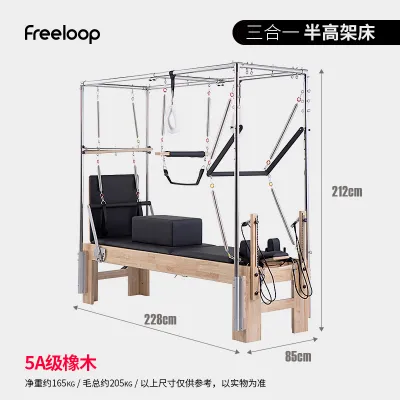
Before purchasing any gear, you must define the structure of your practice. Pilates is broadly split into two modalities: Mat Pilates and Equipment (or Reformer) Pilates. Mat Pilates relies on your own body weight and gravity as resistance, occasionally incorporating small, portable props. Reformer Pilates, on the other hand, utilizes specialized wooden or metal frames equipped with sliding carriages, springs, pulleys, and footbars to provide adjustable resistance and support.
Products mentioned in this guide

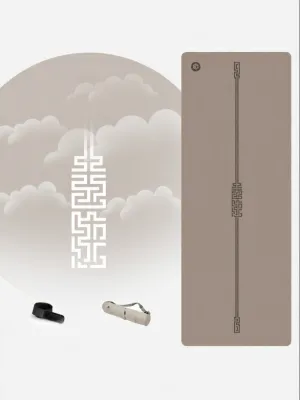
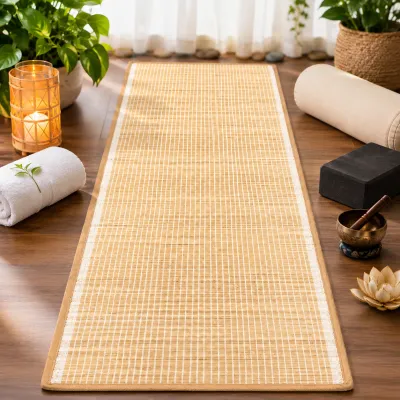
Prices are valid at publication and may change. Please refer to the product page for the latest price.
Your training venue also dictates what you need to buy. If you plan to attend classes at a dedicated Pilates studio or gym in Singapore, the facility will provide all the large machinery, such as reformers, towers, and chairs. They also typically supply mats and small props for hygiene and convenience. In this scenario, your personal shopping list is limited to personal items like grip socks and appropriate clothing.
Conversely, if you are establishing a home practice using online tutorials or virtual coaching, you must supply your own foundational gear. Even then, beginners should focus entirely on mat-work equipment. Jumping straight into home-based reformer training without a solid foundation of core control and professional supervision is highly discouraged, as improper spring settings or poor form can lead to acute joint strain.
The Absolute Essentials: Pilates Gear You Actually Need on Day One
When you are ready to make your first purchases, prioritize items that directly impact your safety, alignment, and physical comfort. For a beginner, these absolute essentials consist of a proper mat, form-fitting activewear, and reliable grip socks.

The Right Pilates Mat
Many beginners assume that any standard exercise or yoga mat will suffice for Pilates, but this is a common misconception that can lead to physical discomfort. Pilates exercises involve a significant amount of rolling, rocking, and lying directly on your back, hips, and stomach. Movements like rolling exercises put direct pressure on your vertebrae and tailbone.
A standard yoga mat is typically thin—usually between 3mm and 5mm—designed primarily to provide standing traction and stability. For Pilates, you require a much thicker, denser barrier to cushion your spine against hard floors. Look for a dedicated Pilates mat with a thickness of 10mm to 15mm.
When selecting a mat, check the material density rather than just the thickness. High-density foam, such as Nitrile Butadiene Rubber (NBR) or dense Thermoplastic Elastomer (TPE), will resist compressing fully under your body weight, maintaining its cushioning properties throughout your workout. Additionally, check the surface texture; a ribbed or textured underside prevents the mat from sliding across slick flooring, while a smooth but high-traction top surface helps you maintain control during sweat-inducing sequences.
Form-Fitting Activewear
Your choice of clothing for Pilates is not about fashion; it is a functional requirement for safety and form correction. Pilates relies on precise, micro-adjustments of your pelvis, spine, and joints. If you wear baggy t-shirts or loose sweatpants, your instructor—or you, when looking in a mirror—will not be able to verify if your spine is neutral, your hips are level, or your knees are tracking correctly.
Overly loose clothing also presents a safety hazard, particularly if you transition to reformer workouts. Baggy fabric can easily become entangled in the springs, wheels, or moving carriage of the machine, leading to sudden stops or falls.
Opt for stretchy, form-fitting activewear such as leggings, fitted tank tops, or snug athletic shirts. Look for high-quality, breathable fabrics with excellent moisture-management properties to keep you cool. Ensure your clothing is entirely free of hard hardware; zippers, plastic toggles, and heavy buttons on the back of your waistband or top will press painfully into your spine and can damage the vinyl upholstery of studio equipment.
Footwear and Grip Socks
For home-based mat sessions, practicing barefoot is highly beneficial. It allows you to engage the small muscles of your feet, improve your ankle stability, and enhance your overall balance and proprioception.
However, if you are practicing in a commercial studio, grip socks are almost universally mandatory. These socks serve two primary purposes: hygiene and safety. Sharing equipment upholstery with dozens of other clients makes wearing socks a basic sanitary practice. More importantly, the specialized traction on the bottom of grip socks prevents your feet from slipping when pushing off the reformer footbar, standing on the carriage, or executing planks on a polished floor.
When shopping for grip socks, which typically cost between S$15 and S$35 per pair in Singapore, look for high-quality silicone or rubber grip patterns that cover the entire sole from heel to toe. Five-toe or open-toe designs are highly recommended for beginners, as they allow your toes to spread naturally, providing a wider base of support and better balance during complex movements.
The "Nice-to-Haves": Props You Can Wait to Buy
The fitness market is filled with auxiliary props designed to enhance your Pilates routine. While these tools are highly effective for intermediate and advanced practitioners, beginners should delay buying them until they have mastered the fundamentals.
Small Resistance Props
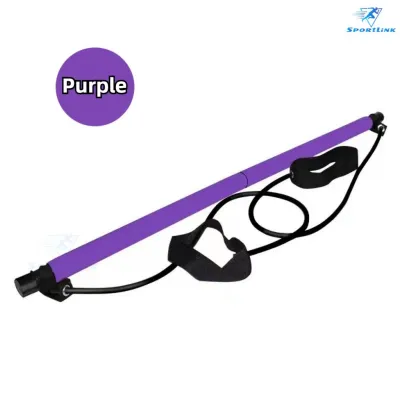
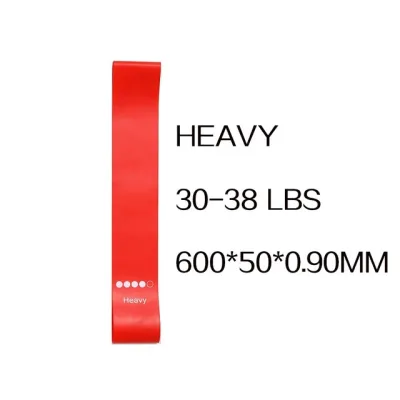
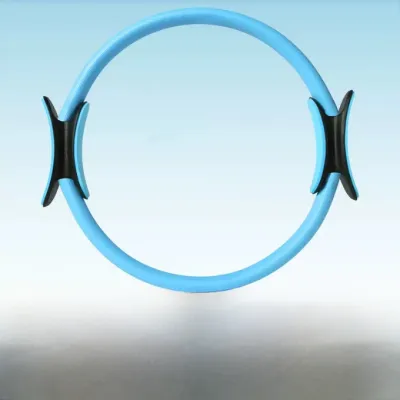
You will frequently see instructors utilizing small props such as the magic circle (a flexible resistance ring), long resistance bands, and small, inflatable Pilates balls (often called overballs). These props are designed to either support your body or add progressive resistance to challenge your muscles.
As a beginner, your primary goal is to master core engagement, lateral thoracic breathing, and basic bodyweight control. Introducing external resistance too early can be counterproductive. When your deep stabilizing muscles are still developing, adding a resistance band or ring often causes larger, dominant muscles to take over, which defeats the purpose of the exercise and can lead to poor movement habits.
Save your money initially and focus on mastering the bodyweight versions of the exercises. Consider purchasing these small props only after you have established a consistent routine for at least two to three months, when you feel your progress has plateaued, or if an instructor specifically recommends a prop to help modify an exercise for your specific body proportions.
Large At-Home Equipment
Investing in large-scale home equipment like a personal reformer, Cadillac, or Wunda chair is a major decision. These machines require a significant financial investment, often ranging from S$1,500 to well over S$5,000, and they occupy a massive physical footprint in your home.
Beyond the cost and space, safety is the primary concern for beginners. Pilates machines utilize heavy-duty metal springs to create resistance. Without the physical presence and real-time feedback of a certified instructor, it is incredibly easy to select the wrong spring tension, which can strain your joints or cause the carriage to move unexpectedly, resulting in injury.
If you enjoy the spring-based resistance of reformer workouts, the most sensible path is to utilize a local studio membership. This gives you access to professional-grade, well-maintained equipment under the direct supervision of trained professionals. Only consider purchasing large home equipment once you have achieved an advanced level of practice, fully understand the safety protocols of the machine, and have verified that you have the space and budget to support it.
Smart Buying Checklist: Space, Storage, and Material Checks
If you are purchasing gear for home use in Singapore, you must consider the local living environment and tropical climate. Standard product descriptions often fail to account for high humidity or compact urban spaces, so use this checklist to guide your purchases.
Space and Storage Assessment
- Evaluate the footprint: Most apartments and HDB flats have limited floor space. Avoid rigid, bulky mats that cannot be easily stowed away.
- Prioritize rollability: Choose a high-density mat that rolls tightly and secures with a strap, allowing you to store it vertically in a corner or closet.
- Opt for collapsible props: If you do eventually buy small props, choose resistance bands that fold flat or a Pilates ball that can be easily deflated and reinflated with a small hand pump.
Material and Climate Checks
- Do not assume material guarantees: Many brands market materials like TPE or natural rubber as inherently mold-resistant. In Singapore's typical relative humidity, which frequently exceeds 80%, almost any surface can develop mold if left damp. Always check the manufacturer's care label for specific sanitizing instructions.
- Choose closed-cell structures: For your mat, prioritize closed-cell foam materials (such as high-quality PVC or closed-cell NBR). These materials do not absorb sweat or moisture, making them significantly easier to wipe clean and far less likely to harbor bacteria and mold than open-cell natural rubber, which acts like a sponge.
Maintenance and Care Boundaries
- Establish a cleaning routine: Wipe your mat down with a soft microfiber cloth and a mild, highly diluted soap solution after every single session. Avoid harsh chemical sprays unless specified by the manufacturer, as they can degrade the slip-resistant surface.
- Ensure proper drying: Never roll up a mat while it is still damp from sweat or cleaning. Allow it to air-dry completely in a well-ventilated, indoor area away from direct sunlight. Exposing synthetic or natural rubber mats to harsh tropical sunlight can cause the material to dry out, crack, and lose its grip.
Frequently Asked Questions (FAQ)
Can I use a regular yoga mat for Pilates?
While you can use a regular yoga mat for your first few sessions, it is not recommended for long-term Pilates practice. Yoga mats are thin (3mm to 5mm) and designed to provide a high-grip surface for standing balance poses. They do not offer the substantial cushioning required to protect your spine, ribs, and tailbone during floor-based rolling and rocking movements. If you must use a yoga mat initially, try folding it in half to double the thickness under your spine, but plan to transition to a dedicated 10mm to 15mm Pilates mat as you commit to a regular routine.
Do I need to buy my own Pilates reformer for home practice?
No, you absolutely do not need to buy a reformer for home practice. Mat Pilates is an incredibly effective, complete workout that builds deep core strength, flexibility, and muscle endurance using only your body weight. For beginners, purchasing a reformer is not only an unnecessary financial and spatial burden, but it also carries safety risks if used without professional supervision. If you want to incorporate reformer training into your routine, it is highly recommended to attend supervised studio classes where a certified instructor can guide your form and ensure you are using the correct spring settings safely.
Community discussion
Share your experience or ask a question. Comments are reviewed before publication.