
When purchasing pingpong balls, the star rating system on the packaging serves as a direct indicator of manufacturing tolerances rather than simple durability. While a casual observer might assume three stars simply mean a tougher ball, the rating actually reflects how closely the ball meets strict standards for roundness, weight consistency, and bounce uniformity.
As a general rule of thumb, 1-star balls are designed for casual or recreational play, 2-star balls suit regular training and multi-ball drills, and 3-star balls provide the precision required for advanced or tournament play. Understanding these ratings, alongside modern material compositions like ABS plastic, is essential for selecting the right equipment for your skill level, table setup, and playing environment.
Decoding the Stars: Performance Differences Across Ratings
The star rating system acts as a grading scale during the manufacturing process. While all balls in a production run might look identical, post-production testing separates them based on how perfectly spherical they are and how evenly they bounce when spun.
Products mentioned in this guide
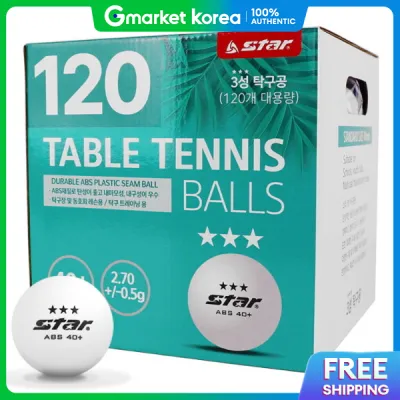
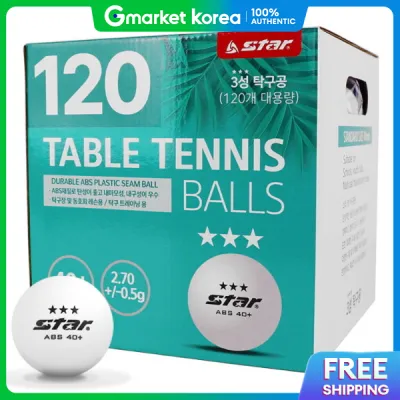
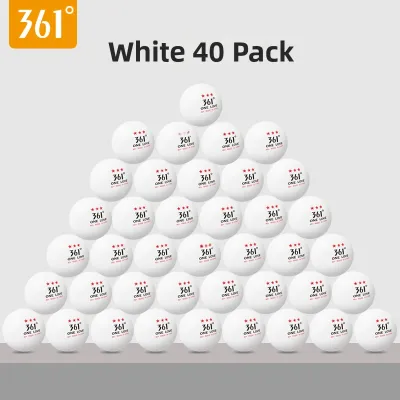
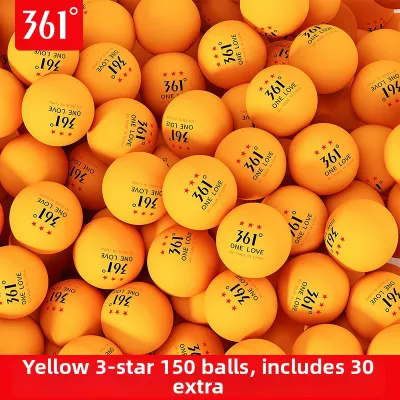
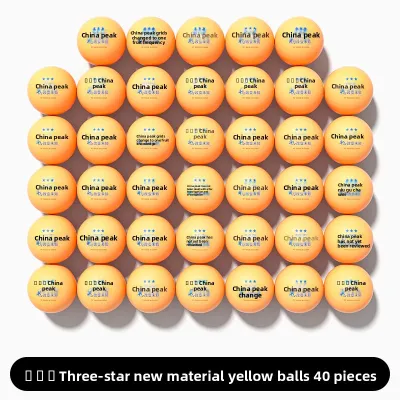
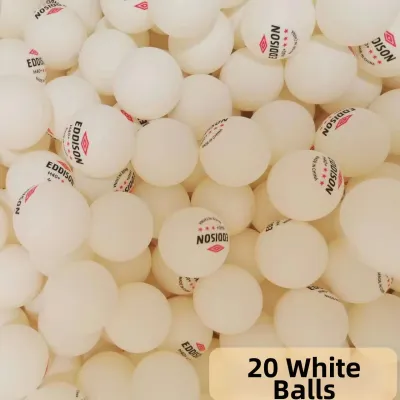
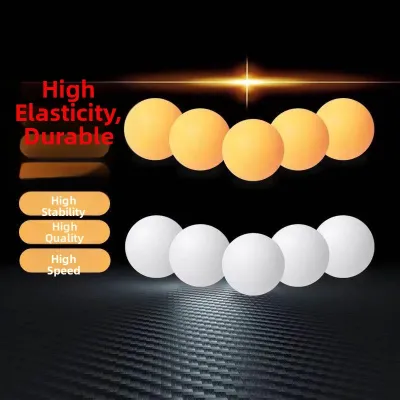
Prices are valid at publication and may change. Please refer to the product page for the latest price.
1-Star Balls: Durability for Casual Play
Entry-level 1-star balls are manufactured with the widest allowable tolerances. This means that while they are highly durable and cost-effective, individual balls within the same pack may exhibit slight variations in their flight paths or bounce heights. These minor deviations are virtually unnoticeable during casual family games in an HDB common room or outdoor recreational sessions.
Because they are inexpensive—often costing just a fraction of premium tournament balls—they are the ideal choice for beginners, children, outdoor tables where wind and rough surfaces affect play, or social party games. Their resilience ensures they can withstand accidental steps and rough handling without immediate cracking.
2-Star Balls: Consistency for Training
Positioned as the mid-tier option, 2-star balls feature significantly tighter manufacturing tolerances than their 1-star counterparts. This tighter control results in a highly predictable bounce and a more reliable response to paddle spin. For intermediate players who are actively developing their strokes, consistent feedback from the ball is crucial for building proper muscle memory.
These balls serve as the standard workhorse for table tennis club practices, multi-ball training buckets, and intensive coaching drills. They offer an optimal balance, providing the reliable trajectory needed to refine advanced techniques without the high price tag of competition-grade equipment.
3-Star Balls: Precision for Competitive Matches
Representing the pinnacle of manufacturing quality, 3-star balls must adhere to the strictest tolerances for weight, roundness, and bounce uniformity. To be used in official matches, these balls must achieve near-perfect sphericity, ensuring that the ball behaves identically no matter which side strikes the table or the racket.
Players preparing for competitive leagues or local tournaments in Singapore should verify that the packaging features an official International Table Tennis Federation (ITTF) approval logo. This certification guarantees the ball meets the precise physical standards required for professional play, ensuring that your training matches the exact conditions you will face under tournament lights.
Material Specs: How ABS, Plastic, and Celluloid Affect Play
Beyond the star rating, the actual material composition of a pingpong ball dictates its speed, spin, and longevity. Historically, table tennis was played with celluloid balls. Celluloid offered a high-spin, high-bounce game, but the material was notoriously flammable and presented significant shipping and storage hazards. Consequently, celluloid has been almost entirely phased out of modern manufacturing and official international tournaments.

The initial transition away from celluloid led to the introduction of early “poly” or non-celluloid plastic balls. These early iterations were often criticized for being overly hard, producing a loud, hollow sound, and being highly prone to cracking along the seams.
Today, Acrylonitrile Butadiene Styrene (ABS) has emerged as the undisputed industry standard for high-quality table tennis balls. ABS plastic resolves many of the durability issues associated with early poly balls, offering a highly consistent bounce, excellent roundness, and a playing feel that closely mimics the traditional celluloid experience. When shopping, always check the material specifications on the packaging. A 3-star ball made from modern ABS will deliver vastly superior performance, structural integrity, and spin response compared to a basic plastic or older poly ball, making material choice just as critical as the star rating itself.
Choosing the Right Ball for Your Skill Level and Setup
Selecting the perfect ball requires matching the equipment to your specific playing environment, budget, and skill level.
For beginners, young children, and casual family setups, 1-star ABS balls are highly recommended. At this stage of development, players are focusing on basic hand-eye coordination and consistent contact rather than high-speed spin dynamics. Investing in premium balls is unnecessary, and the high durability of 1-star options ensures that stepped-on or lost balls do not result in costly replacements.
Intermediate players and home club enthusiasts will benefit most from 2-star ABS balls. As you begin to generate your own spin and learn to read your opponent’s paddle angles, the predictable bounce of a 2-star ball becomes essential. It prevents the frustration of erratic bounces, allowing you to focus entirely on perfecting your footwork and stroke mechanics.
For advanced players, club competitors, and those engaging in serious tournament preparation, 3-star ITTF-approved ABS balls are the only viable choice. Practicing with the exact brand and model of ball used in local Singapore leagues and tournaments is vital. Even minor differences in surface texture or weight between brands can disrupt your timing, so maintaining consistency between your training sessions and match play is key to peak performance.
If you utilize specialty setups, such as multi-ball training buckets or automated pingpong robots, purchasing bulk quantities of 1-star or 2-star ABS balls is the most practical strategy. Automated launchers subject balls to constant mechanical friction, which rapidly wears down the matte finish of premium balls. Using bulk training-grade balls keeps your operating costs low while preserving your expensive 3-star balls for actual match play.
Specs You Can Ignore: Simplifying Your Purchase
When browsing online marketplaces or local sports shops in Singapore, it is easy to get bogged down by minor technical specifications that have little to no impact on your actual playing experience.
One such detail is the seam color or the specific ink used for the brand logo. While some professional players have personal preferences regarding logo visibility for tracking spin, the physical weight of the ink and the color of the seam do not alter the ball’s aerodynamics or bounce in any way that an amateur or intermediate player could detect.
Similarly, you can ignore micro-weight variations. While official 3-star tournament balls must strictly weigh approximately 2.7 grams, minor fractional deviations within the approved manufacturing tolerance are completely imperceptible during standard play. Obsessing over a hundredth of a gram will not improve your game.
Finally, be highly skeptical of unverified “seamless” marketing claims, especially from generic or unknown brands. While seamless balls do exist, high-quality standard ABS balls with well-finished seams from reputable manufacturers offer exceptional roundness and durability. A prominent seam is not a defect; rather, a poorly finished seam on an unbranded ball is what causes erratic bounces. Stick to trusted brands rather than paying a premium for gimmicky seamless designs.
Frequently Asked Questions (FAQ)
How should I store pingpong balls to maintain their bounce?
To preserve the structural integrity and consistent bounce of your pingpong balls, store them in a cool, dry environment away from direct sunlight. Singapore’s hot and humid tropical climate can accelerate the degradation of plastics and alter the internal air pressure of the balls, leading to warping or a dead bounce. Avoid leaving your equipment in hot cars, outdoor balconies, or damp storage cabinets. Keeping your balls in their original packaging, a dedicated hard-shell ball case, or a sealed plastic container will protect them from dust accumulation, moisture, and accidental crushing.
Can I use 3-star tournament balls in a pingpong robot?
While 3-star tournament balls will physically fit and fly out of a pingpong robot, using them is highly inefficient and not recommended. Automated robots utilize rapidly spinning rubber wheels or rollers to propel the balls, which subjects the outer surface to intense mechanical friction. This friction quickly strips away the premium matte finish of 3-star balls, altering their spin characteristics and reducing their lifespan. Given the high cost of ITTF-approved balls, it is far more economical to purchase a bulk box of 1-star or 2-star ABS training balls specifically for robot practice, reserving your premium 3-star balls strictly for human-to-human match play.
Community discussion
Share your experience or ask a question. Comments are reviewed before publication.