
The Short Answer: Which Tee Should a Beginner Choose?
When you are first stepping onto the tee box, the sheer volume of gear decisions can feel overwhelming. If you are trying to decide between traditional wood and a modern golf tee plastic option, the short answer comes down to your immediate priorities: choose wooden tees if you want a low-cost, universally accepted option that lets you focus on your swing without worrying about losing expensive gear; choose a plastic golf tee if you are tired of snapping wood on every swing and want built-in height markers to make your setup consistent.
For most beginners, wooden tees remain the default recommendation. They are inexpensive, traditional, and accepted on every golf course worldwide. However, a high-quality plastic golf tee offers superior durability and consistent height markers, making it an excellent alternative for players who find themselves constantly snapping wooden tees during a round. The final choice depends on your budget, your frustration tolerance, and the local regulations of the courses you play.
Why Choose a Golf Tee Plastic Design for Durability?
One of the most common frustrations for new golfers is the sheer number of broken tees left in their wake. Beginners break significantly more tees than experienced players, and this is primarily due to swing mechanics. A developing swing often features a steep angle of attack, particularly with the driver. Instead of sweeping upward to strike the ball cleanly, beginners frequently hit downward, striking the tee directly with the clubhead. Additionally, hitting “fat” shots—where the club strikes the ground before making contact with the ball—puts immense physical stress on the tee.
Products mentioned in this guide
![[SG 🚚] 20pcs Colorful Plastic Golf Tee Step Down Graduated Castle Tee Height Control Golf Practice](https://img.lazcdn.com/g/p/5e322e166c3a5e4d87dd08e035573f4a.jpg_400x400q80.jpg_.webp)
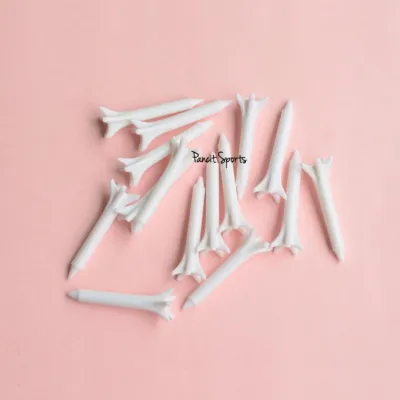

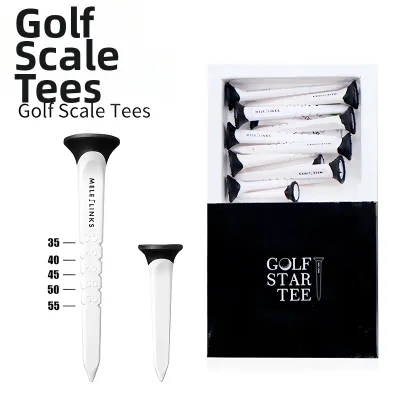
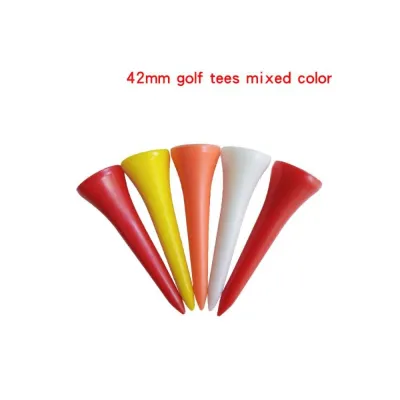
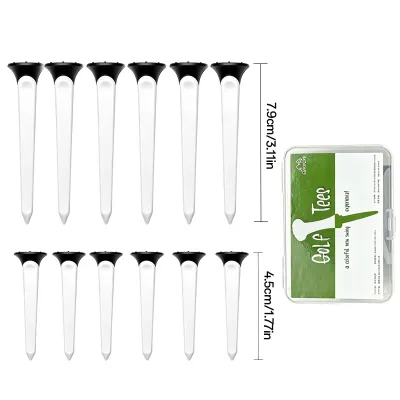
Prices are valid at publication and may change. Please refer to the product page for the latest price.

In regions with challenging soil conditions, such as the hard, clay-heavy soils often found in Singapore during dry spells, pushing a delicate wooden tee into the ground can cause it to snap before you even take a swing. Traditional wooden tees, typically made from birch or maple, have very little lateral flexibility. When subjected to the high-velocity impact of a golf club, they splinter or snap instantly. This constant breakage means beginners must carry a pocketful of spares, leading to mid-round distractions as they search for replacements or clean up splintered wood from the tee box.
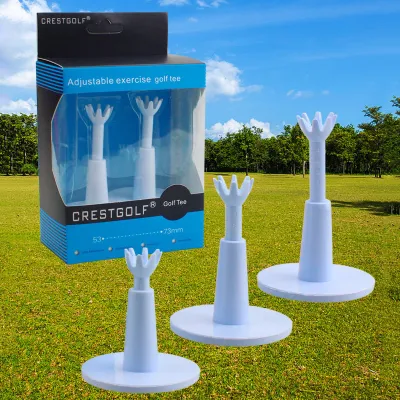
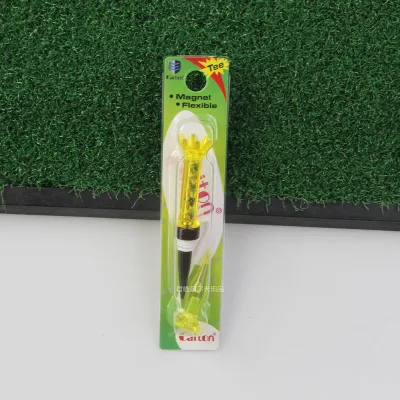
In contrast, a plastic golf tee is engineered to withstand repeated high-impact forces. Modern plastic tees are constructed from durable polymers, polycarbonate blends, or flexible synthetic rubbers. Many designs feature flexible prongs or jointed, spring-loaded shafts that bend upon impact and immediately return to their original shape. This flexibility allows a single plastic tee to survive hundreds of drives without structural failure.
When comparing physical degradation, the difference is stark. While a wooden tee will splinter, shear at the neck, or break in half after one or two mis-hits, a plastic tee is highly resilient. Over dozens of rounds, a plastic tee may eventually bend slightly, lose a prong from its crown, or become scuffed by clubface impact, but it rarely breaks outright. For a beginner trying to establish a rhythm, not having to replace a broken tee after every shot can significantly improve the flow and enjoyment of the game.
Performance and Ball Flight Consistency
When evaluating performance, many manufacturers claim that their specialized plastic tees can reduce friction and side spin, thereby curing a slice or adding distance to your drive. These designs often feature brush-like tops, multi-pronged crowns, or zero-friction vertical ribs. While the physics of reducing contact area to minimize friction is sound, the real-world impact on a beginner’s ball flight is negligible. For a high-handicapper, ball flight is dictated almost entirely by swing path, clubface angle at impact, and strike location. A tee cannot correct a severe out-to-in swing path or an open clubface; proper instruction and practice are the only remedies for these fundamental swing flaws.
However, where plastic tees truly excel in performance is ground stability and height consistency. Wooden tees naturally grip the soil due to their textured, organic surface. Once pushed into the ground, they remain firmly anchored, providing a stable platform for the ball. Plastic tees, having a smoother surface, can sometimes pop out of the ground entirely upon impact. On hard or sandy tee boxes, such as those found on coastal courses, a plastic tee may fly several meters backward or forward, requiring the player to hunt through the grass to retrieve it.
The most significant performance advantage of plastic tees for beginners is height consistency. Many plastic tees are designed with built-in height markers, step-down collars (often referred to as castle tees), or adjustable height rings. This design feature automates one of the most critical setup steps in golf. For a driver, the standard advice is to tee the ball high enough so that half of the ball sits above the top edge of the clubhead. With a traditional wooden tee, a beginner must estimate this height visually on every single hole, leading to high variability. A step-down plastic tee ensures the ball is at the exact same height every time, allowing the beginner to eliminate one variable and focus entirely on their swing mechanics.
Cost Analysis: Upfront Price vs. Long-Term Value
The financial comparison between wood and plastic tees requires looking past the initial price tag to evaluate long-term value and the reality of playing conditions. At first glance, wooden tees are incredibly cheap. You can easily purchase a bulk bag of 100 or 200 wooden tees for around S$5 to S$8 at local golf shops or online marketplaces. This translates to a negligible cost of roughly S$0.05 per tee. If you break or lose a wooden tee, there is zero financial sting, and you can simply grab another from your bag without a second thought.
Plastic tees, on the other hand, require a much higher upfront investment. A pack of four or five premium plastic tees typically costs between S$10 and S$18, depending on the brand and design features. This puts the cost per unit at S$2.00 to S$3.60. For a beginner, spending S$15 on a handful of tees can feel excessive when compared to a massive bag of wooden ones.
However, the true cost-per-round tells a different story. If a beginner breaks an average of five wooden tees per round, a bag of 100 tees will last about 20 rounds, costing approximately S$0.30 per round. If that same beginner uses a single durable plastic tee that lasts for 30 rounds without breaking, the cost per round drops significantly. Over a full season, the plastic tee can easily prove to be the more economical choice.
The critical variable in this equation is the “loss factor.” Beginners do not just break tees; they lose them. A wild slice into the deep rough or a heavy strike can launch the tee into thick undergrowth, water hazards, or deep grass where it is impossible to find. While losing a S$0.05 wooden tee is irrelevant, losing a S$3.50 plastic tee hurts your wallet. If you are a beginner who frequently loses track of your tee after a shot, the cost of repeatedly replacing lost plastic tees will quickly outpace the savings from their durability. Beginners should assess their accuracy and visual tracking ability before investing heavily in premium plastic options.
Environmental Impact and Course Regulations
As golf courses worldwide place a greater emphasis on sustainability, the environmental impact of your gear has become a crucial consideration. Traditional wooden tees are made from natural materials, usually birch, maple, or bamboo. They are fully biodegradable. If a wooden tee breaks and is left in the rough, it will naturally decompose over time without harming the local ecosystem. Furthermore, if a fairway mower runs over a wooden tee, the sharp steel blades will easily slice through the wood without sustaining damage.
Plastic tees present a very different environmental profile. Standard plastic does not biodegrade; instead, it breaks down over decades into microplastics that contaminate the soil and local water systems. When a plastic tee is left on the course and struck by a heavy-duty fairway mower, it can dull or chip the expensive precision blades, leading to high maintenance costs for the golf club. Shattered plastic tees also leave sharp, jagged shards on the turf, which can pose a hazard to local wildlife and birds that inhabit the course grounds.
Because of these operational and environmental challenges, an increasing number of golf clubs, eco-resorts, and municipal courses globally—including several environmentally conscious clubs in Singapore—have implemented strict local rules regarding tee materials. Some courses have banned plastic tees entirely, mandating the use of wood or biodegradable alternatives. Before purchasing a large supply of plastic tees, it is highly recommended to check the local rules of the courses you plan to play most frequently. This information is typically printed on the back of the scorecard or posted near the first tee box.
Decision Framework: Which Tee Fits Your Game?
To help you make the right choice for your current skill level and playing style, use this conditional framework to guide your next purchase.
- Choose Wooden Tees if:
- You are on a strict budget: You prefer to keep your upfront golf expenses as low as possible.
- You frequently lose equipment: Your shots often head into the deep rough, and you struggle to find your tee after swinging.
- You prioritize sustainability: You want to ensure that any gear left behind decomposes naturally without harming the environment.
- You play at strict venues: The courses or driving ranges you frequent have banned plastic materials to protect their mowers and turf.
- Choose Plastic Tees if:
- You want setup consistency: You struggle to tee the ball at the correct height and want a step-down or marked design to automate your setup.
- You hate carrying excess gear: You prefer to keep just one or two highly durable tees in your pocket rather than a handful of wooden ones.
- You play on hard ground: You frequently play on compacted tee boxes where wooden tees snap during insertion.
- You can track your equipment: You have the patience and visual focus to retrieve your tee after every shot, minimizing the risk of losing it.
- Verify First if:
- You expect performance miracles: Always remember that specialized "anti-slice" or "low-friction" plastic tees cannot correct a fundamental swing flaw. If you are struggling with a severe slice or hook, investing in professional coaching or practice time on the driving range will yield far better results than buying premium tees.
Frequently Asked Questions (FAQ)
Do professional golfers use plastic tees?
The vast majority of touring professionals use standard wooden tees. Professionals prefer wood because it offers a traditional, consistent feel and is guaranteed to comply with all tournament regulations worldwide. Since pros have highly consistent swings, they rarely break tees on driver shots, meaning the durability of plastic offers them no real advantage. Additionally, professionals do not need built-in height markers, as they have developed the precise visual muscle memory to tee the ball at their preferred height every time.
What is the best tee height for a beginner using a driver?
For a beginner using a modern driver, the general rule of thumb is that when the clubhead is resting flat on the ground, the equator (the exact middle) of the golf ball should align with the top edge of the driver’s crown. This height encourages an upward striking angle, which helps launch the ball higher with less backspin for maximum distance. Using a step-down plastic tee can help you automate this setup, ensuring that you achieve this exact height on every tee box without having to guess.
Are bamboo golf tees a good alternative to wood and plastic?
Bamboo golf tees are an excellent middle-ground option that combines the best traits of both wood and plastic. Bamboo is a highly sustainable, fast-growing grass that is naturally more flexible and tensile than traditional hardwoods like birch. As a result, bamboo tees are significantly more durable and resistant to snapping than standard wooden tees, while remaining fully biodegradable and environmentally friendly. They are universally accepted on all golf courses, making them a superb choice for beginners who want durability without the environmental drawbacks of plastic.
Community discussion
Share your experience or ask a question. Comments are reviewed before publication.