
Choosing between plastic and wooden golf tees is one of the first practical decisions you will face as a beginner. While it may seem like a minor detail, the material of your tee directly impacts your practice flow, your wallet, and even your setup consistency on the tee box. For most beginners, the choice comes down to a trade-off between the extreme durability of plastic and the classic, low-cost nature of wood. If you are still refining your swing and frequently strike the tee itself, plastic options can save you from constantly reaching into your bag for a replacement. Conversely, if you tend to lose tees easily or prefer a traditional feel that complies with all course environments, wood remains an excellent starting point.
Ultimately, there is no single option that suits every golfer. Your choice should align with your current swing consistency, where you practice, and how much effort you want to spend retrieving deflected tees. By understanding the physical characteristics and long-term costs of each material, you can make an informed decision that keeps your focus where it belongs: on developing a smooth, confident swing.
Core Differences Between Plastic and Wooden Golf Tees
To understand how these tees perform on the course, it helps to look at how they are made and structured. Traditional wooden tees are typically turned from high-quality hardwoods, such as birch or maple. This material is naturally rigid, biodegradable, and finished with either a simple clear coat or bright paint. Because wood is a natural fiber, it has a grain structure that makes it highly rigid along its length but susceptible to splitting when subjected to lateral forces.
Products mentioned in this guide
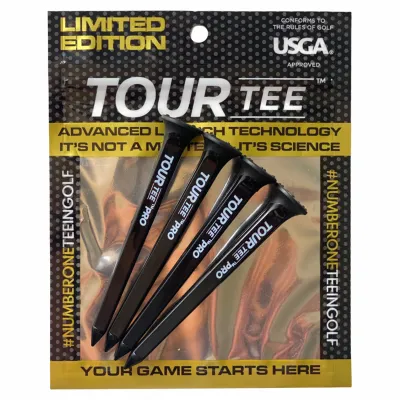
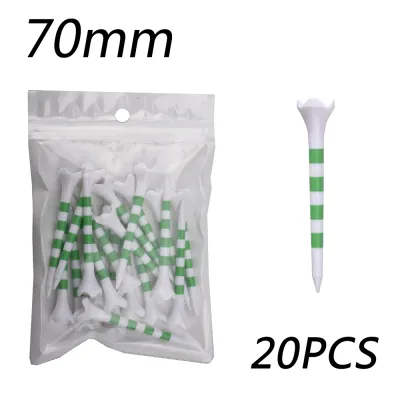
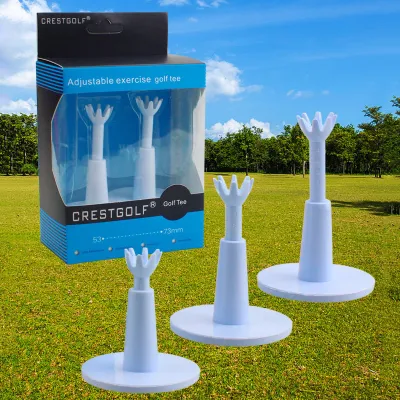
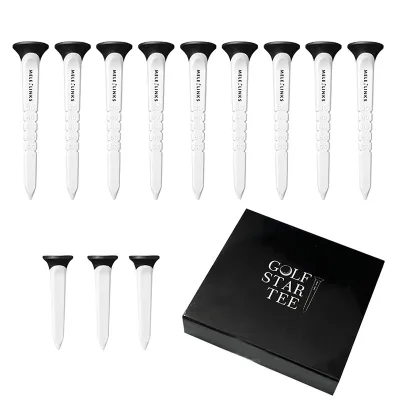
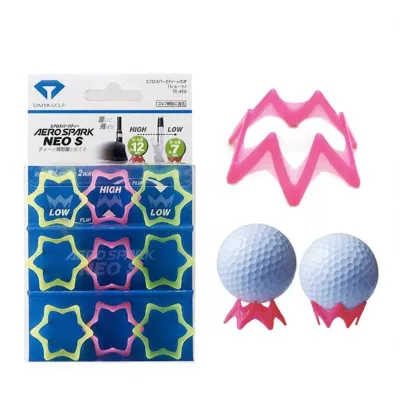
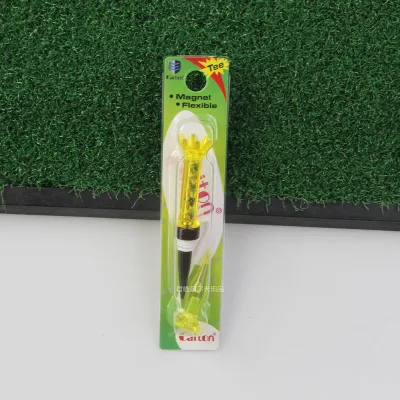
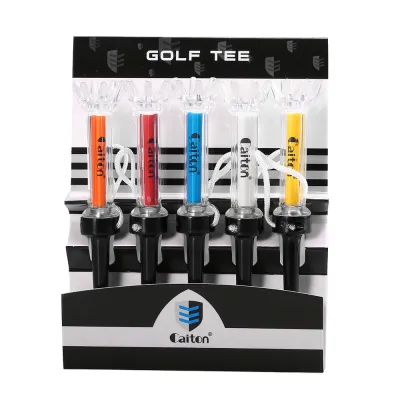
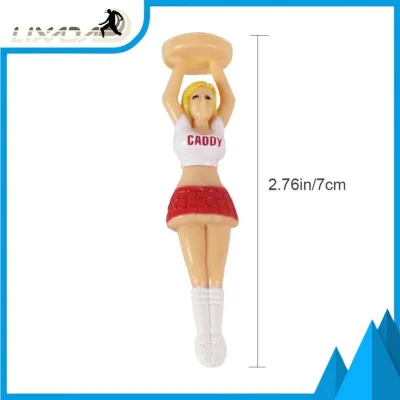
Prices are valid at publication and may change. Please refer to the product page for the latest price.
In contrast, plastic golf tees are manufactured using injection-molded synthetic polymers, such as polycarbonate or ABS plastic. This manufacturing process allows for highly consistent dimensions and the integration of unique structural designs. While wooden tees almost always feature a standard cup design to cradle the ball, plastic tees are available in various shapes. These include multi-prong designs, brush tops, and flexible crowns designed to minimize the contact area between the tee and the ball.
These material differences also affect how the tees interact with the ground. A rigid wooden tee can be driven straight into firm turf, but it is prone to snapping if the ground is exceptionally dry or compacted. Plastic tees, being slightly more flexible, can bend slightly under pressure, allowing them to slide into tough ground without breaking. However, very cheap or thin plastic tees may warp or bend permanently when pushed into hard-packed soil, requiring a sturdier design to perform reliably.
Durability and Breakage Rates on the Course
For a beginner, durability is often the most noticeable difference between these two materials. New golfers are still developing their swing paths, which frequently results in inconsistent strikes. A common error is the “fat” shot, where the clubhead strikes the ground and the tee before making contact with the ball. This delivers a massive, sudden shear force to the tee, testing its structural limits.

When a wooden tee fails, it typically snaps cleanly in half, often leaving the pointed shank buried in the turf while the cup flies forward. This clean break is a result of the wood’s natural grain, which cannot withstand high lateral impacts. If you are breaking a tee on almost every drive, your round will be interrupted by constant replacements, which can disrupt your pre-shot routine and pace of play.
Plastic tees handle these high-impact mishits much better. Instead of snapping, a high-quality plastic tee is designed to flex and absorb the energy of the clubhead. While they are highly resilient, they are not completely indestructible. Over time, repeated strikes will cause plastic to show signs of structural fatigue, such as bending, fraying around the cup, or developing micro-cracks. Inspecting your plastic tees regularly for these signs of wear is important, as a warped or bent tee will fail to hold the ball level, directly affecting your setup.
Cost Efficiency and Value Over Time
Evaluating the cost of golf tees requires looking past the initial price tag to calculate the true cost per round. Wooden tees are incredibly inexpensive when purchased in bulk. You can easily find large bags of 100 or more wooden tees for around S$5 to S$8 at local sports retailers. This low unit cost makes breaking a tee relatively painless, as each individual piece is worth only a few cents.
Plastic tees require a higher upfront investment. A small pack of 10 to 15 premium plastic tees can cost anywhere from S$8 to S$15. To determine if this higher cost is justified, you must estimate your typical replacement rate. If you are a beginner who breaks a wooden tee on nearly every hole, you could easily go through 10 to 15 wooden tees in a single 18-hole round. In this scenario, a single durable plastic tee that lasts for several rounds offers superior long-term value.
However, this cost efficiency model only works if you can keep track of your tees. Because plastic tees flex and bounce upon impact, they often fly several yards away from the tee box. If you frequently lose your tees in the rough or deep grass, the cost of replacing expensive plastic tees will quickly add up. For players who struggle to locate their tees after a shot, using cheap, disposable wooden tees is often the more economical path.
Impact on Ball Flight and Consistency
Many manufacturers of plastic tees claim that their specialized designs—such as three-prong or brush-style tops—reduce friction at impact, leading to longer and straighter drives. While these claims are technically based on physics, the actual performance difference for a beginner is virtually imperceptible. At this stage of your golf journey, factors like clubhead speed, face angle, and swing path have an infinitely greater impact on your ball flight than the friction of the tee.
Where tee design does make a significant difference is in setup consistency. To achieve a predictable launch angle, you must tee the ball up at the exact same height for every drive. Traditional wooden tees require you to visually estimate how deep to push the shank into the ground, which can lead to high variability. If you tee the ball too high, you risk hitting under it; too low, and you may struggle to get the necessary launch.
Many plastic tees solve this problem by incorporating built-in height markers, often referred to as step tees or graduated tees. These designs feature a physical collar or rib that prevents the tee from being pushed any deeper than a set limit. This simple feature removes the guesswork from your setup, allowing you to establish a highly consistent pre-shot routine. While you can find painted stripes on some wooden tees to help with depth alignment, plastic step tees offer a foolproof physical stop that is highly beneficial for developing players.
How to Choose the Right Tee for Your Skill Level
To decide which material deserves a spot in your golf bag, consider your current playing habits, budget, and where you spend most of your time practicing.
Choose plastic tees if:
- You want to eliminate setup variables and prefer using step tees to guarantee a consistent ball height on every drive.
- You practice frequently on grass driving ranges where you can easily retrieve and reuse the same tee for dozens of shots.
- You want to minimize the time spent searching through your bag for a fresh tee after a mishit.
Choose wooden tees if:
- You frequently lose track of your tees after hitting and do not want to spend time searching the tee box.
- You prefer a traditional look and feel, or play on courses with strict environmental guidelines that discourage the use of synthetic materials.
- You want a highly affordable option that allows you to share tees freely with playing partners without worrying about the cost.
- You are practicing on artificial mats that use built-in rubber tees, meaning you only need traditional tees for occasional on-course rounds.
As your swing mechanics improve and your strike consistency increases, your tee breakage rate will naturally decline. When you can cleanly sweep the ball off the tee without striking the ground, the durability gap between wood and plastic becomes less critical. At that point, your choice can transition from a practical necessity to a matter of personal preference and style.
Frequently Asked Questions (FAQ)
Do professional golfers use plastic or wooden tees?
Most professional golfers prefer traditional wooden tees. This preference is largely rooted in tradition, feel, and the fact that professionals rarely break tees due to their highly precise swing paths. Additionally, because professionals receive their equipment and accessories through sponsorships or tournament organizers, the long-term durability and cost of the tees are not active concerns for them.
Are bamboo golf tees a good alternative for beginners?
Yes, bamboo tees are an excellent alternative that bridges the gap between wood and plastic. Bamboo is a highly sustainable, fast-growing grass that possesses greater tensile strength than traditional hardwoods. This makes bamboo tees significantly more durable than standard wooden tees while remaining fully biodegradable and environmentally friendly. They are typically priced similarly to wooden tees, making them a highly cost-effective option for beginners.
Does the color of a plastic golf tee affect visibility?
Yes, the color of your tee plays a major role in how easily you can retrieve it after a shot. Bright, high-visibility colors like neon yellow, orange, or pink stand out clearly against green grass and dark soil. Using high-visibility plastic tees can significantly reduce the time you spend searching the tee box, helping to maintain a good pace of play and ensuring you do not leave plastic waste behind on the course.
Community discussion
Share your experience or ask a question. Comments are reviewed before publication.