
Choosing the right football goal depends on where you play, how often you train, and how much space you have to store your equipment. While portable pop-up goals offer immediate setup and easy transport for casual matches at the park, permanent frame goals provide the structural stability and realistic rebound required for serious shooting practice. Evaluating your playing environment, storage constraints, and training intensity will guide you to the construction style that best fits your needs.
Core Differences in Design and Setup
The fundamental distinction between pop-up and permanent frame goals lies in their structural design, material composition, and assembly requirements. Pop-up goals typically utilize flexible fiberglass poles or spring-steel loops integrated directly into the fabric sleeve of the net. This design allows the goal to spring into shape almost instantly when unpacked, requiring minimal effort and no tools for assembly. The tension of the flexible frame keeps the net taut, though the rebound feel is generally soft and dampens high-velocity shots. Some pop-up models feature internal elastic shock cords, similar to tent poles, which guide the pieces into place quickly.
In contrast, permanent or semi-permanent frame goals rely on rigid materials such as steel, aluminum, or heavy-duty uPVC. These systems require a more involved initial assembly process, often involving locking buttons, screws, or brackets to secure the frame joints. While the initial setup takes longer and may require basic tools like a mallet or screwdriver, the rigid structure allows for a tightly secured net. This setup delivers a highly responsive rebound that closely mimics the feel of a professional match goal, making it far better suited for structured training drills.
Products mentioned in this guide
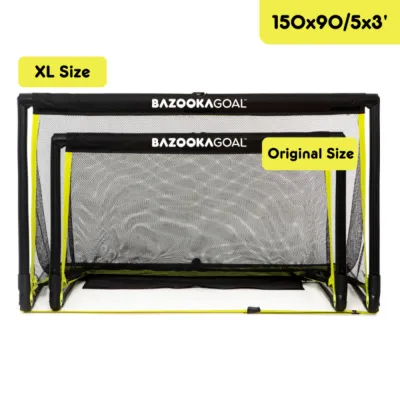
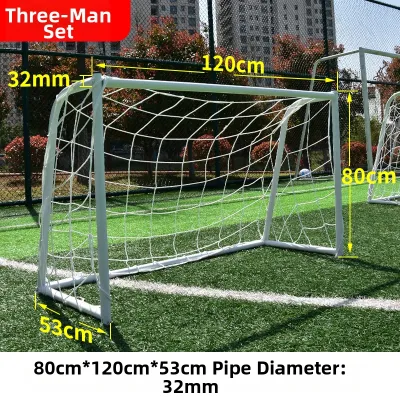
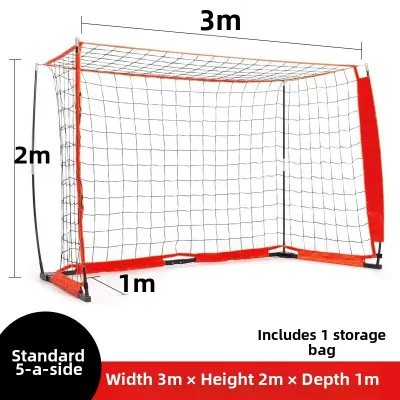
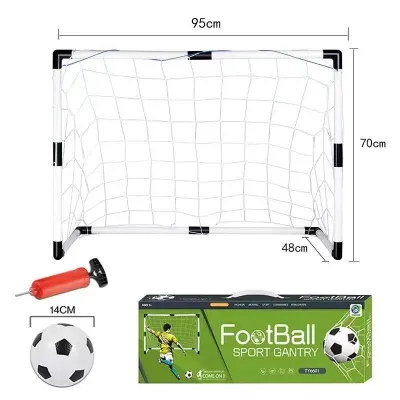
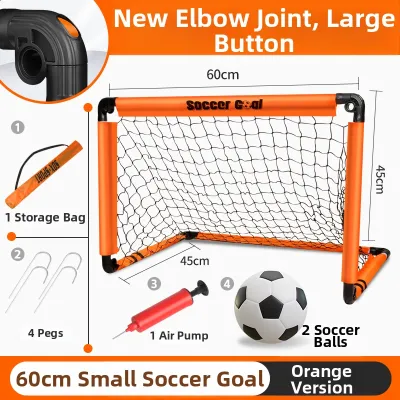
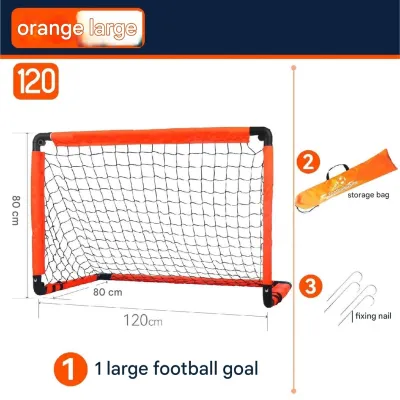
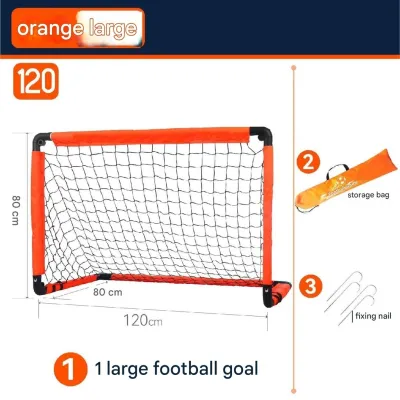
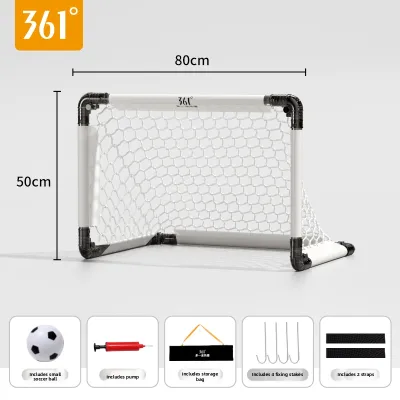
Prices are valid at publication and may change. Please refer to the product page for the latest price.
Net attachment mechanisms also differ significantly between the two styles. Pop-up goals usually feature pre-attached nets that slide over the frame like a sleeve, which simplifies setup but limits your ability to adjust net tension. Rigid frame goals utilize separate nets attached via plastic net clips, velcro straps, or elastic bungee cords. This modular attachment method allows players to adjust the tension of the net, ensuring that the ball reacts realistically when hitting the back of the net rather than dropping dead or pushing the entire goal backward.
Durability and Weather Resistance Checks
A goal’s ability to withstand physical impact and outdoor elements depends heavily on its material specifications and anchoring methods. Permanent metal frames, particularly those made of galvanized steel or powder-coated aluminum, offer excellent resistance to heavy shots and high winds. However, users must verify the manufacturer’s weatherproofing specifications, as untreated steel can rust over time when exposed to rain and humidity. Heavy-duty plastic frames like uPVC resist rust but should be checked for UV-stabilization labels to ensure they will not become brittle under constant sun exposure.

Pop-up goals are inherently lightweight, which makes them susceptible to shifting or blowing away during windy conditions or high-impact shots. To maintain stability, these goals rely on ground pegs or sandbags, which must be checked against the playing surface before setup. While the flexible fiberglass poles can absorb the impact of a ball by bending, the lightweight fabric sleeves and thin netting are more vulnerable to tearing over time. When purchasing, inspect the product labels for denier ratings on the fabric and ply thickness on the netting to gauge long-term durability.
Safety is another critical factor when evaluating durability. Rigid frame goals, especially heavier steel models, pose a tipping hazard if they are not properly anchored to the ground. Manufacturers typically supply J-pegs or U-anchors for grass surfaces, but if you are playing on artificial turf, concrete, or indoor courts, you must verify if the goal is compatible with counterweights or sandbags. Pop-up goals, being much lighter, present minimal safety risks if they tip over, making them a safer choice for unsupervised play involving very young children.
Portability, Storage, and Space Requirements
Your available storage space and transportation options are decisive factors when choosing between these two goal types. Pop-up goals excel in portability, folding down into flat, circular, or compact carrying bags that easily fit into a standard car trunk or can be carried on public transport. This makes them the ideal choice for players who frequently travel to local parks, beaches, or community spaces for casual games. The lightweight nature of these goals means even younger players can carry their own equipment to the field.
Permanent and semi-permanent frame goals demand a much larger storage footprint, even when disassembled. While some rigid models feature quick-release buttons for seasonal disassembly, organizing and storing multiple metal or plastic poles can be cumbersome. If you plan to leave a rigid goal in a backyard, you must measure the lawn space to ensure it does not obstruct other activities or violate local estate guidelines. For those who need to transport a rigid goal, verify the length of the longest disassembled pole to confirm it can fit inside your vehicle.
Some modern rigid goals offer a compromise in the form of folding frames. These models feature hinged corner joints that allow the depth of the goal to fold flat against the main crossbar and posts. This design allows you to store the goal flat against a garage wall or fence without having to pull the entire frame apart. However, folding mechanisms often add to the overall weight and cost of the goal, and they still require significantly more storage space than a collapsed pop-up model.
Cost and Value Considerations
Budget considerations for football goals extend beyond the initial purchase price to include long-term maintenance and usage frequency. Entry-level pop-up goals are generally highly affordable, making them an accessible option for casual recreation. When comparing options, you may find that basic pop-up sets fit a modest budget of under S$100, while heavy-duty rigid frames require a larger investment. However, because individual parts like the integrated netting or flexible poles are difficult to replace separately, a major tear or break often requires replacing the entire unit.
Rigid frame goals represent a larger upfront investment depending on the size, frame material, and brand specifications. Despite the higher initial cost, these goals often provide better long-term value for dedicated players. Many manufacturers of rigid goals sell individual replacement parts, such as net clips, ground anchors, and replacement nets. This modular design allows you to repair specific wear and tear over several seasons without purchasing a completely new goal system.
When calculating the true value of your purchase, consider your expected usage frequency. A simple pop-up goal that is used twice a year at a family picnic offers excellent value for money. Conversely, an aspiring young player practicing daily shooting drills will quickly wear out a lightweight pop-up goal, making a more durable rigid uPVC or aluminum goal a more cost-effective investment over time due to its superior durability and replaceable parts.
Decision Framework: Which Football Goal Should You Choose?
To finalize your decision, evaluate your specific playing conditions against this practical checklist.
Choose a pop-up goal if:
- You frequently play in public parks, beaches, or shared community spaces where equipment must be packed up after every session.
- Your storage space is limited to a small closet, balcony, or car trunk.
- The goal is primarily for young children, casual recreational play, or small-sided games without a goalkeeper.
- You prefer a quick setup that takes less than two minutes without any tools.
- You want a lightweight, low-risk option that is easy and safe for children to handle independently.
Choose a permanent frame goal if:
- You have a dedicated backyard, private lawn, or training facility where the goal can remain assembled for extended periods.
- You are practicing high-velocity shooting, goalkeeper drills, or structured team training that requires a stable, realistic rebound.
- You want a durable system where individual components, like the net, can be replaced as they wear out.
- You can accommodate a longer initial assembly time and have a vehicle large enough to transport disassembled rigid poles if needed.
- You require a goal that matches official training dimensions for specific age groups.
Verify first if:
- Your local park or estate management allows the use of metal ground pegs, as some public lawns prohibit anchoring devices that penetrate the turf.
- The dimensions of your vehicle's trunk or back seats can accommodate the folded diameter of a pop-up goal or the longest pole of a disassembled rigid frame.
- The manufacturer's warranty covers rust, UV damage, or frame breakage under normal outdoor conditions.
Frequently Asked Questions (FAQ)
Can I leave a portable pop-up goal outside all year round?
Leaving a portable pop-up goal outdoors continuously is not recommended and will significantly shorten its lifespan. The lightweight materials, such as polyester fabric sleeves and nylon netting, are highly susceptible to UV degradation from constant sun exposure, which causes the fibers to weaken and tear. Additionally, moisture from rain can accumulate inside the fabric sleeves, leading to mold growth and the deterioration of the internal elastic cords or flexible poles. To maximize the durability of your pop-up goal, always fold it down and store it in its carrying bag in a dry, indoor location after each use.
Community discussion
Share your experience or ask a question. Comments are reviewed before publication.