
When you are stranded on the side of the road with a flat tire, your choice of inflation technology directly determines how quickly, easily, and reliably you can get back in the saddle. Selecting the right portable bicycle pump is not a one-size-fits-all decision; it requires balancing immediate convenience against long-term reliability. The three primary technologies on the market—manual hand pumps, cartridge-based CO2 inflators, and battery-powered mini electric pumps—each serve distinct cycling styles and rider priorities.
To make an immediate decision for your next ride, you can categorize your needs using a straightforward “Choose X if…” framework:
- Choose a Hand Pump if: You prioritize absolute long-term reliability, zero ongoing operational costs, and the self-sufficiency to make unlimited inflation attempts on long, remote, or multi-day rides.
- Choose a CO2 Inflator if: You are a road racer, gravel competitor, or weight-conscious rider where minimizing frame weight and achieving near-instantaneous inflation are critical, and you are comfortable managing single-use consumable cartridges.
- Choose a Mini Electric Pump if: You are an urban commuter, e-bike rider, or casual cyclist who values effortless, automated inflation and digital pressure accuracy, and you do not mind carrying a slightly heavier, battery-dependent device.
Ultimately, the best portable bicycle pump for your setup is the one that aligns with your tolerance for physical effort, your carrying capacity, and your willingness to manage electronic or consumable components.
Products mentioned in this guide
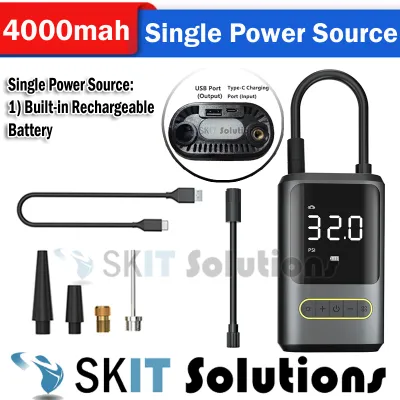

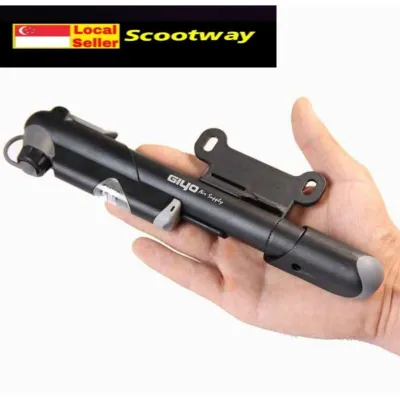
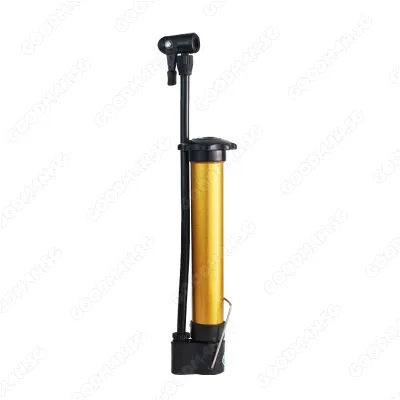
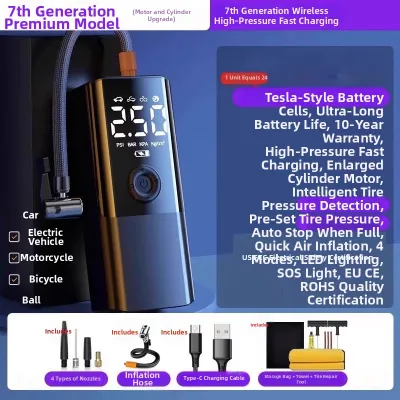
Prices are valid at publication and may change. Please refer to the product page for the latest price.
Evaluating Your Portable Bicycle Pump: The Four Pillars of Comparison
To evaluate which portable bicycle pump technology belongs in your saddlebag, you must analyze how they perform across four fundamental operational categories. Each technology presents a distinct set of trade-offs that can dramatically impact your roadside repair experience.
Inflation Speed and Physical Effort
Restoring a flat tire to its correct operating pressure can range from an effortless five-second task to a strenuous physical workout, depending on your chosen tool. Manual hand pumps require significant physical exertion, particularly when attempting to reach the high pressures (80 to 100+ PSI) required for narrow road tires. Pumping a high-pressure tire by hand can take anywhere from two to five minutes of continuous, vigorous stroking, which can be exhausting in hot weather.
In stark contrast, CO2 inflators provide an instantaneous burst of compressed gas that fills a tire to high pressure in under five seconds with zero physical effort. Mini electric pumps automate the process entirely, but they operate at a much more deliberate pace. A typical battery-powered pump may take between one and three minutes to inflate a standard tire, and you will notice the motor speed and inflation rate drop as the internal pressure of the tire increases. Before purchasing, always check the manufacturer’s specifications for maximum PSI output and estimated inflation times for your specific tire volume to ensure the device meets your expectations.
Portability, Weight, and Mounting
How you carry your inflation gear is just as important as how it performs. Traditional hand pumps are highly versatile in their mounting options; many come with frame-mounting brackets that bolt beneath your bottle cage, keeping your pockets free. Alternatively, modern mini hand pumps are compact enough to slip into a jersey pocket, though they may protrude slightly.
CO2 inflators represent the pinnacle of minimalist portability. A single inflator head and two cartridges can easily fit into a tiny seat pack or a small pocket, making them the preferred choice for racers who want to keep their profiles as streamlined as possible. Mini electric pumps, while increasingly compact, remain the bulkiest and heaviest option of the three. Because they contain a lithium-ion battery and an electric motor, they typically require dedicated space in a frame bag, saddlebag, or backpack, and are rarely comfortable to carry in a standard cycling jersey pocket. Regardless of the technology you select, always verify valve compatibility (Presta or Schrader) and check whether the pump requires separate adapters that you must remember to pack.
Ongoing Costs and Consumables
The financial commitment of a portable bicycle pump does not always end at the initial checkout. Hand pumps are highly economical over their lifespan, requiring only a one-time purchase and virtually zero ongoing costs unless a seal eventually needs replacement. Mini electric pumps also feature low recurring costs, though they have a finite lifespan dictated by battery degradation, and you may eventually need to replace the entire unit once the internal lithium cells can no longer hold a charge.
CO2 inflators, however, introduce a continuous operating cost because they rely entirely on single-use steel cartridges. In Singapore, these cartridges typically cost between S$3 and S$8 each, depending on the size (16g or 25g) and package quantity. Because each cartridge is a “one-shot” system, any user error—such as a misaligned valve connection that lets the gas escape into the air—renders the cartridge useless, leaving you stranded if you do not carry spare cartridges or a manual backup pump.
Reliability and Climate Considerations
The environmental conditions of your local riding environment play a massive role in how these devices perform over time. Manual hand pumps are mechanically simple and incredibly robust; they have no electronics to fail and do not rely on charge levels. However, in hot and humid climates like Singapore, mechanical hand pumps must be protected from moisture. Constant exposure to high humidity and sudden tropical downpours can cause internal corrosion or seize the aluminum shaft if the pump is left mounted to the frame without periodic inspection and lubrication.
Mini electric pumps introduce electronic vulnerabilities. Lithium-ion batteries are highly sensitive to extreme temperatures. You must verify the manufacturer’s specified battery storage temperature limits; never leave an electric pump in a hot car trunk or exposed to direct, midday sunlight on a frame bag, as temperatures exceeding 50°C can cause permanent battery degradation or thermal safety risks.
CO2 inflators present a unique physical hazard during operation. As compressed liquid CO2 expands rapidly into a gas, the temperature of the cartridge and the inflator head drops instantly to sub-zero levels. This freezing effect can cause severe frostbite if the bare metal touches your skin. It can also freeze and damage the rubber seals inside your tire valve core if the gas is released too quickly. Always use an insulated sleeve or wear gloves when operating a CO2 system.
Technology Deep Dive: Pros, Cons, and Ideal Rider Profiles
Understanding the inner workings and practical limitations of each technology allows you to match their specific characteristics to your cycling habits.

Hand Pumps (Mini Floor and Frame Pumps)
Manual hand pumps are generally split into two distinct categories: high-volume (HV) and high-pressure (HP). High-volume pumps feature a wider barrel designed to push a larger amount of air per stroke, making them highly efficient for wide, low-pressure tires such as those on mountain bikes or gravel bikes. High-pressure pumps utilize a narrower barrel, which reduces the physical force required to push air into the tire at higher pressures, making them essential for road bikes.
One of the most significant design advancements in manual pumps is the mini floor pump, which features a fold-out foot peg and a flexible hose. Using a pump with a flexible hose is highly recommended because it isolates your vigorous pumping motion from the tire valve. Standard push-on pumps that clamp directly to the valve stem can easily bend or snap the delicate Presta valve core if you pump too aggressively at the side of the road. While manual pumps offer unmatched reliability, they do require a refined stroke technique to maximize efficiency, and unless you purchase a model with an integrated analog or digital pressure gauge, you will have to rely on the “thumb test” to estimate your tire pressure.
CO2 Inflators
A CO2 inflator consists of a small, lightweight metal head that threads or presses onto the tire valve, and a threaded steel cartridge filled with compressed carbon dioxide. When you thread the cartridge into the inflator head, an internal pin punctures the seal. The rider then controls the release of the gas using either an adjustable dial, a spring-loaded trigger, or by gently backing off the cartridge threads. Controlling this flow rate is critical; releasing the gas too quickly can shock the valve system and cause leakage.
The primary limitation of CO2 is its single-use nature. If you encounter multiple punctures on a single ride, you must carry a corresponding number of cartridges. Furthermore, CO2 gas behaves differently than ambient air inside your tires. Carbon dioxide molecules are highly soluble in butyl and latex rubber, meaning CO2 will permeate through your inner tubes much faster than regular air. A tire inflated with CO2 will lose a noticeable amount of pressure within 12 to 24 hours. Consequently, you must completely deflate your tire after returning home and pump it back up with a standard floor pump before your next ride.
Mini Electric Pumps
Mini electric pumps represent the integration of modern battery technology into cycling maintenance. These compact, motorized compressors feature digital screens that allow you to set your target tire pressure. Once connected to the valve, the pump inflates the tire automatically and shuts off precisely when the target pressure is reached, eliminating any guesswork or manual labor.
However, these devices are limited by their duty cycles and battery capacities. The small electric motors generate substantial heat, especially when working against high pressures. Most manufacturers specify a maximum continuous run time (often around 5 to 10 minutes) before the device must be allowed to cool down to prevent internal damage. Additionally, you must pay close attention to the battery capacity, measured in milliampere-hours (mAh). A typical ultra-compact electric pump may only have enough battery life to fully inflate two road tires or one large mountain bike tire on a single charge. For maximum convenience, ensure the pump supports standard USB-C charging so you can easily top up the battery at home, in the office, or via a portable power bank.
Quick Reference: Portable Bicycle Pump Comparison Matrix
To help you quickly visualize the trade-offs between these three distinct technologies, the table below outlines their primary characteristics and performance metrics.
| Technology | Inflation Speed | Weight & Size | Ongoing Cost | Reliability | Best Use Case |
|---|---|---|---|---|---|
| Hand Pump | Slow (2–5 mins) | Moderate to High | None (One-time buy) | Extremely High | Long-distance touring, remote rides, and daily training |
| CO2 Inflator | Instant (< 5 secs) | Extremely Low | High (Per cartridge) | Moderate (User error risk) | Road/gravel racing and fast-paced group rides |
| Mini Electric | Moderate (1–3 mins) | High & Bulky | Low (Battery lifespan) | Moderate (Battery dependent) | Urban commuting, e-bikes, and casual recreational riding |
Matching the Pump to Your Cycling Discipline
Your choice of a portable bicycle pump should ultimately be dictated by the specific type of riding you do, the terrain you navigate, and your tolerance for mechanical risks.
Road Cycling: Speed and Minimal Weight
For dedicated road cyclists, weight and aerodynamics are often top priorities. If you participate in organized races or fast-paced group rides where getting left behind during a flat repair is a major concern, a CO2 inflator is highly advantageous. It allows you to seat the bead and fully inflate a road tire to 80+ PSI in seconds, minimizing your downtime. However, for solo training rides or long weekend endurance loops, carrying a high-pressure hand pump as a secondary backup is a smart strategy to ensure you are never stranded after using your last cartridge.
Mountain Biking & Gravel: High Volume and Lower Pressure
Off-road tires feature significantly larger air volumes but run at much lower pressures (typically 20 to 40 PSI) than road tires. Using a CO2 inflator on a high-volume mountain bike tire requires a larger, more expensive 25g cartridge, and even then, a single cartridge may not fully inflate the tire. For these disciplines, a high-volume manual hand pump is highly recommended. It moves a large amount of air with each stroke, making manual inflation relatively quick and painless at lower pressures. Alternatively, a mini electric pump is an excellent option for gravel riders who want precise pressure management without the physical workout.
Urban Commuting & E-Bikes: Effortless Maintenance
If you use your bicycle or e-bike for daily commuting to work or running errands around Singapore, convenience and ease of use are paramount. Weight is rarely a primary concern on a commuter bike or a heavy e-bike. A mini electric pump is the ideal companion for this lifestyle. It allows you to perform effortless, clean pressure checks and top-ups in office clothing without arriving at your destination sweaty from manual pumping.
Bikepacking & Touring: Self-Sufficiency in Remote Areas
When your route takes you far from bicycle shops or urban centers, self-sufficiency is your most critical asset. In remote areas, relying on battery-powered devices or a finite supply of CO2 cartridges introduces unnecessary risk. For long-distance touring and bikepacking, a high-quality, fully rebuildable manual hand pump is the gold standard. Look for models that offer replacement seal kits, allowing you to service the pump on the trail and ensure you always have a dependable source of air, no matter how far you travel.
Frequently Asked Questions (FAQ)
Can I use a CO2 inflator to seat tubeless tires on the trail?
While a CO2 inflator provides a rapid, high-volume burst of air that can theoretically help pop a tubeless tire bead onto the rim, a single standard 16g or 25g cartridge is rarely sufficient to seat a completely unseated tubeless tire on the trail. If the tire bead has fully slipped into the center channel, the air from a cartridge may escape through the gaps before building enough pressure to snap the bead into place. For reliable trailside tubeless seating, it is highly recommended to carry a high-volume manual hand pump or a specialized portable tubeless inflator chamber designed specifically for this task.
Do mini electric pumps overheat when inflating high-pressure road tires?
Yes, mini electric pumps can generate significant internal heat when operating against high pressures, such as the 90 to 100+ PSI required for some road bike setups. The small electric motors must work much harder to push air into a highly pressurized tire, which rapidly elevates the temperature of both the motor and the internal lithium battery. To prevent permanent motor damage or accelerated battery degradation, always check the manufacturer’s stated duty cycle. If you need to inflate multiple high-pressure tires, allow the device to cool down completely for several minutes between uses.
How often should I service a portable hand pump?
To ensure your manual hand pump remains reliable when you need it most, you should perform basic maintenance at least once or twice a year, or more frequently if you regularly ride in wet, dusty, or highly humid conditions. Periodic maintenance involves unscrewing the pump collar, cleaning the inner chamber and piston shaft, and applying a thin layer of high-quality silicone grease to the rubber O-rings and plunger. Always check the manufacturer’s care instructions for specific service intervals, and avoid using petroleum-based lubricants like standard WD-40, which can rapidly degrade and destroy the rubber seals inside the pump.
Community discussion
Share your experience or ask a question. Comments are reviewed before publication.