
Selecting the right bike repair stand is a balance between storage footprint and physical stability, especially for riders living in space-constrained homes like HDB flats or condominiums in Singapore. If you have limited space and perform basic maintenance, a compact foldable stand that tucks into a closet or under a bed is ideal. If you ride heavy e-bikes, perform complex overhauls, or frequently travel to trailheads and races, a robust portable tripod stand offers the necessary structural support.
While the terms “portable” and “foldable” are often used interchangeably by manufacturers, their primary engineering priorities differ. Understanding these design differences is crucial for selecting a tool that fits your workspace, matches your bicycle’s weight, and matches your maintenance habits without cluttering your living area.
Defining the Contenders: Portable vs Foldable Stands
Portable bike stands are engineered primarily for mobility, field repairs, and transport. These stands prioritize weight reduction and ease of assembly, making them popular among riders who travel to races, trailheads, or cycling events. They typically feature lightweight aluminum or composite construction, telescoping tubes, and tripod bases that can deploy on uneven outdoor surfaces. The primary goal of a portable stand is to offer a functional workspace anywhere, from a gravel parking lot to a grassy park, without adding excessive weight to your gear gear bag.
Products mentioned in this guide
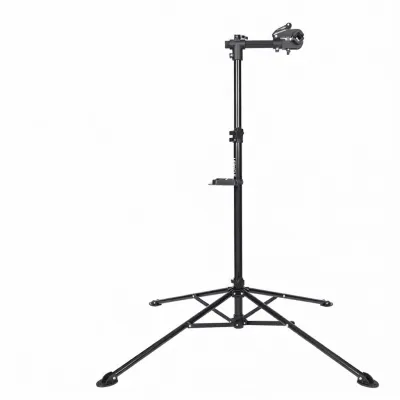
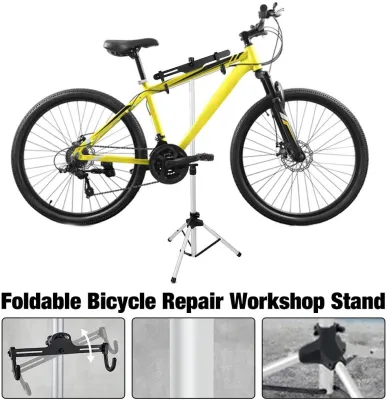
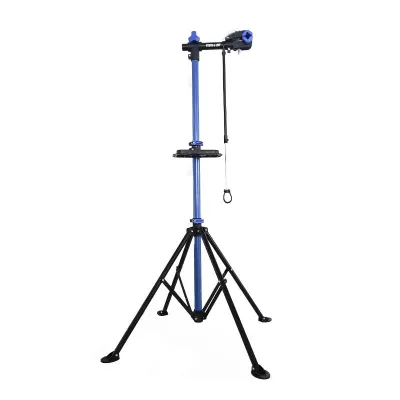
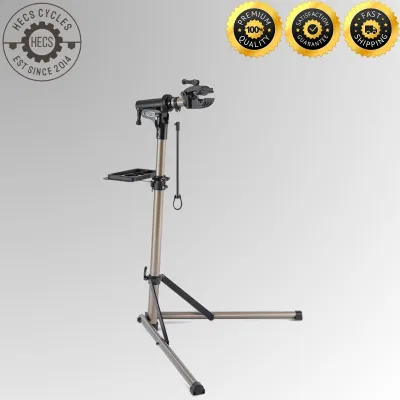
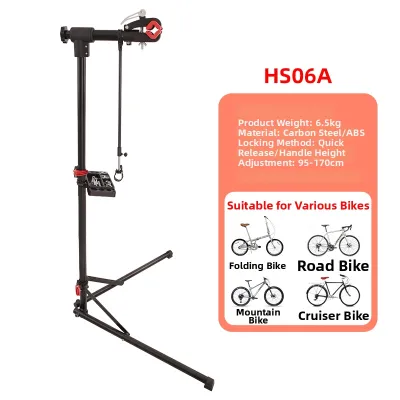
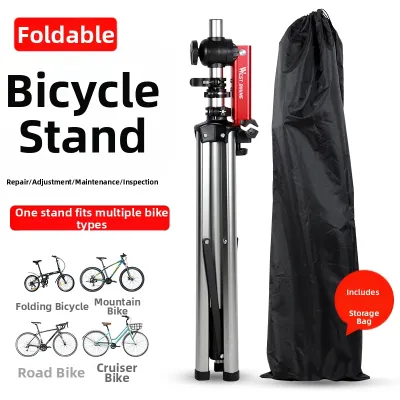
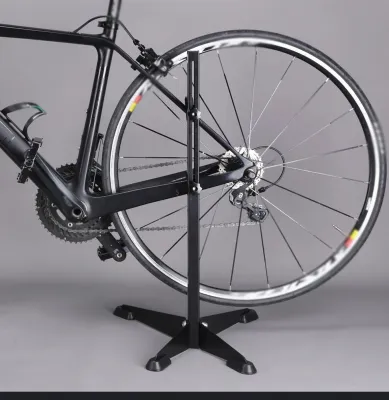
Prices are valid at publication and may change. Please refer to the product page for the latest price.
Foldable bike stands, on the other hand, are designed with space-saving storage as their primary objective. While they do collapse for storage, they are often built with heavier, more robust materials like steel or thick-walled alloy to mimic the stability of permanent workshop stands. A foldable stand might prioritize a flat, highly compact collapsed profile over absolute weight reduction. This design allows the stand to be easily hidden away in a narrow utility closet, behind a wardrobe, or under a bed when not in use, making it highly suitable for urban apartments.
Some high-end models attempt to bridge this gap, offering both lightweight portability and compact folding capabilities. However, a clear trade-off usually remains: ultra-lightweight portable stands may sacrifice some rigidity when handling heavy bikes, while heavy-duty foldable stands can be cumbersome to carry over long distances. Recognizing whether you prioritize transportability or compact home storage will help narrow down your options immediately.
Head-to-Head Comparison: Space, Stability, and Setup
Evaluating a bike repair stand requires analyzing how its physical form factor impacts your daily routine. The ideal stand should integrate seamlessly into your home layout, support your bike safely, and deploy with minimal friction.

Storage Footprint and Space Constraints
In compact living environments, the physical space a tool occupies when idle is just as important as its performance during a repair. Portable tripod stands typically fold into a long, cylindrical shape, often measuring between 100 cm and 120 cm in length and 15 cm to 25 cm in diameter. While this shape is easy to slide into a car trunk or toss into a gear duffel, it can be awkward to store in a small apartment. It requires a dedicated vertical corner in a storeroom or balcony, as it cannot easily lay flat against a wall.
Foldable stands often collapse into a much flatter, more rectangular profile. Some models fold down to a depth of less than 10 cm, allowing them to slide flat under a bed frame, fit inside a narrow service yard gap, or hang from a heavy-duty wall hook. This flat-folding capability is a significant advantage for riders who do not have a dedicated garage or workshop space and must perform all maintenance in their living room or balcony.
Before purchasing any stand, measure your intended storage nook, service yard, or household shelter. Compare these measurements directly against the manufacturer’s stated folded dimensions. If you plan to store the stand in a humid environment like an open balcony or service yard, verify that the materials and hardware are corrosion-resistant, as Singapore’s tropical humidity can quickly degrade exposed steel bolts and pivot joints.
Stability, Weight Capacity, and Bike Compatibility
Stability is the most critical safety factor when suspended a bicycle off the ground. Portable tripod stands excel in this category by utilizing a wide three-point base. This triangular footprint distributes weight evenly and resists tipping, even when you apply high torque to stubborn bottom brackets or stuck pedals. The wide base also makes tripods highly stable on slightly uneven outdoor terrain. However, this stability comes at the cost of a large working footprint, often requiring a clear floor area of over 1.2 meters in diameter.
Foldable stands with two-legged bases or smaller footprints require a perfectly flat, level indoor floor to remain stable. Because their base is narrower, they rely heavily on a low center of gravity. When using a flat-folding stand with a heavy bike, you must carefully align the bicycle’s center of mass directly over the stand’s support legs to prevent tipping. High-torque tasks can cause these narrower stands to flex or wobble, which can be distracting and potentially unsafe during complex repairs.
Weight capacity is a vital specification to verify, particularly with the rising popularity of heavier electric bicycles (e-bikes) and robust commuter bikes. Standard lightweight portable stands often have weight limits capped around 20 kg to 25 kg. A typical e-bike can easily exceed 23 kg, pushing a lightweight stand to its structural limit. Exceeding these limits can cause telescoping collars to slip or the entire stand to buckle. Always check your bike’s exact weight and compare it to the stand’s certified weight capacity before mounting.
Additionally, consider clamp compatibility. Modern bicycles feature a wide variety of frame shapes, including oversized down tubes, delicate carbon fiber tubes, and non-round aerodynamic seatposts. Ensure the stand’s clamp jaw opens wide enough to accommodate your seatpost diameter and features soft, non-marring rubber inserts to protect your bike’s finish.
Setup Time and Ease of Use
If a repair stand is difficult or tedious to set up, you are far less likely to use it for routine maintenance like chain lubrication or post-ride cleanups. Portable tripod stands often feature quick-release clamp collars similar to those found on camera tripods. These allow you to slide the legs open, lock them in place with a single lever, and extend the main column to your desired working height in under thirty seconds.
Some heavy-duty foldable stands utilize threaded hand knobs or complex linkage systems that require multiple steps to unfold and lock securely. While these mechanisms provide exceptional rigidity, they can be slow to operate and may require significant hand strength to tighten sufficiently. If you frequently perform quick, five-minute maintenance sessions, the friction of a slow setup process can become a major deterrent.
Look for stands that feature micro-adjusting clamp jaws and quick-release push buttons. These allow you to quickly clamp the bike with one hand while supporting its weight with the other. Height adjustability is also crucial; a stand that allows you to easily raise the bike to eye level will significantly reduce back strain during long wrenching sessions.
Matching the Stand to Your Home and Riding Habits
Your living situation and how often you ride should dictate the style of repair stand you choose. Matching the tool to your specific lifestyle ensures you get the maximum utility out of your investment.
The Occasional Home Mechanic in a Compact HDB
For riders who primarily use Singapore’s Park Connector Network (PCN) or local bike paths for weekend recreation, maintenance is usually limited to basic cleaning, chain lubrication, and minor gear adjustments. In a typical HDB flat or condominium, floor space is highly optimized, and leaving a large repair stand permanently deployed is rarely an option.
If you fall into this category, a compact foldable stand is highly recommended. These stands can be quickly retrieved from a closet, set up in a tiled hallway or balcony for a quick post-ride wipe-down, and then folded completely flat and tucked away out of sight. Because PCN riding rarely subjects a bike to extreme mud or mechanical strain, you do not need a heavy-duty workshop stand. A light, flat-folding stand provides ample stability for holding a standard road, hybrid, or folding bike while keeping your living areas clear, safe, and free of grease stains.
The Frequent Wrencher with Dedicated Storage
If you are an avid mountain biker, gravel rider, or road cyclist who performs complex home maintenance—such as hydraulic brake bleeding, suspension tuning, drivetrain overhauls, or custom wheel building—your requirements are vastly different. You need a stable, rigid platform that can handle aggressive wrenching and heavy frame loads without flexing.
For this level of maintenance, a sturdy portable tripod stand or a heavy-duty, professional-grade foldable workshop stand is the superior choice. If you have a dedicated balcony, service yard, or a spacious household shelter where the stand can remain semi-permanently deployed, the larger footprint of a tripod stand is a minor inconvenience compared to the immense stability it provides. The ability to rotate the bike 360 degrees and lock it securely at any angle is essential for complex tasks, allowing you to access hard-to-reach areas like bottom bracket cable guides or rear disc brake calipers comfortably.
Final Verdict: How to Make Your Choice
To make your final decision, evaluate your home workspace, your bicycle specifications, and your storage limitations using this structured framework:
- Choose a Foldable Stand if:
- You live in a compact apartment with very limited storage space and need a stand that can fold flat to slide under a bed or hide inside a narrow utility closet.
- Your maintenance routine consists primarily of light cleaning, chain lubing, and minor derailleur adjustments.
- You always work on flat, level indoor flooring and do not need to transport the stand to outdoor trailheads or races.
- Choose a Portable Tripod Stand if:
- You require maximum stability for heavy wrenching, high-torque tasks, or working on uneven outdoor surfaces.
- You ride a heavy bicycle, such as an e-bike or a long-travel mountain bike, that requires a wide, tip-resistant base.
- You frequently travel with your bike and need a lightweight stand that folds into a compact cylinder for easy transport in a vehicle.
- Verify first if:
- You own a carbon fiber frame. Never clamp a carbon frame directly; always clamp a round, non-carbon seatpost, or use a specialized fork-mount stand.
- Your bike has non-standard tube shapes, such as aerodynamic seatposts or oversized down tubes. Verify that the stand's clamp jaw is compatible with these shapes before purchasing.
- Your bike's weight is close to the stand's limit. Always leave a safety margin of at least 15% to 20% between your bike's actual weight and the manufacturer's maximum weight rating.
Frequently Asked Questions (FAQ)
Can I clamp a carbon fiber bike frame to a portable repair stand?
No, you should never clamp a carbon fiber frame tube directly in a repair stand. Carbon fiber tubes are engineered to withstand specific directional forces from riding, but they are highly vulnerable to crushing forces from clamping. Applying even moderate pressure with a repair stand clamp can cause micro-fractures or complete structural failure of the frame.
Instead, always clamp the bicycle by its seatpost, provided the seatpost is made of aluminum or alloy. If your bike has a carbon fiber seatpost, you must exercise extreme caution. Clean any grit from the seatpost and the clamp jaws to prevent scratching, and use a stand with a highly adjustable, torque-limiting clamp. Alternatively, you can use a Euro-style or fork-mount repair stand, which secures the bike by the front or rear dropouts and supports the bottom bracket from underneath, completely eliminating the need to clamp any frame tubes.
Are wall-mounted bike repair stands better for small apartments?
Wall-mounted repair stands offer a highly stable, zero-floor-footprint solution for small spaces, but they come with significant trade-offs. The primary advantage is that they require no floor space when in use, and many models feature clamp arms that fold flat against the wall when idle. This makes them incredibly convenient for quick, spontaneous maintenance sessions.
However, wall-mounted stands are entirely stationary. They require drilling into a solid wall—such as concrete or structural masonry—using heavy-duty anchors to support the weight of the stand and the bike. This permanent installation is often not feasible for renters who do not have permission to drill into walls. Additionally, a wall-mounted stand limits your workspace; you cannot walk around the bike to access the opposite side, forcing you to remove and flip the bike to work on different components.
Do I need a repair stand just for washing my bike?
While a repair stand is not strictly mandatory for washing your bike, it makes the process significantly easier, safer, and more ergonomic. Elevating the bike allows you to thoroughly clean the drivetrain, underside of the down tube, and inside the wheel arches without bending over or kneeling on wet concrete. It also allows you to spin the pedals and run the drivetrain freely, which is essential for properly degreasing and rinsing the chain and cassette.
If budget or space constraints prevent you from purchasing a dedicated repair stand, there are simpler alternatives. You can use a basic triangle floor stand that hooks under the rear chainstay and seatstay, lifting the rear wheel off the ground. While this does not elevate the entire bike, it allows you to spin the drivetrain for cleaning and lubrication. Alternatively, you can carefully lean the bike against a wall, ensuring the contact points are protected to prevent scratches, or use a simple hook-and-pulley system suspended from a sturdy balcony beam if permitted.
Community discussion
Share your experience or ask a question. Comments are reviewed before publication.