
Selecting the right goal post depends on where you play, how often you train, and who manages the ground. If you need to pack up after every session, transport your gear in a car boot, or play on shared public fields, a portable pop-up or quick-assemble goal post is the practical choice. Conversely, if you have access to a dedicated private pitch, a school field with permanent usage rights, or a spacious backyard where the equipment can remain stationary, a permanent fixed goal post offers unmatched stability and a true-to-game rebound. For those who want a professional-grade setup that can still be removed during the off-season, semi-permanent socketed goals serve as an excellent middle ground.
Core Structural Differences to Verify Before Buying
Understanding the physical construction of a goal post is essential to ensuring it survives regular training sessions and matches. Manufacturers use a variety of materials and designs, each offering distinct trade-offs in terms of weight, durability, and ease of use.
Frame Materials and Rigidity
When reviewing product specifications, pay close attention to the frame material. PVC (polyvinyl chloride) is highly popular for recreational use because it is lightweight, rust-proof, and relatively inexpensive. However, PVC frames can flex significantly when struck by high-velocity shots, which may temporarily distort the goal’s shape. Fiberglass is another common material, typically utilized in tension-style pop-up goals. It offers exceptional flexibility and strength-to-weight ratio, allowing the frame to bend and snap back into place without breaking. For a more rigid, professional feel, aluminum is the standard for high-end portable and semi-permanent goals. It provides the structural integrity of metal without the heavy weight of steel. Steel remains the ultimate choice for permanent installations due to its extreme durability and resistance to impact, though it requires proper protective coatings to prevent corrosion.
Products mentioned in this guide
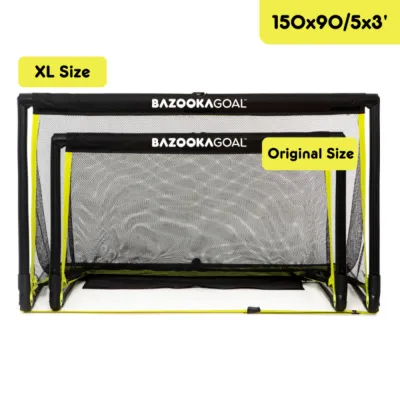
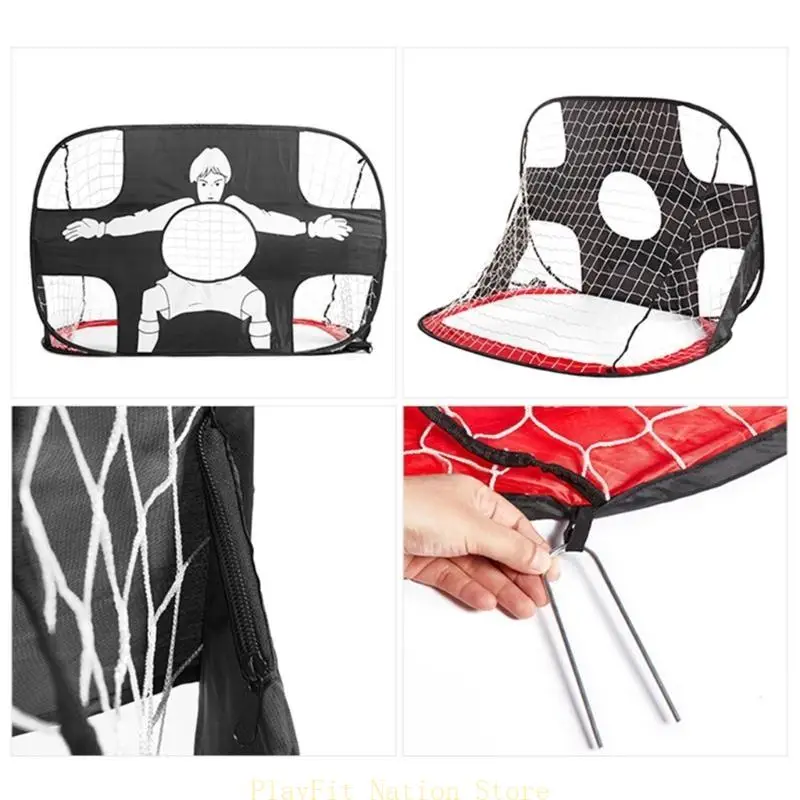
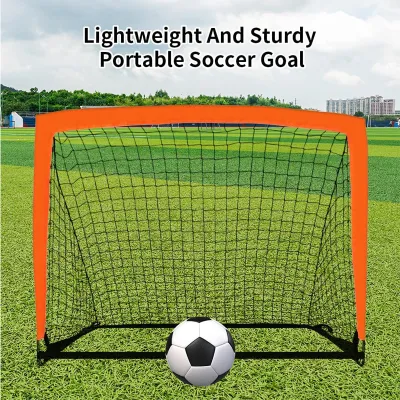
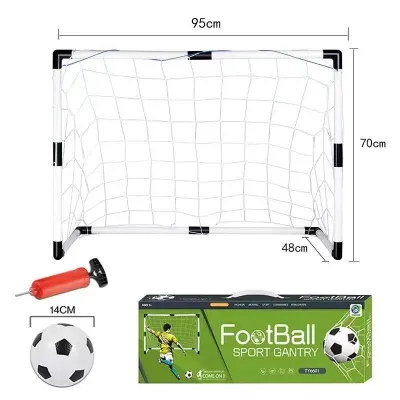
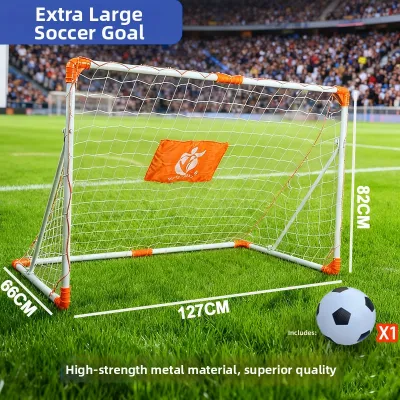
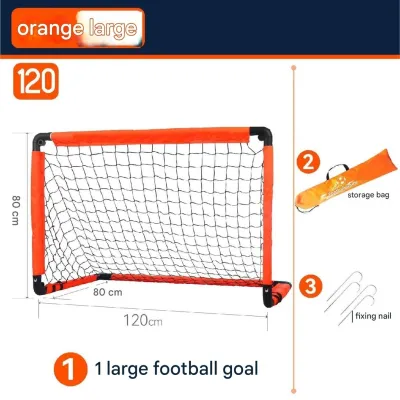
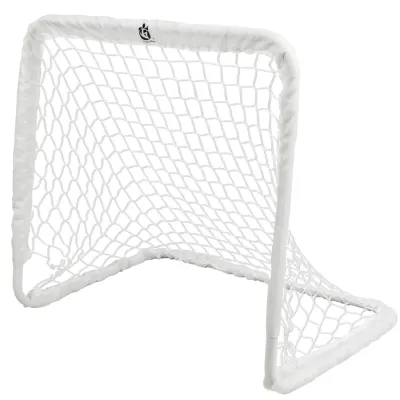
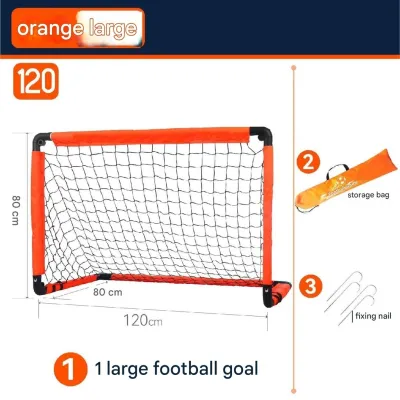
Prices are valid at publication and may change. Please refer to the product page for the latest price.
Net Attachment Systems
A goal is only as good as its net, and how that net attaches to the frame determines how much maintenance you will face during play. Look for integrated net tracks or channel systems on aluminum and steel frames, which slide the net securely into the structure and eliminate the need for external clips. For portable PVC or fiberglass models, check for heavy-duty elastic bungees, velcro straps, or sleeve designs where the frame poles slide directly through the net fabric. Avoid low-grade plastic clips that snap easily under tension or degrade rapidly when exposed to direct sunlight.
Anchoring Mechanisms
The method used to secure the goal post directly impacts both safety and performance. Portable models generally rely on temporary anchoring solutions. On natural grass, U-shaped metal pegs or spiral ground anchors pin the frame to the earth. On hard surfaces like concrete or artificial turf where you cannot puncture the ground, you must look for models compatible with sandbags, counterweights, or pre-weighted steel base frames. Permanent goals, on the other hand, require robust, long-term anchoring. This typically involves digging ground holes and setting concrete sleeves or heavy-duty auger anchors deep into the soil, ensuring the frame remains completely immovable even under heavy impact.
Matching the Goal Post to Your Setup Location and Surface
Before making a purchase, you must carefully evaluate the physical environment where the goal post will be used. Failing to match the equipment to the surface and local regulations can lead to damaged property, safety hazards, or fines.

Surface Compatibility and Ground Rules
Different surfaces require specific goal designs to function safely. If you are playing on natural grass, almost any anchoring system will work, but you must ensure the pegs do not damage underlying utility lines or irrigation systems. For artificial turf pitches, standard ground pegs are unusable; you must select a goal post with a flat, weighted bottom bar or use specialized turf-safe counterweights. If your training takes place on hard courts, such as concrete multi-purpose areas or asphalt driveways, look for rubber-padded bases to prevent the frame from sliding and to protect the playing surface from scratches.
Space and Clearance Requirements
Do not simply measure the dimensions of the goal itself; you must also calculate the surrounding clearance. A safe setup requires a clear run-off area of at least 1 to 2 meters behind the goal line and along the sides. This buffer zone ensures that players running at high speeds or sliding to save a ball do not collide with nearby walls, fences, metal railings, or drainage ditches. If your available space is tight, a smaller portable goal is often safer than a full-sized permanent structure that crowds the playing area.
Property Rules and Local Regulations
In highly urbanized environments, public spaces and residential estates are governed by strict management guidelines. If you plan to set up a goal post in a condominium common area, a local park, or a shared community field, check with the relevant town council or estate management first. Permanent installations are rarely permitted on public land without formal engineering approvals and permits. Even for portable goals, some estates prohibit leaving sports equipment unattended on lawns overnight. If you face these restrictions, a highly portable model that can be packed away in minutes is the only viable option.
Weighing Storage Constraints and Transport Logistics
The practicality of a goal post often comes down to what happens after the final whistle blows. If the process of moving and storing the goal is too exhausting, it will likely end up gathering dust in a storeroom.
Folded Dimensions and Storage Space
Always check the folded or disassembled dimensions of a portable goal post against your available storage areas. Many “portable” goals do not fold into a compact square; instead, they disassemble into long poles that can exceed 1.5 meters in length. Measure your home storeroom, balcony, or garage shelves to ensure you have adequate space. More importantly, if you plan to transport the goal to different venues, measure your car’s boot space or rear seat width to confirm the carrying bag will fit comfortably inside your vehicle.
Assembly and Takedown Time
Consider how much of your training session you are willing to dedicate to setup. Pop-up goals with tension-loop frames can be deployed in under a minute, making them excellent for quick, casual sessions. Modular PVC or aluminum goals with push-button locking joints typically require 10 to 20 minutes to assemble, which is manageable for structured team practices but may feel tedious for solo training. Permanent goals require a significant one-time installation effort—often involving concrete mixing and excavation—but offer the ultimate convenience of zero daily setup time.
Transport Weight and Portability Features
The physical weight of the goal post determines how far you can comfortably carry it. A lightweight fiberglass pop-up goal might weigh less than 3kg, while a robust, full-sized portable aluminum goal can easily exceed 25kg. If you must walk a significant distance from the car park to the playing field, look for carrying bags equipped with padded shoulder straps, dual handles, or integrated wheels. For heavier portable models, ensure you have a training partner to assist with lifting and carrying to prevent physical strain.
Stability, Weather Resistance, and Safety Checks
Safety must always be the top priority when selecting and operating sports equipment. Unsecured or poorly maintained goal posts pose a serious risk of tipping, which can cause severe injuries to players.
Tipping Hazards and Anchoring Protocols
A critical rule of sports safety is that every goal post—regardless of its size, weight, or material—must be properly anchored before use. Even a heavy steel permanent goal can tip forward if a player hangs from the crossbar or if extreme winds catch the net. For portable goals, never rely solely on the weight of the frame to keep it upright. Always use the provided ground pegs, sandbags, or dedicated counterweights. Before allowing any play to begin, perform a physical push-test on the crossbar to verify that the frame remains stable and does not lift off the ground.
Weather Exposure and Material Longevity
Outdoor sports equipment must withstand harsh environmental conditions. In regions characterized by high humidity, heavy rainfall, and intense sunlight, materials degrade rapidly. UV radiation can make standard plastic joints brittle, causing them to crack under the impact of a ball. Rain can quickly rust untreated steel frames and rot low-quality nylon nets. When shopping, look for specifications indicating UV-stabilized netting, powder-coated or galvanized steel, and anodized aluminum. If you choose a permanent goal, ensure the ground sockets have proper drainage caps to prevent water from pooling inside and corroding the metal from the bottom up.
Routine Maintenance and Inspections
To ensure long-term safety and performance, establish a regular inspection routine. Before every session, check the net for tears or loose meshes that could allow a ball to pass through or trap a player’s limbs. Inspect all frame joints, locking buttons, and weld points for signs of hairline cracks or structural fatigue. If you use a semi-permanent socketed goal, clear any dirt, leaves, or debris out of the ground sleeves before inserting the posts to ensure a secure, flush fit.
Final Decision Framework: Portable vs Permanent
To make your final decision, weigh your training goals against your physical space and logistical capabilities. Use the following guidelines to identify the category that aligns with your needs.
Choose Portable if:
- Flexibility is key: You train on shared public fields, local parks, or rented pitches where equipment must be removed after use.
- Storage is limited: Your storage space is limited to a home storeroom, a balcony, or a car boot.
- Casual play: You require a quick, flexible setup for casual play, youth training, or multi-sport spaces.
- Lower initial effort: You want to avoid the high upfront cost and labor of ground excavation and concrete installation.
Choose Permanent if:
- Dedicated space: You own or manage a dedicated private pitch, a school sports field, or a spacious backyard with permanent usage rights.
- Maximum stability: You require maximum structural stability and a true-to-game ball rebound for high-intensity training.
- Zero daily setup: You want a setup that is always ready for play with zero daily assembly or takedown time.
- Long-term investment: You are prepared to invest in professional installation and long-term ground maintenance.
Verify First if:
- Local rules: You are unsure about local council or estate management rules regarding permanent structures.
- Semi-permanent needs: You need a semi-permanent socketed solution, which allows you to slide the goal posts out of concrete ground sleeves when the field needs to be mowed or used for other activities.
- Surface constraints: Your primary playing surface is artificial turf or concrete, which limits your anchoring options to weighted bases and sandbags rather than ground pegs.
Community discussion
Share your experience or ask a question. Comments are reviewed before publication.