
Choosing between a portable and a wall-mounted basketball hoop comes down to balancing your property type, available playing space, and desired play quality. If you live in a rental property, need the flexibility to clear your driveway, or want to store the system during off-seasons, a portable hoop is the most practical choice. Conversely, if you own your home, have a solid concrete or brick wall, and prioritize a rigid, gym-like rebound performance with a minimal ground footprint, a wall-mounted system is generally the better option.
Evaluating your specific environment is the first step. While both systems can provide years of outdoor recreation, their structural demands, installation complexities, and long-term durability differ significantly. By assessing your space, budget, and performance expectations, you can select a setup that ensures safe, active play for your household.
Space, Setup, and Mobility Needs
Before purchasing any basketball system, you must measure your available playing area and the surrounding clearance zones. A standard half-court setup requires a flat, level surface, but even a simple driveway game needs adequate space for players to run, shoot, and rebound safely. You should aim for a clear zone of at least three to four meters in front of the hoop to allow for natural shooting arcs and safe landing areas after layups.
Products mentioned in this guide
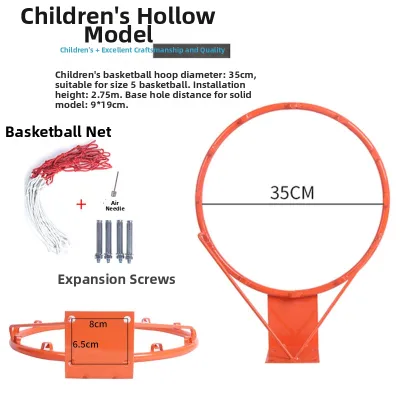
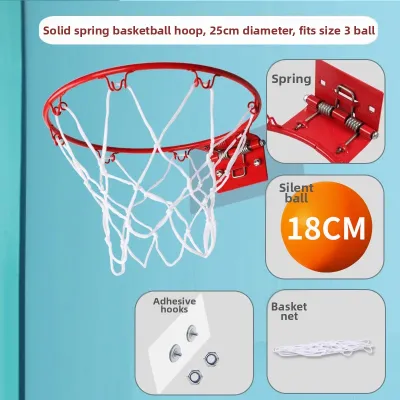
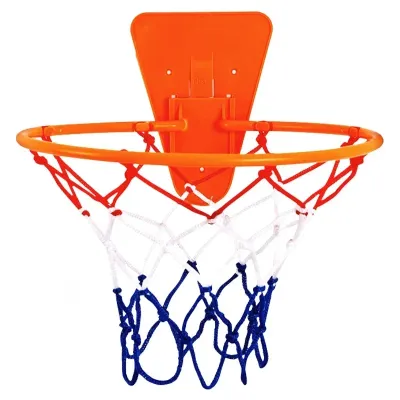
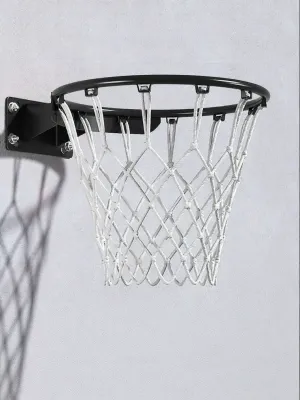
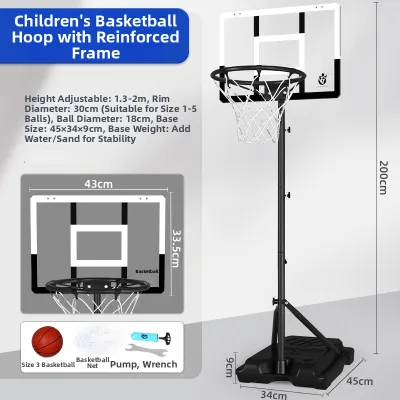
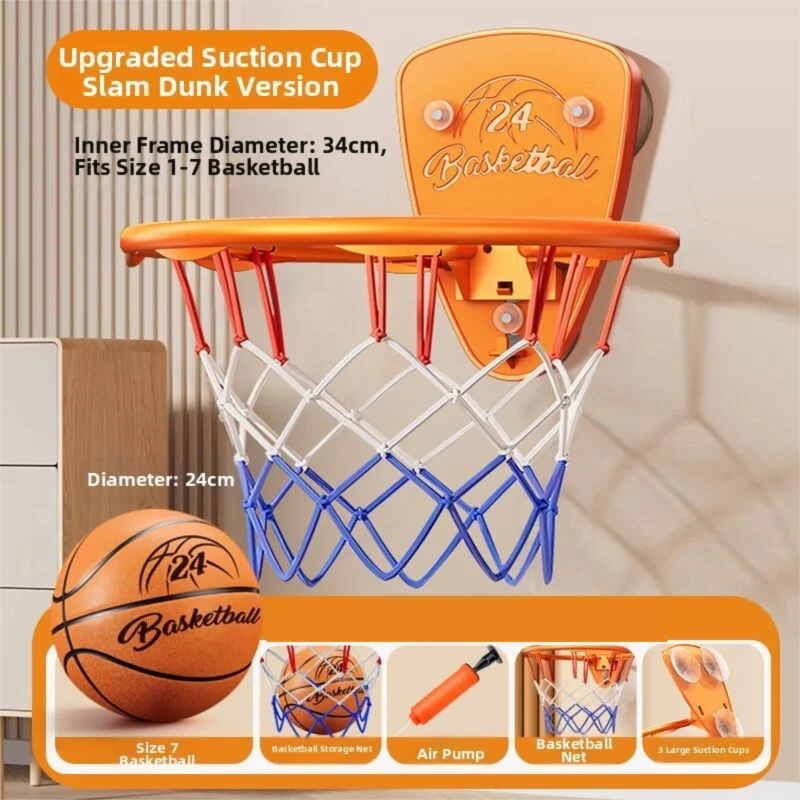
Prices are valid at publication and may change. Please refer to the product page for the latest price.
Portable basketball hoops require a substantial ground footprint to remain stable. The plastic base of a portable system typically measures around 110 to 130 centimeters in length and 70 to 80 centimeters in width. This base must sit entirely on a flat, level surface; placing a portable hoop on a sloped driveway can compromise its stability and alter the rim angle. You must also account for the space behind the backboard, as the support poles and base structure extend backward, reducing the usable playing depth on shorter driveways.
Wall-mounted systems, on the other hand, preserve valuable ground space because they eliminate the need for a bulky base and vertical pole. However, they place strict demands on your home’s architecture. You must mount these systems to a solid structural wall, such as reinforced concrete or load-bearing brickwork. Lightweight boundary walls, decorative stone facades, and wood siding are generally unsuitable because they cannot absorb the dynamic forces generated during active play. Additionally, you must calculate the overhang—the distance the backboard projects from the wall—to ensure players do not collide with the masonry during fast-paced games.
Property ownership and local housing regulations are also decisive factors. If you rent your home, a portable hoop is often your only viable option, as it requires no permanent modifications and can be packed up when you move. For homeowners in private estates or condominiums, you must consult your management corporation strata title (MCST) bylaws or local estate guidelines. Some residential developments restrict permanent outdoor structures, visible sports equipment, or hoops that face common pathways, making a portable system that can be wheeled into a garage or backyard after use the only compliant choice.
Play Quality, Stability, and Rebound
The structural design of your basketball hoop directly influences how the ball behaves when it hits the backboard. Portable hoops are inherently prone to vibration and shaking. Because the system relies on a plastic base filled with ballast and a multi-piece vertical pole, much of the kinetic energy from a shot is absorbed by the joints and frame. This causes the backboard to wobble after a shot, which can disrupt fast-paced shooting drills or consecutive rebound practice.

Wall-mounted hoops offer superior stability because they anchor directly to a rigid, high-mass structure. When bolted securely to a concrete wall, the mounting brackets transfer the impact energy directly into the building’s structure, resulting in a highly rigid backboard response. This setup closely mimics the play quality of indoor gymnasium courts, providing a predictable, immediate rebound that helps players develop consistent shooting and rebounding skills.
Backboard material plays an equally critical role in rebound quality, independent of the mounting style. Tempered glass is the gold standard used in professional courts, offering the truest rebound and maximum scratch resistance, though it is heavy and requires a highly robust mounting system. Acrylic backboards are a popular mid-range alternative; they are lightweight and offer decent rebound performance, though they can scratch over time. Polycarbonate backboards are virtually indestructible and highly impact-resistant, making them excellent for households with young children, but they offer a much softer, less active rebound and can yellow under prolonged exposure to intense tropical sunlight.
Safety under the rim is another key performance consideration. The overhang distance determines how much space players have to drive to the basket without running into the support structure. High-quality wall-mounted brackets often provide an overhang of 60 to 120 centimeters, allowing safe play under the net. Portable systems also offer some overhang, but cheaper models may position the vertical pole very close to the backboard, increasing the risk of player collision. Always check the manufacturer specifications for the rim type; a spring-loaded breakaway rim is essential if players plan to perform aggressive layups, as it flexes under load to protect both the backboard and the player’s wrists.
Installation, Weather Resistance, and Maintenance
Installing a basketball hoop is a demanding physical task that requires careful planning and adherence to safety guidelines. Assembling a portable hoop involves piecing together the steel frame, attaching the backboard, and filling the large base. Because of the weight and awkward dimensions of the backboard and pole, this process requires at least two or three capable adults to prevent tipping and injury during assembly. You must also choose your base ballast carefully; while water is convenient to fill and drain, sand is significantly heavier and provides better long-term stability, though it is much harder to empty if you need to relocate the hoop.
Wall-mounted installations require a high level of structural precision and masonry skill. You must locate the structural studs or verify the solid concrete depth, drill precise anchor holes, and use heavy-duty sleeve anchors or chemical bolts to secure the mounting brackets. Because a falling backboard poses a severe safety hazard, you should stop the installation and consult a qualified structural professional or professional installation service if you are unsure of your wall’s load-bearing capacity or structural integrity.
Our tropical climate presents unique maintenance challenges for outdoor sports equipment. High humidity, intense UV radiation, and frequent heavy downpours can accelerate the degradation of both systems. For portable hoops, water filled in the base can become a breeding ground for algae, or it can slowly evaporate through micro-cracks in the plastic. In coastal areas, salt-laden air can quickly corrode steel poles and mounting hardware. You should regularly inspect all metal components for signs of rust, apply rust-inhibiting spray to exposed joints, and check that the nylon net has not degraded or frayed under UV exposure.
Routine maintenance is essential to keep your system safe and functional. For wall-mounted systems, you must periodically check the tightness of the masonry bolts, as the vibration from play can slowly loosen hardware over time. For portable systems, check the base regularly for leaks and ensure the height-adjustment mechanism is well-lubricated. If you notice any structural cracks in the plastic base, severe rust on the load-bearing poles, or loose wall anchors, suspend play immediately until you can repair or replace the damaged components.
Budget and Long-Term Value
When planning your purchase, you must look beyond the initial retail price of the hoop and consider the total cost of ownership. Basketball systems span a wide range of price tiers, reflecting their material quality, durability, and structural design.
- Entry-Level (S$200 to S$500): This tier consists primarily of portable hoops with smaller plastic bases, multi-piece poles, and thin polycarbonate or acrylic backboards. These are excellent for casual play, young children, and tight budgets, though they tend to wobble during use and have a shorter lifespan under harsh weather conditions.
- Mid-Range (S$500 to S$1,200): In this bracket, you will find high-quality portable hoops with larger bases, thicker steel poles, and sturdier acrylic backboards. You will also find robust wall-mounted systems featuring heavy-duty steel mounting brackets and thick acrylic or entry-level tempered glass backboards. These systems offer a great balance of durability and play quality for active families.
- Premium (S$1,200 to S$2,500+): This tier includes professional-grade wall-mounted systems and top-tier portable hoops featuring large tempered glass backboards, one-piece support poles, advanced height-adjustment gas struts, and extensive rust-resistant coatings. These systems are designed for serious players who demand gym-quality rebound performance and maximum durability.
There are several hidden costs to keep in mind. For portable hoops, purchasing play-grade sand to fill a 100-liter base can add to your initial expenses. For wall-mounted hoops, unless you possess professional-grade masonry tools and experience, you should budget an additional S$150 to S$400 for professional installation services to ensure the system is anchored safely. Additionally, if you plan to move homes in the future, a portable hoop can be transported relatively easily in a large vehicle, whereas moving a wall-mounted system requires unbolting the heavy brackets, patching the wall, purchasing new anchor hardware, and reinstalling it at your new property.
How to Choose the Right Basketball Hoop for Your Home
To make your final decision, evaluate your living situation and playing preferences against this practical framework:
Choose a portable hoop if:
- You rent your home or plan to relocate within the next few years.
- You want the flexibility to move the hoop out of sight, store it in a garage, or adjust its position on your driveway.
- Your driveway is flat, level, and has sufficient space to accommodate the large plastic base.
- Your local estate or condominium guidelines prohibit permanent outdoor installations.
Choose a wall-mounted hoop if:
- You own your home and want a permanent, clean-looking sports setup.
- You have a solid, load-bearing concrete or brick wall facing a flat playing surface.
- You prioritize high-performance play, minimal backboard vibration, and a true ball rebound.
- You want to maximize your playing area by keeping the ground completely clear of poles and bases.
Before making any purchase, always verify the structural capacity of your intended mounting surface or check your driveway’s slope. If your local council regulations restrict outdoor sports structures, or if your available space does not allow for safe player clearance zones, you may need to consider alternative recreational setups to ensure safety and compliance.
Frequently Asked Questions (FAQ)
Can I convert a portable basketball hoop to a wall-mounted one?
Generally, you should not attempt to convert a standard portable basketball hoop into a wall-mounted system. Portable hoops are engineered as integrated systems, where the backboard, rim, and pole are designed to balance together using the base as a counterweight. The mounting brackets on a portable backboard are rarely compatible with wall-mount kits. Attempting a DIY conversion can compromise the structural integrity of the backboard, void the manufacturer’s warranty, and create a severe safety hazard if the unit detaches from the wall under the dynamic load of a basketball impact.
How much clearance do I need behind a wall-mounted backboard?
For safe and comfortable play, you should look for a wall-mounting bracket that provides an overhang clearance of at least 60 to 90 centimeters between the wall and the backboard. This space acts as a safety buffer zone, preventing players from running into the hard concrete wall after driving for a layup or chasing a rebound. If your playing area is tight, you must balance this overhang with your available driveway depth to ensure you still have enough room to shoot comfortably from the key. Always check your local building guidelines to ensure the projecting structure does not encroach on shared pathways or neighboring properties.
Is it safe to leave a portable hoop outside during heavy storms?
While portable hoops are designed for outdoor use, extreme weather conditions require precautionary steps to prevent tipping. Before a heavy storm or high-wind event, you should lower the hoop to its lowest height setting (typically around 2.3 meters) to reduce wind resistance and lower the system’s center of gravity. Ensure the base is completely filled with the recommended volume of sand or water, and inspect the base plug for a tight seal. If your area is prone to severe wind gusts, securing the base with additional sandbags or wheeling the system into a sheltered garage or carport is the safest way to prevent property damage or structural failure.
Community discussion
Share your experience or ask a question. Comments are reviewed before publication.