
Climbing safety relies heavily on the integrity of your gear, and no piece of equipment is more critical to your survival than your climbing rope. Before tying in for your first pitch of the day, performing a comprehensive visual and tactile inspection of your braided rope is an essential habit that every climber must develop. This pre-use routine allows you to identify structural damage, wear patterns, and hidden core issues that could compromise the rope’s ability to catch a fall. By systematically checking your gear, you establish a reliable safety baseline before leaving the ground.
Why Pre-Use Inspection is Critical for a Braided Rope
To understand why pre-use inspections are so vital, it helps to look at how a modern braided rope is engineered. These ropes utilize a kernmantle construction, which features a highly twisted, load-bearing inner core protected by a tightly woven outer sheath. The outer sheath is designed to shield the core from abrasion, dirt, sharp rock edges, and ultraviolet radiation, while also providing the necessary friction for belay devices. The inner core, on the other hand, provides the majority of the rope’s tensile strength and dynamic stretch, which absorbs the impact force of a fall.
Because these two components work as a unified system, damage to one directly impacts the performance of the other. For instance, if the outer sheath becomes worn or cut, the core is left vulnerable to rapid degradation. Conversely, the core can suffer internal fiber breakage or structural collapse from severe falls or sharp bends without showing any obvious visual signs on the outer sheath. This hidden internal damage can lead to sudden, catastrophic failure when the rope is subjected to a high-impact load. A thorough physical check is your primary defense against these invisible hazards.
Products mentioned in this guide
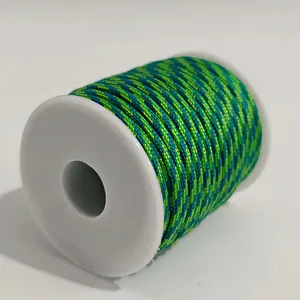
Prices are valid at publication and may change. Please refer to the product page for the latest price.
It is a non-negotiable safety boundary in climbing that you must never use a rope if its structural integrity is in doubt. Regardless of the difficulty of the climb, the height of the wall, or how recently you purchased the gear, any sign of compromise means the rope must be retired immediately. Furthermore, while rigorous gear inspection is a mandatory part of safe climbing, it is important to remember that equipment checks cannot replace proper training, risk assessment, and sound judgment on the wall. Safety is a holistic practice that combines reliable gear with competent decision-making.
Step-by-Step Visual and Tactile Inspection Guide
A reliable inspection requires a systematic approach to ensure that no section of the rope is overlooked. Before you begin, find a clean, dry, and well-lit area where you can lay the rope out completely. Avoid checking your rope on dirty ground, gravel, or near sharp objects, as these environments can introduce abrasive particles into the fibers or cause accidental snags during the process. Having adequate lighting is crucial for spotting subtle color changes, glaze marks, or fine fiber tears.

The most effective way to inspect your braided rope is through a process known as “flaking” or “stacking.” This technique involves passing the entire length of the rope, centimeter by centimeter, from one neat pile to another. Flaking ensures that you physically handle and visually examine every single section of the cord without tangling it. It prevents you from accidentally skipping segments or checking the same section twice, giving you a complete, uninterrupted assessment of the rope’s physical condition from end to end.
Checking the Rope Sheath and Surface
As you flake the rope, keep your eyes focused on the outer sheath to identify any physical or chemical defects. Start by looking for signs of severe abrasion or excessive fuzziness. While a small amount of fuzz is normal as a rope breaks in, a highly fuzzy sheath indicates that the outer fibers are wearing thin, which reduces the rope’s overall durability and its ability to glide smoothly through belay devices and carabiners. Look closely for flat spots where the round profile of the rope has been compromised.
Next, inspect the rope for any distinct cuts, nicks, or tears in the sheath. If you can see the white inner core fibers peeking through the outer colored sheath, you are looking at a “core shot.” This is a critical structural failure that immediately renders the rope unsafe for climbing. Even small cuts that do not fully expose the core should be treated with extreme caution, as they can quickly expand under tension.
You must also check the sheath for signs of chemical contamination or heat damage. Chemical damage often manifests as unusual discoloration, staining, or localized patches that feel exceptionally stiff or brittle. Heat damage, which typically occurs from rapid rappelling or lowering, looks like a glazed, shiny, or melted surface where the synthetic nylon fibers have fused together. Finally, examine both ends of the rope to ensure that the factory heat seals, end knots, or whipped ends are secure, intact, and completely free from fraying.
Feeling for Core Damage and Inconsistencies
Because the load-bearing core is completely hidden beneath the outer sheath, a visual inspection alone is not enough to guarantee safety. You must perform a tactile check by running the entire length of the rope slowly through your bare hands. Do not wear gloves during this process, as they will dull your sense of touch and prevent you from feeling subtle changes in the rope’s internal structure.
As you slide your hands along the rope, feel for any sudden changes in diameter, density, or texture. One of the most critical warning signs to watch for is a “soft spot.” A soft spot feels mushy, hollow, or significantly more flexible than the rest of the rope, indicating that the inner core fibers have parted, slipped, or sustained severe internal damage. Conversely, feel for “hard spots” or localized lumps, which suggest that the core fibers have bunched up, fused, or suffered high-impact deformation.
To verify the core’s consistency, you can perform a simple bend test. Gently bend the rope into a tight loop at various points along its length. A healthy, intact rope will maintain a smooth, rounded arc and resist pinching flat. If the rope pinches completely flat with no resistance, or if you feel a distinct kink where the core offers no support, the internal structure is compromised. If you detect any soft spots, hard lumps, or abnormal flexibility during this physical check, the rope must be retired from climbing service immediately.
Warning Signs: When to Retire Your Climbing Rope
Knowing when to retire your climbing rope is a critical decision that directly affects your safety. There are several non-negotiable warning signs that indicate a rope is no longer safe for use and must be taken out of service permanently.
Core Shot: Any visible exposure of the inner core through a torn or worn-away sheath is an immediate retirement trigger. Once the core is exposed, it lacks the protective shield of the sheath and can fail catastrophically under minimal load.
Severe Sheath Slippage: If the outer sheath shifts significantly over the core, or if extreme fuzziness compromises your ability to handle the rope safely, it must be retired. Excessive sheath slippage can cause bunching at the ends of the rope, making it difficult to pass through belay devices or tie secure knots.
Tactile Defects: Any flat spots, soft mushy sections, or hard internal lumps detected during your physical check are clear indicators of structural compromise. These defects compromise the rope’s dynamic elasticity and load-bearing capacity.
Environmental and Chemical Exposure: Synthetic nylon climbing ropes are highly sensitive to chemical damage. Exposure to strong acids, battery leaks, household cleaning solvents, or unknown chemicals requires immediate retirement, as these substances can silently destroy the fibers without leaving obvious visual marks. Additionally, extreme heat can degrade nylon. In Singapore’s tropical climate, leaving your climbing gear locked inside a hot car trunk can expose the rope to elevated temperatures that slowly weaken the synthetic fibers over time. Always store your gear in a temperature-controlled environment.
Age and Usage Tracking: Keep a detailed logbook to track your rope’s history, including its frequency of use, the number of falls it has held, and its storage conditions. Always defer to the manufacturer’s specific retirement guidelines. While a rope that is rarely used and stored perfectly might last up to ten years according to some manufacturer specifications, a heavily used rope may need retirement after only a few months. There is no universal expiration date; retirement must be based on a combination of verified usage history, environmental exposure, and physical condition.
Proper Handling and Storage to Prevent Damage
Taking proactive steps to care for your climbing rope can significantly extend its safe lifespan and minimize the risk of damage between inspections. One of the simplest ways to protect your rope is to use a dedicated rope tarp or rope bag during your climbing sessions. A tarp keeps the rope off the dirt, mud, and sand, preventing abrasive particles from working their way into the weave of the sheath.
You must also avoid stepping on your climbing rope at all costs. Stepping on a rope grinds microscopic dirt, grit, and rock particles through the outer sheath and into the inner core. Over time, these tiny particles act like miniature saws, causing internal micro-abrasions that slowly cut and weaken the load-bearing core fibers from the inside out every time the rope stretches under load.
When it comes to storage, keep your rope in a cool, dark, and dry place that is completely isolated from direct sunlight, high humidity, and chemical solvents. Ultraviolet radiation from the sun can degrade synthetic nylon fibers over time, while high humidity can encourage mildew growth. Finally, always ensure that your rope is completely dry before coiling it for long-term storage, as storing a damp rope can lead to fiber degradation and unpleasant odors.
Frequently Asked Questions (FAQ)
Can I wash my braided climbing rope if it feels stiff or dirty?
Yes, washing your climbing rope is highly recommended when it becomes stiff, dirty, or gritty, as embedded dirt causes internal abrasion and stiffness over time. To wash it safely, hand-wash the rope in lukewarm water using a mild, rope-specific soap or a gentle, non-detergent cleaner. Strictly avoid using harsh household detergents, bleach, fabric softeners, or washing machines unless the manufacturer’s care instructions explicitly permit it. After washing, rinse the rope thoroughly to remove all soap residue, then lay it out to air dry in a shaded, well-ventilated area. Never dry your rope in direct sunlight or near an artificial heat source, as this can damage the synthetic fibers.
How do I know if a rope has suffered a severe fall?
A severe fall is typically defined as a high fall factor event or any fall where the rope is subjected to extreme shock loading. After arresting a major fall, you must carefully inspect the specific section of the rope that ran through the quickdraws, carabiners, or belay device during the impact. Examine this area for flat spots, glazed or melted sheath fibers, or localized core stiffness. Because a single high-impact fall can exhaust the rope’s dynamic elasticity and compromise its safety margins, you must always defer to the manufacturer’s impact test specifications and retire the rope if it has exceeded those design limits.
Community discussion
Share your experience or ask a question. Comments are reviewed before publication.