
Whether a yoga block is a luxury or a necessity depends entirely on how you practice. For a beginner attending a gentle restorative class once a week, a budget foam block is often more than sufficient. However, for a dedicated practitioner working on advanced balances, hot yoga, or requiring firm joint support, a premium block made of cork, wood, or high-density foam is a crucial investment in safety and alignment. Choosing between premium and budget options requires looking past the brand name and evaluating the physical properties of the materials, their density, and how they perform under pressure.
In Singapore’s tropical climate, factors like humidity and sweat play a significant role in how these materials behave over time. A block that feels stable in a dry, air-conditioned showroom can become slick and dangerous during a humid afternoon session. Understanding the structural differences between budget and premium tiers will help you make an informed decision that protects your joints and supports your practice for years to come.
Material Breakdown: EVA Foam, Cork, and Wood
To understand why some yoga blocks cost five times more than others, you must first look at what they are made of. The market is dominated by three primary materials: ethylene-vinyl acetate (EVA) foam, cork, and wood. Each material offers a distinct tactile experience, weight profile, and level of support.
Products mentioned in this guide
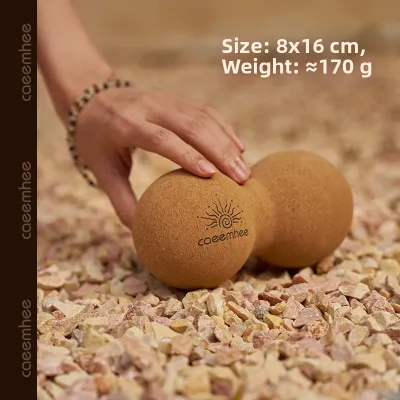
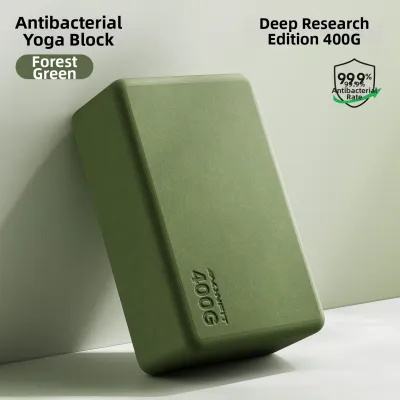
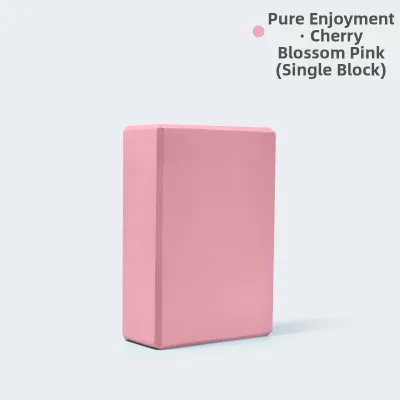
![[SG STOCK] Yoga Block Brick Rectangular Eva High Density 120 gram](https://img.lazcdn.com/g/p/15ec430f3b7931dd5cfe164aa0ece65a.jpg_400x400q80.jpg_.webp)
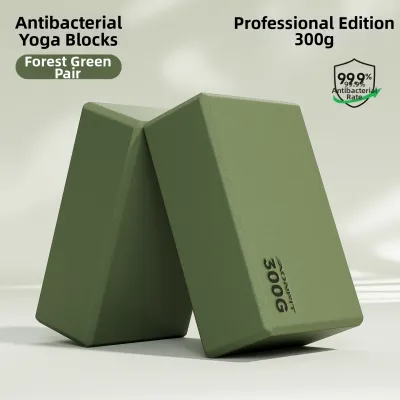
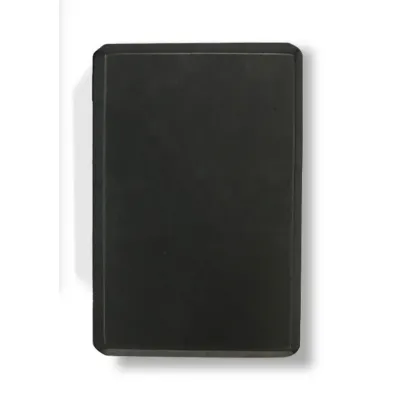
Prices are valid at publication and may change. Please refer to the product page for the latest price.
Standard vs. High-Density EVA Foam
EVA foam is a lightweight, synthetic copolymer known for its cushioning properties. It is the most common material used for budget blocks, but it is also utilized by premium brands. The critical difference lies in the manufacturing density. Budget foam blocks use a high ratio of foaming agents during production, which injects a large volume of air into the material. This results in an incredibly lightweight block, often weighing under 150 grams, but one that is highly compressible and structurally weak.
Premium foam blocks, by contrast, use a high-density EVA formulation with far fewer air pockets. These blocks typically weigh between 250 and 400 grams. When you press your thumb into a budget foam block, the material easily yields and leaves a temporary indentation. A premium high-density foam block resists this compression, offering a firm, supportive surface that maintains its shape even under heavy weight-bearing loads. This structural integrity is vital for maintaining consistent height and stability during challenging poses.
Cork and Bamboo/Wood Blocks
Cork is a natural, sustainable material harvested from the bark of the cork oak tree. Because the bark regenerates over time, cork is highly favored by eco-conscious practitioners. Cork blocks are naturally dense and heavy, typically weighing between 500 and 900 grams. This weight provides an exceptionally stable base that will not slide or tip over on your mat. The texture of cork is slightly porous and organic, offering a secure grip that actually improves when exposed to moisture, making it highly effective for sweaty practices.
Wood and bamboo blocks represent the pinnacle of firmness and durability. Usually made from maple, poplar, or hollowed-out bamboo, these blocks offer zero compression. They are the heaviest option, often exceeding one kilogram, making them virtually indestructible but highly impractical for travel. Wood blocks provide an unyielding foundation that is excellent for precise alignment and restorative poses where absolute rigidity is required. However, their hardness can be uncomfortable when placed directly under sensitive bony areas like the sacrum or spine without the cushioning of a yoga blanket.
Material Verification Checklist
When shopping online, marketing descriptions can make cheap foam sound identical to premium materials. Use this checklist to verify the quality of a block before purchasing:
- Check the product weight specification: A standard 9x6x4 inch block made of high-density foam should weigh at least 250 grams. A cork block should weigh 500 grams or more. If the weight is not listed, the block is likely low-density.
- Verify material certifications: Look for non-toxic and environmental certifications. Premium foam blocks often carry the OEKO-TEX Standard 100 certification, ensuring they are free from harmful chemicals. Premium wood or cork blocks should ideally be FSC (Forest Stewardship Council) certified to guarantee sustainable harvesting.
- Inspect the edge design: High-quality blocks feature generous, smooth beveled edges that reduce pressure on your hands and wrists. Budget blocks often have sharp, poorly finished edges that dig into your skin under load.
Density and Firmness: Why Support Matters More Than Softness
The primary biomechanical purpose of a yoga block is to act as an extension of your body, bringing the floor closer to you so you can maintain proper spinal alignment. To perform this role safely, a block must provide a stable, unyielding surface. If a block is too soft or compressible, it fails to support your body weight, which can compromise your alignment and place dangerous stress on your joints.

Consider a standing balance pose like Half Moon Pose (Ardha Chandrasana). In this posture, your entire torso and one leg are suspended in the air, with your lower hand resting on a block for support. If you use a soft, budget foam block, the material will compress unevenly under your hand. This uneven compression causes the block to tilt or wobble, forcing your wrist, ankle, and core muscles to make rapid, microscopic adjustments to keep you upright. This instability compromises your proprioception—your body’s ability to sense its position in space—leading to rapid muscle fatigue and an increased risk of falling.
Furthermore, a compressible block forces your wrist joint into extreme hyperextension. When a block bottoms out under your body weight, the pressure concentrates on the heel of your hand, compressing the median nerve in your carpal tunnel. A rigid premium block, whether made of high-density foam, cork, or wood, distributes your weight evenly across your entire palm and fingers. It provides a flat, predictable surface that allows your muscles to engage correctly, protecting your wrists and ankles from strain.
Because manufacturers rarely publish exact density metrics in grams per cubic centimeter, you must use the block’s physical weight as a proxy for density. A standard-sized block measures approximately 9 x 6 x 4 inches (23 x 15 x 10 cm), which equates to a volume of roughly 3,500 cubic centimeters. A budget block weighing 120 grams has a density of about 0.034 g/cm³, which is highly compressible. A premium foam block weighing 300 grams has a density of approximately 0.085 g/cm³, offering a much safer, firmer foundation for weight-bearing poses.
Durability, Grip, and Maintenance: The Long-Term Test
How a yoga block ages determines its true cost-to-benefit ratio. While a budget block may save you money upfront, its lifespan is significantly shorter than that of a premium alternative. Under regular use, standard low-density foam blocks quickly show signs of wear. Fingernails can easily gouge chunks out of the soft surface, and the corners will round off and lose their crisp edges over time. Once a block loses its flat, square edges, it becomes unstable when placed on its narrowest side.
High-density foam blocks resist these physical indentations much better, maintaining their sharp edges and flat surfaces for years. Cork blocks are also highly durable, though they can suffer from minor crumbling at the corners if dropped repeatedly on hard floors. Premium cork blocks utilize high-quality, non-toxic polyurethane binders to prevent this crumbling, ensuring the block remains intact through years of practice. Wood blocks are virtually indestructible; barring exposure to extreme moisture, a solid wood block can easily last a lifetime.
In Singapore’s hot and humid climate, grip is a critical safety factor. When you sweat during a vigorous Vinyasa or hot yoga session, cheap foam blocks become incredibly slick. Because standard EVA foam has a non-porous, closed-cell surface, sweat pools on top of the block, creating a slippery film. Placing your hands on a wet, cheap foam block during Downward-Facing Dog (Adho Mukha Svanasana) can cause your hands to slip forward, risking a sudden collapse.
Cork blocks offer a massive advantage in wet conditions. Cork contains suberin, a natural, waxy substance that becomes tacky when wet. Instead of becoming slippery, a cork block’s grip actually improves as your hands sweat. Wood blocks finished with a matte, non-slip varnish also offer decent grip, though highly polished wood can become slippery when wet, requiring the use of a yoga towel.
Proper maintenance is essential to keep your blocks hygienic and prevent material degradation. Always use low-risk, reversible cleaning steps to protect your investment:
- Foam Blocks: Wipe down the surface after every session using a soft microfiber cloth dampened with warm water and a drop of mild, eco-friendly dish soap. Avoid harsh chemical sprays or abrasive sponges, which can break down the synthetic polymer structure.
- Cork Blocks: Cork is naturally antimicrobial, but it still absorbs sweat. Wipe the block with a damp cloth. For a deeper clean, use a highly diluted mixture of water and organic white vinegar, or a specialized cork cleaning spray. Never submerge a cork block in water, as excessive water absorption will cause the cork to swell, warp, and eventually crumble.
- Wood Blocks: Wipe the surface with a dry or very slightly damp microfiber cloth. Do not use household wood polishes or oils, as these leave a slick residue that makes the block dangerous to use.
- Drying: Regardless of the material, always allow your blocks to air dry completely in a well-ventilated, shaded area before storing them. Never leave damp blocks in a closed gym bag or a dark closet, as this creates a breeding ground for mold.
Price vs. Value: When to Pay More and When to Save
In the Singapore market, budget foam blocks are highly accessible, often retailing on online marketplaces for under S$15, and sometimes as low as S$5 to S$8. Premium blocks from established global wellness brands typically range from S$30 to S$60, with solid wood or high-end cork blocks occasionally exceeding S$70. While the price gap is substantial, paying more is often a direct investment in your physical safety and the longevity of your gear.
If you practice yoga three or more times a week, the financial math favors the premium option. A S$10 budget block that compresses and loses its shape may need to be replaced every year, costing you S$50 over five years while providing inferior support. A S$45 cork block will easily last five to ten years without any loss of structural integrity, offering far better value over time.
However, there are specific scenarios where a budget block is actually the smarter financial and practical choice:
- Restorative and Yin Yoga: These styles focus on passive, long-held stretches where the block is used to support your hips, knees, or chest rather than bear active weight. In these poses, a soft, yielding standard foam block is often much more comfortable against sensitive bones than a hard, unyielding cork or wood block.
- Travel and Commuting: Carrying heavy gear on the MRT or buses across Singapore can be exhausting. A lightweight, budget foam block weighing under 150 grams is highly portable and easy to slip into a backpack, whereas a 900-gram cork block adds significant strain to your commute.
- Bulk Purchases: If you are setting up a small home studio space or purchasing props for a community class, buying a dozen budget blocks is highly economical and perfectly adequate for general, non-specialized classes.
Final Verdict: How to Choose the Right Yoga Block for Your Practice
Your choice should align with your physical needs, your preferred style of yoga, and where you practice. Use this framework to make your final decision.
Choose a Premium Yoga Block If…
- You practice active, weight-bearing styles such as Vinyasa, Ashtanga, Power, or Iyengar Yoga.
- You practice hot yoga or tend to sweat heavily, requiring a material like cork that maintains its grip when wet.
- You are working on advanced arm balances or standing inversions where a tipping block could result in injury.
- You require maximum joint protection and wrist support due to past injuries or joint sensitivity.
- You prioritize natural, sustainable, and highly durable materials over synthetic options.
Choose a Budget Yoga Block If…
- You are a complete beginner exploring yoga and are not yet committed to a long-term, daily practice.
- Your practice consists primarily of gentle, restorative, or Yin yoga where soft cushioning is preferred.
- You travel frequently or commute long distances with your gear and require an ultra-lightweight option.
- You need to purchase multiple blocks in bulk for home practice or teaching purposes.
Verify First If…
Before finalizing your purchase, ensure the block’s physical dimensions suit your body. The standard block size is 9 x 6 x 4 inches (approximately 23 x 15 x 10 cm), which is highly versatile for most body types. However, if you have smaller hands or limited flexibility, a block with a 3-inch thickness may offer a more secure and comfortable grip. Always check the seller’s return policy, and read verified customer reviews specifically searching for mentions of “squishiness” or “slipping” to ensure the block meets your expectations.
Frequently Asked Questions (FAQ)
Can I stack two budget blocks instead of buying one premium block for better height?
Stacking two budget foam blocks to gain extra height is highly discouraged for active or weight-bearing poses. Because budget foam is highly compressible and lightweight, stacking them creates an unstable, wobbly tower that can easily slide or collapse under pressure. This instability can lead to sudden falls or wrist hyperextension. If you need extra height, it is significantly safer to invest in a single, larger premium block or use a highly stable, non-slip cork block that will not budge under your weight.
Do premium cork yoga blocks require special care in humid climates?
Yes, Singapore’s high humidity requires specific care for natural materials like cork. While cork is naturally resistant to mold and mildew due to its closed-cell structure, surface mold can still develop if the block is stored while damp in enclosed, poorly ventilated spaces like a zippered gym bag or a dark closet. After a sweaty practice, always wipe your cork block down with a damp cloth and let it air dry completely in a well-ventilated room. Avoid leaving cork blocks in direct, harsh sunlight for extended periods, as UV rays can dry out the natural binders, causing the cork to become brittle and crumble over time.
Community discussion
Share your experience or ask a question. Comments are reviewed before publication.