
Starting your golf journey in Singapore is an exciting milestone, but it also introduces a unique set of physical and logistical challenges. Walking 18 holes under the tropical sun requires careful energy management, making your choice of equipment transport a critical decision. The debate between a manual push cart and a motorized golf trolley is not just about convenience; it directly impacts your physical stamina, your budget, and ultimately your performance on the course.
For budget-conscious beginners who view golf as an opportunity for a robust physical workout, a manual push cart is an excellent, highly reliable choice. These carts are lightweight, easy to fold, and perform beautifully on flatter course layouts. Conversely, if your priority is conserving physical energy to maintain swing consistency in high humidity, or if you frequently play on undulating, hilly courses, investing in a motorized golf trolley is highly recommended. Choosing the right golf cart requires balancing these physical demands against your budget and storage constraints.
Core Differences: Manual Push Carts vs Motorized Trolleys
Understanding the fundamental mechanics of manual push carts and motorized golf trolleys is the first step in determining which system suits your playing style. While both options are designed to transport your golf bag across the course, they rely on completely different propulsion methods, structural designs, and user interactions.
Products mentioned in this guide
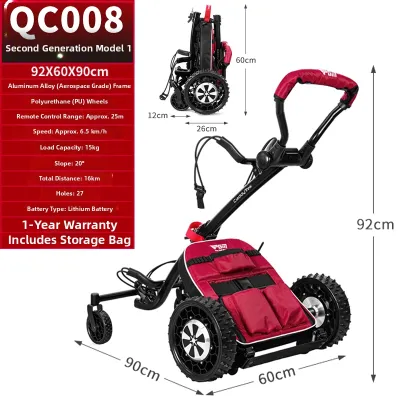
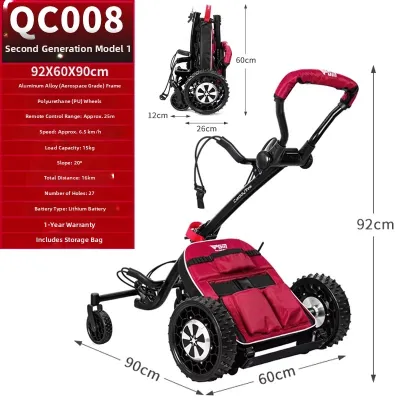
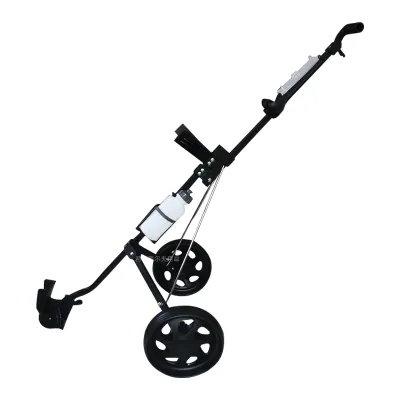
Prices are valid at publication and may change. Please refer to the product page for the latest price.
Manual Push Carts
Manual push carts are human-powered vehicles designed with either three or four wheels. Three-wheel models typically feature a single front wheel that can either pivot for maximum maneuverability or lock in place for straight-line stability. Four-wheel models offer a wider, more stable footprint, making them highly resistant to tipping over on uneven turf or side-hill lies.
These carts rely on mechanical folding systems that allow the frame to collapse into a compact package using simple latches or tension levers. Braking systems are entirely mechanical, consisting of either a foot pedal near the rear wheel or a hand-operated lever on the handle console. Because they lack electrical components, manual carts are highly durable and require minimal physical maintenance beyond occasional cleaning and tire pressure checks.
Pushing a manual cart requires continuous physical effort. A fully loaded golf bag containing clubs, balls, apparel, and water can easily weigh between 12 and 18 kilograms. Pushing this weight across thick grass, sand, and slopes requires constant engagement of your core, legs, and upper body throughout a four-hour round.
Motorized Golf Trolleys
Motorized golf trolleys are battery-powered units equipped with electric motors that propel the cart forward, eliminating the need for physical pushing. Basic motorized models feature a simple speed dial on the handle, allowing you to adjust the motor’s pace to match your natural walking speed.
Mid-range and premium motorized trolleys offer advanced control options, including remote-control functionality and “follow-me” technology. Remote-controlled models allow you to direct the trolley from several meters away using a handheld transmitter. Advanced “follow-me” systems use sensors to track a transmitter clipped to your belt, causing the trolley to automatically trail behind you at a safe distance as you walk.
Motorized trolleys excel at handling steep inclines, where the electric motor does all the heavy lifting. They also feature electronic braking systems (EBS) that provide downhill control, automatically resisting gravity to prevent the trolley from accelerating down slopes. These units require regular battery charging and more careful handling to protect the electrical components from damage.
| Feature | Manual Push Carts | Motorized Golf Trolleys |
|---|---|---|
| Power Source | Manual human power | Rechargeable battery (Lithium or Lead-Acid) |
| Relative Weight | Lightweight and easy to lift | Heavy (due to motor and battery components) |
| Setup Time | Fast (unfolds in seconds) | Moderate (requires battery connection and alignment) |
| Physical Effort | Moderate to high (continuous pushing) | Minimal (trolley moves independently) |
| Typical Maintenance | Low (occasional cleaning and brake checks) | Moderate (battery care, motor checks, electrical safety) |
Playing in Singapore: How Climate and Terrain Affect Your Choice
Singapore’s unique environmental conditions play a massive role in how comfortable and successful your golf rounds will be. The combination of intense tropical weather and varied course topography means that your choice of golf cart can directly influence your physical well-being on the fairways.

Heat and Humidity
Singapore’s tropical climate features average daily temperatures ranging from 31°C to 33°C, with relative humidity levels often exceeding 80%. Walking 18 holes under these conditions is a grueling physical test that causes rapid dehydration and elevated heart rates.
Pushing a manual cart under the midday sun significantly increases your metabolic heat production, leading to faster physical exhaustion. A motorized trolley removes this physical strain entirely, allowing you to walk freely without pushing a heavy load. This energy conservation helps keep your body temperature lower, reduces sweat production, and preserves your physical stamina for the actual game.
Course Topography
Singapore’s golf courses present highly diverse terrain layouts. Public courses, such as the Mandai Executive Golf Course, feature relatively flat layouts where pushing a manual cart is straightforward and requires minimal extra effort.
However, many private and resort courses feature highly undulating, hilly layouts with steep elevation changes. Pushing a manual cart up these steep inclines can be exhausting, putting immense strain on your calves, thighs, and lower back. Motorized trolleys handle these steep climbs effortlessly, while their electronic braking systems ensure the cart remains stable and controlled when descending steep paths.
Weather Disruptions
Sudden tropical downpours and thunderstorms are common occurrences in Singapore. Wet weather transforms fairways into soft, muddy terrain, which increases rolling resistance and makes pushing a manual cart significantly harder as the wheels sink into the turf.
Motorized trolleys have the power to drive through wet grass and mud without extra physical effort from the golfer. However, because they contain sensitive electrical components, you must verify that the trolley has a high water-resistance rating (such as IPX5 or higher) to withstand heavy rain. Additionally, wet conditions require careful cleaning of both manual and motorized wheels to prevent mud buildup from affecting performance.
Budget and Value: Upfront Costs vs Long-Term Maintenance
For a beginner, managing the financial entry barrier of golf is highly important. Your choice of golf cart involves a trade-off between a low upfront cost with minimal maintenance and a high initial investment with ongoing operating expenses.
Initial Investment
Manual push carts represent a highly budget-friendly entry point for beginners. Because they rely on simple mechanical designs without electronics, they are relatively inexpensive, allowing you to allocate more of your initial budget toward high-quality clubs, professional coaching, and course fees.
Motorized golf trolleys are a premium investment. The inclusion of electric motors, rechargeable lithium batteries, control boards, and remote-control systems makes them significantly more expensive upfront. For a beginner, this represents a major financial commitment before fully establishing a long-term dedication to the sport.
Hidden and Maintenance Costs
Manual push carts have virtually no ongoing operating costs. Maintenance is limited to occasional wheel replacements, lubricating moving joints, or adjusting mechanical brake cables, all of which can be done cheaply and easily.
Motorized trolleys carry several hidden, long-term costs. The rechargeable battery—typically lithium-ion—has a finite lifespan and will eventually need replacement after a few years of regular use, which represents a substantial recurring expense. You must also factor in the electricity costs of charging the battery after every round and the potential cost of professional repairs if the motor, wiring, or control console experiences a technical failure.
Resale Value
Beginners often upgrade their equipment as their skills improve and their playing habits change. High-quality manual push carts from reputable brands tend to hold their value exceptionally well on the second-hand market because they have very few components that can wear out or fail over time.
Motorized trolleys can also retain decent resale value, but their market price is heavily dependent on the condition and age of the battery. A motorized trolley sold with a degraded or old battery will fetch a much lower price, as the buyer must factor in the immediate cost of purchasing a replacement battery. Always keep your battery maintenance records and purchase receipts to prove the health of the electrical system to potential buyers.
Fitness and Fatigue: How Your Cart Affects Swing Consistency
Golf is a game of precision, coordination, and mental focus. How you transport your clubs across the course directly affects your physical fatigue levels, which in turn influences your swing mechanics and overall scoring consistency.
Physical Exertion vs Workout
Using a manual push cart turns your golf round into an excellent cardiovascular workout. Pushing a cart over four hours burns a significant number of calories and helps build lower body and core strength. If your primary goal in playing golf is to maximize your physical fitness and get a great workout, a manual cart is the superior tool.
If your primary goal is to shoot the lowest possible score, a motorized trolley is highly advantageous. By eliminating the physical strain of pushing, a motorized trolley allows you to walk the course at a relaxed pace, conserving your physical energy strictly for executing your golf shots.
Fatigue Management
A proper golf swing requires precise muscle coordination, core stability, and shoulder flexibility. As physical fatigue sets in—especially during the back nine in Singapore’s humid conditions—your posture begins to sag, your swing plane shifts, and your timing falters, leading to inconsistent ball striking and lost distance.
Pushing a heavy manual cart up hills and through thick grass tires out your shoulders, upper back, and legs—the very muscles required to generate clubhead speed and maintain balance. A motorized trolley prevents this localized muscle fatigue, helping you maintain a stable posture and a consistent swing from the first tee to the eighteenth green.
Pacing and Rhythm
Maintaining a calm, consistent rhythm is essential for good golf performance. Walking with a motorized trolley allows you to maintain a steady, unhurried pace between shots, giving you time to mentally plan your next shot and stay relaxed.
With a manual cart, pushing up a steep hill can leave you slightly out of breath when you arrive at your ball. If you rush into your pre-shot routine while your heart rate is elevated and your breathing is heavy, your mental focus and physical control can be compromised. Using a motorized trolley ensures you arrive at your ball physically calm and ready to swing.
Logistics: Transport, HDB Storage, and Club Regulations
Owning a golf cart involves practical, everyday logistics that extend far beyond the fairways. You must consider how you will transport the cart to the course, where you will store it at home, and how local club rules might affect its use.
Transport and Boot Space
Before purchasing any cart, you must measure your vehicle’s trunk space. Manual push carts fold down into highly compact, lightweight configurations that easily fit into the trunk of standard sedans or compact cars, leaving plenty of room for your golf bag and other gear.
Motorized trolleys are significantly bulkier and heavier due to their motors, gearboxes, and battery compartments. Even when folded, they take up a substantial amount of space, often requiring you to remove the wheels or store the battery separately to fit them into a standard car boot. Lifting a heavy motorized trolley in and out of a vehicle trunk can also be physically demanding, especially after a tiring round of golf.
Home Storage
Storage space is a premium commodity in Singapore’s HDB flats and condominiums. A compact manual push cart can easily slide into a bomb shelter, utility closet, or a small corner of a balcony without causing obstruction.
Motorized trolleys require a dedicated storage spot near an electrical outlet so you can charge the battery. Because lithium batteries are sensitive to extreme temperatures and moisture, they must be stored in a cool, dry, indoor environment. Storing a motorized trolley in a damp balcony or a hot storage locker can degrade the battery’s lifespan and compromise its safety.
Club Regulations
Local golf clubs in Singapore have specific rules regarding the use of manual and motorized carts on their properties. Some courses may restrict motorized trolleys to designated cart paths during wet weather to prevent the heavy wheels from damaging the soft turf.
Other clubs may have strict weight limits or require specific tire treads to protect their fairways. Before investing in a motorized trolley, always check the bylaws and course regulations of the clubs you plan to play most frequently to ensure your chosen model is fully permitted on the fairways.
Final Verdict: How to Make Your Decision
To choose the perfect golf cart for your needs, evaluate your personal circumstances, playing habits, and physical preferences against this structured decision framework:
Choose a Manual Push Cart if:
- You are working with a limited upfront budget and prefer to invest your money in clubs, lessons, or green fees.
- You enjoy the physical challenge of golf and want to use the round as a cardiovascular workout.
- You have limited storage space at home, such as a smaller HDB apartment, and drive a compact car with limited boot space.
- You primarily play on flatter, public courses where steep hills are not a major obstacle.
Choose a Motorized Trolley if:
- You want to conserve your physical energy to focus entirely on swing mechanics, mental strategy, and shot consistency.
- You frequently play on hilly, undulating courses where pushing a manual cart is physically exhausting.
- You struggle with physical limitations, joint pain, or back issues that make pushing a heavy load uncomfortable or unsafe.
- You have the budget for a premium upfront investment and have a cool, dry indoor space to safely store and charge the battery.
Verify first if:
- Your local golf club permits motorized trolleys on the fairways during all seasons and weather conditions.
- Your vehicle's boot dimensions can comfortably accommodate the folded size of your chosen cart model alongside your golf bag.
- The manufacturer's battery charging and storage instructions align with your home electrical setup.
Frequently Asked Questions (FAQ)
Can I convert a manual push cart into a motorized one later?
Yes, aftermarket conversion kits are available that allow you to add an electric motor and battery to certain manual push carts. However, these conversions can be technically complex and will typically void the original manufacturer’s warranty on your manual cart. Additionally, adding heavy motorized components to a frame designed for manual use can alter the cart’s center of gravity, potentially making it unstable and prone to tipping on slopes. Always check your cart manufacturer’s compatibility guidelines before attempting a conversion.
Do motorized golf trolleys require special batteries?
Yes, motorized golf trolleys require dedicated deep-cycle batteries designed to deliver steady, continuous power over several hours of use. Modern motorized trolleys almost exclusively use lightweight lithium-ion batteries, which offer significantly longer lifespans, faster charging times, and lighter weights compared to older lead-acid batteries. To ensure safety and maintain your warranty, always use the exact battery chemistry, voltage, and charger recommended by your trolley’s manufacturer.
Are three-wheel or four-wheel push carts better for beginners?
Three-wheel push carts generally offer superior maneuverability and are much easier to steer around tight corners, making them highly popular for golfers who prefer a nimble, easy-to-push design. Four-wheel push carts offer exceptional stability, especially on side-hill lies and uneven turf where a three-wheel cart might tip over. Beginners should choose based on their typical course terrain: three wheels for easy steering on paved paths and flat ground, or four wheels for maximum stability on hilly, uneven fairways.
Community discussion
Share your experience or ask a question. Comments are reviewed before publication.