
Selecting your first golf cart trolley is one of the most practical decisions you will make as a beginner. Walking the course instead of riding in a motorized buggy is an excellent way to build stamina, develop a rhythm between shots, and experience the game in its traditional form. However, pushing or pulling a heavy golf bag over several kilometers can quickly lead to physical fatigue if you do not have the right equipment. To maintain your energy, protect your body from strain, and keep your focus entirely on your swing mechanics, choosing the correct style of trolley is essential.
Quick Answer: The Best Golf Trolley Type for Beginners
For the vast majority of beginner golfers, a 3-wheel push cart offers the most balanced, ergonomic, and cost-effective starting point. These carts are designed to be pushed forward using your natural walking posture, which minimizes physical strain while providing excellent stability on uneven turf. Pull carts are highly compact and budget-friendly, making them suitable for infrequent players on a tight budget, but their dragging motion can cause asymmetrical muscle strain over 18 holes. Electric trolleys represent the premium tier, using motorized wheels to eliminate physical effort entirely, which is highly beneficial in warm, humid climates but requires a much higher financial investment and more storage space.
The ideal choice ultimately depends on your physical fitness, your budget in SGD, and how you plan to transport your equipment to local courses. In Singapore, where high humidity and sudden tropical showers are common, having a reliable trolley can make the difference between an enjoyable round and an exhausting, uncomfortable ordeal. By understanding the mechanical differences and practical trade-offs of each option, you can make an informed decision that supports your development as a golfer.
Products mentioned in this guide
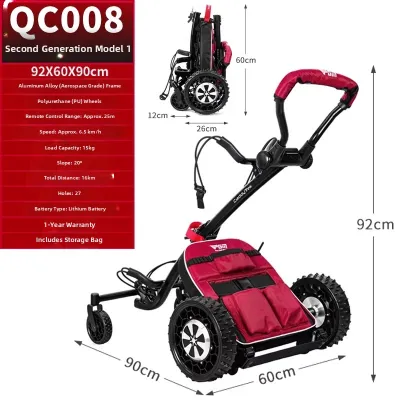
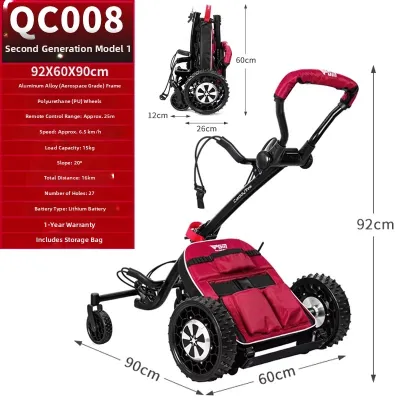
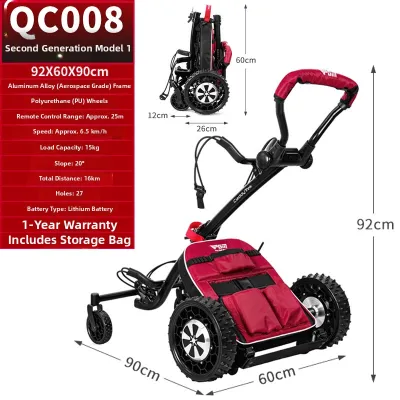
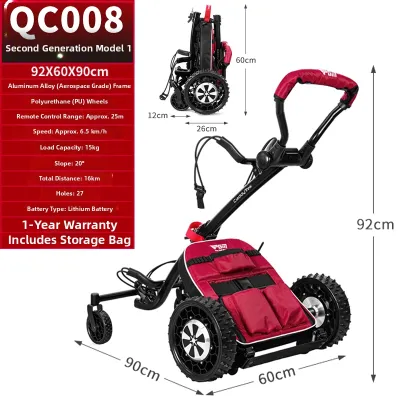
Prices are valid at publication and may change. Please refer to the product page for the latest price.
Understanding Push, Pull, and Electric Golf Trolleys
Every golf cart trolley is engineered to transport your clubs, bag, and accessories across the course, but they achieve this through fundamentally different mechanical designs. Understanding how each type operates will help you evaluate how they perform during a round.

Push Carts (3-Wheel and 4-Wheel Designs)
Push carts are designed to be positioned in front of the golfer and pushed forward, utilizing the body’s natural forward momentum. This layout allows you to maintain an upright, symmetrical walking posture, keeping your clubs and accessories constantly within your line of sight. Most modern push carts are constructed from lightweight, high-strength materials like aircraft-grade aluminum or reinforced steel, ensuring durability without adding unnecessary weight.
The market is primarily divided into 3-wheel and 4-wheel configurations. Three-wheel designs feature a single front wheel that often swivels, offering exceptional maneuverability, a tight turning radius, and easy steering around tight hazards and cart paths. Four-wheel designs utilize a wider, rectangular wheelbase that provides superior straight-line tracking and maximum stability, making them highly resistant to tipping over on side slopes or uneven rough. Additionally, many push carts feature adjustable brackets to securely hold bags of various sizes, from lightweight carry bags to large staff bags.
Pull Carts (Traditional 2-Wheel Designs)
Pull carts represent the traditional, minimalist approach to transporting golf clubs. These models feature a simple two-wheel frame where the golfer walks ahead of the cart and drags it behind them using a single handle. The frame is typically very basic, constructed from steel or aluminum tubing with minimal built-in storage or accessory mounts.
Because the cart is dragged behind the body, the center of gravity is shifted backward, requiring continuous physical effort to keep the frame balanced. This dragging motion forces the golfer to walk with a slightly twisted torso, placing asymmetrical strain on one side of the body. Over an 18-hole round, this repetitive pulling motion can lead to localized fatigue in the shoulders, arms, and lower back. Furthermore, because the bag sits at a steeper angle on a 2-wheel cart, accessing certain pockets on your golf bag can be more difficult while the cart is in motion.
Electric Trolleys (Motorized Options)
Electric trolleys are motorized, battery-powered units that completely eliminate the need to physically push or pull your golf bag. These systems utilize an electric motor integrated into the axle, powered by a rechargeable battery pack secured to the chassis. The motor power is typically designed to handle steep inclines and thick grass without slowing down, allowing you to walk effortlessly.
Control mechanisms vary from simple handle-mounted dials that adjust the speed to match your walking pace, to advanced remote-control systems and automatic “follow” modes that track a transmitter on your belt. While they offer unmatched physical relief, the addition of a motor, battery, and robust frame makes electric trolleys significantly heavier and bulkier than manual alternatives. This extra weight must be lifted into your car boot or carried over curbs, which is an important consideration for players with physical limitations.
Core Trade-Offs of a Golf Cart Trolley: Effort, Portability, and Price
When choosing between these three categories, you must weigh several practical factors that will affect your experience both on the course and during your commute.
Physical Effort and Ergonomics
The physical strain of transporting your gear over a four-hour round can directly impact your performance. Pushing a cart is biomechanically superior to pulling because it engages your legs, chest, and core—the largest and strongest muscle groups in the body. This keeps your spine aligned, reduces fatigue, and prevents the muscle imbalances associated with dragging a 2-wheel cart. When you push, your body weight helps propel the cart, whereas pulling relies almost entirely on the strength of a single arm and shoulder.
Electric trolleys take ergonomic comfort a step further by removing physical resistance entirely. By conserving your cardiovascular energy, electric models help you maintain a stable posture and consistent swing mechanics on the back nine, where physical exhaustion often leads to poor shot execution. For beginners still developing their swing consistency, staying physically fresh is a major advantage. It allows you to focus on your alignment, grip, and tempo rather than battling muscle fatigue and dehydration in the tropical heat.
Portability, Weight, and Folding Mechanisms
Transporting your trolley to and from the course requires careful consideration of its physical footprint and weight. Pull carts are the most lightweight and fold down into highly compact shapes, making them easy to slide into small car boots or transport on public transit. Push carts fold into a slightly larger, boxy shape, though many modern designs feature quick-release wheels that can be popped off with the press of a button to save space in tight compartments.
Electric trolleys are the heaviest and most cumbersome to transport, often weighing between 10 and 15 kilograms without the battery. For golfers in Singapore who rely on compact vehicles, ride-hailing services, or public transport, lifting and loading a heavy electric unit can be physically demanding. Additionally, you must evaluate the folding mechanism; a simple one-click folding system is far easier to manage during a sudden tropical downpour than a complex frame requiring multi-step disassembly. Some electric models require you to remove the battery completely before folding, adding an extra step to your packing routine.
Price Range and Value Considerations
Your budget in SGD is a major deciding factor when selecting your first trolley. The market is structured into distinct price tiers that reflect the complexity and materials of the equipment:
- Entry-Level (Pull Carts): Typically priced under S$150, offering a basic, lightweight frame with minimal features.
- Mid-Range (Push Carts): Generally ranging from S$200 to S$500, featuring durable aluminum frames, foot or hand brakes, adjustable handles, and accessory mounts.
- Premium (Electric Trolleys): Starting around S$800 and easily exceeding S$2,000 for remote-control or follow models, reflecting the cost of lithium batteries, motors, and digital control systems.
Beginners should evaluate their expected playing frequency to determine the true value of their purchase. If you only play once or twice a month, a high-quality push cart offers excellent long-term value without the high upfront cost of a motorized unit. Additionally, while buying a secondhand electric trolley might seem tempting, the cost of replacing a degraded lithium battery can often equal the price of a brand-new push cart, making a new push cart a safer investment for beginners.
Terrain Handling and Course Suitability
The terrain of your local courses plays a crucial role in how well a trolley performs. Larger wheels with deep tread patterns roll easily over thick fairway grass, soft mud, and sandy areas, whereas small, solid plastic wheels tend to sink and slide. In Singapore, where heavy tropical rain can quickly saturate the fairways, having wide, high-traction wheels prevents your trolley from getting bogged down in wet turf.
Controlling a trolley on slopes is another safety consideration. Dragging a 2-wheel pull cart down a steep slope requires constant physical resistance to prevent it from running away, which strains your wrists and shoulders. Modern push carts feature reliable hand or foot brakes to secure the unit on hills, while premium electric trolleys often include automatic downhill braking systems (EBS) to maintain a safe, controlled speed on descents. Without proper brakes, managing a heavy bag on an undulating course can be both exhausting and hazardous.
At-a-Glance Comparison of Golf Trolley Types
To help you quickly compare the key differences between the three main categories, use the summary table below to guide your decision.
| Trolley Type | Primary Motion | Physical Effort Level | Folding Footprint | Relative Price Tier | Best Suited For |
|---|---|---|---|---|---|
| Pull Cart | Dragging behind | High | Very Compact | Entry-Level (Under S$150) | Budget-conscious players playing occasionally on flat courses |
| Push Cart | Pushing forward | Moderate | Compact to Medium | Mid-Range (S$200 – S$500) | Beginners seeking the best balance of comfort, stability, and value |
| Electric Trolley | Motorized self-propel | Low | Bulky and Heavy | Premium (S$800 – S$2,000+) | Players prioritizing energy conservation with a higher budget |
Decision Framework: Which Golf Trolley Fits Your Game?
To finalize your decision, match your personal playing style, physical needs, and logistical constraints to one of the profiles below.
- Choose a Push Cart if: You want the best balance of ergonomic comfort, stability, and moderate pricing. This option is ideal if you plan to walk the course regularly and want a reliable, easy-to-maneuver companion that keeps you active without causing physical strain. It is also best if you have sufficient storage space in your home and a standard car boot to accommodate a folded 3-wheel or 4-wheel frame.
- Choose a Pull Cart if: You are on a very tight budget and want to minimize your initial investment in golf equipment. This works well if you play only a few times a year, primarily on flat, easy-to-walk courses, or if you have limited transport space or rely on public transport, requiring the lightest and most compact frame possible. Ensure you do not suffer from pre-existing shoulder, neck, or lower back issues before choosing this style.
- Choose an Electric Trolley if: You want to conserve maximum physical energy for your swing and avoid fatigue during long rounds in hot, humid weather. This is suitable if you have a flexible budget, view golf as a long-term lifestyle investment, and possess a spacious vehicle boot and adequate home storage to handle a heavier, bulkier motorized frame. You should also be comfortable managing regular battery charging routines and maintaining electronic components.
- Verify First if: Your local golf club or the courses you frequent have specific restrictions on motorized trolleys, particularly during wet weather when heavy units can damage soft turf. Additionally, check if you can easily source replacement batteries and access local repair services for your chosen electric model, as shipping heavy lithium batteries internationally can be highly restricted and expensive.
Basic Maintenance to Extend Your Trolley's Lifespan
Proper maintenance is essential to keep your trolley operating smoothly and to protect your investment over the long term.
After playing a round, especially during the rainy season when fairways can become wet and muddy, take a few minutes to clean your trolley. Use a soft brush and clean water to remove mud, grass clippings, and sand from the wheels, axles, and folding joints. Sand and grit can easily work their way into wheel bearings, causing friction, squeaking, and premature wear. Once clean, wipe down the aluminum or steel frame with a dry microfiber cloth to prevent moisture buildup and guard against corrosion in humid climates.
For electric trolleys, battery care is critical to maintaining performance and safety. Avoid letting your battery discharge completely; charge it as soon as possible after your round rather than leaving it depleted for days. Store the battery in a cool, dry place away from direct sunlight, and avoid leaving it in a hot car boot for extended periods, as extreme heat can degrade the battery cells. Always follow the manufacturer’s specific charging instructions and use only the approved charger supplied with your unit.
Before attempting any adjustments, disassembly, or mechanical repairs, always consult the product’s user manual. This ensures you adjust brakes, lubricate joints, or fold the frame correctly without voiding your manufacturer’s warranty.
Frequently Asked Questions (FAQ)
Can I use a 2-wheel pull cart on hilly golf courses?
While physically possible, dragging a 2-wheel pull cart on hilly terrain is not recommended. Walking downhill with a pull cart requires you to constantly hold back the weight of your clubs, which places significant, uneven strain on your shoulders, wrists, and lower back. Additionally, 2-wheel carts lack the stability and braking systems of 3-wheel or 4-wheel push carts, making them prone to tipping over on side slopes or rolling away on steep inclines.
Do electric golf trolleys require special batteries?
Yes, electric golf trolleys require dedicated rechargeable batteries designed specifically for their motor systems, typically categorized into lead-acid or lithium options. Lithium batteries are highly recommended because they are significantly lighter, charge much faster, and offer a much longer overall lifespan compared to traditional lead-acid options, though they carry a higher upfront cost. You must always check the manufacturer’s specifications to ensure any replacement battery matches the voltage and connector requirements of your specific trolley model.
Are 3-wheel or 4-wheel push carts better for beginners?
For most beginners, a 3-wheel push cart is the preferred choice because the single front wheel provides a much tighter turning radius, making it incredibly easy to maneuver around trees, bunkers, and narrow cart paths. A 4-wheel push cart offers slightly better straight-line stability and is less likely to tip over on extremely uneven ground, but it requires a wider turning circle and can feel slightly heavier to steer.
Community discussion
Share your experience or ask a question. Comments are reviewed before publication.