
Quick Answer: Which Golf Buggy Should a Beginner Choose?
Choosing the right golf buggy as a beginner in Singapore depends on three primary factors: your budget, your physical stamina under the tropical sun, and how frequently you plan to play. There is no single superior option, as both manual and motorized designs serve different player profiles.
Manual push trolleys are highly suited for active, budget-conscious beginners who view walking the fairways as an integral part of their fitness routine. They demand physical effort but offer mechanical simplicity, low maintenance, and a highly accessible entry price.
Electric golf buggies are a premium alternative designed to conserve your physical energy. They are ideal if you want to focus entirely on your swing mechanics, regularly play on undulating courses, or manage physical limitations that make pushing a heavy load up steep slopes difficult.
Products mentioned in this guide
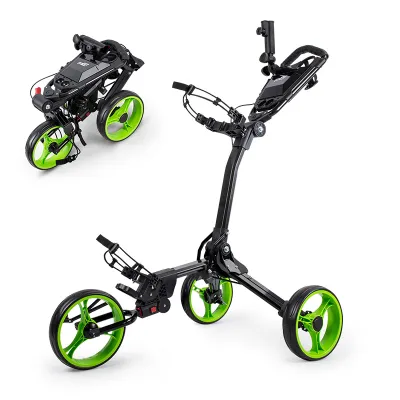
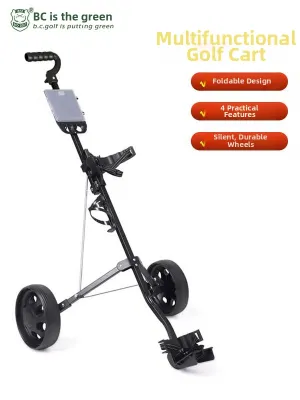
Prices are valid at publication and may change. Please refer to the product page for the latest price.
Understanding the Basics: Push Trolleys vs Electric Buggies
Before comparing specific models, it is essential to understand what defines each category and how they fit into the local golfing landscape.

Manual push trolleys are human-powered frames designed to secure and transport a standard golf bag. Typically featuring three or four large, smooth-rolling wheels, these units are constructed from lightweight materials such as aluminum or carbon fiber. They rely entirely on your physical force to move forward, turn, and stop. Modern designs incorporate highly engineered folding mechanisms that allow them to collapse into compact shapes for transport and storage.
Electric golf buggies are motorized units powered by rechargeable batteries—most commonly lithium-ion. They feature one or two electric motors integrated into the axle to drive the wheels. These buggies range from basic models with a simple speed-control dial on the handle to advanced remote-controlled or “follow-me” units that track your movement across the fairway using sensors.
In Singapore, it is important to clarify local terminology. Golfers often use the terms “buggy,” “cart,” and “trolley” interchangeably. However, you must distinguish personal walk-behind buggies from the ride-on motorized golf carts provided by golf clubs. While ride-on carts are driven like small utility vehicles, personal push trolleys and electric buggies are designed specifically for players who prefer to walk the course.
Walking the course with a personal buggy is an excellent way for beginners to learn the game. It encourages better course management, allows you to observe the terrain and wind conditions as you approach your ball, and helps you maintain a steady, natural playing pace.
Key Comparison Dimensions for Beginners
To make an informed decision, you must evaluate how each buggy type performs across real-world scenarios. Let’s break down the practical trade-offs across four key dimensions: financial investment, physical demands, on-course handling, and off-course logistics.
Budget and Ongoing Costs
Manual push trolleys represent an accessible entry point for beginners. A quality three-wheel manual trolley typically falls into a broad price band of S$150 to S$450, depending on the brand, frame materials, and built-in accessories. This low upfront cost makes them an attractive option if you are still exploring the sport and want to minimize your initial financial commitment.
Electric golf buggies require a significantly higher initial investment. Entry-level motorized models generally start around S$800, while premium remote-control or follow-me units can easily exceed S$1,500 to S$3,000. For a beginner, this represents a major financial decision that requires careful consideration of your long-term commitment to the sport.
The financial differences extend beyond the initial purchase price. A manual push trolley has virtually zero ongoing operating costs. Maintenance is limited to occasional cleaning, lubricating moving joints, and checking tire wear. In contrast, electric buggies incur ongoing costs related to battery health. Lithium batteries have a finite lifespan—often measured in charge cycles—and replacing a depleted battery pack can cost several hundred Singapore dollars. You must also factor in the minor electrical cost of charging the battery after every round.
To get an accurate sense of current pricing, beginners should check local golf pro shops in areas like Queensway Shopping Centre, specialized golf retailers, or reputable online marketplaces in Singapore. Avoid relying on outdated global price lists, as local import taxes and shipping fees can influence the final retail price in Singapore.
Physical Effort and Fitness Requirements
Pushing a fully loaded golf bag—which can easily weigh 12 to 15 kilograms with clubs, balls, water, and accessories—for four to five hours requires substantial physical exertion. On a flat course, this is manageable for most healthy individuals. However, on undulating terrain, pushing a manual trolley up steep slopes demands significant cardiovascular and muscular effort.
Singapore’s tropical climate, characterized by high humidity and temperatures frequently exceeding 30°C, amplifies this physical strain. Excessive exertion can lead to rapid dehydration, physical fatigue, and elevated heart rates. This physical exhaustion often directly impacts a beginner’s swing consistency, coordination, and mental focus during the back nine holes.
Electric buggies eliminate almost all pushing effort. The motor does the heavy lifting, allowing you to walk at a comfortable pace alongside or behind your bag. This conservation of energy helps you maintain a steady heart rate, stay hydrated, and focus your physical energy entirely on executing your golf swing rather than recovering from a strenuous climb. If you have pre-existing joint issues, back pain, or cardiovascular concerns, the electric option serves as a crucial aid to keep you playing safely.
Convenience, Setup, and Course Navigation
On the driving range or in the club parking lot, manual push trolleys are exceptionally quick to deploy. Most modern designs feature simple one-click or two-step folding mechanisms that allow you to go from car boot to fairway in under thirty seconds. There are no cables to connect, batteries to mount, or electronic systems to calibrate.
Operating an electric buggy requires a more methodical setup routine. You must lift the heavier motorized frame, secure the battery pack into its cradle, connect the power cables, and ensure the control unit pairs correctly with your remote control or follow-me sensor. This process takes longer and requires careful handling to avoid damaging sensitive electronic connections.
A manual trolley offers direct, tactile control. You steer it exactly where you want it to go, and your hands are always on the brake when navigating slopes. Electric buggies, particularly remote-controlled versions, require a learning curve. You must actively manage the remote control while walking, ensuring the buggy does not steer into bunkers, water hazards, or deep rough. If using a follow-me model, you must remain highly aware of your surroundings to prevent the buggy from colliding with other players or getting stuck on narrow bridges.
Storage, Transport, and Maintenance
Space is a premium consideration for many Singaporean golfers, especially those living in apartments or driving compact vehicles. Manual push trolleys are lightweight (typically weighing between 6 and 9 kilograms) and fold down into highly compact shapes. They easily fit into the boots of compact sedans alongside your golf bag, and they require minimal storage space in your home.
Electric buggies are significantly heavier, often weighing between 12 and 20 kilograms without the battery pack. The battery itself adds several more kilograms of dead weight. Lifting these units in and out of a car boot requires proper lifting technique to avoid back strain. They also occupy a larger footprint when folded, which may require folding down rear car seats if you are transporting multiple bags.
Manual trolleys require simple care: a quick wipe-down with a damp cloth to remove mud and grass, and dry storage to prevent rust. Electric buggies demand strict battery management. You must charge the battery according to manufacturer guidelines, avoid leaving it fully discharged for long periods, and store it in a cool, dry place away from direct sunlight. If you travel or do not play for several months, you must follow specific storage charging routines to prevent permanent capacity loss.
Decision Framework: How to Choose the Right Buggy for You
To help you navigate this choice, use the structured framework below to match your specific playing profile to the correct equipment.
Choose a Push Trolley if:
- Budget Constraints: You are operating on a strict budget and want to avoid high upfront or replacement battery costs.
- Portability Needs: You prioritize a lightweight, highly portable setup that is easy to lift into your car boot and store in a compact space.
- Physical Fitness: You enjoy the physical exercise of walking the course and have the stamina to push a load in hot, humid weather.
- Simplicity: You prefer a simple, reliable mechanical design with no batteries to charge or electronics to troubleshoot.
Choose an Electric Buggy if:
- Investment Capability: You have a flexible budget and view the purchase as a long-term investment in your comfort and enjoyment of the game.
- Energy Conservation: You want to conserve your physical energy to maintain swing consistency and focus on your technique across all 18 holes.
- Course Terrain: You frequently play on hilly or undulating courses where pushing a manual cart is physically exhausting.
- Physical Health: You manage physical limitations, joint pain, or health conditions that make manual pushing unsafe or uncomfortable.
Verify first if:
- Long-term Commitment: You are fully committed to the sport. If you are still testing the waters, consider renting course equipment or borrowing a trolley before committing to a major purchase.
- Course Regulations: Your local golf club or preferred course has specific regulations regarding personal motorized buggies. Some courses restrict electric buggies to designated paths, ban them during exceptionally wet weather to protect the turf, or require specific tire profiles.
Always match your equipment choice to your current physical comfort levels and financial readiness. Do not feel pressured to buy an advanced electric buggy simply because experienced players use them; starting with a reliable manual trolley is an excellent, highly respected way to learn the game.
Essential Features to Verify Before Buying
Before finalizing your purchase, whether shopping online or visiting a local pro shop, use this checklist to verify specific product features.
For Push Trolleys:
- Wheel Design: Verify whether the model uses air-filled pneumatic tires (which offer excellent shock absorption but are susceptible to punctures) or solid, maintenance-free polyurethane tires (which never go flat but may ride slightly rougher on hard ground).
- Braking System: Ensure the trolley features a reliable, easy-to-engage foot brake or hand-operated handbrake. This is critical for preventing runaway carts on slopes.
- Adjustable Handle: Check that the handle height can be adjusted to match your height, ensuring ergonomic pushing angles that prevent wrist and lower back strain.
For Electric Buggies:
- Battery Chemistry: Prioritize lithium-ion batteries over older lead-acid alternatives. Lithium batteries are significantly lighter, charge faster, and offer a much longer overall lifespan.
- Battery Range: Verify the rated range of the battery. Ensure it is certified to comfortably last at least 18 holes (plus a safety margin for hilly terrain or extra holes) on a single charge.
- Motor Power and Control: Look for dual-motor setups if you play on steep courses, as they provide better traction and downhill braking control. Verify the responsiveness of the remote control or follow-me sensors.
- Warranty Terms: Confirm the warranty coverage, specifically looking for separate warranties on the frame, motor, and battery pack.
Always consult the manufacturer’s manual for specific weight capacities, battery care instructions, and terrain limits before operating your new buggy.
Frequently Asked Questions (FAQ)
Can I use an electric golf buggy in the rain?
While most modern electric golf buggies are designed with water-resistant housing for their electronic components and batteries, they are rarely completely waterproof. You should check the manufacturer’s IP (Ingress Protection) rating to verify the level of water resistance. Avoid operating the buggy in heavy tropical downpours or driving through deep standing water and mud puddles, as this can breach the seals, damage the motor or control board, and void your warranty.
Do push trolleys work well on hilly golf courses?
Push trolleys can be used on hilly courses, but they require significant physical effort to push uphill and careful control when going downhill. Three-wheel models are highly maneuverable but can sometimes tip backward on steep inclines if the bag’s weight distribution is uneven. Four-wheel models offer superior stability on slopes. Always test and engage the braking system when parking on any incline to prevent the trolley from rolling away. Never park a manual trolley sideways on a steep slope, as it may tip over and damage your clubs.
Is it better to rent a golf cart or buy a personal buggy?
The decision depends on your playing frequency and personal preferences. If you only play occasionally (e.g., once or twice a month) or are still deciding if golf is the right sport for you, renting a ride-on golf cart or a club-owned manual trolley is highly cost-effective. However, if you play regularly and prefer the physical and mental benefits of walking the course at your own pace, investing in a personal push trolley or electric buggy quickly pays for itself in convenience and saved rental fees.
Community discussion
Share your experience or ask a question. Comments are reviewed before publication.