
A Reebok Deck can comfortably fit in most Singapore HDB flats, but success depends on calculating both the physical footprint of the equipment and the dynamic clearance zone required for safe movement. Because HDB bedrooms and living rooms often feature compact layouts with built-in furniture, simply measuring the static length of the deck is not enough. You must account for your own body span, the sweep of nearby doors, and the specific configuration of the deck during use.
Before making a purchase, evaluating your home’s layout ensures that your workout routine remains safe, fluid, and uninterrupted. By understanding how to measure your space and position the equipment, you can enjoy a versatile home gym setup without cluttering your living area.
Quick Assessment: Is the Reebok Deck Right for Your Space?
Determining whether this fitness tool fits your home requires looking beyond the physical dimensions of the plastic and rubber frame. A successful home workout setup relies on a two-part space equation: the static equipment footprint and the dynamic workout clearance. The static footprint is the physical area the deck occupies when resting on the floor, while the dynamic clearance is the active zone you need to perform exercises without restriction. In typical HDB flats, where living rooms and bedrooms serve multiple purposes, balancing these two factors is essential for maintaining a harmonious household.
Products mentioned in this guide
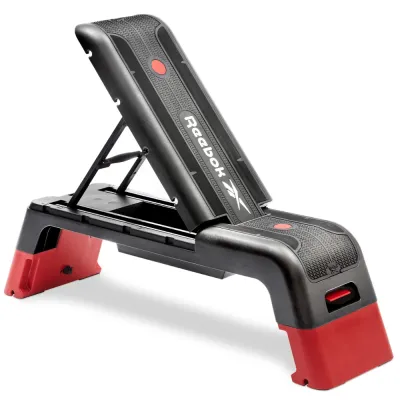
Prices are valid at publication and may change. Please refer to the product page for the latest price.
Before browsing online marketplaces or visiting local sporting goods stores, you should measure your intended workout zone. Use a physical measuring tape to map out the floor area in your living room, bedroom, or household shelter. Marking these boundaries with masking tape can help you visualize how much floor space will remain for daily foot traffic and whether you can easily move around the equipment when it is fully deployed.
It is also vital to verify the specific Reebok Deck model you plan to purchase, as dimensions, weight capacities, and folding mechanisms vary across different product generations. Older versions may have slightly different adjustment mechanisms or foot designs compared to newer releases. Checking the exact product specifications for your chosen model prevents unexpected surprises when unboxing the equipment in your flat, ensuring that your calculated measurements align perfectly with the physical product.
Verifying Reebok Deck Dimensions and Configurations
To ensure a precise fit, you must locate the exact length, width, and height from the manufacturer’s official specification sheet for your specific model. Avoid relying on third-party retail descriptions, which sometimes round numbers or mix up packaging dimensions with the actual product size. Having the exact manufacturer measurements is the only way to guarantee your calculations are accurate and that the equipment will fit into your designated workout corner.

The spatial demand of the deck changes significantly depending on how you configure it for different exercises. When set up as a flat bench, the deck lies low to the ground but occupies its maximum horizontal length, making it ideal for chest presses or step-ups. When you adjust the deck into an inclined or declined position, the backrest rises, which reduces the horizontal footprint slightly but increases the vertical height requirement. Understanding these changes helps you plan for different exercise variations without having to rearrange your furniture mid-workout.
You must also account for any protruding parts that extend beyond the main body of the deck. Adjustment knobs, transport handles, resistance band attachment points, and non-slip rubber feet can add extra centimeters to the total width and length. Measuring from the outermost edge of these components ensures that you do not scrape your walls, damage your skirting boards, or pinch your fingers during setup and adjustment.
Calculating Workout Clearance and Safety Zones
A safe workout environment requires a generous buffer zone around the entire perimeter of the deck. For lateral clearance, you must allow enough space for full arm extensions, dumbbell lateral raises, and stepping off the deck during high-intensity interval training. If you stand next to the deck for step-ups, side lunges, or lateral hops, your active footprint expands significantly beyond the bench itself, requiring at least one meter of clear space on either side.
Vertical clearance is another critical factor that is easily overlooked in HDB flats, where ceiling heights are typically around 2.6 meters. When performing seated overhead shoulder presses, incline dumbbell presses, or explosive jump squats off the deck, your hands, weights, and head will reach much higher than the deck’s backrest. You must ensure that your workout zone is completely clear of low-hanging ceiling fans, decorative light fixtures, and wall-mounted air-conditioning units to prevent serious injury or property damage.
Finally, establish a clear buffer zone at both the head and the foot of the deck. This space is necessary for safely mounting and dismounting the equipment, as well as for stretching before and after your session. A minimum clearance of one meter at both ends allows you to transition between exercises smoothly, perform lying leg raises without hitting the wall, and ensure that you can quickly step away from the equipment if you lose your balance.
Navigating HDB Flat Layout and Structural Constraints
When planning your home gym, you must consider how the physical structure of your HDB flat affects the movement and placement of your equipment. Start by checking the width of your main doorway, bedroom doors, and hallway corridors. Ensure that you can easily carry the deck from its storage spot to your active workout area without scraping the door frames, struggling around tight corners, or bumping into hallway shoe cabinets.
The type of flooring in your flat also plays a major role in safety and equipment longevity. Hard surfaces like ceramic tiles, vinyl, and parquet can be slippery, causing the deck to shift during high-impact movements or rapid step exercises. Placing a high-density, non-slip rubber exercise mat under the deck is highly recommended to provide grip, protect your flooring from scratches, and absorb impact vibrations that could otherwise damage your home.
Additionally, take note of built-in features that cannot be moved, such as wardrobes, structural pillars, and window frames. A workout corner might seem spacious on paper, but a swinging wardrobe door or an inward-opening window can instantly compromise your safety zone. Ensure that all doors, drawers, and windows can open fully without striking the deck or restricting your movement, allowing other household members to navigate the space safely while you exercise.
Smart Storage and Placement Strategies for Compact Rooms
If you live in a smaller HDB flat, such as a 2-room Flexi or a 3-room unit, keeping fitness equipment permanently on display may not be practical. Fortunately, the compact design of the deck allows for creative storage solutions that keep your living areas tidy. Some models are designed to stand upright vertically when folded, which dramatically reduces the floor space they occupy when not in use, making them perfect for tucking into narrow gaps.
If you choose vertical storage, always verify that the deck is stable and cannot be easily knocked over, especially if you have children or pets at home. Alternatively, look for low-clearance storage zones around your flat. The folded deck can often slide easily under elevated bed frames, behind living room sofas, or inside deep walk-in wardrobes, keeping it completely out of sight during the day.
Some users consider utilizing the folded deck as a temporary seating bench or a step stool in their entryway. While this is a creative way to save space, you must consult the manufacturer’s official guidelines to ensure this secondary use is safe. Never use the equipment as furniture unless the user manual explicitly states that it can support static weight in that manner, as improper use could damage the adjustment hinges or compromise the structural integrity of the deck.
Common Space-Measuring Mistakes to Avoid
One of the most frequent errors home gym buyers make is mistaking the compact folded footprint for the active workout footprint. A deck that looks incredibly small when tucked away in a closet will require more than double that space once it is unfolded and surrounded by an active user. Always base your room layout decisions on the fully extended dimensions of the deck rather than its storage configuration.
Another common mistake is forgetting to account for your own physical height and limb span during dynamic movements. A taller user performing a chest fly, a lying leg raise, or a full-body stretch will extend far beyond the physical boundaries of the deck. Your measurements must reflect your body’s full range of motion, ensuring that you have enough clearance to extend your arms and legs fully without hitting nearby walls or furniture.
Lastly, do not ignore the swing radius of nearby household fixtures and doors. A layout that fits perfectly when the bedroom door is closed might become completely unusable or dangerous the moment someone opens the door to enter the room. Always measure your workout zone with all nearby doors, drawers, and windows fully open to ensure absolute safety and to prevent accidental collisions during your workout sessions.
Frequently Asked Questions (FAQ)
Will using the Reebok Deck cause noise complaints from downstairs HDB neighbors?
Using the deck for high-impact exercises like step-ups, box jumps, or weight training can generate structural vibrations that travel through the concrete floors of HDB flats. To prevent disturbing your neighbors downstairs, always place a thick, high-density rubber gym mat underneath the equipment to absorb shock and dampen sound. Additionally, focusing on controlled movements, landing softly during jumps, and avoiding dropping dumbbells directly onto the deck or floor will significantly reduce noise transmission and maintain good neighborly relations.
Can I keep the Reebok Deck permanently set up in a small bedroom?
While keeping the deck permanently set up offers the convenience of a ready-to-use workout space, it can severely restrict your daily movement in a compact HDB bedroom. A permanent setup can make routine tasks like vacuuming, changing bed sheets, or accessing wardrobes difficult and frustrating. To maintain a comfortable living environment, map out your daily walking paths first; if the deck blocks access to your bed, closet, or emergency exit routes, it is better to fold and store it after each session to keep your room functional.
Community discussion
Share your experience or ask a question. Comments are reviewed before publication.