
Quick Answer: Is the Rep QuickDraw Right for You?
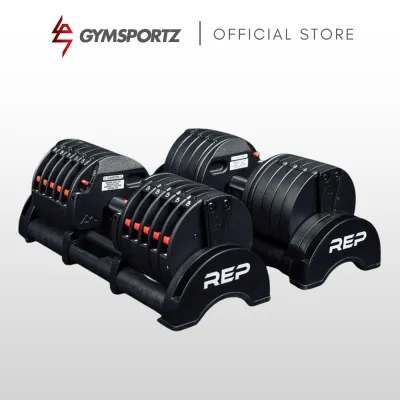
The Rep QuickDraw dumbbell is an exceptional choice if your training prioritizes rapid weight transitions, high-intensity drop sets, and a traditional, fully knurled handle that closely mimics the feel of a commercial gym dumbbell. By utilizing a robust sliding selector mechanism rather than complex internal gears, it offers a highly tactile and mechanically durable experience for home lifting.
However, this system is not a universal solution for every lifter. If your workouts require precise micro-loading in small increments for rehabilitation or shoulder isolation, extreme drop-safety from overhead positions, or a weight stack that can expand beyond its base capacity as you grow stronger, you will find better value in alternative designs.
Ultimately, the ideal choice depends on your specific training style, the physical space available in your home, and local distributor availability. There is no single winner; instead, the best adjustable dumbbell is the one that aligns with your lifting habits and fits safely within your workout environment.
Products mentioned in this guide
Prices are valid at publication and may change. Please refer to the product page for the latest price.
4 Key Dimensions for Comparing Adjustable Dumbbells
To evaluate any adjustable dumbbell system, you must look beyond marketing claims and analyze how the equipment performs during actual training. The ideal set should feel secure in your hands, change weights smoothly without sticking, and fit comfortably within your living space. We evaluate these systems across four primary dimensions.

Adjustment Mechanism & Speed
During high-intensity training or fast-paced supersets, the time spent changing weights can directly affect your heart rate and workout momentum. Different systems utilize twisting dials, sliding pins, or handle-rotation mechanisms to engage or disengage weight plates. Beyond sheer speed, you must consider mechanical complexity; systems with intricate internal gears or plastic selector parts are generally more susceptible to wear, jamming, or damage over years of constant use. A simpler, metal-on-metal locking system typically offers greater long-term reliability.
Weight Increments & Range
Progressive overload requires gradual increases in resistance to stimulate muscle growth and strength gains safely. Some adjustable dumbbells offer tight, 1 kg to 2 kg jumps, which are essential for smaller muscle groups like the deltoids or rotators. Other systems jump by 4 kg or 5 kg increments, which may be too aggressive for isolation movements but perfectly fine for heavy compound lifts like rows and presses. Always verify the manufacturer’s exact specifications for weight increments, as some models have uneven jumps across their range.
Handle Ergonomics & Grip
A dumbbell is only as good as your connection to it. Traditional fixed dumbbells feature a straight or slightly contoured steel handle with knurling to prevent slipping under heavy loads. Adjustable models often compromise on this design; some use thick, textured plastic sleeves, while others house the locking mechanism inside the handle itself, reducing the usable gripping area. The depth of the knurling and the diameter of the handle significantly affect grip fatigue during heavy pulling movements.
Footprint & Storage
In compact living environments, such as apartments or high-density housing, floor space is at a premium. Unlike a full rack of fixed dumbbells, adjustable sets rely on a docking cradle or storage tray to hold the unused plates. You must evaluate the total footprint of these cradles, whether they require a dedicated stand, and how easy it is to re-insert the dumbbells into their slots when your muscles are fatigued at the end of a challenging set. A bulky or poorly designed cradle can quickly clutter a small room.
Rep QuickDraw Profile: Mechanism, Pros, and Limitations
The Rep QuickDraw dumbbell represents a distinct approach to home strength training, prioritizing a heavy-duty build and a highly intuitive adjustment method. Understanding its unique design philosophy will help you determine if its real-world performance aligns with your lifting habits.
Design and Operation
Unlike traditional dial-turn systems, the QuickDraw utilizes a sliding selector lock mechanism. To change weights, you simply slide the secure metal selectors to your desired weight marking on the side of the frame. This physical engagement bypasses the complex internal nylon gears found in many twisting-dial competitors, offering a more direct, tactile, and mechanically robust connection that reduces the risk of internal gear failure over time. The plates are held securely in a linear fashion, allowing you to see exactly which plates are engaged before you lift.
Ideal Use Cases
This system shines brightest during fast-paced workouts where transition speed is critical. If you perform drop sets—where you immediately decrease the weight after reaching failure—the QuickDraw allows you to slide the selectors and pull the handle free in a matter of seconds. Furthermore, the handle design closely mimics a high-quality fixed barbell or dumbbell, featuring a fully knurled steel shaft that provides a secure, professional-grade grip without any bulky plastic components interfering with your hand placement. This makes it highly suitable for dynamic movements where a secure grip is paramount.
Potential Drawbacks
Despite these strengths, the QuickDraw has specific design limitations you must consider. Because the outer frame maintains its full physical length regardless of the selected weight, the dumbbell can feel unwieldy and long when set to lighter loads, potentially interfering with your range of motion during exercises like bicep curls or chest presses. Additionally, the maximum weight capacity is fixed, meaning you cannot purchase expansion kits to increase the load as your strength progresses. If you eventually need to lift heavier than the base set allows, you will have to replace the entire system.
Verification and Support
Before committing to this system, it is highly recommended to verify the current warranty terms, replacement part availability, and authorized dealer support. Because fitness equipment is subject to high mechanical stress, having access to local customer service and readily available spare parts is crucial for protecting your investment over the long term. If you purchase from an unauthorized parallel importer, you may face significant difficulties if a component requires repair.
How the Rep QuickDraw Compares to Other Adjustment Systems
To understand where the Rep QuickDraw fits in the market, it is helpful to compare its sliding mechanism against the three other dominant adjustable dumbbell designs available to home gym enthusiasts.
Dial-Selector Systems
Dial-selector dumbbells are among the most common styles found in home gyms, utilizing a rotating dial on the outer ends of the dumbbell or a twisting handle to select the weight plates. These systems are highly regarded for their space efficiency, as they typically feature very compact cradles that fit easily on a small shelf or in the corner of a room. They also tend to offer a wide variety of micro-weight increments, making them exceptionally versatile for lifters who require precise, incremental progression for rehabilitation or isolation exercises.
However, this convenience comes with a significant trade-off in terms of durability. Most dial systems rely on internal plastic dials, gears, or alignment tracks to secure the plates. If you drop a dial-selector dumbbell, even from a low height onto a rubber mat, these internal components can easily crack or misalign, rendering the entire unit unusable. Compared to the QuickDraw’s metallic sliding lock, dial systems require far more careful handling and are generally unsuitable for high-intensity workouts where weights might be dropped in exhaustion.
Block and Pin-Selector Systems
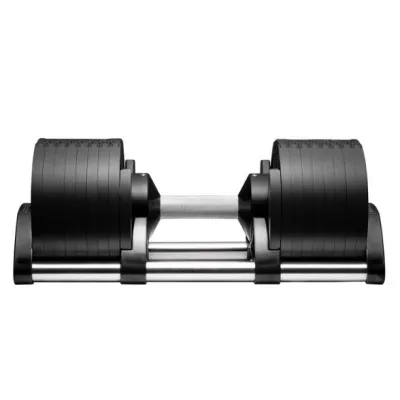
Block-style adjustable dumbbells utilize a nested, rectangular design where a U-shaped selector pin is inserted horizontally into the side of the weight stack, similar to the weight stack on a commercial cable machine. These systems are renowned for their exceptional durability and drop-safe engineering, often featuring heavy-duty steel plates and flexible composite pins that can withstand substantial impact. Additionally, many block systems are modular, allowing you to purchase expansion kits that can increase the weight of each dumbbell up to 40 kg or more as your strength increases.
The primary drawback of the block design is its non-traditional ergonomics. The rectangular shape and internal support pillars can feel restrictive, occasionally rubbing against your wrists or forearms during dynamic movements like clean-and-presses or overhead extensions. The process of inserting the selector pin can also be slower and more deliberate than sliding the QuickDraw’s selectors, making block systems less ideal for rapid-fire drop sets where every second of rest matters.
Handle-Slide and Quick-Release Systems
This category includes competing designs that use sliding levers, quick-release collars, or mechanical tabs to lock plates onto a central shaft. While these systems aim to bridge the gap between the speed of dial selectors and the durability of block systems, minor engineering differences can drastically affect your training experience. You must pay close attention to the locking security of these mechanisms, as any play in the system can lead to annoying plate rattle or, worse, a plate slipping loose during overhead movements.
When compared directly to the QuickDraw, some quick-release systems require you to manually slide individual collars or lock rings on both ends of the dumbbell, which can double your transition times. Furthermore, the overall balance of the dumbbell can shift depending on how the plates are distributed along the shaft. The QuickDraw’s integrated frame ensures that the weight remains perfectly balanced and centered, minimizing rotational torque on your wrists during heavy presses.
Final Verdict: Which Adjustable Dumbbell Should You Buy?
Your choice of adjustable dumbbell should align directly with your training philosophy, space constraints, and budget. There is no single “best” option, but rather the most suitable tool for your specific lifting style.
Choose the Rep QuickDraw if:
- You want a premium, commercial-gym feel with a traditional knurled steel handle.
- You prioritize rapid weight changes for drop sets or supersets.
- You have sufficient floor space in your home gym to accommodate its dedicated storage tray.
- You want a highly robust, tactile adjustment mechanism that minimizes the use of internal plastic gears.
Choose a Dial-System Alternative if:
- You are working with highly restricted space and need a compact all-in-one cradle that fits on a small table.
- You require small, precise weight increments (such as 1 kg or 2 kg jumps) to support progressive overload on isolation movements or physical therapy exercises.
- You are comfortable handling your equipment with care and do not plan to perform high-impact workouts.
Choose a Block/Pin-Loaded Alternative if:
- You lift exceptionally heavy and want a system that can grow with you via weight expansion kits over several years.
- You plan to train to failure and need equipment that can occasionally survive being dropped onto protective flooring.
- You do not mind a non-traditional rectangular shape and internal handle support pillars.
Before making your final purchase, always check with local retailers regarding current stock, warranty terms, and exact pricing in SGD. Keep in mind that importing heavy fitness equipment independently can incur substantial shipping fees and import taxes, which can significantly alter the overall value proposition. Confirming whether a local distributor offers local warranty servicing can save you significant hassle and expense if your equipment ever requires maintenance or replacement parts.
Frequently Asked Questions (FAQ)
Can you drop adjustable dumbbells during a workout?
As a general rule, you should avoid dropping adjustable dumbbells. Unlike solid cast-iron or rubber-coated fixed dumbbells, adjustable models contain moving parts, selector pins, sliding tracks, or internal gears that can misalign or break under high impact. Even highly durable block-style systems should be lowered with control whenever possible to protect your flooring, the equipment’s locking mechanisms, and your own safety. Always consult the manufacturer’s specific guidelines regarding drop ratings before performing high-impact lifts.
How do you maintain adjustable dumbbells in a humid climate?
High humidity levels can accelerate rust and corrosion on metal gym equipment if left unchecked. To protect your investment, always wipe down the dumbbell handles and selector tracks with a dry microfiber cloth after every workout to remove sweat and oils. Avoid spraying liquid cleaners or heavy lubricants directly onto the adjustment tracks or dial mechanisms, as these can attract dust, chalk, and debris, eventually jamming the moving parts. If the manufacturer recommends lubrication, apply a very light coat of dry silicone spray to a cloth first, then gently wipe the sliding surfaces.
Community discussion
Share your experience or ask a question. Comments are reviewed before publication.