
The specific bike stand you need depends entirely on when, where, and why your bicycle is stationary. If you struggle to clean your drivetrain, index your gears, or perform routine maintenance, you need a dedicated repair stand. If you are trying to reclaim floor space in a compact apartment or protect your frame from moisture damage, you require a storage stand. If you are a commuter or casual rider who frequently stops along the Park Connector Network (PCN) or at local cafes, a kickstand is your best option.
Choosing a single, “universal” stand to handle all three scenarios often leads to wasted money and cluttered living spaces because these accessories serve entirely different phases of bike ownership. A repair stand is built for structural stability and component access; a storage stand focuses on space optimization and aesthetics; a kickstand prioritizes on-the-go convenience. Depending on your riding routine, you may find that a combination of two different stands is the most practical setup for your home and your journeys.
Before purchasing any support system, you must identify your primary cycling friction point. Ask yourself whether you spend more time fighting with a bike that slips while you wash it, tripping over handlebars in your hallway, or searching for clean walls to lean your frame against during a ride. Pinpointing this exact bottleneck ensures you select an accessory that integrates seamlessly with both your bicycle’s specifications and your household layout.
Products mentioned in this guide
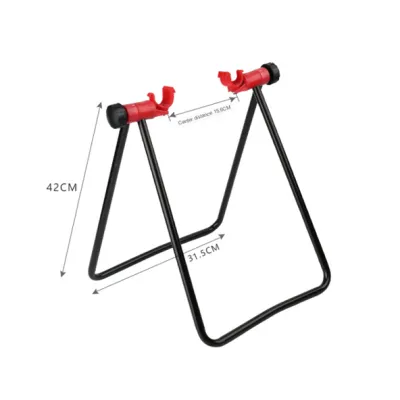
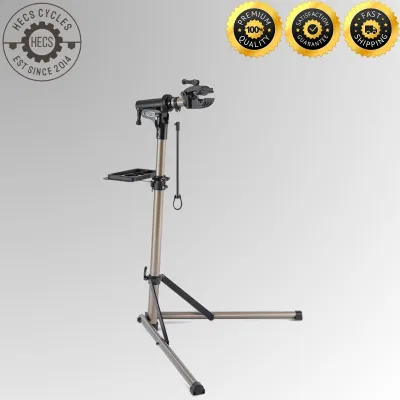
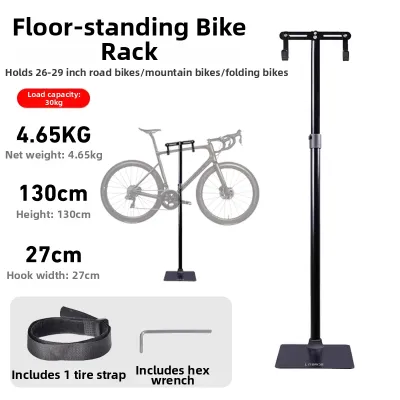
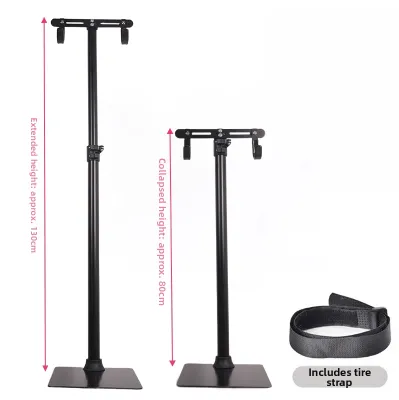
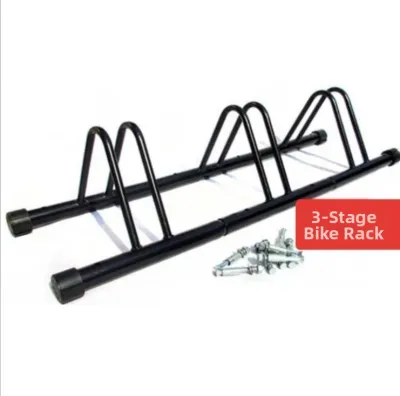
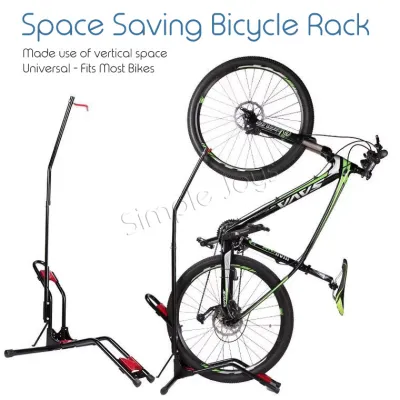
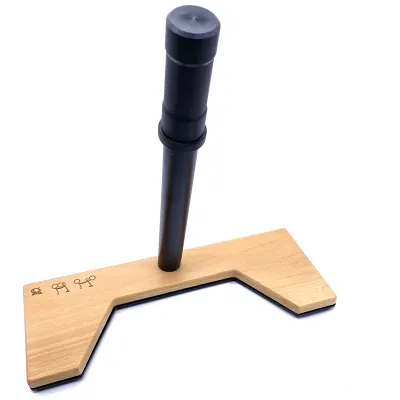
![[SG SELLER] Litepro Mainstand Bike Road Bike Double kickstand Aluminium Alloy Parking Bracket Foot Adjustable Length Stand](https://img.lazcdn.com/g/p/6c08829b1f153463f573df5b960a8dea.png_400x400q80.png_.webp)
Prices are valid at publication and may change. Please refer to the product page for the latest price.
Repair Stands: The Dedicated Bike Stand for Home Mechanics and Deep Cleaning
For riders who prefer to handle their own maintenance, a repair stand is an indispensable workshop tool. Elevating the bicycle to eye level eliminates the physical strain of bending over for extended periods while cleaning a chain or adjusting shifting. By lifting the wheels off the ground, a repair stand allows you to spin the drivetrain and rotate the handlebars freely, which is essential for accurate gear indexing, brake bleeding, and wheel truing.
When selecting a repair stand, the primary design choice is between a clamp-style (tube clamp) and an axle-mount (Euro-style) stand. Clamp-style stands secure the bike by gripping the seatpost or frame tubes with a rubberized jaw. Axle-mount stands require you to remove the front or rear wheel, securing the bike’s fork or rear dropouts directly to a beam via a quick-release or thru-axle mechanism while supporting the bottom bracket. Axle-mount stands are highly stable and eliminate the risk of crushing delicate frame tubes, making them a favorite for high-end racing machines.
Stability and weight capacity are critical safety specifications to verify before mounting your bicycle. Standard folding repair stands typically support bikes up to 20 to 25 kilograms, which easily accommodates road, gravel, and traditional mountain bikes. However, if you ride a heavy utility bike or an e-bike, you must verify that the stand is rated for the extra load—often requiring heavy-duty steel construction and a wider tripod base to prevent tipping. Always check the manufacturer’s maximum weight limit before lifting any heavy bicycle.
Living in a compact apartment means foldability is a non-negotiable feature for home mechanics. Look for stands constructed from lightweight aluminum that fold down into a compact cylinder, allowing you to slide the tool into a closet or behind a door when your maintenance session is complete. Quick-release clamps on the stand’s joints make setup and teardown fast, but ensure the locking collars are fully tightened before placing any weight on the clamping arm.
Safety is paramount when using a clamp-style repair stand. Never clamp a bicycle by a carbon fiber frame tube or an aerodynamic seatpost, as the localized clamping pressure can easily crack the carbon layups. Additionally, if your bike is equipped with a dropper seatpost, do not clamp the moving inner stanchion; doing so can scratch the surface, damage the internal seals, and lead to costly suspension failures. If you must use a clamp stand on a bike with a dropper post, extend the post fully and clamp only the outer, lower collar if permitted by the manufacturer’s instructions, or use a specialized top-tube adapter bar.
Storage Stands: For Compact Living and Bike Protection
Storage stands are designed to keep your bicycle safe, upright, and organized when it is parked at home. For urban cyclists living in high-density housing, leaving a bike leaning casually against a wall invites accidental tip-overs, which can bend rear derailleur hangers, scratch expensive frame paint, or damage household plaster. Furthermore, keeping a bike supported properly prevents tire flat-spotting—a condition where constant pressure on one section of a stationary, underinflated tire deforms the casing over time.

In humid tropical climates, storing a bicycle directly on damp balcony tiles or near open windows can accelerate the oxidation of steel bolts, chains, and cable inner wires. A dedicated storage stand keeps the bike elevated and stable, allowing air to circulate freely around the components. When shopping for a storage solution, prioritize materials like powder-coated steel or rust-resistant aluminum alloys, and ensure all contact points are covered in soft, non-marring rubber to protect your frame’s finish.
Floor Stands vs. Wall-Mounted Racks
Floor stands, such as gravity-fit stands or wheel-in slots, are the ideal option for renters or those who prefer not to drill holes into their walls. These stands typically support the bike by cradling the rear tire or clamping onto the rear axle hub. Before buying, check the footprint dimensions of the stand and verify its tire width compatibility; a stand designed for narrow road tires will not accommodate wide mountain bike or fat-bike tires, while a slot that is too wide will allow a road bike to tilt dangerously. If your bike has a heavy front basket or commuter panniers, ensure the floor stand has a wide, weighted base to prevent the front wheel from flopping and pulling the entire bike down.
Wall-mounted racks, including horizontal hooks, vertical hangers, and ceiling-mounted pulley systems, are the ultimate space-saving solutions because they reclaim valuable floor area. Vertical wall hangers are highly efficient for narrow corridors, while horizontal hangers display the bicycle like a piece of art. However, wall mounting requires careful structural verification. You must check the integrity of your wall; in many modern apartments, partition walls are made of lightweight drywall that cannot support a bicycle without structural studs. Always mount heavy bikes, especially e-bikes, directly into solid concrete walls or load-bearing studs using heavy-duty masonry anchors, and never exceed the rack’s rated weight limit.
Kickstands: For Commuters and Frequent Stops
For daily utility riders, utility commuters, and touring cyclists, a kickstand provides immediate, freestanding convenience. If your typical ride involves stopping at local coffee shops, hawker centres, or grocery stores along the PCN, you cannot always rely on finding a vacant bike rack, railing, or clean wall. A kickstand allows you to park your bike instantly on any flat surface, making loading and unloading panniers or frame bags significantly easier.
Despite their convenience, kickstands are generally avoided by competitive road cyclists and mountain bikers. On technical off-road trails, a kickstand is a severe safety hazard; the violent vibrations of riding over roots and rocks can cause a spring-loaded kickstand to deploy mid-ride, potentially catching on trail obstacles and causing a crash. For road racers, kickstands add unnecessary weight, disrupt aerodynamics, and can rattle loose during high-speed descents. If your riding style focuses on performance or rough terrain, skip the kickstand and rely on portable storage solutions or careful leaning techniques.
If a kickstand fits your riding profile, you must choose between a single-leg chainstay mount and a double-leg center mount. Single-leg kickstands are lightweight and attach near the rear dropout, which is sufficient for light commuter bikes. However, if you ride a heavy cargo bike, transport groceries, or use a child seat, a double-leg center-mount kickstand is essential. When deployed, a double-leg stand lifts one of the wheels off the ground, keeping the bicycle perfectly vertical and highly stable, which prevents the bike from tipping over while you load heavy cargo.
Before purchasing an aftermarket kickstand, perform a thorough installation check on your bicycle frame. Many modern hybrid and city bikes come with a dedicated kickstand mounting plate welded behind the bottom bracket shell, or integrated mount holes on the left chainstay. If your bike lacks these features, you will need a clamp-on kickstand. Never clamp an aftermarket kickstand to thin-walled carbon fiber chainstays or highly shaped aerodynamic aluminum tubes, as the high clamping force required to keep the stand from rotating can easily crush the frame tubing. Always consult your bike manufacturer’s manual to verify if kickstand installation is supported.
Quick Decision Matrix: Match Your Rider Profile
| Stand Type | Best For | Primary Pain Point Solved | Key Compatibility Check | Typical Use Case |
|---|---|---|---|---|
| Repair Stand | DIY mechanics & deep cleaning | Back strain, spinning wheels, lack of 360-degree access | Weight capacity & frame material clamping limits | Weekly drivetrain degreasing, gear tuning |
| Storage Stand (Floor) | Renters & multi-bike households | Floor clutter, wall scuffs, bike tipping over | Tire width clearance & base footprint stability | Parking a road/gravel bike safely in a living room |
| Storage Stand (Wall) | Space-constrained apartments | Zero available floor space, narrow hallways | Wall material strength & drilling permissions | Hanging a commuter bike vertically in an entryway |
| Kickstand | Commuters & cargo transport | No place to lean the bike during quick stops | Frame mounting plate or chainstay tube clearance | Quick stops at PCN rest areas, grocery runs |
Frequently Asked Questions (FAQ)
Can I use a repair stand for long-term bike storage?
Using a repair stand for long-term storage is generally not recommended. Leaving a bicycle clamped by its seatpost or frame for weeks at a time places continuous, unnecessary stress on both the clamp mechanism and the bike’s components. If the stand is bumped in a high-traffic area of your home, the high center of gravity makes it much more prone to tipping over than a dedicated floor storage stand. Additionally, storing a bike at an extreme angle or inverted can cause air bubbles in hydraulic disc brake systems to travel into the brake calipers, resulting in spongy brake lever feel and compromised stopping power when you next ride.
Do I need a special stand for an e-bike?
Yes, e-bikes require heavy-duty stands specifically rated for their increased weight. Because of the integrated motor and battery, a typical e-bike weighs between 22 and 30 kilograms, which can bend or snap the clamping arms of standard, lightweight repair stands. When purchasing a repair stand, look for workshop-grade steel models with verified weight capacities of at least 35 kilograms. For storage, avoid hanging heavy e-bikes on standard drywall wall hooks; instead, opt for heavy-duty floor stands or wall mounts anchored securely into solid concrete. If you want a kickstand for an e-bike, choose a heavy-duty, double-leg center-mount model to support the bike safely during parking.
Will a kickstand fit any bike frame?
No, kickstands are not universally compatible and can cause severe damage if installed incorrectly. Many high-performance road, gravel, and mountain bikes lack the physical clearance, flat surfaces, or structural strength required to support a kickstand. Clamping a metal kickstand bracket onto a carbon fiber frame or thin-walled aluminum chainstays can easily crush the tubes under clamping pressure or cause structural fatigue over time. If your frame has internally routed cables running through the bottom bracket area, a center-mount clamp kickstand can pinch and damage the internal housings. Always check your bicycle manufacturer’s instructions to confirm compatibility before attempting to install a kickstand.
Community discussion
Share your experience or ask a question. Comments are reviewed before publication.