
Choosing the right exercise resistance band for post-run recovery can significantly accelerate muscle repair, improve flexibility, and prevent common running injuries. While there are several styles available, the flat therapy band is generally the most effective and safest option for post-cardio stretching. Its wide, flat design distributes tension evenly across the foot and limbs, preventing the band from digging into tired muscles or slipping off your running shoes during deep stretches. While other band types like continuous loops or handled tubes have their place in strength training, they often fall short when it comes to the precise, gentle alignment needed to release tight hamstrings, calves, and hip flexors after a demanding run.
Understanding Your Post-Run Recovery Needs
Running is a high-impact, repetitive activity that places immense stress on your lower body. Over time, this constant pounding tightens key muscle groups, including your hamstrings, calves, quadriceps, and hip flexors. Post-run recovery requires a deliberate approach that transitions your body from a state of high tension to deep relaxation. Unlike strength training, which aims to break down muscle fibers to build mass, post-run stretching focuses on active recovery, flexibility improvement, and muscle tension release.
To achieve these recovery goals, you need an exercise tool that provides gentle, consistent, and easily adjustable tension. High-resistance bands designed for heavy strength training are counterproductive here; they require too much effort to stretch, which can cause your muscles to contract defensively rather than relax. In warm and humid climates, outdoor runs can leave your muscles highly fatigued and dehydrated, making them more susceptible to cramping or strain if forced into deep stretches too quickly. Therefore, your recovery equipment must allow for gradual, controlled movements that respect your body’s post-run limits.
Products mentioned in this guide
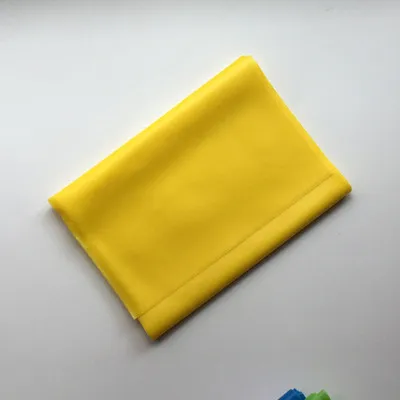
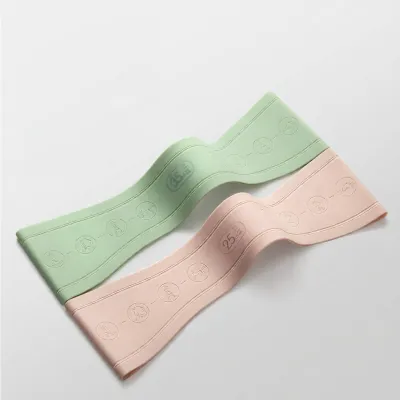

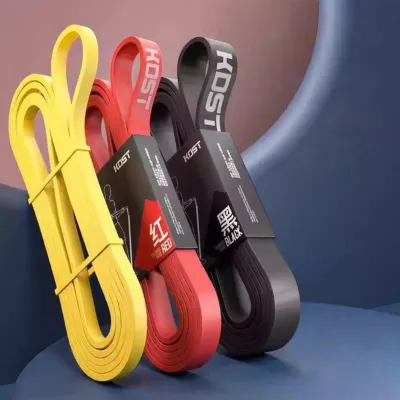
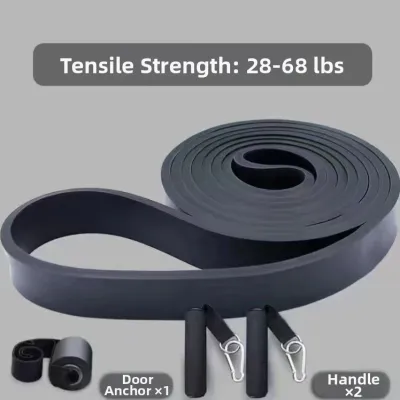
Prices are valid at publication and may change. Please refer to the product page for the latest price.
Comparing Resistance Band Types for Runners
To select the right tool, it is essential to understand how different resistance bands are constructed and how their physical designs affect stretching mechanics. The market primarily offers three categories: loop bands, tube bands with handles, and flat therapy bands. Each type interacts differently with your body, your footwear, and the floor, influencing how safely and comfortably you can perform your recovery routine.

Loop Bands (Mini and Large)
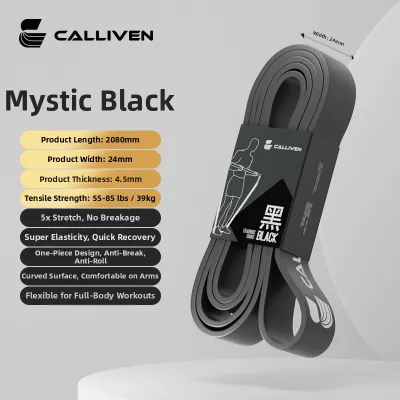
Continuous loop bands are highly popular in the fitness world and come in two main varieties: small mini-bands and long, heavy-duty resistance loops. Mini-bands are excellent for pre-run glute activation and hip mobility exercises, but their short length makes them virtually useless for static post-run stretching. Large loop bands, on the other hand, are long enough to assist with deep lower-body stretches, such as lying hamstring extensions or assisted groin stretches.
However, large loop bands present several practical challenges during recovery. Because they are made of thick, dense rubber or heavy fabric, they can be difficult to grip comfortably with sweaty hands after a hard run. Their narrow, circular cross-section also tends to roll up into a tight cord when stretched under tension. This rolling effect can cause the band to pinch your skin uncomfortably or, worse, slip off the sole of your running shoe and snap back toward your body. When using loop bands for recovery, it is crucial to check the width of the band to ensure comfortable skin contact and minimize the risk of sudden slippage.
Tube Bands with Handles
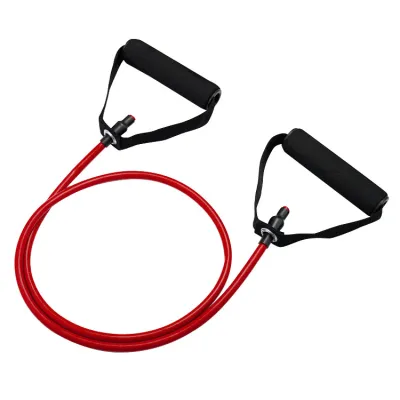
Tube bands consist of a hollow rubber tube fitted with plastic or foam handles at both ends. These bands are highly versatile for general strength training and are particularly useful for standing stretches that require a secure, ergonomic grip. For example, you can easily use a tube band to perform standing chest openers or shoulder mobility exercises to relieve the upper-body tension that accumulates from holding a running posture over long distances.
Despite these benefits, tube bands are rarely the best choice for floor-based post-run stretching. The bulky plastic handles and metal carabiners can interfere with precise joint alignment and are awkward to position under the foot. If you try to loop a tube band under your arch for a lying hamstring stretch, the hard plastic connectors can press painfully into your foot, and the round tube is highly prone to rolling off the edge of your shoe. If you choose to use tube bands, always inspect the connection points between the tube and the handle to ensure they are secure, and opt for models with soft, low-profile foam grips.
Flat Therapy Bands
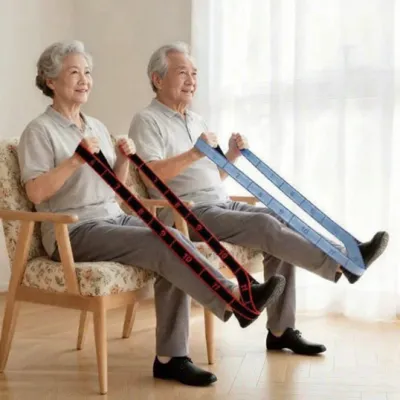
Flat therapy bands are wide, thin sheets of latex or synthetic elastomer that do not form a closed loop and do not have handles. These bands are the gold standard in physical therapy and rehabilitation settings, and they are exceptionally well-suited for post-run recovery. Because they are wide and flat, they wrap securely around the entire midfoot or heel of your running shoe, distributing the stretching force over a large surface area and completely eliminating the risk of the band rolling or sliding off during a stretch.
The primary limitation of flat therapy bands is that they lack built-in handles or loops, meaning you must manually wrap the ends around your hands to secure your grip. This can occasionally lead to hand fatigue if you are holding a deep stretch for an extended period. However, this design also allows you to adjust the tension instantly by simply changing where you grip the band. When shopping for flat therapy bands, check the thickness and material quality; look for bands that offer consistent elasticity and smooth, durable edges that resist tearing when stretched over the tread of your running shoes.
Matching Band Types to Specific Post-Run Stretches
To get the most out of your post-run routine, you should match your band type to the specific muscle groups you need to target. For hamstring and calf stretches, a flat therapy band is unmatched. By lying on your back, looping the wide band over the ball of your foot, and gently pulling your leg upward, you can achieve a highly controlled stretch that targets the entire posterior chain without straining your lower back. The wide surface area of the band also allows you to gently pull your toes downward, adding a targeted stretch for tight calves and the plantar fascia.
For hip flexor and quadricep stretches, a large loop band can be highly effective if used correctly. You can anchor one end of a large loop band to a heavy, stable object—such as a sturdy door anchor or a heavy piece of gym equipment—and loop the other end around your hip joint while performing a low lunge. This provides a gentle, passive traction that helps open up the hip joint. Regardless of the stretch, always adjust the tension by modifying your grip width or stance rather than forcing your joint into a painful position; the goal is a gentle, relaxing pull, not intense resistance.
Safety Guidelines and When to Stop Stretching
Using an exercise resistance band for stretching carries inherent physical risks if the equipment is worn out or used incorrectly. Because bands store kinetic energy when stretched, a sudden snap or slip can cause painful bruising or serious eye injuries. Before every recovery session, perform a quick pre-stretch inspection by holding the band up to the light and checking for micro-tears, discoloration, or any loss of elasticity. If you notice any small nicks along the edges of a flat therapy band, discard it immediately, as these tiny tears can quickly turn into a complete snap under tension.
Proper anchoring is another critical safety factor. Never anchor a resistance band to light household furniture, such as a plastic chair or a loose table leg, which can easily tip over and fly toward you. When wrapping a band around your foot, ensure it is positioned securely across the wide midfoot or heel rather than the slippery toe area. Finally, establish clear stop conditions for your routine. You should feel a deep, warm, and satisfying release in the belly of the muscle; if you experience sharp, shooting pain, joint pinching, or numbness, stop stretching immediately and consult a healthcare professional.
Cross-Scenario Compatibility: Can One Band Do It All?
Many runners wonder if they can buy a single, highly versatile band that handles both post-run recovery stretching and weekly strength training. While a single medium-resistance large loop band is the closest thing to an all-in-one solution, it involves clear trade-offs. It will be slightly too stiff and awkward for gentle, precise stretching, and it may require extra caution to prevent slipping during floor exercises.
For most runners, building a minimal, highly effective recovery kit is a more practical approach. Because high-quality flat therapy bands are highly affordable—often costing between S$10 and S$20—you can easily pair one with a set of small mini-loops for glute strengthening. This combination takes up virtually no storage space in a compact apartment, fits easily into a running vest or gym bag, and ensures you always have the correct, specialized tool for both injury prevention and post-run muscle relief.
Frequently Asked Questions (FAQ)
How do I choose the right resistance level for post-run stretching?
For post-run recovery, you should always prioritize light to medium resistance bands. The primary goal of a recovery stretch is to encourage muscle relaxation and restore your natural range of motion, not to build strength or power. A band that is too stiff will force your muscles to tense up to resist the pull, which defeats the purpose of the stretch and can lead to micro-tears in fatigued muscle fibers. You should be able to pull the band easily and hold the stretch comfortably for 30 to 60 seconds. If you need to adjust the intensity, do so by changing your grip position or body angle rather than switching to a heavier, high-resistance band.
How should I clean and store my resistance bands after outdoor runs?
To prolong the lifespan and maintain the safety of your resistance bands, you must clean them regularly to remove sweat, body oils, dirt, and sunscreen residue, all of which can degrade the material over time. After an outdoor run, wipe your bands down with a damp cloth using mild soap and water; avoid harsh chemical cleaners or alcohol-based wipes, which can dry out the rubber. Allow the bands to air dry completely away from direct sunlight. Store your bands in a cool, dry place, as prolonged exposure to UV rays and high humidity can cause the material to become brittle, crack, and eventually snap during use.
Community discussion
Share your experience or ask a question. Comments are reviewed before publication.