
Quick Answer: Which Accessory Solves Your Pull-Day Problem?
When planning an effective pull-day routine, your progress often hits a wall due to one of two distinct bottlenecks: either your grip gives out before your target muscles are fully stimulated, or your muscles lack the strength to move your body weight through a full range of motion. Lifting straps and resistance bands (often referred to as 弹力带) are not direct competitors; instead, they solve these entirely different mechanical limitations.
Lifting straps are designed to bypass grip fatigue during heavy, externally loaded pulling movements like deadlifts and heavy rows by shifting the load directly to your wrists. In contrast, resistance bands provide variable elastic tension, which can either assist your body weight during challenging movements like pull-ups or add accommodating resistance to isolate target muscles. Choosing the right tool depends entirely on whether your primary training bottleneck is your forearm grip strength or the muscular capacity of your target muscle groups.
Lifting Straps: Bypassing Grip Fatigue for Heavy Pulls
Lifting straps consist of durable strips of cotton, nylon, or leather that loop around your wrist and wrap tightly around a barbell, dumbbell, or cable attachment. This physical wrap creates a high-friction connection that transfers the weight of the bar directly to your wrist bones and forearms, bypassing the need for your hand and finger flexors to squeeze with maximal force. By reducing the reliance on the flexor digitorum profundus and other small forearm muscles, your nervous system can focus its neural drive and motor unit recruitment on larger, more powerful target muscles like the latissimus dorsi, trapezius, and rhomboids.
Products mentioned in this guide



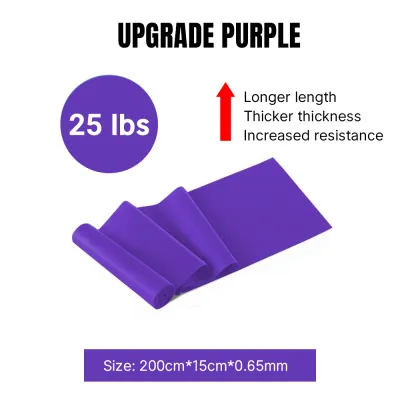

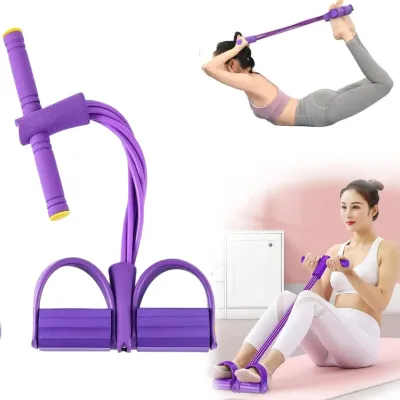

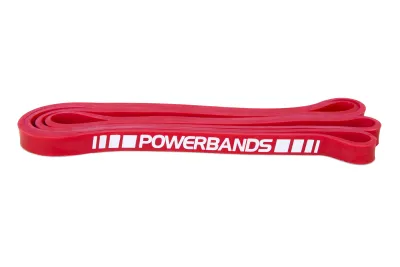
Prices are valid at publication and may change. Please refer to the product page for the latest price.

The mechanical advantage of lifting straps is most apparent during heavy, compound pulling exercises. Conventional deadlifts, Romanian deadlifts (RDLs), heavy barbell rows, dumbbell rows, and heavy shrugs are prime candidates. During a heavy Romanian deadlift, for example, your hamstrings and glutes can handle significantly more weight than your fingers can hold for a set of ten repetitions. Straps close this gap, ensuring your posterior chain is fully stimulated without the bar slipping from your hands.
To maintain a balanced physical profile, reserve lifting straps for your top working sets. If you use straps for every warm-up set, you miss valuable opportunities to build raw grip strength. A good rule of thumb is to perform all warm-up and lighter working sets without straps, only “strapping up” when the load reaches a point where your grip is highly likely to fail before your target back or leg muscles reach true muscular fatigue. This approach ensures your grip continues to develop alongside your major muscle groups.
Proper wrapping technique is essential to prevent wrist strain and ensure a secure lift. For standard lasso straps, slide your hand through the loop so the tail of the strap runs along your palm in the direction of your thumb. Place your hand on the bar, wrap the tail under and around the bar in the opposite direction of your fingers, and pull it taut by twisting the bar like a motorcycle throttle. Never use lifting straps for Olympic lifts such as cleans, snatches, or jerks. These movements require a rapid transition where you must be able to instantly release the bar if a lift fails; being locked to the bar during a missed clean can cause severe wrist, elbow, or shoulder injuries. Always inspect the stitching and material integrity of your straps before lifting heavy loads.
Resistance Bands (弹力带): Assisting, Accommodating, and Warming Up
Resistance bands operate on the principle of variable elastic resistance, governed by Hooke’s Law: the tension increases proportionally to how far the band is stretched. This creates a dynamic loading profile that is fundamentally different from the constant gravity-based load of free weights. When used for assistance, the band is at its maximal stretch—and therefore provides the most help—at the bottom of the movement where you are mechanically weakest. When used for resistance, the load peaks at the end of the range of motion, forcing your muscles to work harder during the peak contraction phase.
Resistance bands are highly versatile tools for both compound and isolation pull-day movements. They are widely used for assisted pull-ups and chin-ups, where the band loops over the bar and under your feet or knees to help you overcome your body weight. They are also excellent for banded pull-aparts, face pulls, and single-arm lat pulldowns to target the rear deltoids and rotator cuff muscles. Additionally, advanced lifters anchor bands to the bottom of a deadlift platform and loop them over the barbell to create accommodating resistance, making the lockout portion of the lift significantly more challenging.
Incorporate resistance bands during your warm-up routine to activate the shoulder girdle, rotator cuffs, and scapular stabilizers before moving to heavy free weights. They are also ideal for high-rep isolation work at the end of your workout to drive blood flow and metabolic stress to target muscles without overloading your joints. For beginners, they serve as a critical bridge to build the necessary strength to perform unassisted bodyweight pull-ups.
Because elastic bands are subject to high tension, safety is paramount. Always inspect your bands for micro-tears, discolouration, or small punctures before every single session; a band snapping under high tension can cause painful skin welts or serious eye injuries. Ensure the band is anchored to a completely stable, non-moving structure, such as a bolted-down gym rig, a heavy dumbbell, or a secure door anchor. Never anchor a band to sharp metal edges or lightweight furniture that could tip over. If you are training at home in a typical space-conscious Singapore HDB apartment, ensure your door anchors are placed on the side of the door that closes towards you, so the door frame acts as a physical backup stop.
Straps vs. Bands: How They Actually Change Your Pull Exercises
To understand how these two accessories alter your training mechanics, it is helpful to compare them across several key training dimensions. While both can be found in any well-equipped gym bag, they serve entirely different roles in your workout progression.
| Dimension | Lifting Straps | Resistance Bands (弹力带) |
|---|---|---|
| Primary Function | Bypasses grip fatigue to maximize heavy external loads | Provides variable tension for assistance, activation, or isolation |
| Load Type | Constant gravity-based resistance (barbells, dumbbells) | Variable elastic resistance (tension increases as stretched) |
| Grip Strength Impact | Temporarily removes grip demand from the target movement | Minimizes grip demand (assisted) or trains grip dynamically |
| Ideal Skill Level | Intermediate to Advanced | Beginner to Advanced |
| Typical Price Range | S$15 to S$40 | S$10 to S$30 |
| Portability | Highly compact, fits in any pocket | Lightweight and highly portable for home or travel |
Lifting straps temporarily remove grip strength from the equation, allowing you to lift heavier than your hands would naturally allow. Resistance bands, on the other hand, either bypass grip requirements entirely (such as when a band assists your body weight during pull-ups, reducing the total load your hands must hold) or train your grip dynamically (such as during banded rows, where you must actively squeeze the band, but the tension builds gradually rather than starting at maximum).
It is a mistake to view these accessories as mutually exclusive. A well-structured pull-day routine can easily utilize both tools to maximize performance. For instance, you might begin your workout by warming up your shoulders and upper back with banded pull-aparts. Next, you transition to heavy barbell rows or deadlifts, using lifting straps on your heaviest working sets to isolate your lats and hamstrings. Finally, you finish the session with high-rep banded face pulls to target your rear delts. Using them in tandem ensures you prepare your joints, overload your prime movers, and achieve deep muscular fatigue.
The Decision Framework: When to Strap Up vs. Band Up
Choosing between these two accessories depends on your immediate training goals, your current strength levels, and your physical limitations. Use the following scenarios to guide your decision before your next training session.
Choose Lifting Straps if:
- Your primary goal is maximal strength or hypertrophy in your back, traps, or posterior chain.
- Your grip consistently fails before your target muscles are fully stimulated.
- You are performing heavy compound lifts like Romanian deadlifts, barbell rows, or heavy shrugs where the load exceeds your hand-holding capacity.
- You want to eliminate the mental distraction of a slipping bar so you can focus entirely on lat and hamstring contraction.
Choose Resistance Bands if:
- You are working on bodyweight mastery, such as learning to perform full, unassisted pull-ups or chin-ups.
- You need to warm up, activate, or rehabilitate your shoulder girdle, rotator cuffs, or upper back muscles.
- You want to isolate smaller muscle groups, like the rear deltoids, using high-rep, low-impact movements.
- You require a highly portable workout solution for home training in a compact space or while traveling.
Use Both if:
- Your training program spans from joint preparation to heavy compound lifting and high-rep finishing work.
- You want to optimize every phase of your workout, protecting your joints during the warm-up, pushing your strength limits during heavy lifts, and achieving deep muscular fatigue during isolation work.
Verify First if:
- You have any pre-existing injuries or chronic pain in your wrists, elbows (such as golfer's or tennis elbow), or shoulders. While straps can reduce direct finger strain, they still transfer significant force to the wrists and elbows. Similarly, the rapid, snapping tension of resistance bands can irritate compromised tendons if not controlled. Always consult a physiotherapist or a qualified fitness professional before incorporating these tools if you are recovering from an injury. Ensure you follow the manufacturer's guidelines regarding weight limits, anchoring methods, and care instructions to avoid equipment failure.
Frequently Asked Questions (FAQ)
Can I use resistance bands instead of lifting straps for heavy deadlifts?
No, resistance bands cannot safely or effectively replace lifting straps for grip support during heavy lifts. Wrapping an elastic band around a heavy barbell and your wrist does not provide the secure, non-slip friction lock that cotton, nylon, or leather straps offer. Because bands are highly elastic, they will stretch and slip under heavy loads, which can cause you to lose control of the barbell, potentially leading to severe acute injuries. Furthermore, the friction of the metal knurling against the rubber can easily tear the band, causing it to snap dangerously under tension.
Do lifting straps weaken your grip over time?
Lifting straps will only weaken your grip if you rely on them excessively for every exercise and set. If you use straps for your warm-ups, light sets, and minor accessory movements, your grip muscles will not receive enough stimulus to maintain or grow their strength. However, if you apply a balanced approach—performing all warm-up and moderate-weight sets with a raw grip, and only using straps for your heaviest, top-tier working sets—your grip strength will continue to develop naturally while your back muscles get the heavy stimulation they need.
Are figure-8 straps better than traditional lasso straps for pulling?
Whether figure-8 straps are better than traditional lasso straps depends on your specific exercise selection and training goals. Figure-8 straps loop over your wrist, under the bar, and back over your wrist, essentially locking your hand securely to the bar with zero chance of slipping. This makes them highly favored by powerlifters and strongman athletes for heavy, straight-bar deadlifts. However, because they lock you in so securely, they are difficult to release quickly in an emergency and are impractical for dumbbell exercises or movements requiring quick setup adjustments. Traditional lasso straps offer slightly less absolute locking force but are far more versatile, easier to adjust, and allow for a quick release of the bar if needed.
Community discussion
Share your experience or ask a question. Comments are reviewed before publication.