
Finding the right bicycle bag setup transforms your riding experience, whether you are navigating the paved paths of the local Park Connector Network (PCN), commuting daily to the central business district, or preparing for an extended self-supported touring adventure. Rhinowalk has established a diverse ecosystem of bike luggage, ranging from streamlined frame packs to high-capacity rear panniers. Selecting the ideal configuration requires balancing your cargo volume requirements with your bicycle’s specific geometry and mounting limitations.
Rather than choosing a single universal bag, most riders benefit from matching specific bag types to their primary cycling style and physical bike setup. By understanding the unique advantages and physical constraints of each bag category, you can build a secure, stable, and weather-resistant carrying system that complements your ride.
Assess Your Riding Style and Cargo Requirements
To build an efficient carrying system, start by analyzing your typical riding scenarios and the physical items you must transport. A daily commuter heading to an office requires a vastly different setup than a gravel enthusiast exploring unpaved trails or a bikepacker planning a multi-day journey. Commuters generally prioritize quick access, structured compartments for laptops or work attire, and reliable weather protection. Leisure riders on weekend PCN excursions typically need minimal storage for essentials like a phone, keys, a compact multi-tool, and a light windbreaker.
Products mentioned in this guide
Prices are valid at publication and may change. Please refer to the product page for the latest price.
In contrast, off-road riders and tourers must accommodate bulky camping gear, spare apparel, and cooking equipment, which demands high-capacity, highly stable storage solutions. Evaluating your cargo volume and weight distribution needs early prevents purchasing bags that are either too small for your gear or too bulky for your frame.
Weight distribution is another critical factor that directly influences your bicycle’s handling and stability. Placing too much weight high up or far back can cause the front wheel to feel light and unresponsive, while overloading the front can make steering sluggish and unpredictable. As a general rule, aim to keep heavy items centered and low within the bike’s frame triangle. Before purchasing any luggage, inspect your bicycle for existing accessory conflicts. Look closely at your bottle cage placements, brake and gear cable routing, front and rear light mounts, and whether your frame features dedicated threaded eyelets for mounting traditional racks.
Frame Bags: Maximizing Stability for Daily and Light Loads
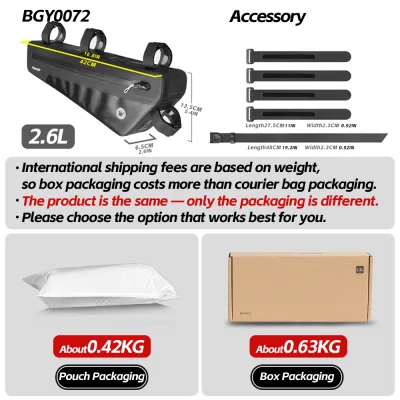
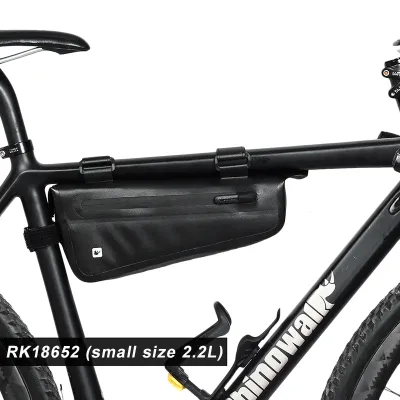
Frame bags occupy the space inside your bicycle’s front triangle, making them one of the most stable carrying solutions available. Because the cargo sits directly between your knees and below your center of gravity, a frame bag has a negligible impact on your bike’s handling, even when loaded with dense, heavy items. This makes them exceptionally well-suited for daily commuting, gravel riding, and lightweight bikepacking where maintaining agile steering is essential. They are ideal for storing heavy tools, spare inner tubes, external power banks, and daily essentials that you need to access quickly without stopping.

Before selecting a frame bag, you must carefully measure the internal dimensions of your front triangle. Use a flexible measuring tape to record the length of the top tube’s underside, the seat tube, and the down tube. Compare these measurements against the manufacturer’s specified bag dimensions to ensure a snug fit that does not bunch or sag. A key consideration during this step is bottle cage interference. A full-frame bag will completely block access to your water bottles, requiring you to relocate your hydration to the handlebar, fork blades, or a hydration pack.
If you wish to retain use of your standard bottle cages, a half-frame bag is often the preferred compromise. Half-frame designs attach to the underside of the top tube, leaving the lower portion of the triangle open for water bottles. However, riders with compact frame geometries, dual-suspension mountain bikes, or smaller frame sizes must exercise extra caution. The rear shock absorber on a full-suspension mountain bike significantly reduces the available triangle space, often limiting compatibility to highly specialized, compact frame bags. Always verify that the bag’s straps will not pinch or rub against exposed shift cables running along the frame tubes.
Saddle Bags and Seat Packs: Aerodynamics for Off-Road and Minimalists
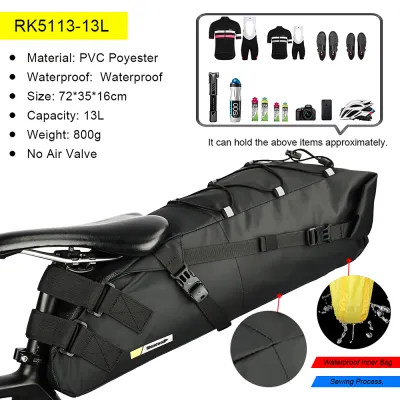
Saddle bags and large seat packs mount directly behind the rider, tucked neatly into the slipstream to minimize aerodynamic drag. This streamlined profile makes them a favorite among road cyclists, gravel riders, and minimalist bikepackers who want to maintain speed without the bulk of traditional side panniers. Small, low-profile saddle bags are perfect for carrying a basic puncture repair kit, a spare tube, and a multi-tool. Larger, roll-top seat packs can expand to hold several liters of soft, compressible gear, such as spare clothing, a lightweight sleeping bag, or a compact bivy sack.
Installing a large seat pack requires verifying several critical physical clearances on your bicycle. First, measure the amount of exposed seatpost between the seatpost collar and the saddle rails; most large seat packs require at least 8 to 12 centimeters of exposed post to secure the mounting straps properly. Second, check the clearance between the bottom of the packed bag and the top of your rear tire. If you ride a small frame size or a bike with 29-inch wheels, a sagging seat pack can rub against the tire tread, leading to rapid material wear or a dangerous sudden wheel lockup. Additionally, if your bike features a dropper seatpost, you must use a compatible adapter to prevent the bag’s straps from damaging the post’s smooth stanchion during travel.
One common challenge with large seat packs is tail sway, which occurs when the bag swings side-to-side as you pedal out of the saddle. To mitigate this movement, pack your heaviest items deep inside the bag, closest to the seatpost, and place lighter, compressible items toward the rear roll-top closure. Pull all mounting straps as tight as possible, ensuring the saddle rail buckles are locked securely. Some riders also opt for aftermarket metal stabilization brackets that bolt directly to the saddle rails, clamping the bag from both sides to eliminate sway entirely on rough terrain.
Handlebar Rolls: Carrying Bulky Gear Without Rack Mounts
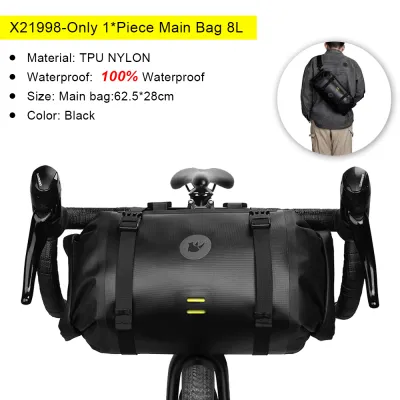
Handlebar rolls provide an elegant way to carry bulky, lightweight gear on bicycles that lack traditional rack mounts, such as carbon road bikes or modern gravel rigs. By securing a cylindrical dry bag directly to your handlebars, you can easily transport sleeping pads, tents, sleeping bags, or extra layers of clothing. This setup keeps your gear highly accessible and distributes a portion of your cargo weight to the front wheel, which can help balance a heavily loaded rear seat pack during steep climbs.
However, handlebar rolls require careful fitment checks to prevent interference with your bike’s controls. Measure the horizontal distance between your drop-bar hoods or flat-bar brake levers to ensure the packed roll will not squeeze your shifters or restrict your hand positions. Cable routing is another critical area; stiff brake hoses or mechanical gear cables can be pinched or bent at harsh angles by a handlebar bag, which can degrade shifting performance or compromise braking safety. You must also verify that the vertical clearance between the bottom of the handlebar bag and the top of the front tire or fender is sufficient to prevent contact when the front suspension compresses or when riding over bumpy terrain.
Adding weight to your handlebars directly alters your bicycle’s steering dynamics. A front-heavy load increases the steering inertia, making the bike feel slower to turn and more prone to wheel flop at low speeds. To maintain safe handling, limit the cargo in your handlebar roll to lightweight, high-volume items, keeping the total weight well below the manufacturer’s recommended limit. When navigating technical descents or wet roads, adjust your speed early and avoid sudden, jerky steering inputs to maintain traction on the front tire.
Panniers: High-Capacity Solutions for Commuting and Touring
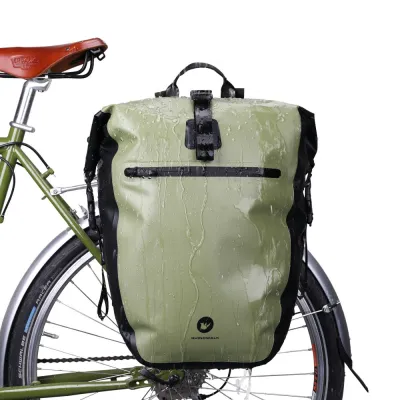
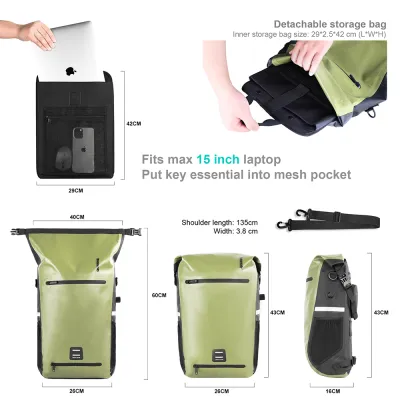
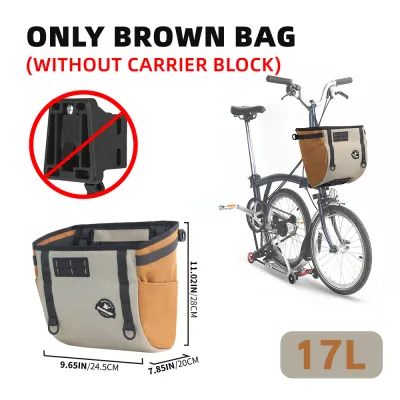
For riders who need to carry heavy, bulky, or structured cargo, traditional rack-mounted panniers remain the gold standard. Offering significantly more volume than frame bags or seat packs, a pair of rear panniers is ideal for daily utility commuting, grocery runs, and fully loaded long-distance touring. Panniers mount low on a rear rack, keeping the center of gravity stable and making it easy to load and unload items quickly via quick-release mounting clips. This setup is particularly advantageous for carrying laptops, change of clothes, or heavy groceries without straining your back with a heavy backpack.
Before purchasing panniers, you must verify that your bicycle is equipped with a compatible rear cargo rack. Inspect your frame for threaded eyelets near the rear dropouts and on the seatstays; if your bike lacks these mounts, you will need to look for specialized axle-mounted or seatstay-clamping rack systems. Check the maximum weight capacity of both your rack and your bicycle frame to ensure they can safely support your intended cargo load. The rack’s tubing diameter must also match the mounting hooks of the panniers, though many models include plastic inserts to accommodate various tube sizes.
A common installation pitfall with rear panniers is heel strike, which occurs when your heel hits the front of the bag during the pedal stroke. To prevent this, adjust the pannier’s mounting hooks to slide the bag as far rearward on the rack as possible, while ensuring the bag remains fully supported by the rack’s structural uprights. Additionally, check that the pannier straps and mounting hardware do not interfere with your rear disc brake caliper, wheel spokes, fenders, or rear safety lights. Always secure loose straps before riding to prevent them from becoming entangled in the spinning wheel.
Decision Matrix: Matching Bag Types to Your Bike Setup
To help you synthesize these options, the following matrix compares the core characteristics of each bag type. Use this guide to cross-evaluate cargo capacity, installation complexity, aerodynamic drag, and handling impact against your specific bicycle setup and riding goals.
| Bag Type | Typical Capacity | Installation Complexity | Aerodynamic Drag | Handling Impact | Best Suited For |
|---|---|---|---|---|---|
| Frame Bag | Low to Medium (2L – 8L) | Moderate (Strap-on) | Very Low | Minimal (Centered weight) | Commuting, Gravel, Day Rides |
| Seat Pack | Medium to High (5L – 15L) | Moderate (Strap-on) | Low | Moderate (Tail sway risk) | Bikepacking, Road, Gravel |
| Handlebar Roll | Medium to High (8L – 15L) | Moderate (Strap-on) | Medium | High (Steering inertia) | Bikepacking, Touring, Bulky Gear |
| Panniers | Very High (15L – 40L+ per pair) | High (Requires Rack) | High | Moderate (Rear-heavy) | Commuting, Touring, Groceries |
Final Fitment Checks Before You Buy
Before finalizing your purchase, perform a comprehensive pre-purchase audit to guarantee compatibility and long-term durability. Start by cross-referencing the manufacturer’s specified maximum load limits for each bag against your planned cargo weight. Overloading a bag can strain the seams, damage the mounting straps, or cause the bag to sag into moving bicycle parts. Pay close attention to the fabric specifications; look for heavy-duty materials like TPU or 500D polyester if you frequently ride in harsh, abrasive off-road environments.
Weather protection is another vital consideration, especially when riding through unpredictable tropical downpours. Verify the waterproof rating and construction method of the bag you are considering. Bags with fully welded seams and roll-top closures generally offer superior water resistance compared to stitched bags with standard zippers, which may require an additional external rain cover to keep your contents dry. If you plan to ride in wet conditions, look for bags explicitly labeled as fully waterproof rather than merely water-resistant.
Finally, review the retailer’s return and exchange policies before placing your order. Even with precise measurements, physical fitment issues can occasionally arise due to unique frame curves, cable routing paths, or accessory mounts. Purchasing from a retailer with a flexible return policy allows you to test-fit the empty bag on your clean bicycle frame at home, ensuring a perfect, secure fit before you head out on your first ride.
Frequently Asked Questions (FAQ)
Are Rhinowalk bags fully waterproof?
Rhinowalk offers bags in different product lines, some of which are fully waterproof while others are water-resistant. Fully waterproof models typically feature seamless high-frequency welding technology and TPU or heavy-duty PVC materials, which effectively block heavy rain. Water-resistant models may use treated fabrics with water-repellent zippers, which can withstand light showers but may eventually allow moisture penetration through the stitched seams during prolonged downpours. Always check the specific product specifications and look for IP ratings or welded seam construction if you require absolute protection for electronics.
Can I use multiple Rhinowalk bags at the same time?
Yes, combining different bag types is an excellent way to distribute your cargo weight evenly across your bicycle. A balanced setup might include a half-frame bag for heavy tools, a handlebar roll for lightweight sleeping gear, and a seat pack for spare clothing. When combining bags, ensure that the mounting straps do not overlap in a way that compromises security, and verify that your total cargo weight does not exceed the structural limits of your bicycle frame, fork, or wheelset.
Community discussion
Share your experience or ask a question. Comments are reviewed before publication.