
Selecting the ideal support tool depends entirely on your athletic goals, the nature of your sport, and the recovery phase of your injury. Whether you need to lock down an unstable joint, manage acute swelling, or enhance your movement awareness during a high-intensity workout, choosing the wrong option can hinder your performance or even worsen physical strain.
To make an immediate decision, consider your primary objective:
- Rigid athletic tape is designed to mechanically restrict or completely block joint range of motion. It acts as an external stabilizer to prevent structural damage during high-impact sports.
- Elastic bandages provide uniform, adjustable compression to manage acute swelling and offer mild, flexible joint support.
- Kinesiology tape offers elastic, skin-like tension to provide sensory feedback and micro-support, promoting natural movement without structural restriction.
While these tools are highly effective when applied correctly, they are adjuncts to recovery rather than standalone cures. Severe pain, joint deformity, rapid swelling, or complete instability requires immediate evaluation by a physiotherapist or medical professional before you apply any tape or bandage.
Products mentioned in this guide
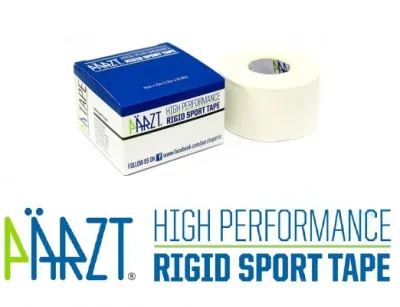
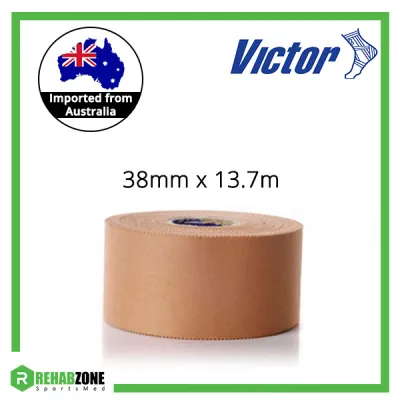
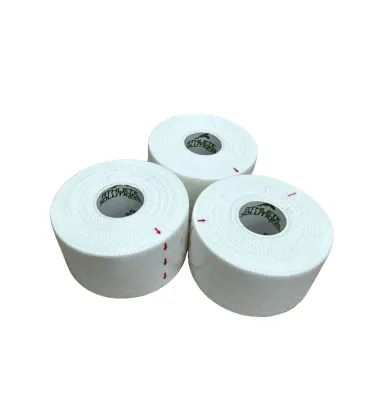
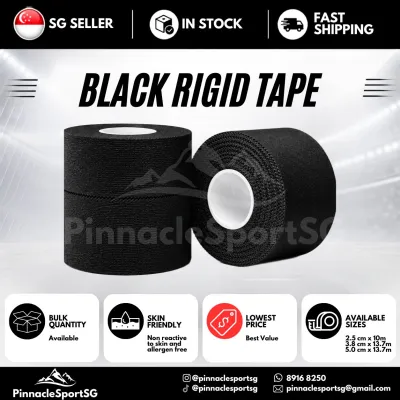
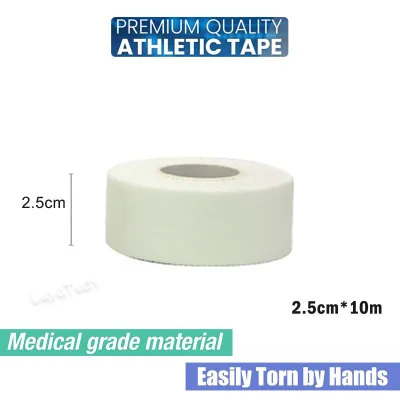
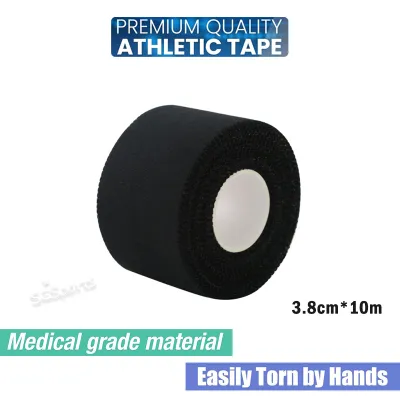
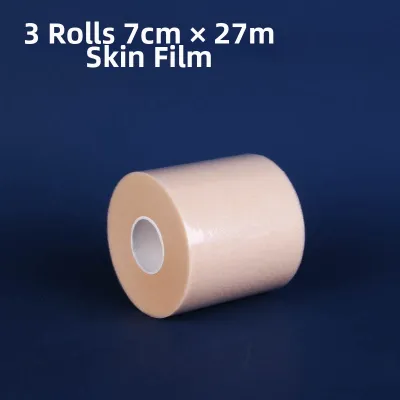
Prices are valid at publication and may change. Please refer to the product page for the latest price.
Rigid Tape, Elastic Bandages, and Kinesiology Tape Explained
Understanding the physiological mechanisms and material properties of these three support systems is essential for making an informed choice. Each is engineered to interact differently with your skin, muscles, and joints, offering distinct therapeutic benefits based on established sports medicine principles.
Rigid Athletic Tape
Rigid athletic tape is characterized by its high-tensile strength and complete lack of longitudinal stretch. Typically manufactured from tightly woven cotton or synthetic fiber blends, it is coated with an aggressive zinc oxide or acrylic adhesive designed to bond firmly to surfaces under high stress.
The primary mechanism of rigid tape is mechanical restriction. By applying the tape in specific anatomical configurations, it functions as an external ligament. This physical barrier prevents a joint from moving into extreme, vulnerable ranges of motion—such as stopping a basketball player’s ankle from rolling outward (inversion) or protecting a netballer’s fingers from hyperextension during a catch.
Because the adhesive is exceptionally strong and the material does not yield, applying rigid tape directly to the skin can cause friction blisters, irritation, or painful tears upon removal. To mitigate this risk, sports professionals typically apply a thin, hypoallergenic foam pre-wrap or underlay over the skin first. This protective layer cushions the skin while allowing the rigid tape to maintain its stabilizing structure.
Elastic Bandages (Cohesive and Crepe)
Elastic bandages are highly stretchable, non-adhesive or self-adhesive wraps designed to conform easily to the contours of the body. They generally fall into two categories: crepe bandages, which are woven cotton wraps secured with metal clips, safety pins, or tape; and cohesive bandages, which feature a specialized cohesive coating that allows the material to stick to itself but not to skin, hair, or clothing.
The primary function of an elastic bandage is to deliver adjustable, uniform compression. This circumferential pressure is highly effective at managing localized edema (swelling) by encouraging lymphatic drainage and preventing fluid accumulation in injured tissues. Additionally, the broad coverage of an elastic bandage provides mild proprioceptive feedback, giving the wearer a heightened sense of joint security.
Because these bandages stretch significantly under tension, they cannot mechanically block a joint from moving into an unsafe position. They are highly flexible and will yield under sudden, high-force impacts, meaning they should not be relied upon to stabilize structurally compromised joints during contact sports.
Kinesiology Tape
Kinesiology tape is a highly elastic, thin tape designed to closely mimic the thickness, weight, and elasticity of human skin. Made from cotton or synthetic fibers woven with elastane, it can stretch longitudinally up to 120% to 140% of its resting length. It features a medical-grade, acrylic adhesive applied in a wave-like pattern, which is activated by gentle heat and friction after application.
Rather than restricting movement, kinesiology tape works through a sensory and neurological mechanism. When applied to the skin with light-to-moderate tension, the elastic recoil of the tape creates microscopic lifting of the epidermis. This micro-lifting decompresses the underlying subcutaneous tissues, which can improve local blood circulation and lymphatic flow, helping to reduce localized pressure and pain.
Furthermore, the constant tactile presence of the tape stimulates superficial skin mechanoreceptors. This stimulation sends continuous sensory feedback to the central nervous system, enhancing neuromuscular coordination, improving joint position awareness, and modulating pain perception through the gate control theory. It does not provide structural, mechanical stabilization, making it unsuitable for locking down unstable joints.
How They Compare: Support, Mobility, and Use Cases
When deciding between these three options, athletes and fitness enthusiasts must weigh several critical dimensions: the level of physical restriction required, the environmental conditions of the activity, and individual skin sensitivity.

Mechanical vs. Sensory Support
The fundamental trade-off in sports taping is between mechanical restriction and sensory feedback. Rigid tape sits at the extreme end of restriction, physically binding the joint to prevent movement. This is crucial when a ligament is partially torn or highly vulnerable, but it limits overall mobility and can alter natural movement patterns. Kinesiology tape sits at the opposite end, offering zero mechanical restriction but high sensory feedback, allowing your muscles and joints to move through their full, natural range while receiving continuous neurological support. Elastic bandages occupy a middle ground, offering flexible compression that supports the tissue without physically locking the joint.
Durability and Environmental Factors
Environmental conditions—such as heavy sweat, humidity, water immersion, and friction—impact these materials differently. In Singapore’s humid tropical climate, sweat can quickly compromise standard adhesives. Rigid tape can lose its grip when saturated with sweat or water, though specialized waterproof variants are available. Kinesiology tape is highly water-resistant and designed to withstand sweat, showering, and swimming, often lasting for multiple days; however, friction from tight clothing can roll up the edges. Elastic bandages do not rely on skin adhesives, making them highly reusable and washable, but they can slip or unravel during vigorous, high-velocity movements, requiring frequent adjustment. Always check the manufacturer’s label to verify specific waterproof or sweat-resistant ratings.
In terms of cost, high-quality rigid tapes in Singapore typically range between S$5 and S$15 per roll, while specialized kinesiology tapes range from S$10 to S$30 depending on the brand and material.
Skin Sensitivity
Skin health is a vital consideration, especially for multi-day applications. The aggressive zinc oxide adhesive used on rigid tape can cause contact dermatitis, redness, or skin stripping if applied directly to bare skin or left on for extended periods. Cohesive elastic bandages avoid skin adhesives entirely, making them the safest choice for individuals with highly sensitive skin, open wounds, or adhesive allergies. Kinesiology tape uses medical-grade, latex-free acrylic adhesives that are generally well-tolerated, but individuals with sensitive skin should still perform a small patch test before full application.
| Feature | Rigid Athletic Tape | Elastic Bandage | Kinesiology Tape |
|---|---|---|---|
| Primary Function | Mechanical restriction and joint immobilization | Adjustable compression and swelling management | Sensory feedback, micro-circulation, and pain gating |
| Joint Mobility Impact | High restriction; physically limits range of motion | Moderate, flexible support; does not block movement | Minimal restriction; allows full, natural range of motion |
| Ideal Scenario | Prophylactic joint taping for contact/high-impact sports | Acute post-injury compression (RICE protocol) | Muscle facilitation, posture correction, and overuse injuries |
| Typical Wear Duration | Single session or match; remove immediately after play | Temporary use; until swelling subsides or washed | Multi-day wear (typically 3 to 5 days; check label) |
| Skin Contact | Often requires foam pre-wrap to protect skin | Wraps over skin or clothing; cohesive styles avoid adhesive | Direct skin application; heat-activated acrylic adhesive |
Choosing the Right Tape or Bandage for Your Activity
The choice of support must be tailored to the specific demands of your sport, your movement patterns, and the timeline of your recovery.
High-Impact and Contact Sports
In high-impact and contact sports such as basketball, rugby, netball, football, and martial arts, joints are subjected to sudden, unpredictable lateral forces, rapid deceleration, and physical collisions. For these activities, rigid tape is the industry standard for prophylactic (preventative) stabilization.
Athletes in these disciplines use rigid tape to secure highly vulnerable structures, such as the lateral ligaments of the ankle, the collateral ligaments of the thumb, or the wrist joint. Because these joints are prone to sudden, extreme forces that exceed normal physiological limits, elastic materials would simply stretch under the load, failing to prevent a severe sprain or dislocation. Rigid tape provides the structural rigidity necessary to absorb these forces, keeping the joint within safe anatomical boundaries during high-stress maneuvers.
Endurance and Repetitive Motion Sports
For endurance and repetitive motion sports like running, road cycling, triathlons, or swimming, the primary requirement is unhindered movement and long-term comfort. In these scenarios, rigid tape is highly counterproductive. Applying a rigid wrap to a runner’s ankle or a cyclist’s knee would restrict natural biomechanics, forcing adjacent joints to compensate and potentially leading to overuse injuries elsewhere in the kinetic chain. Additionally, the friction of rigid tape against moving skin during a long-distance run can cause severe chafing and blisters, while prolonged sweat exposure will quickly cause the tape to peel.
Instead, endurance athletes favor kinesiology tape or lightweight elastic bandages. These options move dynamically with the body, managing sweat effectively while providing continuous sensory feedback. Kinesiology tape can help support fatigued muscles, maintain proper joint alignment, and reduce pain perception over hours of repetitive movement, all without restricting the natural stride or pedal stroke.
Acute Injuries vs. Chronic Pain Management
Your recovery timeline plays a decisive role in determining which support type to use.
During the acute post-injury phase—immediately after sustaining a sprain, strain, or contusion—the primary clinical goal is to control bleeding and manage swelling. An elastic bandage is the most appropriate tool here, serving as the compression component of the standard RICE (Rest, Ice, Compression, Elevation) or PEACE & LOVE protocols. Its adjustable nature allows you to loosen the wrap if swelling increases, preventing dangerous pressure buildup and compromised blood flow.
Once the acute swelling has subsided and you transition to the return-to-play phase, your needs shift toward structural protection. During sport-specific drills or your first few competitive sessions back, rigid tape can be applied to physically protect the healing ligaments from sudden, lateral forces.
For chronic pain management or overuse conditions, such as patellofemoral pain syndrome, Achilles tendinopathy, or plantar fasciitis, kinesiology tape is highly effective. It can be worn for several days to alter movement patterns, alleviate pressure on inflamed tendons, and facilitate muscle activation. Remember that all taping and bandaging strategies should evolve as your tissues heal, and complex applications should always be guided by a qualified physiotherapist.
Safe Application and When to See a Professional
To maximize the benefits of your support wrap and avoid secondary injuries, you must follow strict application, monitoring, and removal guidelines.
Skin Preparation
Before applying any adhesive tape, prepare your skin to ensure a secure bond and prevent irritation. Clean the area thoroughly with mild soap and water, or use an alcohol prep pad to remove sweat, dirt, and natural body oils. If the area has dense hair, gently shave or trim it; this improves adhesive contact and prevents a highly painful removal process. Ensure the skin is completely dry, and avoid applying any lotions, oils, or sunscreens beforehand, as these substances will prevent the adhesive from bonding.
Circulation Checks
Applying any tape or bandage too tightly can restrict blood flow or compress superficial nerves, leading to tissue damage. Always perform a circulation check immediately after application and periodically during wear. You can verify blood flow by performing a capillary refill test: press firmly on a nail bed or the skin adjacent to the wrap until it turns white, then release. The natural pink color must return within two seconds. Additionally, monitor the limb for warning signs of restricted circulation:
- Numbness, tingling, or a "pins and needles" sensation
- Coldness in the fingers or toes
- Bluish, pale, or discolored skin
- An increase in throbbing pain
If you experience any of these symptoms, remove the wrap immediately.
Removal Safety
Ripping adhesive tape off quickly can cause painful skin stripping, epidermal tears, or blisters. To remove rigid tape or kinesiology tape safely, avoid pulling it upward at a 90-degree angle. Instead, peel it back slowly, keeping the tape flat against the skin and pulling in the direction of hair growth. If the tape is stuck firmly, apply a dedicated medical adhesive remover, baby oil, or olive oil to the tape and let it sit for several minutes to break down the adhesive bond. Alternatively, you can soak the area in warm, soapy water during a shower to ease removal.
Red Flags
It is vital to recognize the limits of self-treatment. Tape and bandages are designed to support minor injuries and assist recovery; they cannot repair structurally compromised tissue. Stop and seek immediate medical evaluation if you experience any of the following red flags:
- A visible deformity or abnormal angle in the joint or limb
- An inability to bear weight on the injured limb
- Severe, sharp, or unmanageable acute pain
- Joint locking, catching, or complete instability
- Rapid, extreme swelling or severe bruising immediately after the injury
In these situations, professional imaging and a comprehensive medical diagnosis are required to rule out fractures or complete ligament tears.
Final Verdict: How to Make Your Choice
Navigating the choices between rigid tape, elastic bandages, and kinesiology tape comes down to matching the product’s physical properties to your immediate physical needs.
- Choose Rigid Tape if: You need to physically restrict or block a specific joint's movement to protect compromised ligaments during high-impact, high-velocity sports, and you are trained in proper anatomical taping techniques.
- Choose an Elastic Bandage if: You need adjustable, non-adhesive compression to manage swelling immediately after an acute injury, or you require light, temporary support that can be easily removed and re-applied.
- Choose Kinesiology Tape if: You require muscle facilitation, pain modulation, and sensory feedback for overuse issues or endurance activities without restricting your natural, healthy range of motion.
Verify First if: You are uncertain about the severity of your injury, have a history of severe skin allergies to adhesives, or do not know the correct application patterns. In these scenarios, consult a certified physiotherapist. A professional can provide an accurate diagnosis, recommend a tailored recovery plan, and teach you the correct taping techniques to ensure safe and effective performance.
Community discussion
Share your experience or ask a question. Comments are reviewed before publication.