
Transporting your bicycle opens up a world of cycling opportunities beyond your immediate neighborhood. Whether you want to explore the scenic coastal routes of East Coast Park, navigate the green corridors of the Park Connector Network (PCN), or tackle the mountain biking trails at Chestnut Nature Park, getting your bike to the starting point requires a reliable transport solution. Choosing the right car-mounted bike rack is a balancing act between vehicle compatibility, budget, ease of use, and local infrastructure constraints.
To make an immediate decision, you can evaluate your situation using a simple, condition-based framework. Your vehicle type, the physical weight of your bicycles, and your parking habits will point you directly to the most appropriate system.
Choose a Roof Rack if:
Products mentioned in this guide
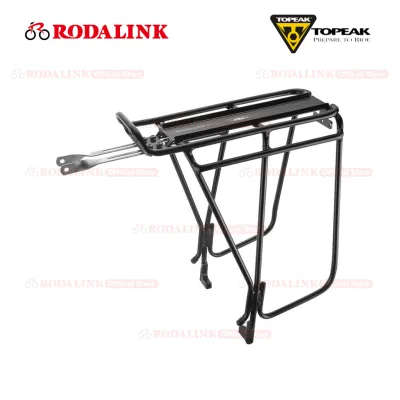
Prices are valid at publication and may change. Please refer to the product page for the latest price.
- You require unobstructed access to your car’s boot at all times.
- Your vehicle does not have a tow hitch, and you prefer not to undergo aftermarket modifications.
- You transport standard, lightweight road or gravel bikes.
- You do not mind lifting your bike overhead to secure it.
- You rarely park in height-restricted, multi-storey carparks.
Choose a Hitch Rack if:
- You transport heavy e-bikes, fat-tire bikes, or heavy full-suspension mountain bikes.
- You want an effortless loading process that requires lifting the bike only a few inches off the ground.
- Your vehicle is already equipped with a certified towbar, or you are willing to invest in an authorized installation.
- You want a highly stable, premium mounting system with minimal wind noise.
Choose a Trunk Rack if:
- You are on a strict budget and need an entry-level, cost-effective solution.
- You only transport lightweight, standard-frame bikes for occasional weekend rides.
- You drive a sedan or hatchback with a compatible boot profile and no rear spoiler.
- You want a highly portable rack that can be folded flat and stored in your boot when not in use.
While these guidelines provide a quick starting point, understanding the physical limits, regulatory requirements, and practical trade-offs of each rack type will ensure you avoid costly damage to your car, your bike, and local parking infrastructure.
Roof Racks: Best for Boot Access and Standard Bicycles
Roof racks are a classic and highly secure method of carrying bicycles. They mount directly onto horizontal crossbars running across your car’s roof, keeping your bikes completely separate from the rear of the vehicle.
Advantages and Ideal Scenarios
One of the greatest operational benefits of a roof rack is that it leaves the rear of your vehicle completely unobstructed. You retain full, immediate access to your boot, allowing you to load groceries, luggage, or extra cycling gear without having to tilt, swing, or remove a loaded bike rack. This rear-clearance design also ensures that your reversing cameras, rear parking sensors, and license plates remain completely visible and functional, eliminating any interference with your daily driving assist systems.
Roof racks are highly versatile and ideal for transporting lightweight road, gravel, or standard cross-country mountain bikes. Because the bikes are mounted individually on separate trays, there is zero risk of them rubbing against each other during transit. This makes roof mounts a preferred choice for cyclists who own premium bikes with delicate finishes and want to avoid cosmetic frame damage.
Limitations and Vehicle Checks
The primary physical drawback of a roof rack is the requirement to lift your bicycle overhead. For a lightweight carbon road bike weighing under 8 kg, this is relatively straightforward. However, lifting a 15 kg trail bike or a 25 kg e-bike to roof height is physically exhausting and carries a high risk of slipping, which can cause severe dents or scratches to your car’s doors and roof panels. If you have limited upper body strength or drive a tall SUV, this loading process can quickly become a major chore.
In Singapore, the most critical limitation of a roof rack is vertical clearance. Standard multi-storey HDB carparks, shopping mall basements, and older commercial buildings frequently have strict height limits ranging from 1.9m to 2.1m. A typical compact SUV stands at roughly 1.6m to 1.7m tall; adding roof crossbars, a bike mount, and a upright road bike can easily push your total vehicle height past 2.6m. Forgetting this overhead load when entering a carpark can result in catastrophic structural damage to your bike, your vehicle’s roof, and the carpark entrance beam.
Additionally, roof racks require a base system of roof rails, fixed mounting points, or door-jamb clamp kits. If your car has a completely bare roof, you must purchase these base crossbars separately, which increases the initial setup cost. Because the bikes are fully exposed to the oncoming wind at highway speeds, roof racks also generate noticeable wind noise and increase aerodynamic drag, which can noticeably reduce your vehicle’s fuel efficiency over long distances.
Hitch Racks: The Heavy-Duty Choice for E-Bikes
Hitch racks mount directly into a receiver hitch (towbar) attached to the frame of your vehicle. They are widely regarded as the most robust, stable, and user-friendly option for serious cyclists, particularly those carrying heavier loads.

Advantages and Ideal Scenarios
The standout advantage of a hitch rack is its low loading height. Because the platform sits just off the ground, you only need to lift your bicycle a few inches to secure it onto the wheel trays. This low-profile lifting makes hitch racks the only practical and safe option for heavy electric bikes (e-bikes), heavy-duty commuter bikes, and long-travel downhill mountain bikes, which are far too heavy for roof or trunk mounting.
Premium platform-style hitch racks are engineered with highly convenient tilt or swing-away mechanisms. By pulling a release lever, you can tilt the entire rack—even when fully loaded with multiple bikes—away from the vehicle to gain access to your boot. This design provides a highly practical compromise, giving you the heavy-duty carrying capacity of a rear-mounted rack without completely sacrificing rear vehicle access.
From an aerodynamic perspective, hitch racks position your bikes directly behind the rear profile of your car. This placement shields them from the direct oncoming wind, resulting in significantly less wind noise and a much lower impact on fuel consumption compared to roof-mounted setups.
Limitations and Vehicle Checks
The main prerequisite for a hitch rack is the presence of a rear towbar. If your vehicle does not have a factory-installed tow hitch, you must have one fitted. In Singapore, towbar installations are strictly regulated by the Land Transport Authority (LTA). The towbar must be installed by an authorized professional workshop, and the specific model must be certified to ensure it meets safety and structural standards. Unauthorized installations can lead to vehicle inspection failures and void your motor insurance policy.
Because hitch racks sit directly behind your vehicle, they completely block your rear visibility, reversing cameras, and rear parking sensors. When the rack is mounted, your car’s parking sensors will likely beep continuously when in reverse, requiring you to rely entirely on your side mirrors or install a dedicated, rack-integrated camera system.
Furthermore, a loaded hitch rack adds significant length to your vehicle, often extending the rear bumper by a meter or more. This added length makes parallel parking in tight urban spaces exceptionally difficult and requires extra caution when navigating the tight, winding ramps of multi-storey carparks, as the rear of the rack can scrape against the concrete ramp if the angle of approach is too steep.
Hitch racks are also the most expensive category of bike carriers. A high-quality platform rack can cost anywhere from S$600 to S$1,800, and when you factor in the professional installation and certification of a compliant towbar (which typically costs between S$500 and S$1,200), the total entry cost is substantial.
Trunk Racks: The Budget-Friendly and Portable Option
Trunk racks, also known as strap-on racks, are temporary carriers that secure to the boot lid or tailgate of a sedan, hatchback, or SUV using a system of high-tension straps, padded metal hooks, and rubber support feet.
Advantages and Ideal Scenarios
Trunk racks are highly popular among casual cyclists and beginners due to their affordability. With entry-level models starting under S$100, they represent a fraction of the cost of roof or hitch systems. They require no permanent vehicle modifications, no roof rails, and no towbar installations, making them an excellent off-the-shelf solution that you can use immediately.
These racks are lightweight, highly portable, and designed to fold completely flat. When you finish your weekend ride along the PCN, you can quickly unstrap the rack, fold it up, and store it in your boot or home closet. This temporary nature is ideal for drivers who only transport their bikes occasionally and do not want a permanent structure permanently attached to their car.
Limitations and Vehicle Checks
While trunk racks are highly convenient, they are exceptionally dependent on your vehicle’s body shape. They rely on the structural integrity of your boot edges to hold the tension of the straps. If your car has a plastic or fiberglass rear spoiler, curved glass edges, or very narrow panel gaps, a trunk rack is highly likely to crack the plastic or shatter the glass under load. You must verify that your specific vehicle model is explicitly listed on the rack manufacturer’s compatibility chart before attempting to mount one.
Another major operational drawback is that a trunk rack completely blocks access to your boot while mounted. If you need to retrieve a helmet, water bottle, or change of clothes from the boot, you must unload the bikes and completely detach the rack’s upper straps to open the lid.
Because trunk racks rely on physical contact with your car’s bodywork, they carry a high risk of cosmetic damage. The rubber pads and metal hooks will inevitably vibrate against your car’s paintwork during transit. If there is any fine road grit, dust, or dirt trapped between the pad and the paint, it acts like sandpaper, leaving deep scratches and swirl marks. To minimize this risk, you must thoroughly clean both the car’s boot lid and the rack’s rubber pads before every single installation.
Finally, trunk racks are strictly designed for lightweight, standard-frame bicycles. The high-tension straps and hinge mechanisms have strict weight limits and are not engineered to support the heavy, concentrated weight of e-bikes or heavy full-suspension mountain bikes. Attempting to carry heavy bikes on a trunk rack can cause the straps to slip or snap, posing a severe safety hazard to other road users.
Head-to-Head Comparison: Key Decision Factors
To help you weigh the practical trade-offs of each system, the following table summarizes how Roof, Hitch, and Trunk racks compare across key operational and physical dimensions.
| Feature | Roof Racks | Hitch Racks | Trunk Racks |
|---|---|---|---|
| Vehicle Prerequisites | Roof crossbars (requires rails, fixed points, or gutter clamps) | LTA-compliant, professionally installed towbar | Compatible metal boot lid/tailgate (no plastic spoilers) |
| Loading Effort | High (requires lifting the bike fully overhead) | Low (requires lifting the bike only a few inches) | Moderate (requires lifting the bike to waist height) |
| E-Bike Compatibility | Poor (rarely supports weights over 15-20 kg per tray) | Excellent (heavy-duty platform models support up to 30 kg per tray) | Not recommended (exceeds strap and hinge weight limits) |
| Boot Access | Unobstructed (100% open at all times) | Variable (requires premium tilt-away or swing-away models) | Completely blocked (must remove rack to open boot) |
| Carpark Clearance Impact | High risk (adds significant height; easily exceeds 2.0m/2.1m limits) | Minimal (adds rear length; does not affect vertical clearance) | Minimal (adds rear length; does not affect vertical clearance) |
| Approximate Cost Band | Moderate (S$300 – S$800 rack + S$200 – S$500 crossbars) | High (S$600 – S$1,800 rack + S$500 – S$1,200 towbar & LTA check) | Low (S$80 – S$250 total) |
The Carpark Clearance Factor
When evaluating carpark clearance, do not rely on generic online estimates. You must physically measure your vehicle’s total height once the rack and bikes are fully mounted. Write this measurement on a sticky note and place it on your dashboard as a physical reminder. If your total height exceeds 2.0 meters, you must plan your route carefully, avoiding older HDB multi-storey carparks and underground shopping mall bays, and opt for open-air surface parking lots instead.
Bike Frame Protection
Another critical factor is how the rack physically holds your bicycle. Traditional trunk racks and hanging-style hitch racks support the bike by cradling its top tube. If you ride a premium carbon fiber road or mountain bike, these clamping forces and strap-squeezing mechanisms can crush or crack the delicate, thin-walled carbon tubes under high tension. For carbon frames, look for platform hitch racks or roof mounts that secure the bike solely by its wheels or front fork, ensuring zero contact with the frame tubes.
How to Verify Vehicle and Bike Compatibility
Before purchasing any bike rack, you must perform a series of safety and compatibility checks to protect your vehicle, your bikes, and other road users.
First, consult your vehicle’s owner’s manual to verify its structural load limits. For roof racks, check the maximum dynamic roof load limit (which is typically between 50 kg and 75 kg for standard passenger cars). Remember that this limit must accommodate the combined weight of your base crossbars, the bike carriers, and the actual bicycles. For hitch racks, check the maximum vertical tongue weight of your towbar to ensure it can support the heavy downward leverage of a loaded platform rack.
Second, always use the rack manufacturer’s official online fit guide. Enter your exact vehicle make, model, year, and body style (e.g., sedan, hatchback, or SUV). These databases are updated continuously and will flag specific compatibility issues, such as whether a trunk rack will interfere with your rear wiper or if a roof rack requires a specific custom fit kit.
Third, inspect your bicycle manufacturer’s guidelines. This is particularly important for e-bikes, step-through frames, and carbon frames. Some manufacturers explicitly state that their frames should not be clamped or hung, which will require you to purchase specialized frame adapter bars or wheel-clamping carriers.
Finally, establish a strict pre-trip safety routine before every drive:
- Check Strap Tension: For trunk racks, tug and re-tighten all straps after mounting the bikes, and check them again after driving the first few kilometers.
- Verify Bolt Torque: For roof and hitch racks, regularly check that all mounting bolts, hitch pins, and quick-release levers are torqued to the manufacturer's specifications.
- Ensure License Plate Visibility: In Singapore, your rear license plate and taillights must remain completely visible to trailing vehicles. If your hitch or trunk rack blocks them, you must install an auxiliary license plate holder and a light board connected to your car's trailer plug to remain compliant with local traffic laws.
Frequently Asked Questions (FAQ)
Do I need to register my hitch rack or towbar in Singapore?
You do not need to register the bike rack itself, but the towbar installation must comply with LTA regulations. The towbar must be installed by an authorized workshop, and the specific towbar model must be certified and inspected to ensure it meets structural safety standards. Additionally, if the mounted rack blocks your rear license plate, you must display an LTA-compliant auxiliary license plate on the outermost rear part of the rack.
Can I use a trunk rack on a car with a rear spoiler?
Most standard trunk racks cannot be safely used on vehicles with plastic or fiberglass rear spoilers. The high-tension straps of a trunk rack apply significant downward and inward pressure, which will easily crack or tear off a cosmetic plastic spoiler. Always consult the rack manufacturer’s vehicle fit list; some brands offer specialized adapter straps that anchor to the metal trunk hinges inside the boot, but if your car has a prominent spoiler, a roof or hitch rack is generally the safer choice.
Community discussion
Share your experience or ask a question. Comments are reviewed before publication.