
Selecting the right badminton shuttlecock can dramatically alter the pace, control, and enjoyment of your game. Among the options favored by club players and competitive enthusiasts, RSL Supreme shuttlecocks stand out for their balance of flight consistency and structural durability. Designed to bridge the gap between everyday training gear and premium tournament-grade equipment, these shuttlecocks are engineered to withstand high-intensity rallies while maintaining a predictable trajectory.
Understanding the technical specifications of your gear helps you make informed purchasing decisions and optimize your performance on the court. By evaluating the feather quality, cork construction, speed ratings, and overall suitability for your skill level, you can determine if this specific model aligns with your playing style and local venue conditions.
Decoding the Feather Quality and Grade
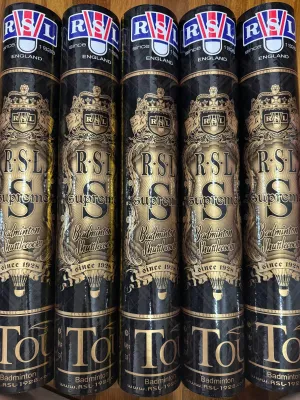
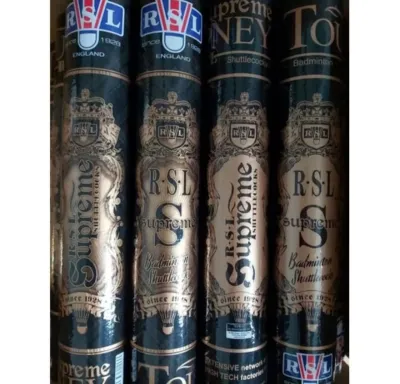
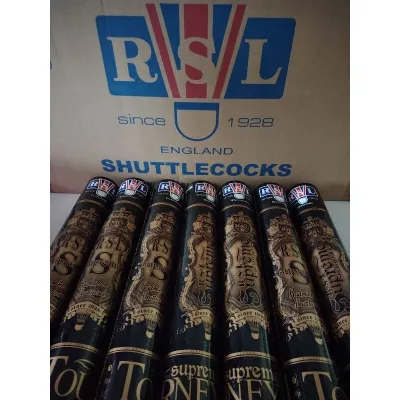
The durability and flight stability of any feather shuttlecock depend heavily on the source material and manufacturing precision. When examining a tube of RSL Supreme shuttlecocks, the packaging labels provide key indicators of the feather grade used. This model typically utilizes selected premium goose feathers, which are widely recognized in the sport for offering superior structural integrity compared to standard duck feathers.
Products mentioned in this guide
![[RSL] Badminton Shuttlecock Supreme Speed 77](https://img.lazcdn.com/g/p/73e1b96efd8e374970a3c09d10b288b6.jpg_400x400q80.jpg_.webp)
Prices are valid at publication and may change. Please refer to the product page for the latest price.
Feather thickness, curvature, and alignment directly dictate how the shuttlecock behaves in the air. Thicker feather shafts resist the high-impact forces of heavy smashes, preventing the blades from shearing or snapping prematurely. Furthermore, the natural curvature of each feather must be perfectly uniform across all 16 feathers in the skirt. This uniformity ensures the shuttlecock rotates at a consistent rate during flight, stabilizing its path and ensuring a predictable drop angle.
Before opening a new tube for a match, players can perform a quick visual inspection to verify quality. Slide a shuttlecock out and look down the center of the skirt. The feathers should be spaced evenly with no visible gaps or overlapping discrepancies. Examine the glue lines securing the feathers to the strings; the adhesive should be applied smoothly and symmetrically, without heavy globs or dry patches that could throw off the balance or cause early unraveling during play.
Understanding the Cork Base and Weight Distribution
The construction of the shuttlecock’s nose, or cork base, determines the tactile feedback and power transfer when the racket face makes contact. High-performance shuttlecocks generally feature natural cork, composite cork, or synthetic bases. The RSL Supreme typically utilizes a dual-tier composite cork base, which pairs a solid natural cork layer at the hitting face with a reconstituted composite cork backing.

This composite design directly influences the impact sound and shock absorption of your shots. When you strike a natural cork face, it delivers a crisp, satisfying sound and provides immediate tactile feedback through the racket handle, allowing you to gauge the control of your net drops and clears. The solid face also helps absorb harsh vibrations, protecting your wrist and elbow during repeated hard clears while maintaining consistent string tension feedback.
During a physical inspection, pay close attention to the base-to-feather ratio and overall weight distribution. Hold the shuttlecock horizontally on your finger to check its balance point. A well-constructed shuttlecock should not feel excessively front-heavy or tail-heavy. The thin leather or synthetic casing wrapped around the cork base should be perfectly smooth, tightly sealed, and free of wrinkles, ensuring clean contact with your racket strings.
Speed Ratings and Environmental Adjustments
Shuttlecocks are manufactured in different speed ratings to account for varying atmospheric conditions. You can locate the speed number—typically 76, 77, or 78—printed on the tube cap or the sticker sealing the tube. This number indicates the baseline distance the shuttlecock will travel under standard testing conditions, with lower numbers representing slower flights and higher numbers representing faster flights.
Environmental factors such as temperature, altitude, and humidity play a massive role in how a shuttlecock behaves. In a tropical climate like Singapore, high temperatures and high humidity levels make the air less dense. In these warm, humid indoor halls, shuttlecocks naturally fly faster and travel further. Consequently, players in these regions typically opt for a slower speed rating, such as speed 76 or 77, to prevent clears from easily sailing past the baseline.
To verify if your selected speed rating is appropriate for your specific venue, perform a simple on-court clear test. Stand at the back boundary line of the court and strike the shuttlecock with a full underhand stroke, hitting it parallel to the sideline. For the speed to be considered correct, the shuttlecock should land between the double service back line and the long service line on the opposite side of the court. If it consistently lands short, you may need a faster speed; if it flies out, a slower speed is required.
Is the RSL Supreme Right for Your Playing Standard?
Matching your shuttlecock choice to your skill level and training intensity is essential for both performance and budget management. The RSL Supreme is highly suited for intermediate to advanced players who engage in consistent club play, league matches, or structured drill sessions. At this level, players have developed the clean hitting techniques required to strike the cork base consistently, which preserves the life of the feathers.
When deciding between equipment tiers, consider your training goals. Entry-level nylon alternatives are incredibly durable and cost-effective for beginners learning basic hand-eye coordination, but they lack the authentic flight deceleration and crisp feel of real feathers. On the other hand, ultra-premium tournament-grade shuttles offer flawless flight but come at a premium price point that may not be practical for everyday practice. The RSL Supreme serves as an excellent middle ground, offering tournament-like flight characteristics with enhanced durability for intense training.
From a cost-per-hour perspective, balancing the price per tube—typically ranging around S$35 to S$45 depending on local retailers—against expected durability is key. During intense sessions featuring heavy smashing and aggressive net play, a single RSL Supreme shuttlecock can often last through multiple games before its flight path becomes erratic. This longevity makes it a highly practical and economical choice for competitive club players looking to maximize their playing time without sacrificing flight quality.
Frequently Asked Questions (FAQ)
How should I store feather shuttlecocks to maintain moisture?
To prevent the feathers from becoming dry and brittle, store your shuttlecock tubes in a cool, shaded area away from direct sunlight and dry air-conditioning drafts. In dry environments, you can maintain moisture by using a specialized shuttlecock humidifier or by placing a lightly dampened sponge or paper towel inside the cap of the tube a few hours before playing. Ensure the damp material does not directly touch the feathers to avoid waterlogging the adhesive.
Are RSL Supreme shuttlecocks approved for official tournaments?
While RSL Supreme shuttlecocks are manufactured to high quality standards suitable for competitive club play, local leagues, and community tournaments, official international events sanctioned by the Badminton World Federation (BWF) require specific models from their approved equipment list. Always consult your local tournament organizers or check the official BWF database to verify the approved shuttlecock models for your specific sanctioned competition.
Community discussion
Share your experience or ask a question. Comments are reviewed before publication.