
Quick Answer: Is RSL Supreme the Right Choice for You?
Determining whether the RSL Supreme is the right feather shuttlecock for your game depends on your playing frequency, skill level, and budget. Positioned as a high-performance club-grade shuttlecock, the RSL Supreme is designed primarily for advanced social players, club members, and local competitive leagues. It offers a highly consistent flight trajectory and robust durability that closely mimics top-tier tournament models, but at a more accessible price point.
If you require reliable, predictable flight paths for competitive matches without the premium cost of international tournament-grade shuttles, the RSL Supreme is an excellent choice. However, if you are preparing for officially sanctioned national tournaments where absolute weight and flight tolerances are strictly mandated, investing in premium tournament-grade options is advisable. Conversely, if you are a beginner focusing on high-volume training drills, standard training-grade shuttlecocks will better serve your budget while forgiving frequent frame hits.
Understanding Feather Shuttlecock Grades
Feather shuttlecocks are generally categorized into three primary tiers: Tournament/Premium, Advanced/Club, and Training/Beginner. These categories are not merely marketing labels; they are defined by specific physical characteristics and material standards that directly influence how the shuttlecock behaves in the air and how long it lasts.
Products mentioned in this guide
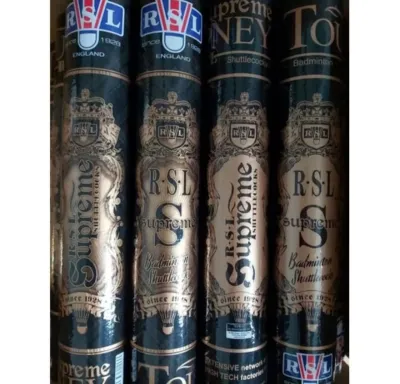
![[IN SG STOCK]Supreme RSL Fresh Stocks Badminton Shuttlecock](https://img.lazcdn.com/g/p/d3c92ca4d78f06e401b36003104cb337.jpg_400x400q80.jpg_.webp)
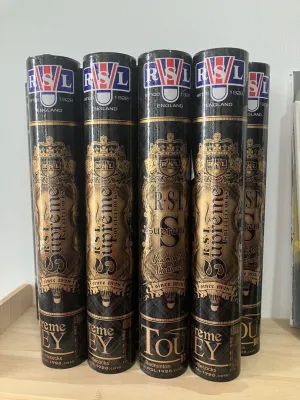
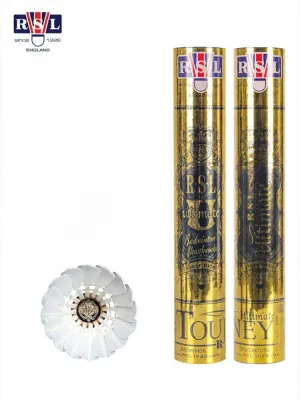
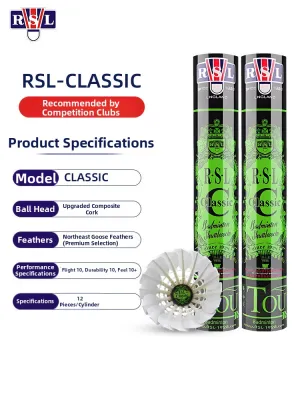
Prices are valid at publication and may change. Please refer to the product page for the latest price.

The first major differentiator is the feather type, specifically goose versus duck feathers. Goose feathers are the gold standard for high-grade shuttlecocks because they possess thicker, stronger shafts and more uniform vanes, yielding a highly stable flight path and superior structural resilience. Duck feathers, while more economical, tend to have thinner shafts that are more brittle and prone to splitting under heavy impact.
The second factor is feather selection and alignment. Premium and advanced grades utilize only highly selected, straight feathers with uniform thickness and curvature. If even a single feather in the skirt is slightly misaligned or thinner than the others, the shuttlecock will wobble, lose speed unpredictably, or veer off course.
Finally, the construction of the cork head determines the feel and rebound off the racket face. High-grade options utilize natural cork, which provides optimal elasticity, solid impact feedback, and a clean sound. Mid-tier and lower-tier options often use composite cork—a combination of natural cork at the tip and synthetic materials or compressed cork dust at the base—or fully synthetic PU cork. While composite corks are more cost-effective, they may feel stiffer and can degrade faster under high-velocity impacts. Before buying, always physically check the product label and tube packaging to verify these material specifications rather than relying solely on brand descriptions.
RSL Supreme: Specifications and Performance Profile
Within the brand’s extensive lineup, the RSL Supreme is positioned as a premium club-grade shuttlecock, bridging the gap between everyday training options and elite tournament models. When evaluating a tube of RSL Supreme, you should verify several key specifications printed on the packaging to ensure they match your playing environment.
First, check the speed and weight grading, which typically ranges from 76 to 77 for tropical regions. Speed 76 is lighter and designed for warmer, more humid conditions, while speed 77 is slightly heavier, suited for cooler or air-conditioned environments. The RSL Supreme utilizes carefully selected goose feathers paired with a high-quality natural cork composite base, providing a solid feel on impact and a clean, stable flight arc.
The general reputation of the RSL Supreme centers on its excellent balance of flight stability and durability relative to its mid-to-high price tier. However, you must keep in mind that actual performance and lifespan can vary significantly based on storage conditions, manufacturing dates, and local climate factors. In Singapore, the combination of high outdoor humidity and heavily air-conditioned indoor sports halls creates challenging conditions for natural feathers.
Dry air from air-conditioning units can rapidly strip moisture from the feathers, making them brittle and prone to snapping during play. Conversely, playing in a non-air-conditioned hall with high humidity can make the feathers absorb moisture, slightly increasing the shuttlecock’s weight and altering its flight speed. To ensure optimal performance, always check the tube seal and the production date before purchasing. Avoid buying tubes that have been sitting on retail shelves for years, as the feathers may have dried out, significantly reducing their durability on the court.
RSL Supreme vs. Other Feather Grades: Core Comparisons
To determine where the RSL Supreme fits into your badminton gear rotation, it is helpful to compare it directly against alternative grades. Evaluating these options across flight consistency, durability, and cost-effectiveness reveals the practical trade-offs of each tier.
Flight Consistency and Stability
The flight trajectory of a shuttlecock is determined by its aerodynamic design, feather uniformity, and weight distribution. The RSL Supreme delivers a highly stable, predictable flight path with a clean spin and a natural deceleration curve. When you hit a clear or a drop shot with a Supreme, the shuttlecock recovers its nose-down orientation quickly after impact, allowing for precise control and placement.
In comparison, top-tier tournament shuttlecocks (such as the Yonex Aerosensa 40 or 50) offer an even tighter tolerance for flight consistency. These elite models undergo rigorous testing to ensure that every single shuttlecock in the tube flies at the exact same speed and trajectory, with virtually zero wobble during high-speed smashes or delicate net tumbling. For professional or highly competitive matches, this absolute precision is vital.
On the other end of the spectrum, lower-tier training shuttlecocks (often made from duck feathers or lower-grade goose feathers) frequently exhibit inconsistent flight paths. You may notice these shuttles wobbling mid-air, decelerating abruptly, or drifting off-line even in windless indoor environments. This inconsistency occurs because the feathers are less uniform and the cork heads may have uneven density. To evaluate this yourself, observe the flight path during deep clears and drop shots; a high-grade shuttle like the RSL Supreme will maintain a smooth, clean parabolic arc, whereas training grades will often show visible vibrations or erratic drops.
Durability and Feather Resilience
A shuttlecock’s durability is a product of its raw materials, the quality of the binding glue, and the strength of the thread wrap. The RSL Supreme is constructed with robust goose feathers and high-strength adhesive, allowing it to withstand multiple high-velocity smashes before showing signs of structural wear. The feather shafts are resilient enough to resist splintering, and the double-stitched thread binding keeps the skirt shape intact even after extended rallies.
When compared to premium tournament grades, the RSL Supreme often holds up remarkably well, sometimes even outlasting delicate tournament shuttles during aggressive play. While premium tournament shuttles offer unmatched flight precision, their feathers are selected for aerodynamic perfection rather than raw toughness, meaning a single severe mishit on the feather tip can ruin the shuttlecock’s flight characteristics instantly.
Training-grade shuttlecocks, particularly those utilizing thicker duck feathers, are designed with durability in mind, but they achieve this by sacrificing flight quality. These shuttles can survive many mishits and frame clips without breaking completely, making them highly forgiving for beginners who are still developing their timing. However, once the feathers on a training shuttle begin to fray or bend, its flight quality degrades rapidly. To monitor your shuttlecocks during play, inspect the feather spines and glue lines regularly. If you notice the glue cracking or the spines splitting at the base, the shuttlecock’s structural integrity is compromised, and its flight will soon become unpredictable.
Price-to-Performance Ratio
Evaluating the value of a shuttlecock requires looking beyond the initial purchase price of a tube. Instead, you should calculate the “cost per hour of play,” which factors in how many shuttlecocks your group consumes during a typical session. A cheaper tube of shuttlecocks may seem economical upfront, but if you have to replace the shuttlecock after every few rallies, the total cost adds up quickly.
For instance, if a tube of standard training shuttlecocks costs S$30 and your group goes through eight shuttles in a two-hour session, your direct cost is relatively high. If a tube of RSL Supreme costs S$45, but because of its superior durability, you only need to use three shuttles during the same two-hour session, the RSL Supreme actually becomes the more cost-effective choice. It provides a far better playing experience with stable flight while lowering your long-term consumption rate.
This price-to-performance ratio is highly dependent on your group’s playing style and skill level. If your games feature aggressive smashing and frequent mishits, you will consume shuttlecocks faster regardless of their grade. However, for intermediate and advanced players who consistently hit the sweet spot of the racket, the RSL Supreme offers an exceptional balance, providing near-tournament performance at a price point that does not drain your monthly sports budget.
Decision Framework: Which Grade Should You Buy?
Choosing the right feather shuttlecock grade involves matching the product’s specifications to your skill level, playing intensity, and budget. Use the following structured guidelines to make your decision:
Choose RSL Supreme if:
- You are an intermediate to advanced club player who participates in regular social matches or local competitive leagues.
- You demand high-level flight consistency, predictable deceleration, and excellent feel off the racket face.
- You want a durable shuttlecock that can withstand aggressive play and multiple games without needing immediate replacement.
- You want to avoid the premium pricing associated with international tournament-grade shuttlecocks while still enjoying a high-quality playing experience.
Choose Premium Tournament Grades if:
- You are competing in high-level, officially sanctioned tournaments, national qualifiers, or elite club championships.
- Absolute flight precision, strict weight tolerances, and official badminton association certifications are mandatory for your matches.
- Your playing group has a flexible budget and prioritizes flawless aerodynamic performance above all other factors, including durability.
Choose Training/Club Grades if:
- You are a beginner or lower-intermediate player still working on consistency, timing, and clean ball contact.
- You are conducting high-volume multi-shuttle drills, coaching sessions, or casual recreational games where the primary goal is repetitive practice.
- Your games involve frequent mishits on the racket frame, which tend to break feather shafts regardless of the shuttlecock's quality or price.
- Minimizing upfront costs and maximizing structural forgiveness are your group's highest priorities.
Verify first if:
- You are unsure about the speed rating required for your venue. Before purchasing a large quantity, test a single tube of speed 76 and speed 77 in your specific local hall. The ambient temperature, humidity, and air-conditioning levels of the court will significantly affect flight distance and speed, regardless of the shuttlecock's grade.
Extending the Lifespan of Your Feather Shuttlecocks
To maximize the value and performance of whichever feather grade you choose, proper care and maintenance are essential. Feather shuttlecocks are highly sensitive to environmental conditions, and dry air is their greatest enemy. Storing your shuttlecock tubes in cool, dark places away from direct sunlight, extreme heat, or dry air-conditioned rooms will prevent the natural feathers from drying out and becoming brittle. Always store the tubes vertically with the cork heads facing downward to maintain the shape of the feather skirts.
A traditional and highly effective method for improving feather resilience before play is “steaming” or humidifying the shuttlecocks. Introducing controlled moisture to the feathers makes the shafts more flexible and elastic, allowing them to bend under impact rather than snapping. This simple preparation can significantly increase the lifespan of your shuttlecocks on the court.
To execute this safely, follow these steps:
- Check any care instructions provided by the manufacturer on the tube packaging.
- Open both ends of the shuttlecock tube.
- Use a dedicated garment steamer, a facial humidifier, or a kettle of hot water to generate a gentle flow of steam.
- Expose one open end of the tube to the steam for approximately 10 to 15 seconds, allowing the steam to pass through the tube and exit the other side.
- Immediately close both plastic caps on the tube to trap the humidified air inside.
- Perform this process 24 to 48 hours before your scheduled playing session to allow the feathers to absorb the moisture evenly.
Be mindful of strict safety boundaries when humidifying your equipment. Over-steaming or exposing the shuttlecocks directly to boiling water can cause the feathers to become heavy and waterlogged, which will severely alter their flight trajectory and increase their weight. Excessive heat and moisture can also degrade the glue holding the feathers together or damage the structural integrity of the natural cork head. If you notice the feathers feeling damp or soft to the touch, allow them to air-dry in a cool space before use.
Frequently Asked Questions (FAQ)
How do I know when it is time to replace a feather shuttlecock during a game?
Knowing when to swap out a degraded shuttlecock ensures that your games remain fair and competitive. You should look for clear visual and performance cues during play. Visually, inspect the shuttlecock if you notice a change in its behavior; a broken or severely bent feather spine, frayed binding threads, or a cracked cork head are immediate signs of failure. If the feather skirt loses its uniform circular shape, the aerodynamic balance is ruined. Performance-wise, replace the shuttlecock if it begins to wobble visibly in the air, drops abruptly during clears, or fails to spin correctly. A dead shuttlecock will also produce a dull, hollow sound upon impact and will feel noticeably heavier or sluggish on your racket strings.
Does the shuttlecock speed rating matter for indoor courts in Singapore?
Yes, the speed rating is highly important due to Singapore’s tropical climate and the varying conditions of local indoor sports halls. The speed of a feather shuttlecock is influenced by air density, which is directly affected by temperature and humidity. In warmer, non-air-conditioned halls, the air is less dense, which reduces aerodynamic drag and causes the shuttlecock to fly faster and further. In these warm environments, using a slower speed rating, such as speed 76, is highly recommended to prevent standard clears from consistently flying out of bounds. Conversely, in heavily air-conditioned sports complexes where the air is cooler and denser, a standard speed 77 is usually preferred to ensure the shuttlecock travels the correct distance. Always test a few shuttlecocks during your warm-up to verify how they react to that specific day’s court temperature and ventilation.
Community discussion
Share your experience or ask a question. Comments are reviewed before publication.