
Selecting the right gym mat floor is the foundation of a safe, functional, and durable workout space. The ideal material depends entirely on your training style, the equipment you use, and the environment in which you train. Rubber offers unmatched durability and impact protection for heavy lifting, EVA foam provides superb cushioning for floor exercises and bodyweight routines, and Thermoplastic Elastomer (TPE) serves as a lightweight, versatile bridge between the two.
In Singapore’s tropical climate, factors like high humidity, sweat accumulation, and the type of subfloor in your home—such as parquet, vinyl, or homogeneous tiles—greatly influence how these materials perform over time. Understanding the physical properties, benefits, and limitations of each material will help you protect your joints, your gear, and your home.
Quick Comparison: Rubber vs. EVA Foam vs. TPE
While material type sets the baseline for performance, the actual durability and support you experience depend heavily on the specific thickness and density of the product you choose. A thin rubber mat may not protect a tiled floor from a dropped dumbbell, while an ultra-dense foam mat might feel too rigid for comfortable floor stretching.
Products mentioned in this guide
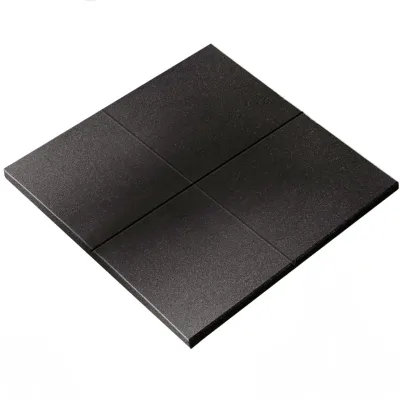
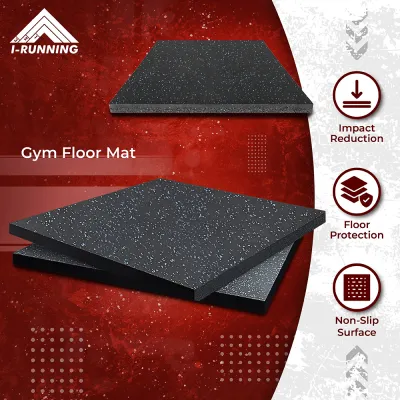
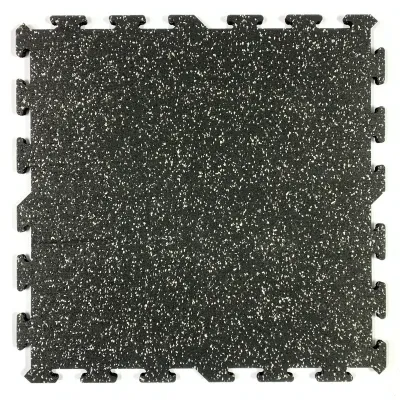
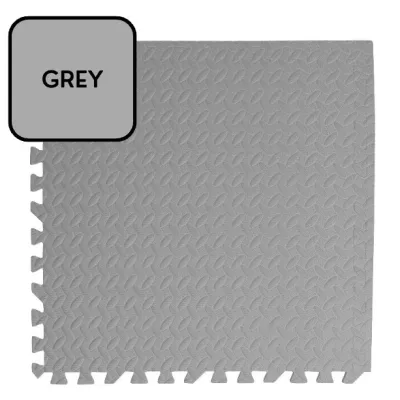
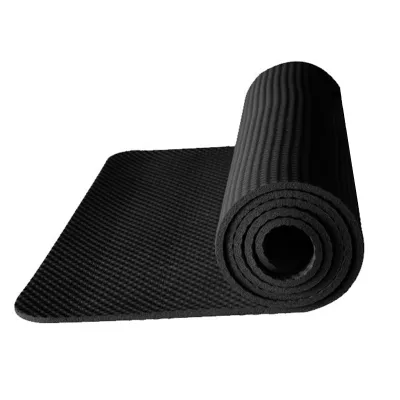
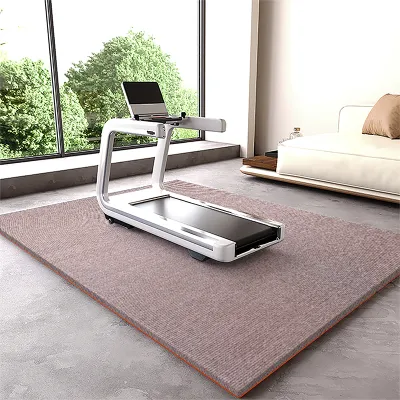
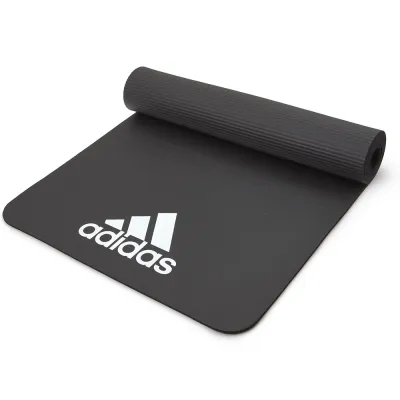
Prices are valid at publication and may change. Please refer to the product page for the latest price.
To help you quickly identify which material aligns with your primary workout style, the table below evaluates Rubber, EVA Foam, and TPE across key decision dimensions:
| Dimension | Rubber | EVA Foam | TPE |
|---|---|---|---|
| Durability | Exceptional; resists heavy impacts, drops, and tearing | Low to Moderate; prone to permanent indentation and tearing | Moderate to High; resists moderate wear and stretching |
| Cushioning | Firm; prioritizes stability and subfloor protection | High; soft, excellent joint comfort for floor work | Moderate; balanced support with mild compression |
| Grip & Traction | Excellent; highly slip-resistant even when wet | Moderate; can become slick when coated in heavy sweat | High; features a tacky surface texture for solid footing |
| Load Capacity | High; supports heavy power racks, dumbbells, and treadmills | Low; permanently deforms under sustained heavy loads | Moderate; suitable for light dumbbells and utility benches |
| Best Use Case | Heavy weightlifting, CrossFit, and high-impact plyometrics | Yoga, Pilates, stretching, and martial arts | Mixed functional fitness, yoga, and light cardio setups |
Rubber Gym Mats: Best for Heavy Lifting and High Impact
Rubber is the gold standard for heavy weightlifting, powerlifting, and high-impact training zones. Its high density and natural shock-absorbing properties allow it to disperse the massive kinetic energy generated by dropped dumbbells or barbells. By absorbing this force, rubber mats protect both your expensive fitness equipment and the underlying subfloor from structural damage.

Beyond impact absorption, rubber provides superior grip underfoot. This high-friction surface is essential for maintaining stability during heavy compound lifts like squats and deadlifts, where any foot slippage can lead to serious injury. Additionally, rubber is highly resistant to wear, meaning it will not crumble, tear, or shred when subjected to high-intensity footwork, sled pushes, or heavy equipment vibration.
However, rubber mats do have notable limitations. They are physically heavy, making installation and relocation a labor-intensive process. They also tend to emit a strong, distinct sulfur-like odor (off-gassing) when new. In Singapore’s compact apartments and air-conditioned rooms, this smell can quickly become overwhelming. If you purchase rubber mats, plan to air them out in a well-ventilated outdoor space, such as a balcony or service yard, for several days before laying them indoors.
Before purchasing, do not assume all rubber mats are created equal. Some budget-friendly options made from low-density recycled crumb rubber may shed particles under heavy shear forces. Always check the manufacturer’s specific load-bearing and drop-test specifications to ensure the mats are rated for the exact weight ranges you plan to lift.
EVA Foam Mats: Best for Cushioning and Floor Exercises
EVA (Ethylene-Vinyl Acetate) foam is a lightweight, highly cushioned material that excels at providing joint comfort. If your routine consists primarily of yoga, Pilates, stretching, martial arts, or bodyweight floor exercises, EVA foam is often the most comfortable choice. It creates a soft, forgiving barrier that protects your knees, elbows, and spine from the hard subfloor.
Because EVA foam is incredibly light and typically manufactured as interlocking puzzle tiles, it is exceptionally easy to transport, assemble, and store. You can quickly lay down a temporary workout space in a living room and pack it away when finished. This flexibility makes it a popular choice for multi-purpose rooms and temporary home gym setups.
Despite these comfort benefits, EVA foam has severe limitations regarding durability. It has low structural density, meaning heavy gym equipment like treadmills, spin bikes, or squat racks will leave permanent, deep indentations that ruin the mat’s integrity. Sharp objects, pet claws, and even the aggressive tread of running shoes can puncture or tear the surface. Furthermore, rapid pivoting movements can cause the interlocking seams to pull apart or slide across the floor.
Singapore’s hot and humid environment presents another challenge for foam. Sweat can easily accumulate during workouts. To prevent hygiene issues, look specifically for closed-cell EVA foam, which does not absorb moisture. Open-cell foams can act like a sponge, trapping sweat, bacteria, and moisture, which leads to mold growth and persistent odors. Always verify the manufacturer’s cleaning and drying instructions, and wipe the mats down with a mild disinfectant after every sweat session.
TPE Mats: The Balanced and Eco-Friendly Alternative
TPE (Thermoplastic Elastomer) is a polymer blend that successfully bridges the gap between rubber and foam. It is lighter and more flexible than rubber, yet significantly more durable and tear-resistant than EVA foam. For fitness enthusiasts who need a single, versatile surface for a variety of workouts, TPE offers an excellent middle-ground solution.
One of the primary appeals of TPE is its eco-friendly profile. Unlike traditional vulcanized rubber, which is difficult to recycle, TPE is a recyclable material that requires less energy to manufacture. It is also naturally non-toxic, hypoallergenic, and free from PVC, phthalates, and heavy metals. This makes it an appealing option if you are sensitive to chemical smells, as high-quality TPE mats exhibit virtually no off-gassing odor.
In terms of performance, TPE provides a tacky, high-traction surface that delivers excellent grip for both bare feet and training shoes. It offers a comfortable level of cushioning that supports your joints during floor work, while maintaining enough structural integrity to prevent you from sinking and losing your balance during standing exercises.
However, TPE does have clear boundaries. While it is far more resilient than EVA foam, it cannot match the extreme tear resistance and heavy-drop protection of high-density commercial rubber. If you regularly drop heavy iron plates or host high-impact plyometric workouts with heavy footwear, TPE will eventually show signs of wear, stretching, or surface degradation. It is best reserved for moderate-weight training and functional fitness setups.
Matching the Mat Material to Your Specific Workout Routine
To get the most out of your investment, you should align your flooring material with the specific physical demands of your daily exercises. Choosing the wrong material can compromise your safety and lead to premature wear of the mats.
Weightlifting, CrossFit, and Plyometrics
For any training style that involves heavy barbells, dumbbells, kettlebells, or explosive jumping, high-density rubber is mandatory. When performing heavy lifts, your feet require a completely stable, non-compressible surface to ensure proper joint alignment and force transfer. Soft mats cause your feet to sink and wobble, which increases the risk of ankle rolls and knee strain. Rubber tiles with a thickness of at least 10mm to 15mm are recommended to absorb the high-impact shock of plyometric jumps and protect your subfloor from dropped weights.
Yoga, Pilates, and Bodyweight Training
If your workouts are centered on flexibility, core strength, and low-impact movements, joint comfort is your primary concern. Hard rubber surfaces can be painful during prolonged kneeling, side planks, or spinal rolling. For these routines, EVA foam or softer TPE mats are highly preferable. They provide the plush cushioning needed to protect sensitive pressure points. A thickness of 6mm to 10mm for TPE, or 10mm to 20mm for EVA foam, will deliver the ideal balance of comfort and floor insulation.
Mixed-Use and Functional Home Gyms
If you use your workout space for a combination of light weightlifting, HIIT, and yoga, a hybrid flooring strategy is often the smartest approach. You can zone your workout area by placing heavy-duty rubber mats under your weight bench or dumbbell rack to protect the floor, while using interlocking EVA foam tiles or a roll-out TPE mat in an adjacent zone dedicated to stretching and bodyweight exercises. Alternatively, look for high-density rubber-foam composite mats, which attempt to combine the durability of a thin rubber top layer with the cushioning of a foam base.
Essential Specifications to Verify Before Purchasing
When shopping for a gym mat floor, do not rely solely on generic material names. A product labeled “heavy-duty rubber” might be too thin to offer real protection, while a “high-density foam” mat might still compress completely under moderate weight. Always verify the following physical specifications on product listings:
- Thickness: For rubber mats, 8mm is the minimum recommended thickness for general home use, while 15mm or thicker is required if you plan to drop heavy weights. For EVA foam, look for tiles that are at least 10mm to 20mm thick to ensure adequate joint protection. For TPE mats, a thickness of 6mm to 8mm strikes the best balance between portability and comfort.
- Density and Hardness: Look for density ratings or Shore hardness specifications if available. Higher density indicates greater load-bearing capacity and resistance to bottoming out. For rubber, a higher density ensures the mat will not deform under heavy treadmills or squat racks.
- Surface Texture: Ensure the mat features a textured, non-slip pattern (such as a pebble-grain, ribbed, or cross-hatch texture). This is especially critical in Singapore's humid climate, as smooth surfaces can become dangerously slick when wet with sweat.
- Installation Method: Decide between interlocking puzzle tiles and rolled mats. Interlocking tiles are highly customizable, easy to replace if a single section gets damaged, and simple to install without adhesive. Rolled mats offer a seamless, professional aesthetic with fewer joints where dirt and sweat can accumulate, but they are heavier and harder to cut to size.
- Subfloor Compatibility: Before laying down any gym flooring, consult the manufacturer's guidelines regarding your specific subfloor. Some rubber compounds contain plasticizers that can chemically react with, stain, or discolor polyurethane finishes on hardwood (parquet) floors or certain luxury vinyl tiles (LVT). If compatibility is a concern, you may need to install a protective, non-reactive underlayment or moisture barrier between your subfloor and the gym mats.
Frequently Asked Questions (FAQ)
Can I place heavy gym equipment on EVA foam mats?
No, it is not recommended to place heavy gym equipment, such as treadmills, elliptical trainers, squat racks, or heavy dumbbell stands, on EVA foam mats. Because EVA foam has a low density, the heavy, concentrated weight of these machines will cause the foam to compress permanently. This compression ruins the cushioning properties of the mat and compromises the stability of your equipment, creating a potential tipping or slipping hazard during use. For heavy machinery, always use high-density rubber tiles or specialized hard equipment pads.
Will rubber gym mats damage my existing flooring?
They can if you do not take proper precautions. Natural and recycled rubber mats contain oils and plasticizers that can chemically react with the polyurethane finishes on hardwood (parquet) flooring or certain vinyl planks, leading to permanent yellowing or dark staining. Additionally, in Singapore’s humid climate, ambient moisture or sweat can get trapped underneath dense rubber mats, potentially warping wood or laminate subfloors over time. To prevent damage, check the mat manufacturer’s subfloor compatibility guide, ensure your floor is completely clean and dry before installation, and use a compatible, non-reactive underlayment or moisture barrier if recommended.
Community discussion
Share your experience or ask a question. Comments are reviewed before publication.