
Selecting the optimal aerodynamic helmet for triathlons and time trials is a highly individualized decision. While the Rudy Project Propulse is designed to balance streamlined airflow with rider comfort, it is not a one-size-fits-all solution. The most effective helmet for your race day depends on your specific riding posture, the wind conditions of your target course, and how your body manages heat under intense physical exertion.
To make an informed choice, you must look beyond marketing claims and evaluate how different helmet profiles interact with your body and riding style. By understanding the engineering trade-offs between drag reduction, ventilation, and fit, you can select a helmet that preserves your energy and keeps you comfortable over long distances.
Key Evaluation Criteria for Triathlon Aero Helmets
When comparing aerodynamic helmets, it is easy to get lost in manufacturer performance claims. To find the right gear for your multi-sport or time trial needs, you must establish a consistent set of baseline metrics to evaluate every option.
Products mentioned in this guide
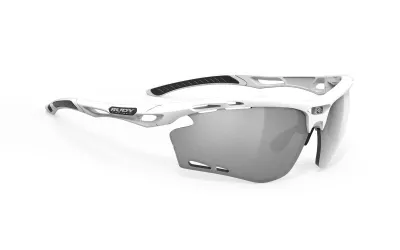
Prices are valid at publication and may change. Please refer to the product page for the latest price.
Aerodynamic Claims and Real-World Wind Angles
Manufacturers frequently publish wind-tunnel data showing significant drag savings, but these tests are often conducted under idealized conditions. In a wind tunnel, the air flows straight at the helmet, representing a zero-degree yaw angle. In real-world outdoor riding, however, you will almost always encounter crosswinds, which create varying yaw angles.
When researching helmets, check if the manufacturer discloses testing data across a range of yaw angles, typically from 5 to 15 degrees. A helmet that performs exceptionally well in a straight line might create significant drag if a crosswind hits its side profile. Look for designs that maintain a clean boundary layer of air even when the wind is coming from an angle.
Ventilation vs. Drag Trade-offs
Aerodynamics and cooling are naturally opposing forces in helmet design. To minimize drag, aero helmets typically feature closed shells with minimal external vents. However, trapping heat inside the helmet can cause your core temperature to rise, which directly degrades your physical performance, especially in hot and humid climates like Singapore.
When evaluating a helmet, inspect the internal channeling rather than just the external vents. High-performance aero helmets use deep, sculpted channels on the inner EPS foam liner. These channels are designed to pull cool air in through small front intakes, sweep it across your scalp, and exhaust the warm air out the back. If a helmet lacks these defined internal pathways, it is highly likely to trap heat during long, intense efforts.
Weight and Balance for Long-Course Comfort
An aerodynamic advantage is useless if your neck muscles fatigue halfway through the bike leg, forcing you to drop your head and ruin your aero posture. While a helmet’s total weight is important, its balance and center of gravity are even more critical when you are tucked into the aero extensions.
Helmets with long, heavy tails tend to pull the back of your head down when you fatigue, straining your neck and upper back. When checking manufacturer specifications, look for the stated weight and consider how the mass is distributed. A compact, well-balanced helmet will feel much lighter on your head during a multi-hour ride than a poorly balanced model of the same weight.
Assessing the Rudy Project Propulse Design and Features
The Rudy Project Propulse is engineered specifically to address the common pain points of traditional time trial helmets. By examining its specific design elements, you can determine if its architecture matches your physical requirements.

Shell Shape and Tail Length
The Propulse features a mid-to-short tail design, which represents a modern shift in aerodynamic philosophy. Traditional long-tail helmets require you to keep your head perfectly still and your back completely flat to keep the tail flush against your spine. If you look down or turn your head, a long tail sticks up into the wind, acting like a sail and creating massive drag.
The shorter, more rounded tail of the Propulse is designed to be highly forgiving. If you drop your head to look at your bike computer or stretch your neck, the compact tail minimizes the aerodynamic penalty. This makes it an excellent option for triathletes who tend to move their heads or struggle to maintain a rigid, static posture over long distances.
Visor and Shield Integration
An integrated visor is a key component of a modern aero helmet, as it smooths out the airflow over your face far better than standard sports sunglasses. When inspecting the Propulse, pay close attention to the optical clarity of its integrated shield.
Verify how the shield attaches to the helmet shell. Many high-end helmets use magnetic or snap-lock mechanisms that allow you to quickly flip or remove the visor during a transition or if weather conditions change. Additionally, check if the visor has an anti-fog treatment and whether the manufacturer offers prescription optical inserts if you require vision correction to ride safely.
Retention System and Stability
To maintain its aerodynamic efficiency, a helmet must remain perfectly positioned on your head without shifting, even when you encounter bumpy roads or strong gusts of wind. The retention system is responsible for this stability.
Examine the rear dial-fit system on the Propulse. It should allow for precise, micro-adjustments that you can easily operate with one gloved hand while riding. The strap anchor points should lie flat against your temples and jawline to prevent the webbing from fluttering in the wind, which is both noisy and aerodynamically inefficient.
Decision Framework: Propulse vs. Competing Aero Profiles
To choose the right helmet, you must match your personal riding style, physical flexibility, and typical race environments against the strengths and weaknesses of different helmet categories.
Choose the Rudy Project Propulse if:
- Your riding posture is dynamic: If you frequently move your head, look down to check your power meter, or stretch your neck to relieve tension, the forgiving mid-tail design will prevent sudden spikes in aerodynamic drag.
- You prefer integrated eye protection: The integrated shield system provides a wide, unobstructed field of view in the aero tuck and seals out wind debris better than standard sunglasses.
- You ride in varied weather: The balance of moderate ventilation and a streamlined shell makes it highly versatile for courses that transition from cool mornings to hot afternoons.
Choose a Short-Tail or "Road-Aero" Alternative if:
- You race in extreme heat: If you are highly sensitive to heat or racing in exceptionally humid conditions, a road-aero helmet with larger, open ventilation ports will provide superior cooling, even if it sacrifices a small amount of aerodynamic efficiency.
- The course is highly technical or climbing-heavy: Technical courses with sharp corners and steep climbs require you to frequently look around and stand out of the saddle. A lighter, ultra-compact road-aero helmet offers better lateral stability and less neck strain during these dynamic movements.
Choose a Traditional Long-Tail Time Trial Helmet if:
- You have a highly disciplined, flat-back posture: If you have undergone professional bike fitting and can maintain a locked-in, static aero position for the entire duration of your ride, a long-tail helmet will deliver the absolute lowest drag coefficient.
- You prioritize straight-line speed above all else: On flat, non-technical, and low-wind courses, the maximum drag reduction of a long-tail helmet outweighs the benefits of ventilation and weight distribution.
Verify First If:
- You are unsure of your aero position consistency: Before investing in a specific tail length, have a friend film you from the side while you ride on an indoor trainer. If your head drops significantly when you are tired, avoid long-tail designs, as they will actually increase your drag compared to a shorter, more rounded profile.
Fit, Safety Certifications, and Value Verification
Before finalizing your purchase, you must verify that the helmet meets strict safety standards, fits your unique head shape, and represents a sound financial investment.
Locating Safety Labels
Never compromise on safety for the sake of aerodynamics. Every helmet sold must carry official safety certifications. When inspecting a helmet, look inside the shell for sticker labels indicating compliance with regional standards, such as CE EN 1078 for Europe or CPSC for the United States.
These certifications guarantee that the helmet has undergone rigorous impact testing. If you are purchasing from an online marketplace or local specialty retailer, always double-check that these safety labels are physically present on the interior EPS foam liner.
Physical Fit Testing
Head shapes vary widely, and a helmet that fits one rider perfectly may cause painful pressure points for another. When trying on a helmet, perform the following checks:
- The Shake Test: Put the helmet on and tighten the rear retention dial, but leave the chin strap undone. Gently shake your head side to side and front to back. The helmet should remain securely in place without sliding or tilting.
- Pressure Point Check: Keep the helmet on for at least five to ten minutes. Pay close attention to your forehead, temples, and the crown of your head. Any slight discomfort or pinching will quickly turn into severe pain during a multi-hour ride.
- Brow Clearance: Ensure the front edge of the helmet sits about two fingers above your eyebrows. If it sits too low, it will block your upward vision when you are tucked into your aero position.
Value Assessment
When evaluating the retail price in S$, consider what is included in the package. A higher upfront cost may be justified if the helmet comes with premium accessories, such as a high-quality hard travel case, multiple interchangeable visors for different light conditions, or a comprehensive crash replacement policy.
Compare the build quality of the strap adjusters, the padding materials, and the visor attachment mechanisms. A well-constructed helmet made with durable materials will easily last several seasons of training and racing, making it a much better long-term value than a cheaper, less durable alternative.
Building Your Race-Day Helmet Shortlist
To make your final decision, synthesize what you have learned into a practical, step-by-step action plan.
First, narrow your choices down to a top-two shortlist. For example, you might pair the Rudy Project Propulse against one highly rated road-aero alternative if you prioritize ventilation, or against one traditional long-tail helmet if you are focused on absolute speed. This direct comparison makes it much easier to weigh the specific trade-offs of each design.
Next, plan a real-world test ride if your local specialty retailer offers demo models, or if a fellow athlete is willing to let you try theirs. Use this test ride to evaluate wind noise at race pace, check how well the ventilation channels keep your head cool, and verify if the integrated shield fogs up when you start to sweat heavily.
Finally, before you hand over your S$, check the retailer’s return and exchange policies. Ensure they offer a flexible fit-exchange option in case you discover a pressure point after your first long ride. Additionally, verify the manufacturer’s warranty terms so you are fully protected against any material or manufacturing defects.
Community discussion
Share your experience or ask a question. Comments are reviewed before publication.