
Quick Answer: Which Running Belt Brands Are the Most Breathable?
No single running belt brand can be crowned as the absolute most breathable because breathability is determined by a direct trade-off between material composition and physical structure. For maximum direct airflow, brands that utilize open-mesh panels or segmented backings (such as Nathan or SPIbelt) perform exceptionally well in hot, stagnant conditions. Conversely, tubular brands (such as FlipBelt) rely on ultra-thin, highly elastic synthetic blends that wick moisture away efficiently but offer less direct ventilation due to their wider skin-contact area. The ideal choice depends on your individual sweat rate, local climate conditions, and sensitivity to chafing.
Key Factors That Determine Running Belt Breathability
To find a running belt that keeps you cool, it is essential to understand the physical properties and design choices that drive breathability and moisture management.

Material Composition (Mesh vs. Solid Synthetics)
The primary line of defense against heat buildup is the fabric itself. Open-weave mesh features physical perforations that allow ambient air to pass directly through the fabric to the skin. This direct ventilation facilitates rapid sweat evaporation, which is the body’s primary mechanism for cooling. In contrast, solid tubular fabrics like spandex, Lycra, or polyester blends do not have macroscopic holes. Instead, they rely on capillary action to pull moisture from the skin to the outer surface of the fabric, where it can evaporate. While this wicking process is highly effective at keeping the skin dry and preventing chafing, it provides less immediate cooling from passing breezes.
Products mentioned in this guide
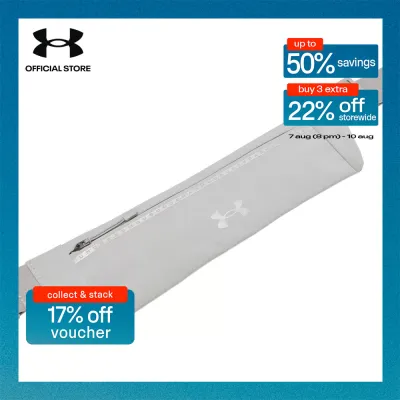
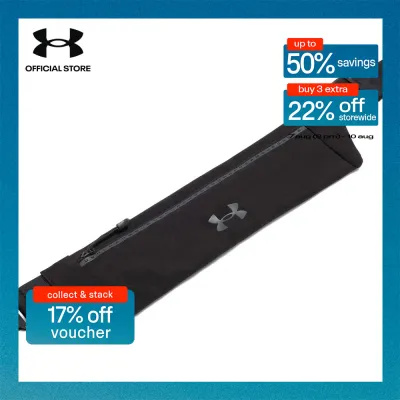
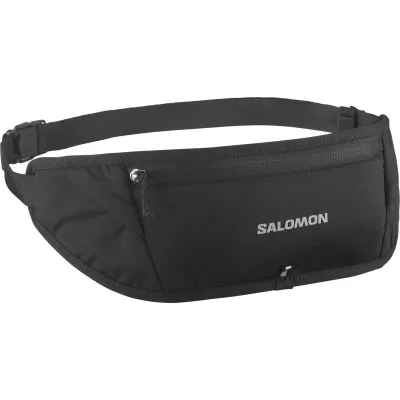
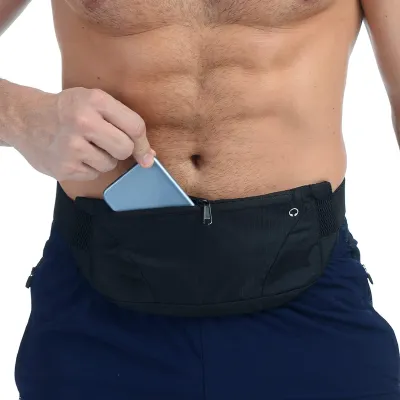
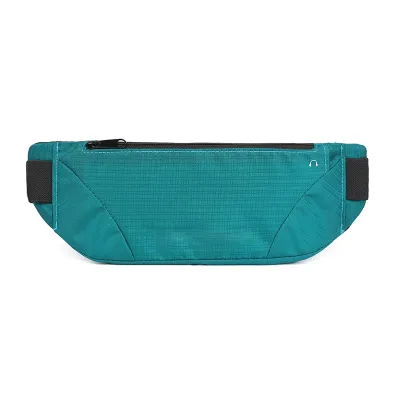
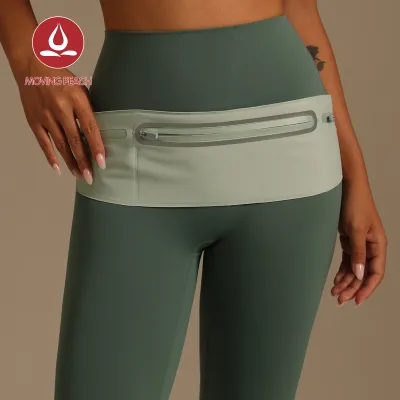
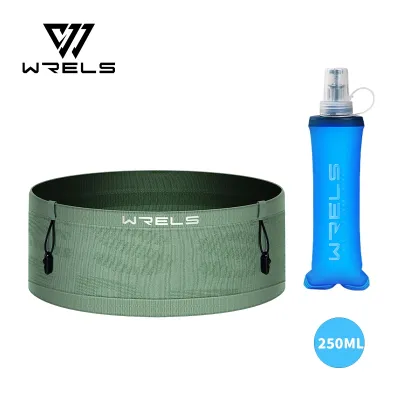
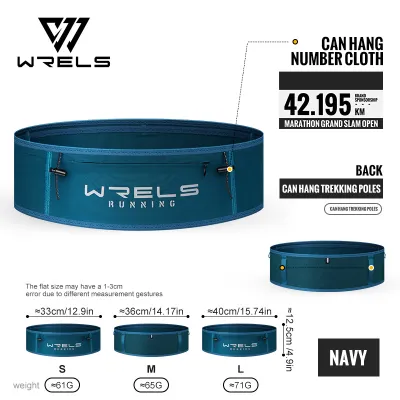
Prices are valid at publication and may change. Please refer to the product page for the latest price.
For runners operating in hot, tropical, or highly humid environments—such as Singapore, where ambient humidity frequently exceeds 80 percent—the choice of material is critical. In these conditions, sweat cannot evaporate easily because the air is already saturated with moisture. Therefore, avoiding heavy, non-technical materials is paramount. Thick neoprene (often used in cheap, water-resistant belts) and heavy nylon function essentially as vapor barriers. They trap sweat and metabolic heat against your lower back and abdomen, rapidly raising your localized skin temperature and increasing the risk of heat discomfort or chafing. Always check the material composition label on any running belt before purchasing.
Design and Fit (Tubular vs. Zippered Pouches)
The physical structure of a running belt dictates how much heat it traps against your body. Tubular designs are constructed as a continuous 360-degree band that sits snugly around the waist or hips. This design is highly praised for distributing weight evenly and eliminating bounce, but it also means a large surface area of fabric is in constant, direct contact with your body. If the fabric is not exceptionally thin and quick-drying, this continuous band can act as a heat wrap, raising your core temperature during intense workouts.
On the other hand, flat zippered pouches or segmented belts have a much smaller skin-contact footprint. They typically feature a single pocket that rests against the lower back or front, supported by a thin elastic strap. While this minimizes the overall area of covered skin, it can create localized hot spots. If the backing material of the pouch—the part directly touching your shirt or skin—is made of a solid, non-breathable synthetic, sweat will pool rapidly in that specific area.
Furthermore, the effectiveness of any breathable fabric relies heavily on fit. A running belt must sit snugly against the body to allow moisture-wicking fibers to make contact with sweat. However, if the belt is adjusted too tightly, it compresses the fabric fibers, closing the microscopic spaces that allow air and moisture vapor to escape. Finding a balance—a secure, bounce-free fit that does not constrict or over-compress the material—is essential for optimal thermal regulation.
Popular Running Belt Brands and Their Breathability Approaches
Different brands tackle the challenge of heat and moisture management using distinct design philosophies. Understanding these approaches helps you match a belt to your specific running conditions.
Tubular and Seamless Brands (e.g., FlipBelt)
Tubular belts, pioneered by brands like FlipBelt, take a distinct approach to managing heat and moisture. Rather than using open mesh windows, these belts are constructed from high-quality, lightweight synthetic blends—typically a combination of polyester or nylon with spandex. The primary mechanism for breathability here is the fabric’s extreme thinness and advanced moisture-wicking capabilities.
Because a tubular belt wraps entirely around your waist, it relies on the capillary action of its microfibers to pull sweat away from your skin and disperse it across a wide surface area on the exterior of the band. This wide dispersion allows for faster drying, even without direct airflow. Additionally, the seamless construction and lack of plastic buckles or heavy zippers eliminate friction points, making these belts highly comfortable for long-distance runs where chafing is a major concern.
However, runners should note that in extremely humid conditions, where evaporation is slow, a fully saturated tubular belt can begin to feel heavy and damp. It is best suited for runners who prioritize a secure, bounce-free fit and are comfortable relying on fabric wicking rather than direct, open-air ventilation.
Mesh-Backed and Zippered Brands (e.g., SPIbelt, Nathan)
Brands like SPIbelt and Nathan offer models specifically engineered to maximize direct airflow through the use of open mesh and segmented designs. SPIbelt, known for its expandable pleated pockets, offers versions that utilize lightweight, highly breathable mesh fabrics for the pocket itself. This design allows air to flow directly through the pocket, cooling the items inside and minimizing heat buildup against the body.
Nathan frequently incorporates structured, perforated mesh backings and 3D air-mesh panels into their running belts. These panels feature a three-dimensional weave that creates a physical gap between the belt’s main compartment and your body, allowing air to circulate freely behind the pocket. This direct air exchange is incredibly beneficial when running in high-temperature environments, as it prevents the localized sweat pooling common with solid-backed pouches.
The trade-off with these designs lies in their complexity. The integration of zippers, adjustable plastic buckles, and reinforced seams can create potential friction points against the skin. If you choose a mesh-backed zippered belt, it is crucial to ensure that the seams are flat-locked and that the buckle is positioned comfortably to avoid chafing during long workouts.
Hydration-Integrated Brands (e.g., Salomon, CamelBak)
For long-distance runners or trail runners who need to carry fluid, hydration-integrated belts from brands like Salomon and CamelBak present a unique breathability challenge. Carrying the weight of water bottles or soft flasks requires a more rigid, supportive structure. This added bulk and the physical presence of water containers naturally reduce the belt’s overall breathability, as the bottles themselves block airflow.
To counteract this, these brands employ advanced materials and engineering. Salomon, for example, utilizes highly technical, open-structured elastic meshes (such as their Power Mesh and 3D Comfort Mesh) in their hydration belts. These materials are incredibly porous and designed to stretch and breathe under tension. CamelBak similarly integrates ventilated mesh panels and perforated foam backings to channel air behind the water reservoirs.
Despite these innovations, any hydration belt will inherently trap more heat than a minimalist, non-hydration belt. When selecting a hydration belt for hot-weather workouts, closely inspect the backing material. Look for deep ventilation channels, highly perforated foams, and wide-open mesh structures. Runners should also accept the trade-off that carrying fluid on the waist will always result in some localized heat retention, making proper pacing and clothing selection elsewhere even more critical.
How to Choose the Right Breathable Belt for Your Workout
Selecting the right running belt requires matching the design to your specific workout environment, gear requirements, and physical sensitivities.
The placement of your gear also plays a role in heat perception. Carrying items on your lower back is generally preferred for breathability, as this area experiences more air movement when running forward compared to the lower abdomen. However, if you carry a heavy load, a front-facing placement may feel more secure, though it may trap more heat against your core.
Choose a mesh-backed zippered belt if:
- You primarily run in tropical heat or high humidity, where sweat evaporation is severely limited.
- You carry only minimal items, such as a single key, a couple of energy gels, or a small card holder.
- You prioritize direct airflow and rapid drying over a completely seamless, compression-style feel.
Choose a thin tubular spandex belt if:
- You are highly prone to chafing from seams, zippers, or plastic adjustment buckles.
- You need to carry a larger smartphone securely against your body without any bounce.
- You prefer continuous, even moisture-wicking and a uniform, secure fit over direct ventilation.
Avoid thick neoprene or heavy nylon if:
- You are exercising in tropical, coastal, or highly humid environments. These materials act as insulators, trapping metabolic heat and sweat, which can lead to skin irritation, heat rash, and localized discomfort.
Verify first if:
- The product specifications or physical care label explicitly mention technical terms like "moisture-wicking," "perforated panels," "3D air-mesh," or "hydrophobic fibers," rather than relying solely on generic marketing terms like "breathable" or "cool-touch." Look for specific fabric blends (such as polyester-spandex or nylon-elastane) and physical design features like laser-cut ventilation holes or mesh windows.
Care and Maintenance to Preserve Moisture-Wicking Performance
The high-performance fabrics used in breathable running belts require proper care to maintain their technical properties over time. Sweat salts, body oils, and residual laundry detergents can clog the microscopic pores of technical fabrics, significantly reducing their breathability and wicking efficiency.
To preserve your belt’s performance, follow these low-risk maintenance steps:
- Rinse immediately: After a heavily sweaty run, rinse the belt with cool, clean water to remove salt deposits before they dry and crystallize within the fabric fibers.
- Wash gently: Machine wash or hand wash according to the manufacturer's care label, using a mild, liquid detergent.
- Avoid fabric softeners: Strictly avoid fabric softeners or bleach. Fabric softeners leave a thin, waxy coating on synthetic fibers, which clogs the pores and completely destroys the fabric's ability to wick moisture and breathe.
- Air dry only: Air dry the belt in a shaded, well-ventilated area. Avoid using a high-heat clothes dryer, as excessive heat can degrade the elastic fibers (spandex or elastane) and damage any bonded seams or reflective elements.
If your running belt develops a persistent odor that does not wash out, loses its elasticity, or remains wet and heavy during runs rather than wicking moisture away, the technical fibers have likely degraded, and it is time to replace the belt.
Community discussion
Share your experience or ask a question. Comments are reviewed before publication.