
For runners training in warm, humid climates like Singapore, maintaining hydration and energy levels is a constant balancing act. Carrying a heavy liquid payload alongside sharp-edged, slippery gel packets can quickly disrupt your running form if your gear is not up to the task. To solve this, finding a specialized running water bottle belt that provides dedicated, secure compartments for both items is essential. A well-designed belt prevents the annoying and energy-sapping bounce that occurs when rigid bottles and flexible gel packets are crammed into poorly constructed pockets. By understanding how different belt layouts distribute weight, you can select a system that keeps your fuel accessible and your stride natural.
Understanding the Physics of Belt Bounce and Weight Distribution
Every stride you take during a run generates vertical impact forces that travel through your body. When you wear a running water bottle belt, you introduce an external mass to your pelvic region. As your body moves upward and downward, this external mass responds to gravity and momentum. If the belt lacks structural integrity or is fitted poorly, it will move out of sync with your pelvis. This phase lag is what runners experience as “bounce.” The vertical oscillation is further complicated by the natural side-to-side rotation of your hips and the expansion of your abdomen as you breathe.
The physical challenge increases significantly when you mix different types of payloads. A standard 500ml sports drink bottle filled with fluid weighs approximately 500 grams, representing a dense, rigid, and shifting mass. Conversely, energy gel packets are light, flat, and highly flexible, weighing only about 30 to 45 grams each. Placing these two contrasting items in the same general area creates a severe weight imbalance. When a heavy bottle sways, its momentum pulls the lighter gel packets out of place, causing the belt to sag, twist, or ride up toward your natural waist.
Products mentioned in this guide
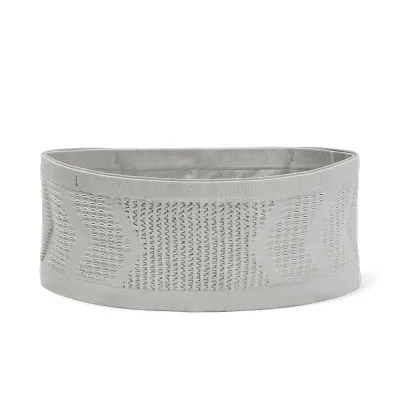
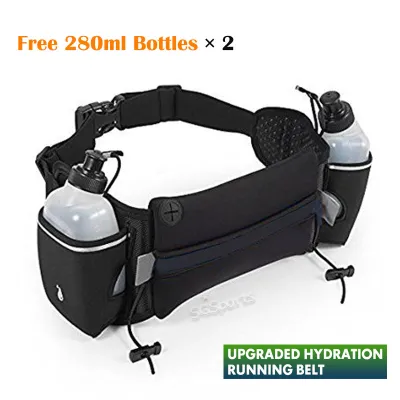
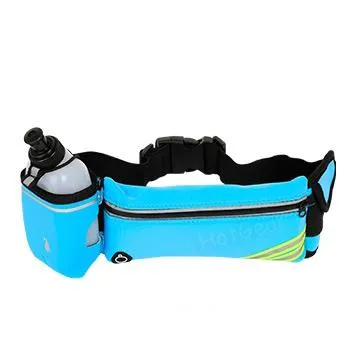
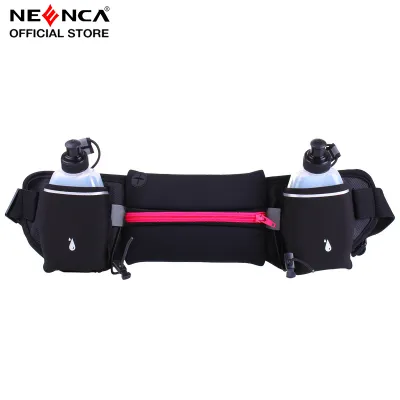
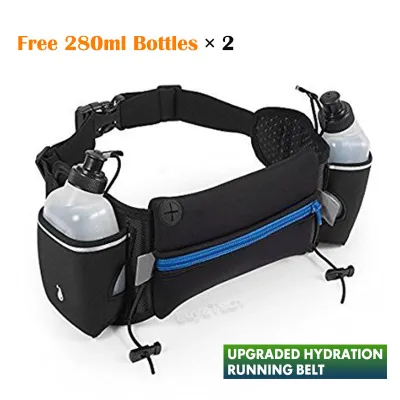
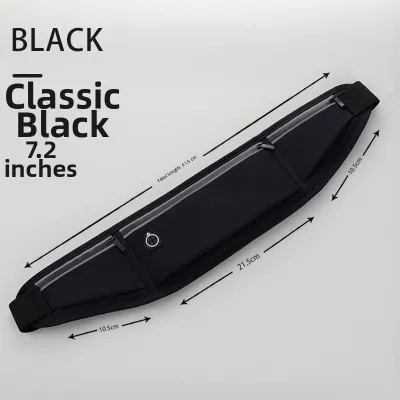
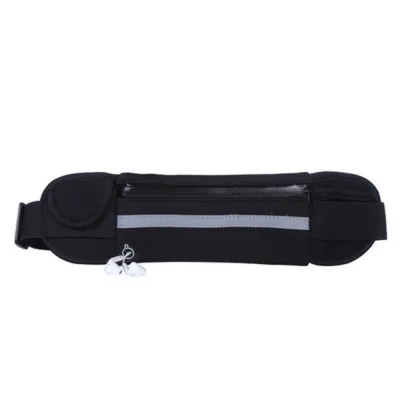
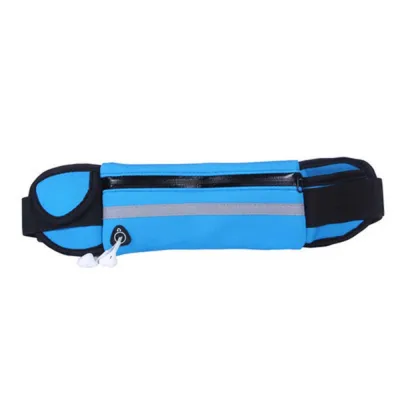
Prices are valid at publication and may change. Please refer to the product page for the latest price.
Eliminating this bounce is not merely a matter of comfort; it is vital for protecting your running biomechanics and skin. In high-humidity environments, sweat acts as a lubricant that accelerates skin irritation. A bouncing belt rubbing against damp clothing or bare skin will quickly cause painful chafing. Furthermore, when a belt shifts constantly, runners often subconsciously alter their gait, shorten their stride, or restrict their breathing to keep the gear stable. A secure, bounce-free fit ensures that your body can maintain its natural, efficient running form while keeping your airways fully open.
Key Design Features of a Secure Running Water Bottle Belt
Selecting a belt that can handle both heavy fluids and light gels requires looking closely at its structural engineering. You cannot rely on basic elastic bands to hold these items secure; instead, you must verify specific design features that manage tension, grip, and weight distribution.

Bottle Holster Mechanics and Compatibility
The mechanism that secures the bottle inside its holster is the first line of defense against bounce. Look for holsters that utilize high-tension bungee cords with adjustable toggles that loop over the neck of the bottle. This vertical restraint prevents the bottle from launching upward during fast descents or high-cadence strides. Additionally, high-quality holsters feature inner linings with silicone grip patterns or are constructed from semi-rigid molded plastic inserts. These materials generate friction against the smooth plastic of sports drink bottles, preventing lateral sway and keeping the bottle firmly seated.
It is also critical to verify the physical compatibility between the holster and your preferred bottles. Standard water bottles are typically slim and uniform, whereas many sports drink bottles or vacuum-insulated flasks are wider, contoured, or have irregular shapes. A holster designed exclusively for slim, proprietary running flasks will stretch excessively when forced to accommodate a wider, off-the-shelf sports drink bottle. This over-stretching degrades the elastic fibers over time, rendering the holster loose and prone to bouncing. Always check the manufacturer’s maximum diameter specifications before purchasing.
The depth of the holster and its base support determine how the bottle’s weight is transferred to your body. If a holster is too shallow, the bottle’s center of gravity sits too high, causing it to tip outward and pull the belt away from your hips. The base of the holster should feature a reinforced fabric cup or a molded plastic shelf. This structure ensures the bottle does not bottom out or press directly into your pelvic bones. Proper base support distributes the heavy fluid load across a wider surface area, preventing painful bruising on the iliac crest during long-distance runs.
Dedicated Gel Pockets and Accessibility
To carry energy gels effectively, a belt must feature dedicated pockets that compress the packets flat against your body. These pockets are typically constructed from high-performance power-mesh or heavy-duty elastane. By placing these pockets along the side panels or front of the belt, manufacturers distribute the weight away from the rear bottle holster. This strategic placement balances the belt’s overall center of mass, ensuring that as you consume your fluids and gels, the belt remains stable and does not pull to one side.
The closure mechanism of the gel pockets is another vital feature to evaluate. Overlapping envelope-style flaps and deep stretch-mesh pockets with reinforced elastic hems are highly effective at keeping gels secure without adding bulk. They allow you to slide a gel out with one hand while maintaining your pace. Zippers offer excellent security but can add rigid points that cause chafing if positioned poorly. Magnetic snaps are convenient but must be checked to ensure they do not pop open when the belt is fully loaded and stretched around your hips.
Finally, examine the interior lining of the gel pockets. Energy gel packets are sealed with stiff, crimped plastic edges that can be surprisingly sharp. If these packets are compressed tightly inside a pocket with rough interior seams or exposed zippers, the constant vibration of your running stride can cause the sharp edges to rub against the seams. Over time, this friction can puncture the gel packet, leading to a sticky, messy rupture inside your belt. Smooth, seamless interior linings are essential to protect your fuel supply from self-destructing mid-run.
Comparing Belt Layouts for Different Fueling Strategies
Different running distances and training regimens require different fueling strategies. Rather than looking at specific brands, it is most helpful to evaluate running water bottle belts by their structural layout archetypes. Each design distributes weight in a unique way, presenting distinct advantages and trade-offs depending on your hydration and nutrition needs.
To help you decide which layout fits your specific running style, consider the following comparative matrix of the three primary belt archetypes:
| Layout Archetype | Bottle Capacity | Gel Storage Style | Best For (Distance/Strategy) | Potential Bounce Risk |
|---|---|---|---|---|
| Single Bottle with Multi-Gel Mesh | 1 bottle (300ml to 600ml), typically angled at the rear lumbar | Surrounding stretch pockets integrated along the waistband | Mid-distance runs (10km to half marathons) with structured fueling | Moderate; can bounce if the single bottle is heavy and the waist strap is not cinched tightly |
| Dual Symmetrical Bottles with Integrated Gel Slots | 2 bottles (250ml to 350ml each) positioned symmetrically on the hips | Dedicated sleeves or small pockets adjacent to each bottle holster | Long-distance training, marathons, and hot-weather runs requiring high fluid volume | Low; symmetrical weight distribution minimizes lateral sway and balances the pelvis |
| Tube-Style Continuous Mesh Belts | 1 to 2 soft flasks (up to 500ml each) tucked flat against the body | 360-degree continuous internal compartment with multiple access slots | Marathon training, trail running, and runners who prioritize comfort and quick gear access | Low to Moderate; depends heavily on a precise, snug fit as there are no adjustable tension straps |
Each of these layouts involves specific trade-offs that you must weigh against your personal preferences. Dual-bottle configurations offer the best protection against bounce because they split the liquid payload across both hips, preventing the lopsided pull that single-bottle belts can create. However, they are inherently bulkier, heavier when fully loaded, and require you to manage and clean two separate bottles.
Single-bottle belts are lighter, less restrictive around the waist, and easier to adjust on the fly. However, because they concentrate the entire fluid weight in one location (usually the lower back), they require a highly structured, rigid holster and a very secure waist strap to prevent the bottle from sagging and bouncing.
Tube-style continuous mesh belts provide the most comfortable, low-profile fit because they use wide, stretchy fabric to compress all items flat against your torso. They are excellent for carrying soft flasks and multiple gels. However, because they rely entirely on the elasticity of the fabric rather than adjustable straps, their stability can decrease over time as the material stretches out. They also require you to step into the belt to put it on, which some runners find less convenient than a traditional buckle closure.
How to Fit, Load, and Test Your Belt to Eliminate Bounce
Even the most technologically advanced running water bottle belt will bounce if it is fitted, loaded, or adjusted incorrectly. Achieving a stable, bounce-free ride requires systematic preparation before you take your first stride.
Proper positioning on your anatomy is the foundation of belt stability. Many runners instinctively pull their belt up around their natural waist, just above the belly button, because it feels secure while standing. However, as soon as you start running, the narrowing of your waist and the movement of your abdominal muscles will push the belt downward, causing it to bounce violently. Instead, position the belt lower down, resting directly on your iliac crest (the top of your hip bones). This bony structure acts as a natural shelf that prevents the belt from sliding downward, keeping the heavy fluid payload centered over your body’s center of gravity.
Once the belt is positioned correctly, load your gear in a balanced, systematic order. Always insert your heaviest items—the filled water or sports drink bottles—first. If you are using a dual-bottle belt, ensure both bottles are filled to equal levels to maintain a symmetrical lateral balance. Next, distribute your energy gels evenly among the dedicated pockets on the left and right sides of your body. Avoid clustering all your gels in a single pocket, as this creates an asymmetrical weight distribution that will cause the belt to twist and slip as your hips rotate.
Before heading out for your run, perform a quick physical assessment using the “jump test.” Stand in place and jump up and down firmly three to four times. Pay close attention to how the belt behaves. If you feel the bottles shifting vertically or the gel packets sliding within their pockets, stop and make adjustments. Follow this with a few high-knee lifts and gentle torso twists to simulate the multi-directional forces of a running stride. If the belt sways or twists during these movements, it indicates that the tension is too loose or the weight is distributed unevenly.
When tightening the adjustment straps, you must find a balance between security and physiological comfort. The belt must be snug enough to eliminate vertical movement, but not so tight that it constricts your breathing or pinches your stomach. A practical way to find this balance is to tighten the tension straps while taking a deep breath in. This ensures that the waistband accommodates your diaphragm’s maximum expansion during heavy aerobic efforts, preventing the belt from feeling suffocating while still maintaining enough tension to prevent slipping when you exhale.
Pre-Purchase Checklist: Sizing, Compatibility, and Climate Factors
Before purchasing a running water bottle belt online or in-store, review this concrete checklist of physical specifications and personal measurements to ensure a successful fit:
- Measure Your Actual Hip Circumference: Do not rely on your standard pants or apparel size, as running gear sizing is highly specialized. Use a flexible measuring tape to measure the circumference of your body at the widest part of your hips (along the iliac crest) where the belt will actually rest. Compare this measurement directly to the manufacturer's specific sizing chart.
- Verify Bottle Diameter and Volume Limits: Check the maximum bottle dimensions specified by the belt manufacturer. If you plan to use standard sports drink bottles or your own specialized flasks, measure their outer diameter to ensure they will fit securely inside the holsters without over-stretching the fabric.
- Assess Material Care and Climate Properties: In hot, high-humidity climates like Singapore, heavy sweating is inevitable. Look for belts constructed from lightweight, moisture-wicking materials like nylon or polyester blends that resist water absorption. Check the care label to ensure the belt is machine washable or easy to hand wash, as regular cleaning is required to remove salt buildup from sweat, which can degrade elastic fibers over time.
- Confirm Return and Exchange Policies: Because every runner's body shape and running gait are unique, a belt that feels comfortable in a store may still bounce during a dynamic, high-intensity run. Verify the retailer's return policy to ensure you can exchange or return the belt if it causes unexpected chafing or instability during your initial trial runs.
Frequently Asked Questions (FAQ)
Can I use a standard water bottle in a belt designed for sports drinks?
While a standard, slim water bottle will physically fit into a holster designed for wider sports drink bottles, it often lacks the lateral friction required to stay secure. This size mismatch can cause the bottle to sway, bounce, or even slip out of the holster during high-impact running. If you must use a narrower bottle, verify that the holster features an adjustable bungee cord, a tension toggle, or a highly elastic collar that can be cinched down tightly to compress and secure the smaller bottle diameter.
How do I prevent energy gel packets from tearing inside the belt pockets?
To prevent the sharp, crimped plastic edges of energy gel packets from tearing open inside your belt, always place them in dedicated, smooth-lined mesh pockets away from rigid plastic bottle edges, zippers, or exposed Velcro closures. Orient the packets with their tear-tabs pointing upward or away from high-friction zones. Ensure that the pocket is not overstretched; excessive tension can press the sharp plastic corners of the gel packet tightly against the fabric, increasing the risk of friction-induced tears during your run.
Community discussion
Share your experience or ask a question. Comments are reviewed before publication.