
Quick Answer: Essential Safety Features for Senior Exercise Bikes
Selecting a senior exercise bike requires prioritizing features that minimize fall risks, protect vulnerable joints, and prevent cardiovascular overexertion. The absolute must-have features include:
- Step-through frame: Eliminates the need to lift the leg high, allowing safe mounting and dismounting.
- Wide, heavy base: Ensures the machine remains stable on indoor flooring without tipping.
- Adjustable ergonomic seat with back support: Reduces spinal pressure and stabilizes the pelvis.
- Smooth magnetic resistance: Prevents sudden jerks or belt slips that strain arthritic joints.
- Secure pedal straps: Keeps feet firmly in place to prevent slips during the pedaling motion.
These features work together to create a controlled, low-impact exercise environment that supports independent mobility.
Frame Design and Base Stability to Prevent Falls
The physical structure of an exercise bike determines how safely an older adult can interact with the machine. For many seniors, the most hazardous moments of a workout occur before the pedaling even begins. Mounting and dismounting require a level of balance and single-leg stability that can be challenging for those managing age-related physical changes.
Products mentioned in this guide
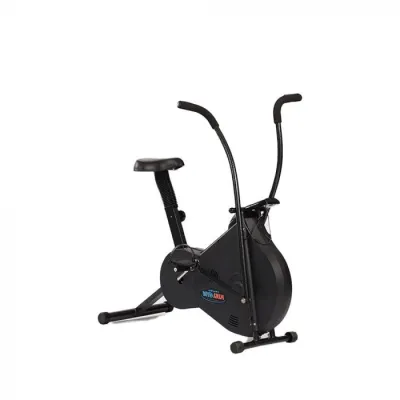
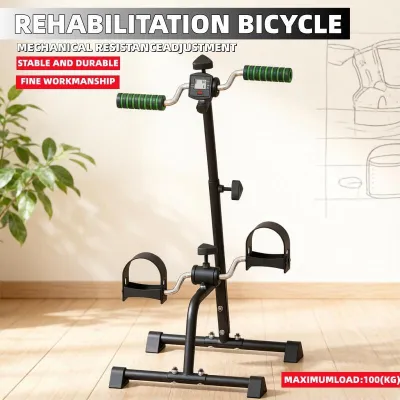
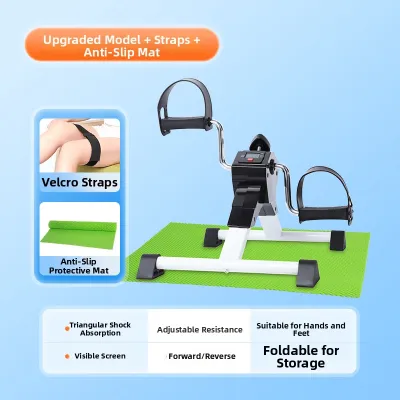
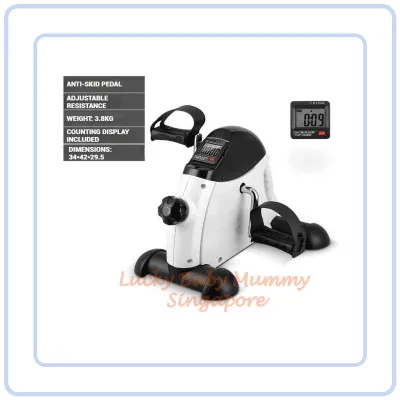
![[SG SELLER LOCAL STOCK]Adjustable Pedal Exerciser Bike Fitness Bike Upper And Lower Limb Rehabilitation Bicycle](https://img.lazcdn.com/g/p/032f3bcbf8694ac4b934140c490ebdc5.jpg_400x400q80.jpg_.webp)
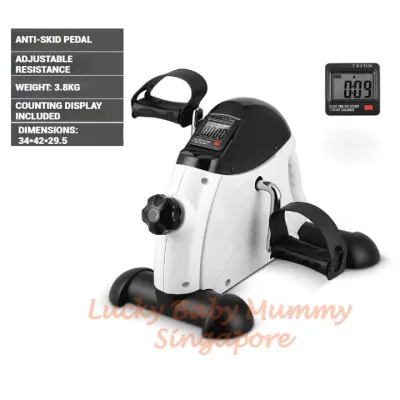
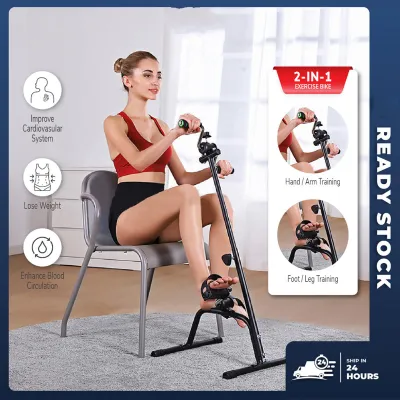
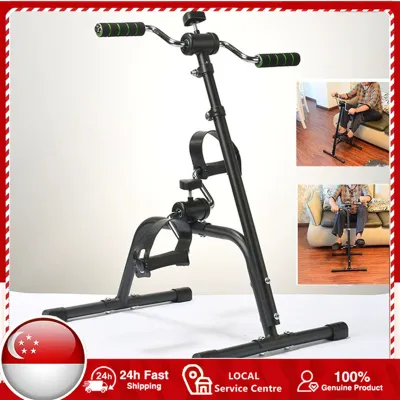
Prices are valid at publication and may change. Please refer to the product page for the latest price.

A step-through frame design is the first line of defense against falls. Traditional upright bikes often feature a high center bar or shroud enclosing the flywheel, requiring the user to swing one leg high over the frame to sit down. For seniors dealing with hip stiffness, osteoarthritis, or general balance impairments, this motion is a frequent source of trips and slips. A step-through design lowers the frame profile significantly, allowing the user to simply step across a low barrier close to the floor. This keeps both feet near the ground during the mounting process, maximizing stability.
The footprint and overall weight distribution of the bike also dictate its safety profile. A wider base frame prevents the bike from rocking or tipping sideways when a user shifts their weight during mounting or dismounting. Lightweight frames might seem appealing for easy storage, but they often lack the structural ballast needed to remain anchored under pressure. A heavier frame, combined with a low center of gravity, ensures the bike remains completely stationary even during vigorous pedaling or when a user leans heavily on the handlebars for support.
Floor contact is another critical factor, particularly on smooth indoor surfaces. Many homes in Singapore feature polished ceramic tiles, marble, or smooth vinyl flooring, which can become slippery under a moving machine. Adjustable, rubberized foot caps on the bottom of the stabilizer bars are essential. These caps can be rotated to level the bike on slightly uneven floors, while the rubber material grips the surface to prevent the machine from gradually sliding or walking across the room during use.
Seat and Handlebar Adjustability for Joint and Posture Safety
Once the rider is safely mounted, the ergonomic setup of the bike determines whether the workout supports or harms their joints. Improper positioning can quickly lead to chronic knee strain, lower back pain, or shoulder fatigue, turning a healthy habit into a source of injury.
Proper seat adjustability is vital for protecting the lower joints. A senior exercise bike must offer both vertical height adjustments and horizontal fore-and-aft positioning. When adjusting the seat height, the rider should achieve a slight bend of approximately 25 to 30 degrees in the knee at the very bottom of the pedal stroke. If the seat is too low, it places excessive compressive force on the patellofemoral joint, which can aggravate arthritis. If the seat is too high, the hips will rock side to side, straining the lower back and making it difficult for the feet to maintain continuous contact with the pedals.
The shape and style of the seat are equally important for pelvic and spinal alignment. Standard narrow bicycle saddles can cause significant discomfort and numbness over time due to pressure on the perineum. Seniors generally benefit from a wide, contoured, and well-padded seat that distributes body weight evenly across the sit bones. For those with chronic back pain, spinal stenosis, or balance challenges, a recumbent bike seat with an integrated backrest is highly recommended. This design provides robust lumbar support, stabilizes the pelvis, and allows the rider to sit in a reclined position that minimizes spinal compression.
Handlebars must also adapt to the user’s physical proportions. Fixed handlebars can force a senior into a hunched posture, straining the neck, shoulders, and wrists. Adjustable handlebars allow the user to bring the grips closer to their body, promoting an upright spinal alignment. The grips themselves should be wrapped in a non-slip, sweat-resistant foam or textured rubber to ensure a secure hold. These handlebars serve as crucial anchor points, helping the rider maintain upper body balance and feel secure throughout their session.
Resistance Systems and Pedal Grips for Controlled Movement
The mechanics of how an exercise bike generates resistance and manages pedal movement directly impact joint safety. Sudden changes in tension or loose foot placement can disrupt a senior’s rhythm, leading to joint hyperextension or muscle strains.
Magnetic resistance systems are highly superior to older friction-pad designs for senior fitness. Friction systems rely on felt pads pressing directly against the flywheel, which can wear down unevenly and cause sudden slips, catches, or jerky transitions. Magnetic resistance, on the other hand, utilizes non-contact magnets to adjust tension smoothly and quietly. This ensures that transitions between resistance levels are completely linear and predictable, protecting arthritic knees and hips from sudden, jarring impacts.
Pedal design and retention mechanisms are critical for preventing the feet from slipping off mid-workout. If a foot slips off a moving pedal, the pedal can swing around and strike the shin, or the sudden loss of balance can cause the rider to strain a muscle trying to recover. Senior-friendly pedals should feature a wide, textured surface that provides natural traction. Adjustable toe straps or rigid pedal cages are essential to lock the shoe securely in place, ensuring that the foot remains centered over the pedal spindle throughout the entire rotation.
Furthermore, the resting position of the pedals should be easy to manage. High-quality bikes often feature self-leveling pedals that naturally rest with the strap side facing upward. This eliminates the need for the user to bend over or use their feet blindly to flip the pedal over before starting, reducing the risk of dizziness or loss of balance before the workout even begins.
Emergency Stops and Heart Rate Monitoring for Cardiovascular Safety
Cardiovascular health is a primary goal for many seniors using exercise bikes, but it also presents risks if exertion levels are not carefully managed. Safety features must extend beyond physical stability to include tools that protect the heart and allow for immediate intervention.
An immediate quick-stop mechanism is an essential safety feature, particularly on spin bikes or flywheels that utilize a fixed-gear system. On a fixed-gear bike, the pedals continue to spin as long as the flywheel is moving, which can be dangerous if the rider experiences a sudden cramp, dizziness, or loss of control. A prominent, easily accessible brake lever or emergency stop button allows the user to halt the flywheel instantly. For standard recumbent or upright bikes, the resistance system should allow the user to stop pedaling without the pedals forcing their legs to keep moving.
Monitoring cardiovascular exertion is crucial for staying within a safe, doctor-recommended target heart rate zone. Many senior exercise bikes feature built-in metallic grip sensors on the handlebars that estimate heart rate when held. For more accurate, continuous tracking, compatibility with wireless chest straps or Bluetooth armbands is highly beneficial. These tools help seniors avoid overexertion, ensuring they maintain a moderate intensity that strengthens the heart without causing undue cardiovascular stress.
To make this data useful, the console display must be designed with age-related vision changes in mind. A tiny, unlit screen forces the rider to lean forward and squint, disrupting their posture and balance. The console should feature a large, high-contrast, backlit LCD or LED screen with clear, oversized numbers. Important metrics such as heart rate, elapsed time, and resistance level should be readable at a single glance, allowing the user to stay fully focused on their movement and balance.
Safe Environment Setup and Usage Boundaries
Even the safest exercise bike cannot prevent injuries if it is placed in a hazardous environment or used incorrectly. Setting up a dedicated, safe workout space and establishing clear usage guidelines are essential steps for long-term safety.
The physical placement of the bike requires careful planning. Always position the machine on a flat, level surface with at least one meter of clear space on all sides. This clearance ensures that the senior has ample room to mount and dismount without bumping into walls, furniture, or other obstacles. Placing a high-density, non-slip equipment mat beneath the bike is highly recommended. The mat dampens vibrations, protects the floor, and prevents the bike from shifting or sliding, especially on smooth surfaces like tile or laminate.
Establishing a structured mounting and dismounting protocol helps prevent common balance-related accidents. Before stepping onto the bike, ensure that the machine is completely powered down and the pedals are stationary. Always grip the handlebars firmly with both hands to stabilize your body before placing your first foot onto the pedal. When finishing a session, wait for the flywheel to come to a complete, absolute stop before releasing your grip on the handlebars and stepping down.
Before starting any new exercise program, it is essential to consult a healthcare professional or physical therapist to determine your safe limits. Equipment cannot replace personal medical guidance or physical training. While exercising, pay close attention to your body’s signals. Stop pedaling immediately and seek medical attention if you experience chest pain, severe shortness of breath, dizziness, lightheadedness, or sudden joint pain.
Frequently Asked Questions (FAQ)
Is a recumbent bike safer than an upright bike for seniors?
Yes, for most seniors, a recumbent bike is the safer and more comfortable option. Recumbent bikes feature a step-through frame, a lower center of gravity, a wide bucket seat, and a supportive backrest, which significantly reduces the risk of falling and minimizes lower back strain. Upright bikes are still suitable for seniors who possess excellent core strength, reliable balance, and healthy joints, and who prefer a traditional cycling posture.
Do I need a special mat under the exercise bike?
Yes, using a high-density, non-slip equipment mat under your exercise bike is highly recommended for safety. It prevents the bike from slipping or shifting on smooth surfaces like tiles or vinyl, absorbs vibrations to keep the machine stable, and protects your home’s flooring from scratches, indentations, and sweat.
Community discussion
Share your experience or ask a question. Comments are reviewed before publication.